AudaTours logoAudaTours

Stop 13 of 16

St. Florian's Gate

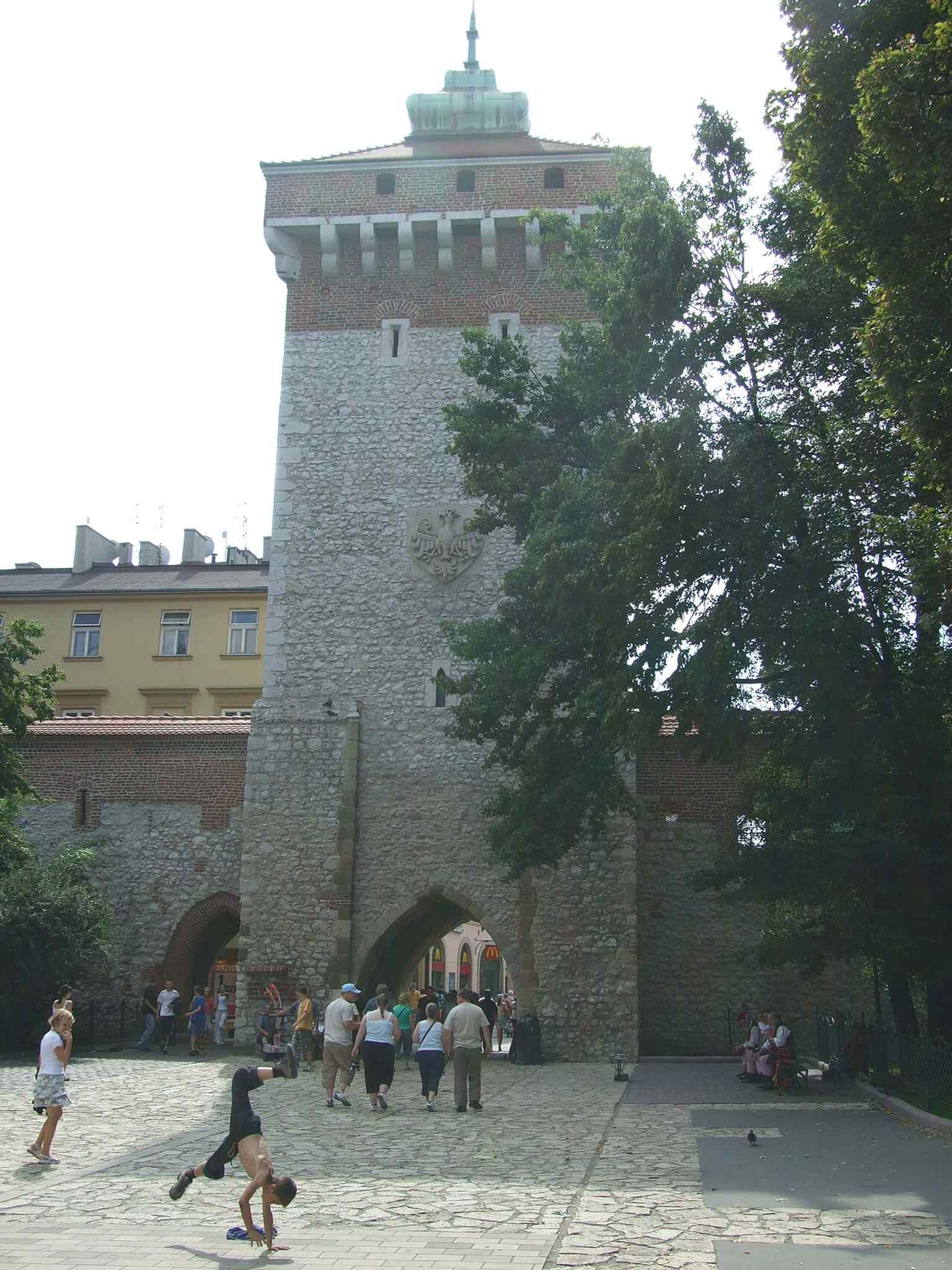
Look for a tall rectangular tower of rough stone and brick, pierced by a pointed Gothic arch and topped with a dark metal crown that gives the gate its unmistakable silhouette.

This is St. Florian’s Gate... the place where Kraków learned, the hard way, that wealth and faith needed guarding.

In twelve forty-one, the Tatar invasion tore through Kraków and destroyed most of the city. That shock changed how people here thought about safety. A few decades later, Prince Leszek the Black gave permission for a stronger ring of defenses: stone walls, watchtowers, fortified gates, and a moat. Out of that plan came this tower, first mentioned in thirteen oh seven, built in the fourteenth century from what the records call wild stone.

It was never just decorative. This gate became the main entrance to the Old Town, linked by a long bridge to the circular Barbican across the moat. At the height of Kraków’s defenses, the wall line carried forty-seven watchtowers and eight gates. This is the only medieval city gate that survived the great nineteenth-century clear-out, which is a polite phrase for knocking most of it down.

Take a second and read the tower from the ground up. The lower body is Gothic and practical... thick, stern, not here to charm anyone. Then your eye reaches the Baroque metal helmet added in sixteen sixty and renewed in sixteen ninety-four, and suddenly the soldier has put on a ceremonial hat. Kraków rarely throws anything away if it can give it a second job.

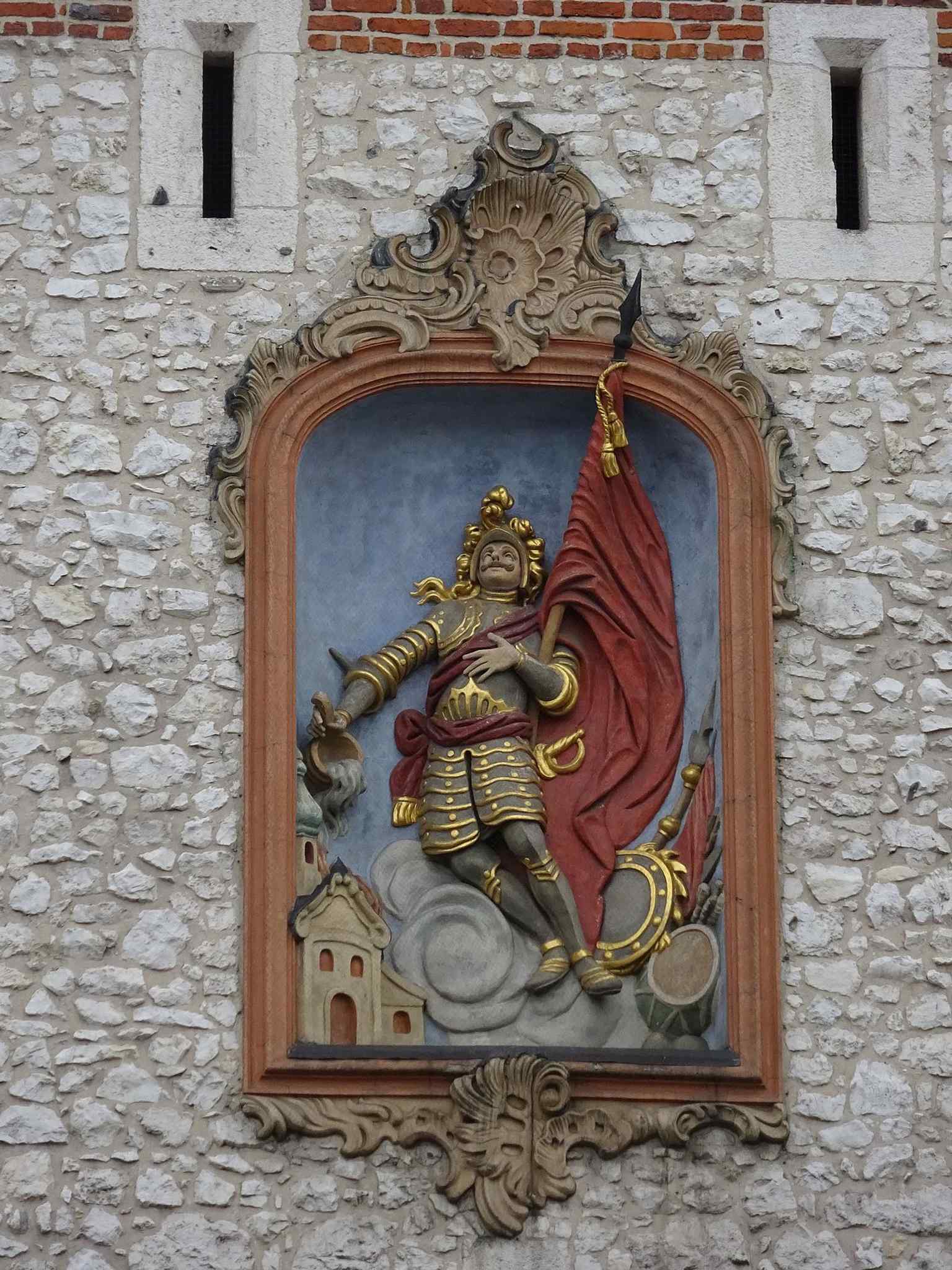
The layers keep going. On the south face, an eighteenth-century relief shows Saint Florian putting out a burning building, a reminder that protection here meant fire as well as invasion. On the north face, a stone eagle appeared in eighteen eighty-two, carved by Zygmunt Langman from a design by Jan Matejko. During the partition era, that eagle turned the gate into a patriotic statement as much as a medieval survivor. If you want a closer look at that symbol, the app has a good detail image of it.
The north-side eagle designed by Jan Matejko and carved by Zygmunt Langman in 1882, a patriotic symbol added during the partition era.
The north-side eagle designed by Jan Matejko and carved by Zygmunt Langman in 1882, a patriotic symbol added during the partition era.Photo: Mach240390, Wikimedia Commons, CC BY 4.0. Cropped & resized.

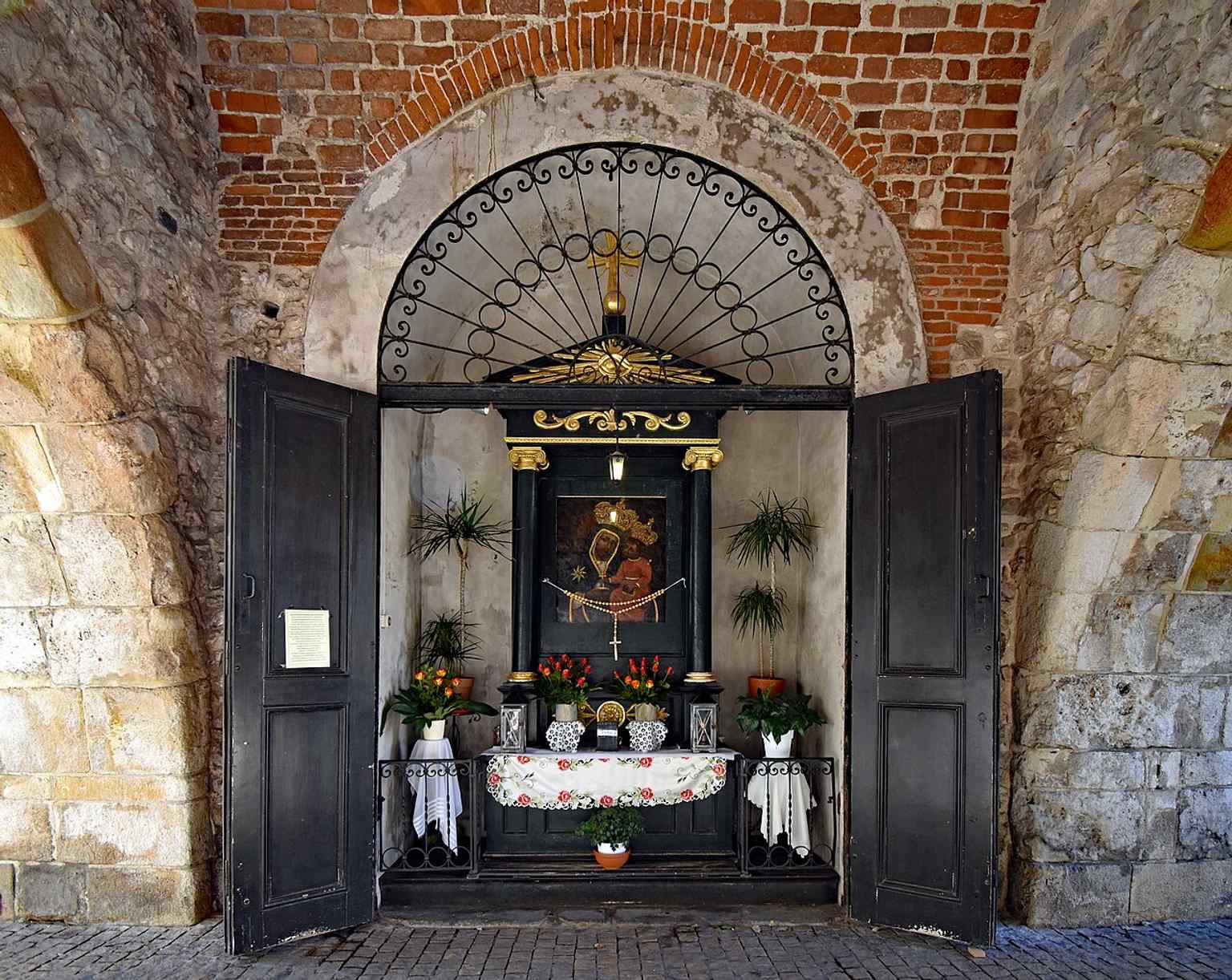
And then the gate changed again. Kings, envoys, coronation processions, and funeral corteges all passed through here onto the Royal Road toward the Market Square and Wawel. Inside the gate, travelers also met a small altar with a late Baroque copy of the Piaskowa Madonna, so the threshold into the city became part checkpoint, part shrine.

By the sixteenth century, the city added an arsenal beside the gate. Later, the complex even served as stables. Fortifications age, enemies change, and cities improvise.

In the early nineteenth century, this tower nearly vanished with the rest of the walls. Professor Feliks Radwański of Jagiellonian University helped save it in eighteen seventeen by persuading the Senate to preserve the gate and barbican. His argument included heritage, yes... but also the useful fact that the old wall line blocked wind, snow, and blown-in filth from the north. Not every preservation campaign gets to be both noble and practical.

That rescue helped make Planty, the green ring that replaced the moat and ruined walls. If you like, check the comparison image in the app; it shows how a once busy gateway of carts and traffic became the calmer monument you see now.

And that is the point of this place: without a defended entrance, there is no confident market beyond it. From here, we head toward the Cloth Hall, where security turned into trade, and trade turned into urban swagger. It’s about a seven-minute walk.

If you plan to visit inside later, it’s usually open from eight in the morning to six in the evening, and closed on Sundays.
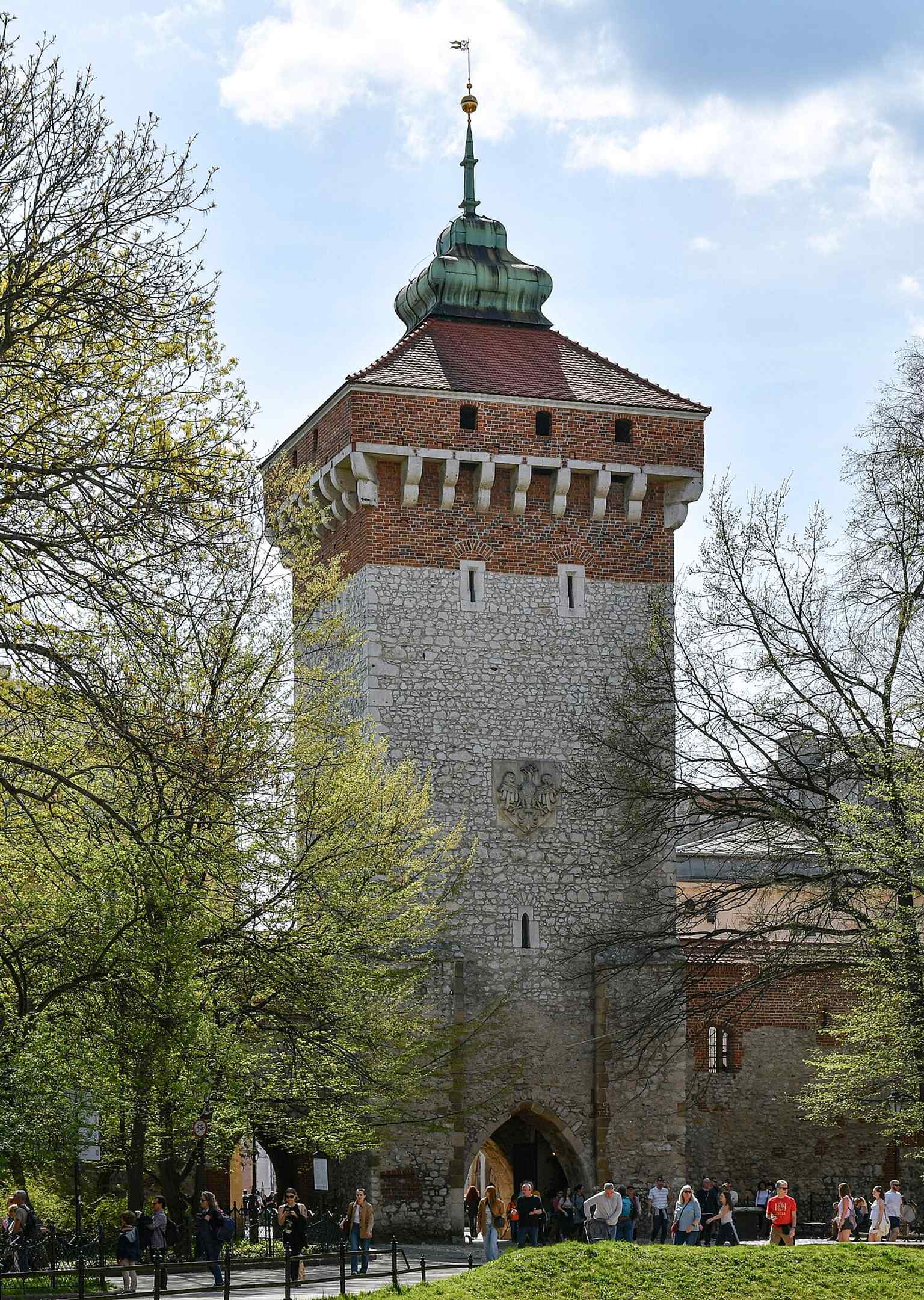
A clear frontal view of St. Florian's Gate, the surviving medieval gateway that once marked the main entrance to Kraków's Old Town.
A clear frontal view of St. Florian's Gate, the surviving medieval gateway that once marked the main entrance to Kraków's Old Town.Photo: Rj1979, Wikimedia Commons, Public domain. Cropped & resized.
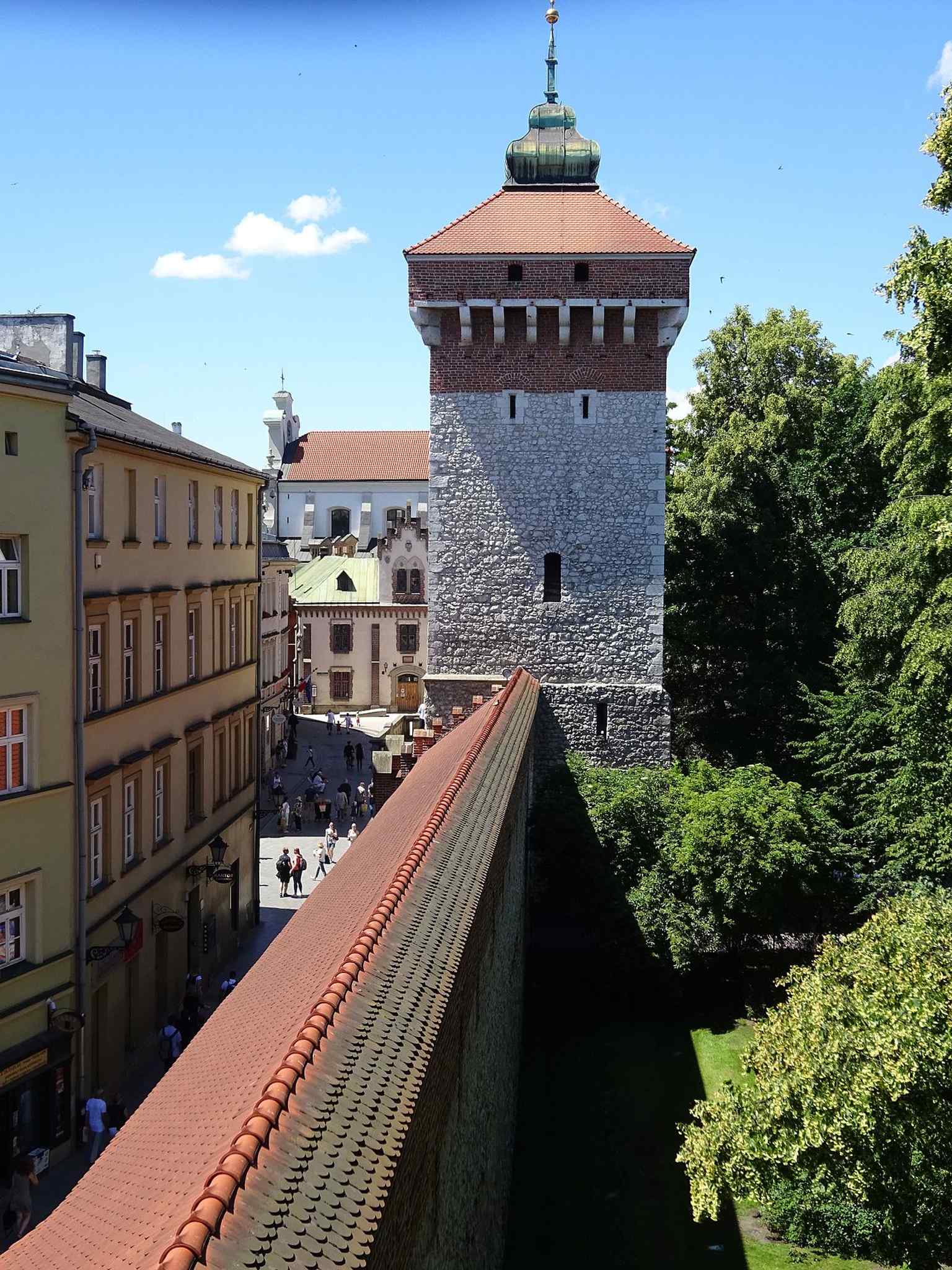
Seen from outside the old fortifications, this angle emphasizes the gate’s defensive role as part of Kraków’s medieval city walls.
Seen from outside the old fortifications, this angle emphasizes the gate’s defensive role as part of Kraków’s medieval city walls.Photo: Necrothesp, Wikimedia Commons, CC BY-SA 3.0. Cropped & resized.
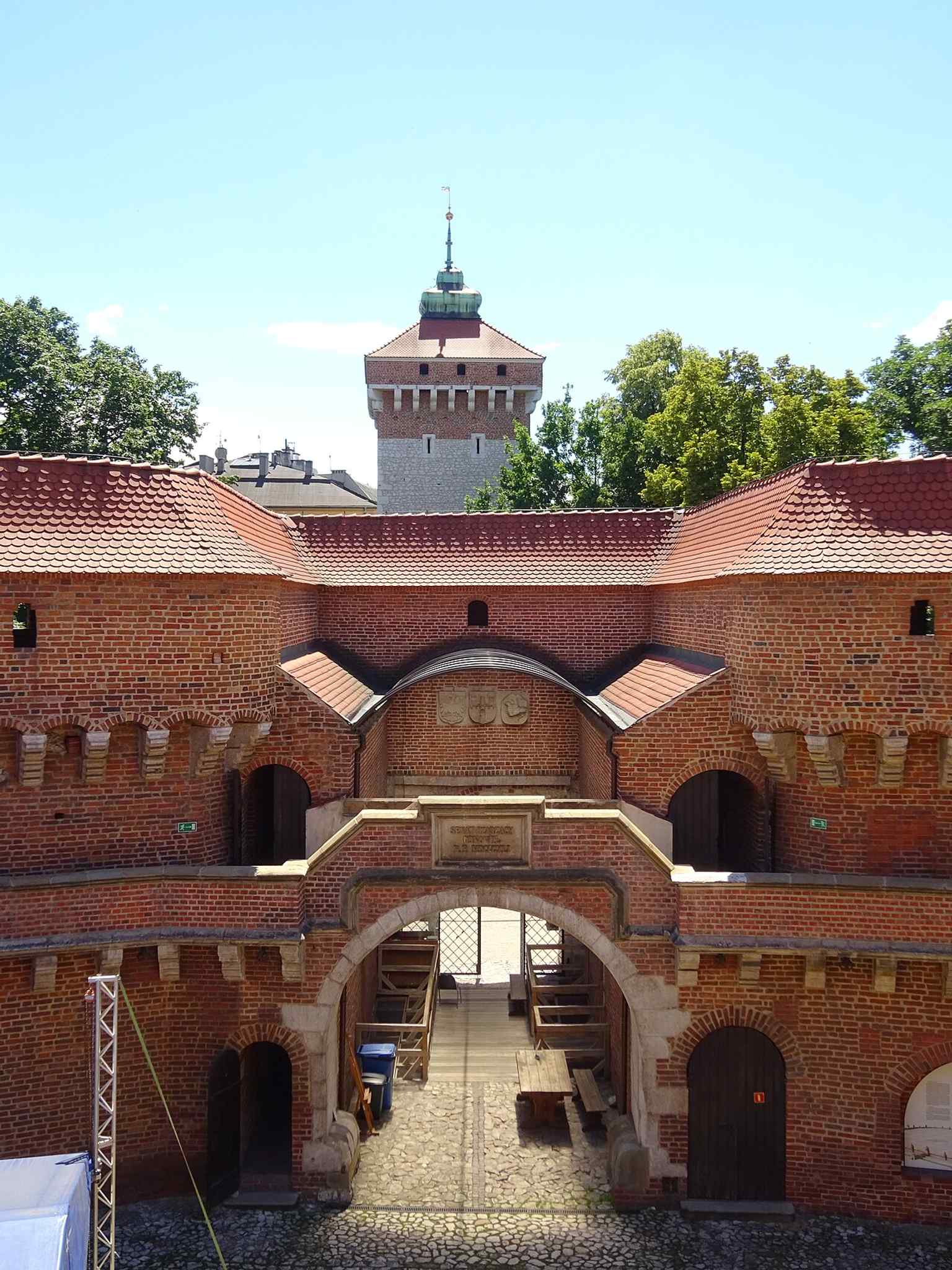
The gate framed from inside the Barbican complex, showing how the tower was linked to the circular barbican by the fortified approach across the moat.
The gate framed from inside the Barbican complex, showing how the tower was linked to the circular barbican by the fortified approach across the moat.Photo: Mach240390, Wikimedia Commons, CC BY 4.0. Cropped & resized.
The south-side relief of Saint Florian extinguishing a burning building, echoing the gate’s role as a protector not only against armies but also against fire.
The south-side relief of Saint Florian extinguishing a burning building, echoing the gate’s role as a protector not only against armies but also against fire.Photo: Mach240390, Wikimedia Commons, CC BY 4.0. Cropped & resized.
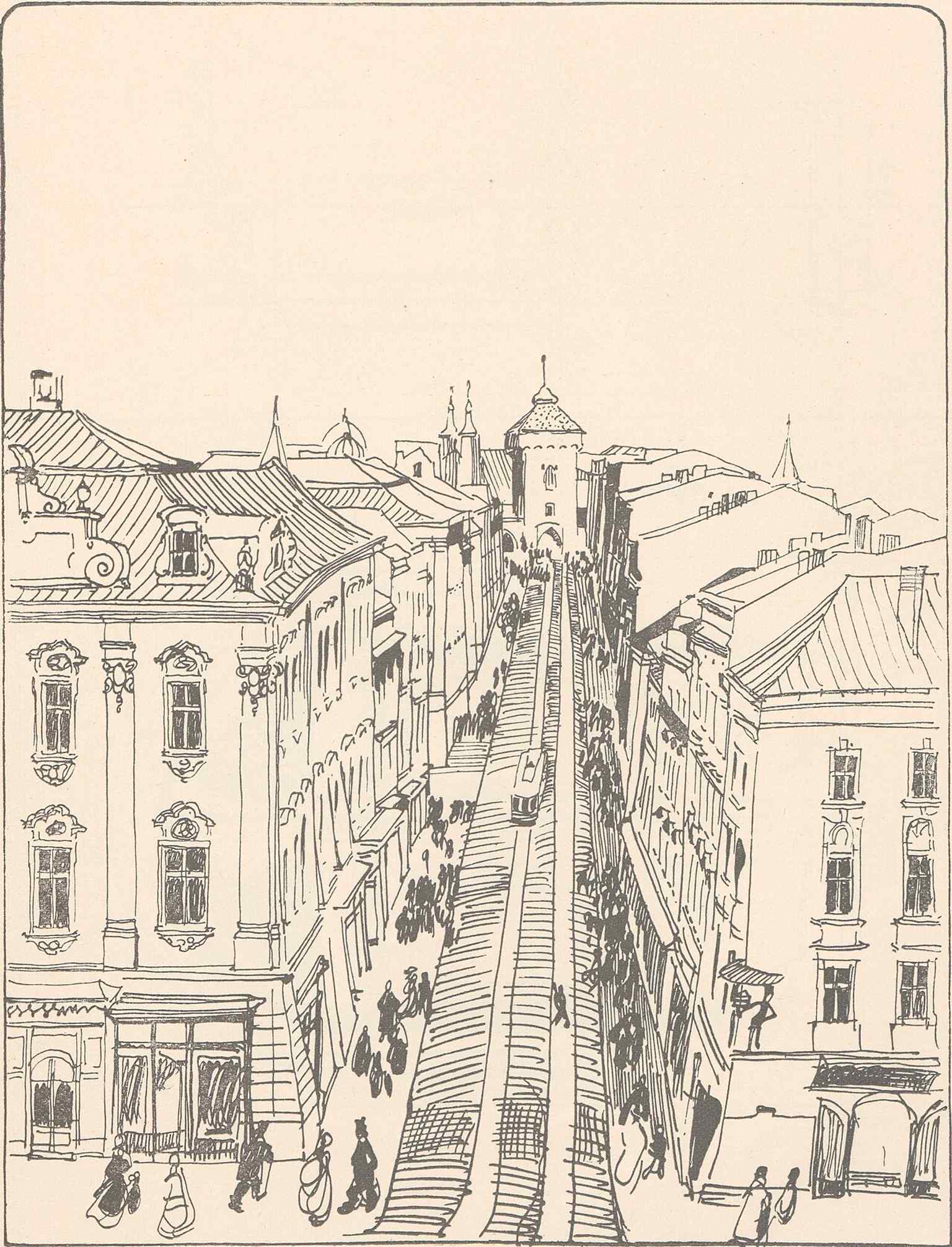
An early 20th-century postcard view with trams nearby, suggesting how the old gate became part of Kraków’s modern urban life.
An early 20th-century postcard view with trams nearby, suggesting how the old gate became part of Kraków’s modern urban life.Photo: Unknown authorUnknown author, Wikimedia Commons, Public domain. Cropped & resized.
An 1862 printed view of Kraków’s historic architecture, useful for showing the gate in the era when the old walls were being reconsidered as heritage.
An 1862 printed view of Kraków’s historic architecture, useful for showing the gate in the era when the old walls were being reconsidered as heritage.Photo: Unknown authorUnknown author, Wikimedia Commons, Public domain. Cropped & resized.
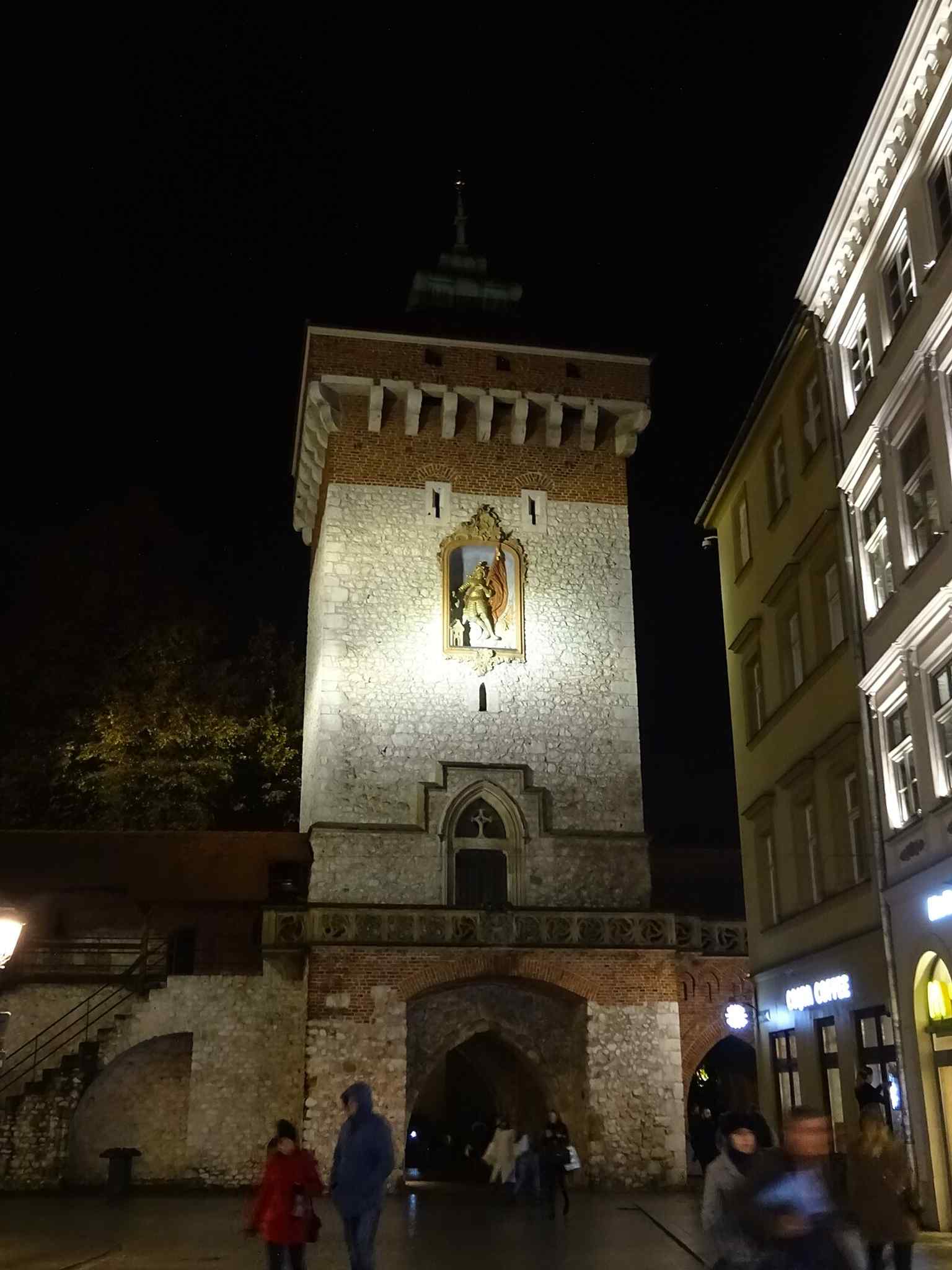
The gate at night, highlighting its dramatic silhouette and the way this former stronghold now anchors the Old Town after dark.
The gate at night, highlighting its dramatic silhouette and the way this former stronghold now anchors the Old Town after dark.Photo: Mach240390, Wikimedia Commons, CC BY-SA 3.0. Cropped & resized.
A contemporary full-height view that shows St. Florian’s Gate as the last surviving medieval city gate of Kraków.
A contemporary full-height view that shows St. Florian’s Gate as the last surviving medieval city gate of Kraków.Photo: Fotoomnia, Wikimedia Commons, CC BY-SA 4.0. Cropped & resized.
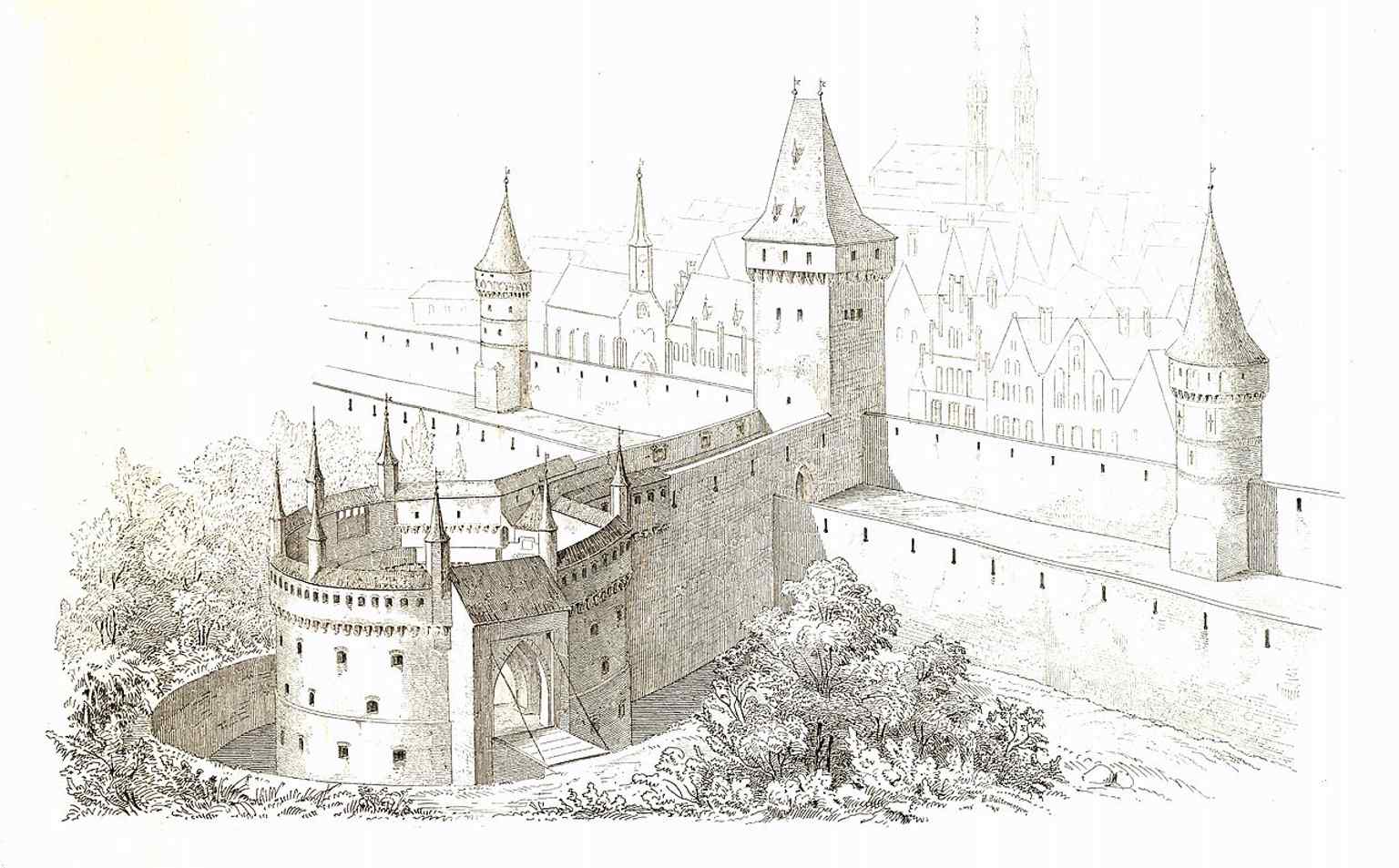
A historic image of the Kraków Barbican, the gate’s fortified partner across the moat and a key part of the old defensive system.
A historic image of the Kraków Barbican, the gate’s fortified partner across the moat and a key part of the old defensive system.Photo: Unknown authorUnknown author, Wikimedia Commons, Public domain. Cropped & resized.
arrow_back Back to Krakow Highlights Audio Tour: Royal and Architectural Heritage
Loved by travellers

Thousands of tours started.
Plenty of opinions.

4.8 across the App Store and Google Play. Here's a few we keep coming back to.

starstarstarstarstar
This was a solid way to get to know Brighton without feeling like a tourist. The narration had depth and context, but didn't overdo it.
Christoph
Christoph
Brighton Tour
starstarstarstarstar
Started this tour with a croissant in one hand and zero expectations. The app just vibes with you, no pressure, just you, your headphones, and some cool stories.
download Get the app

Pop your headphones in.
Step outside.

Free to download. Tours in every city. Start in 60 seconds — no account, no card.

Download on the App StoreGet it on Google Play
starstarstarstarstar_half
4.8
AudaTours app icon
headphones
~ 4 min until your first tour starts
public
1,000+ cities worldwide
all_inclusive
AudaTours
Unlimited

Every tour. Every city. One subscription.

3101 tours2271 cities138 countries50+ languages