
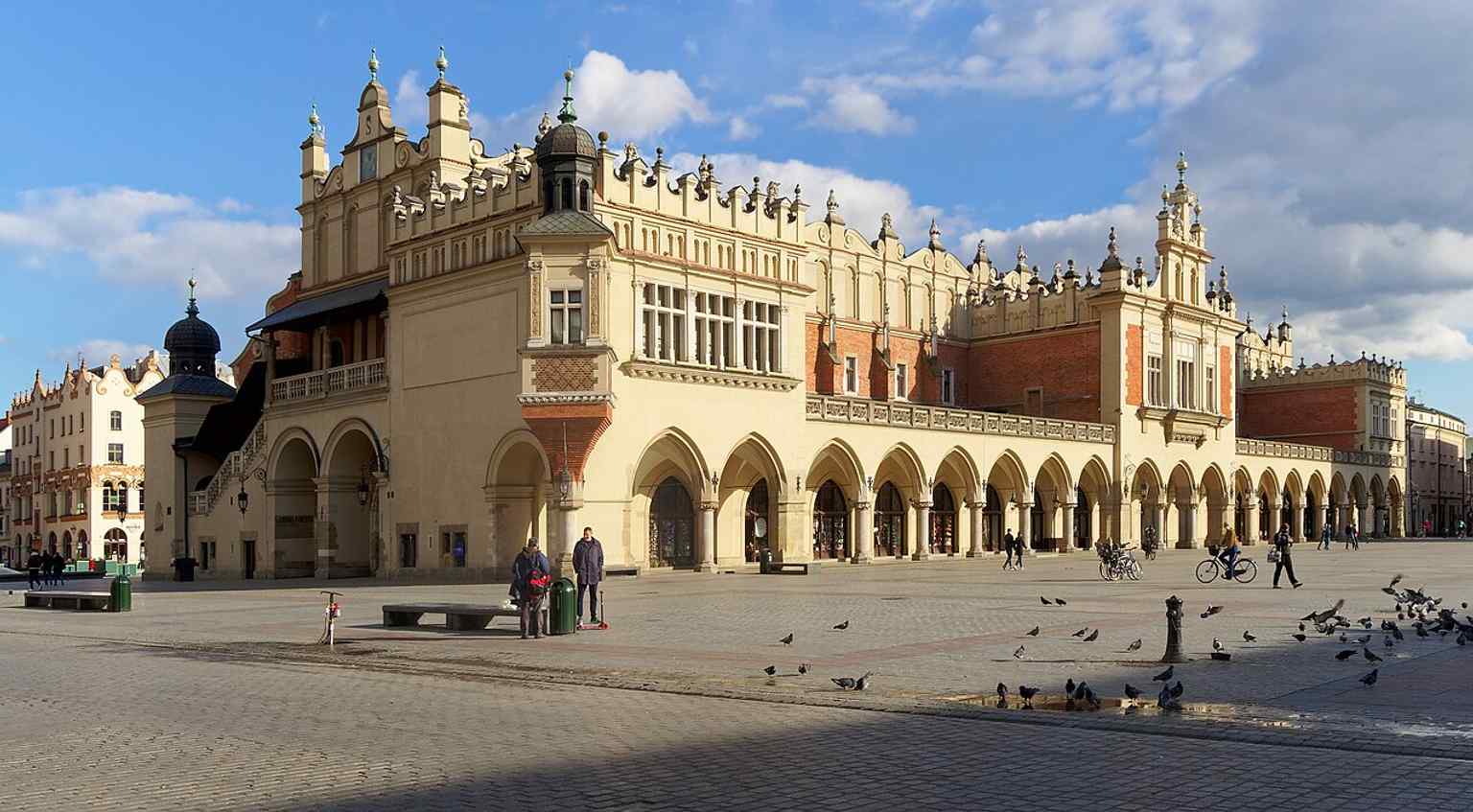
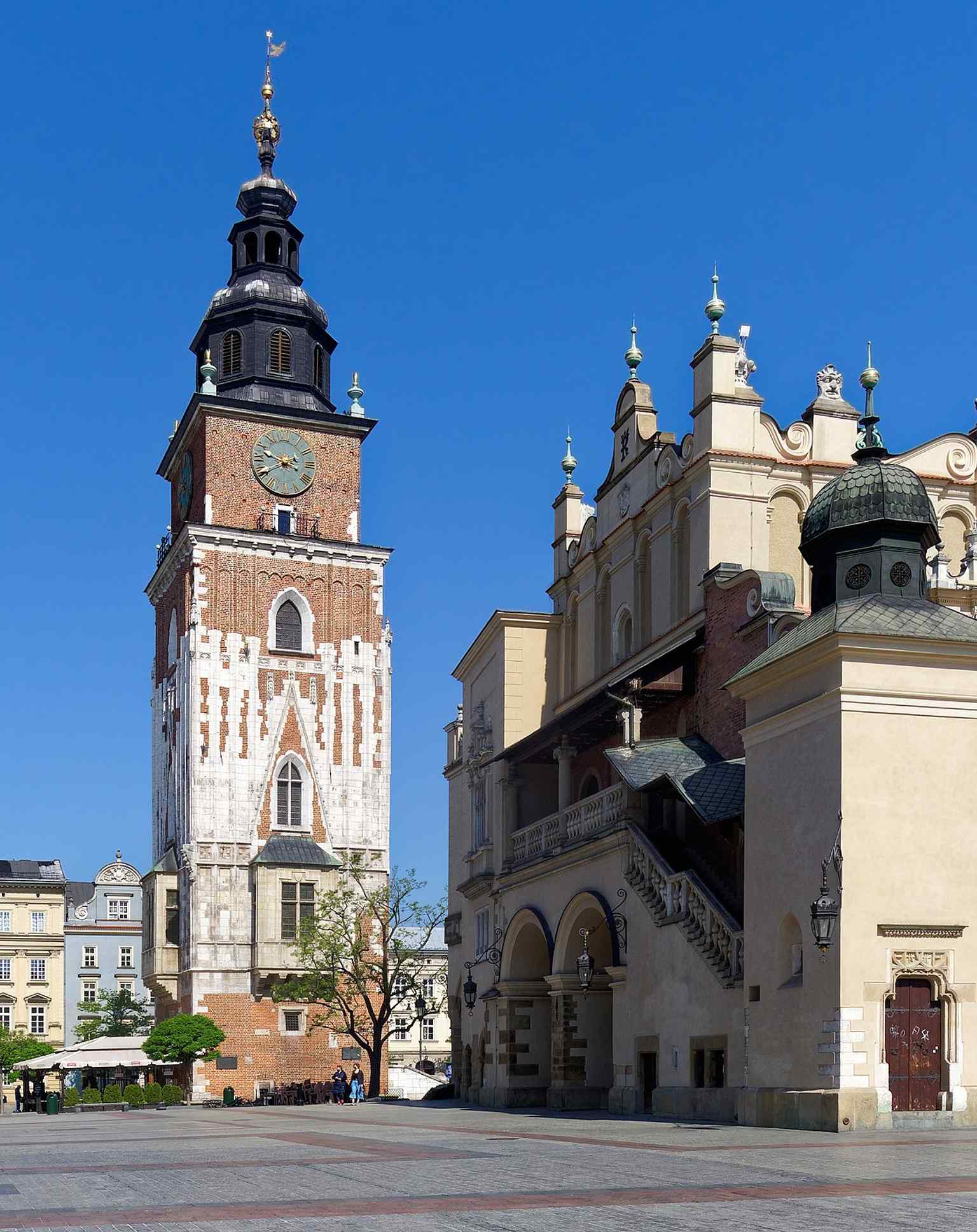
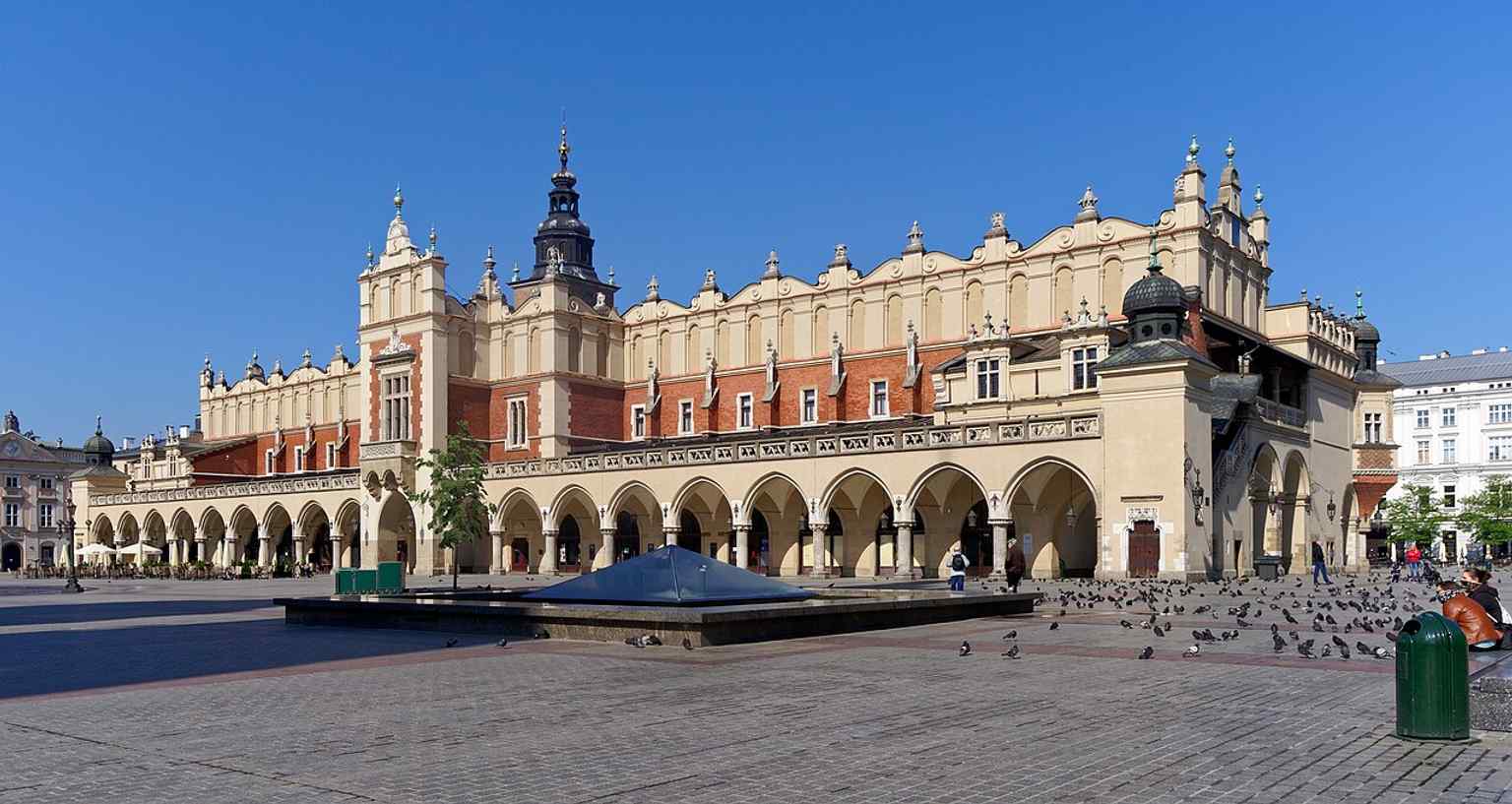
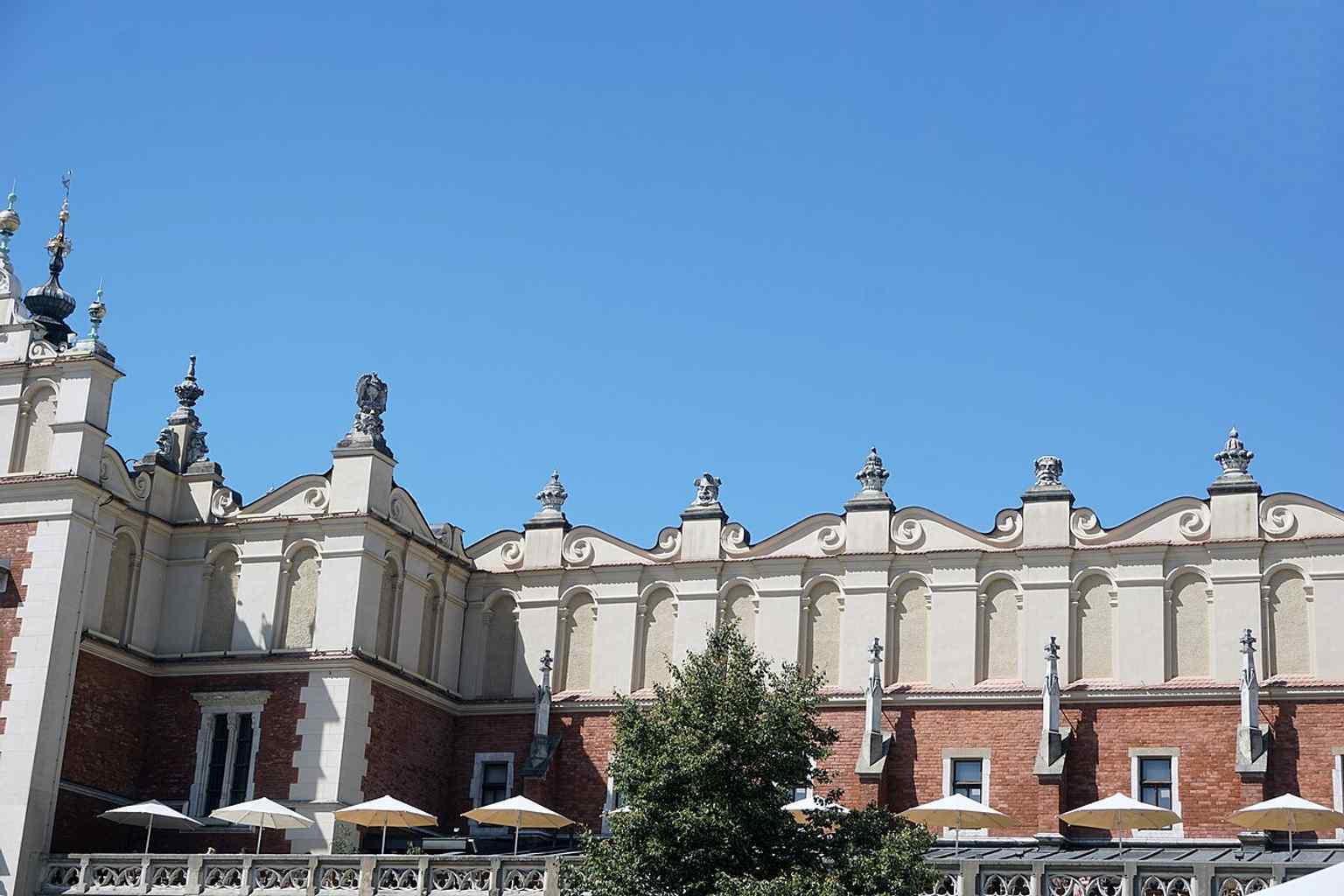
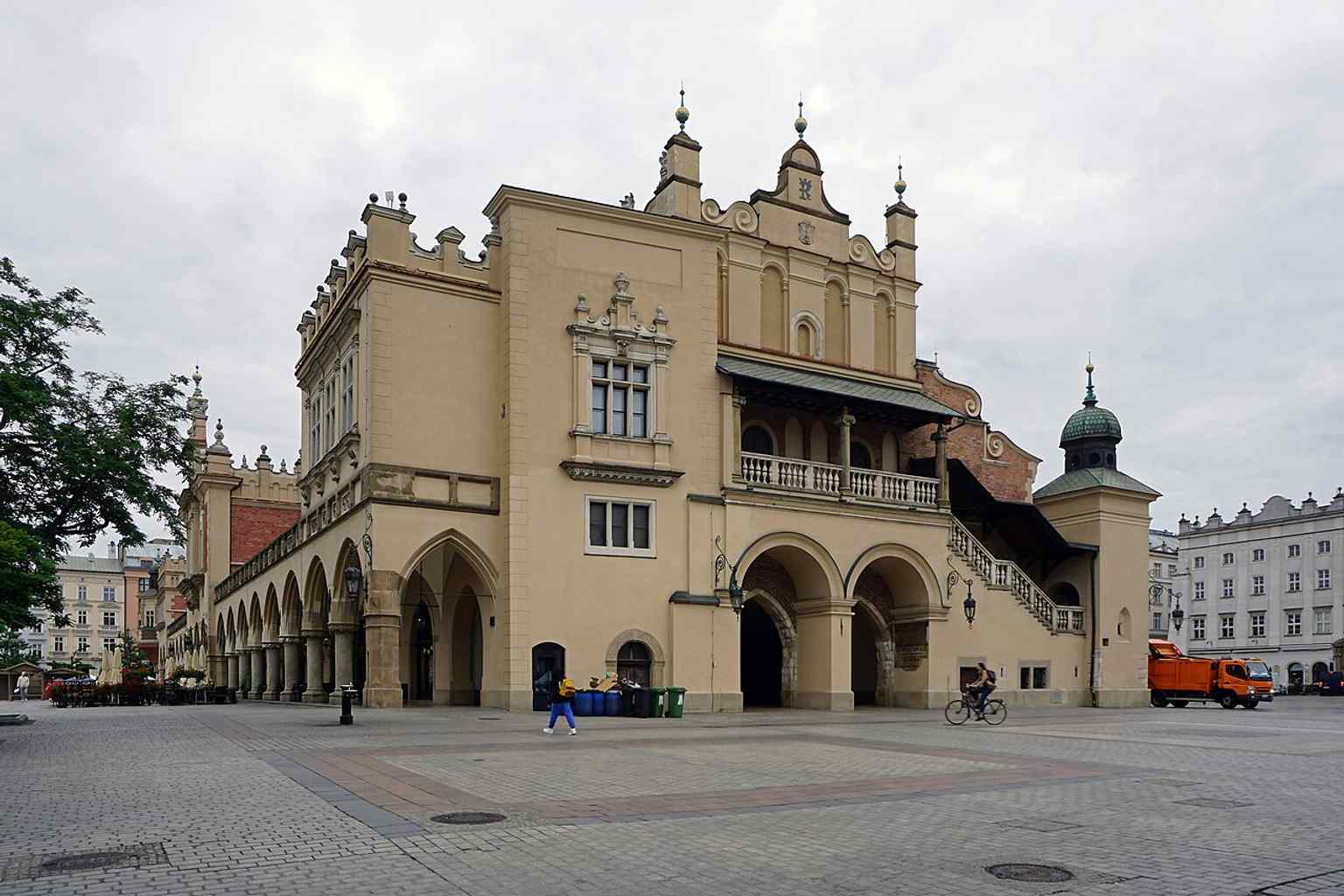
Ahead of you is a long pale stone hall with a row of ground-floor arches and a high decorative roofline crowned with carved faces.
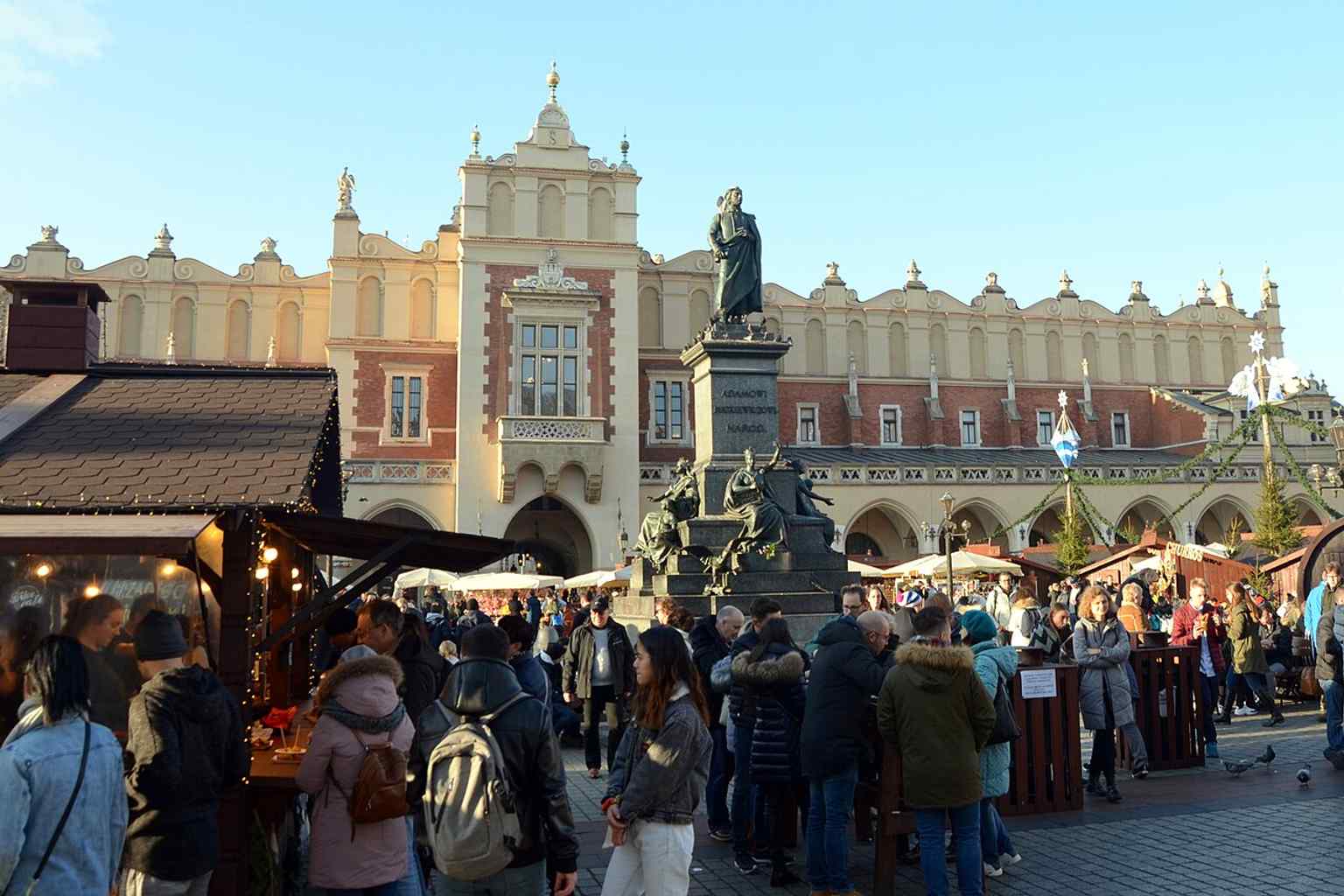
This is the Sukiennice, the Cloth Hall, and it makes a very Kraków argument: trade belongs at the center of civic life, not tucked away like an embarrassing cousin. Kings had Wawel, bishops had the cathedral... and merchants got the middle of the main square.
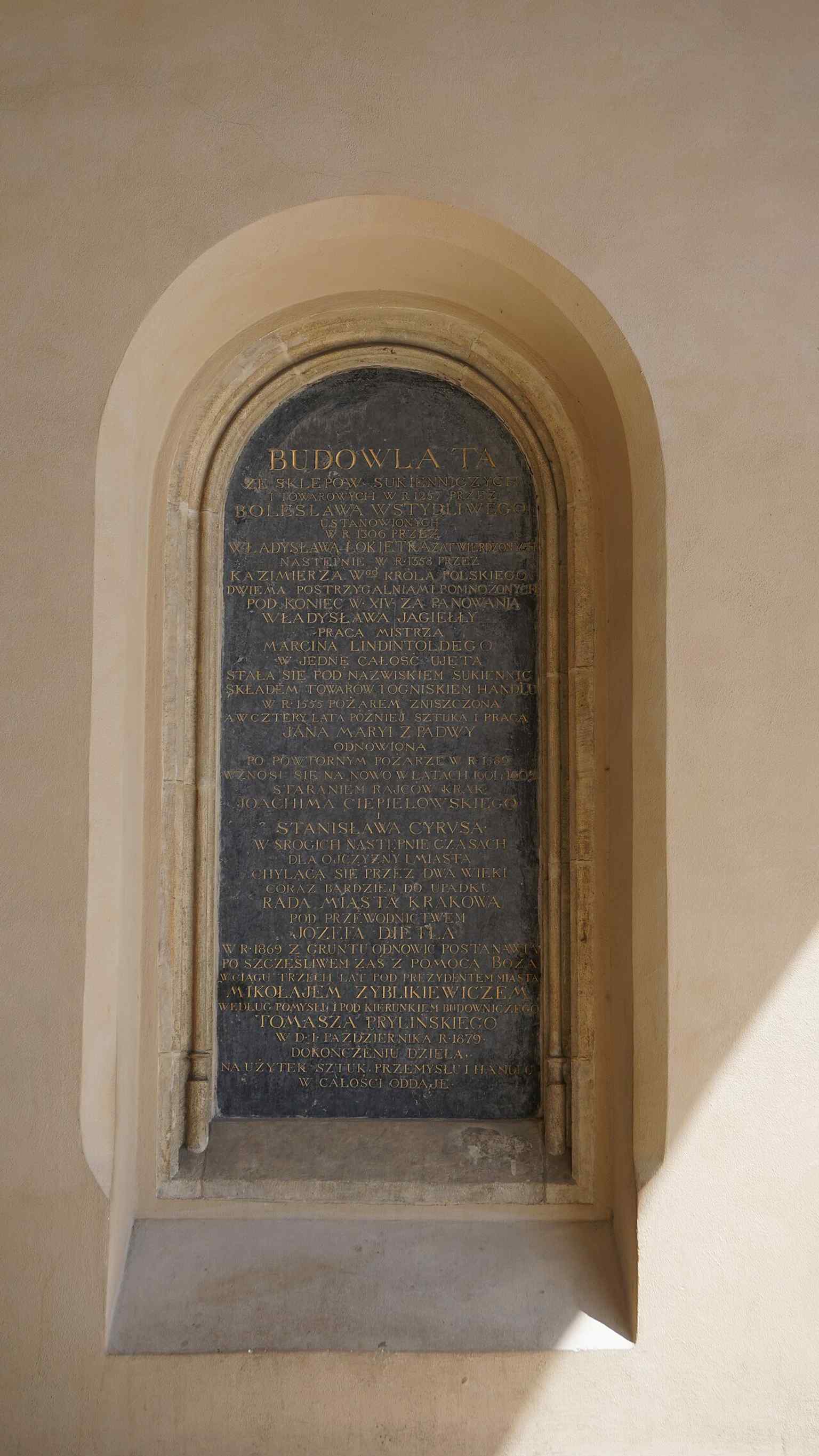
The story starts in the year twelve fifty-seven, when Duke Bolesław the Bashful founded Kraków under new city law and promised stone cloth stalls here. At first, they formed two parallel rows with a narrow lane between them, like a tiny street running through the square. People locked that passage at both ends each night. Around the year thirteen hundred, builders added a roof, and the whole thing began to feel less like scattered stalls and more like a proper market hall.
Then King Casimir the Great pushed it further. Before thirteen fifty-eight, he gave Kraków a much larger Gothic hall here, more than a hundred meters long, with shops on both sides and pointed arches opening inward. It stood until the fire of fifteen fifty-five ruined it. Kraków, being Kraków, did not sulk for long. Master Pankracy led the rebuilding between fifteen fifty-six and fifteen fifty-nine, and that is when the hall took on its Renaissance swagger: the long vaulted interior, the elegant arcaded crown at the roofline, and those carved masks looking down with the mild disapproval of people who have seen every bad business idea in town.
If you want a quick sense of how much this place changed, have a look at the comparison image in the app; it shows the hall before and after the nineteenth-century restoration.
The biggest nineteenth-century makeover came under architect Tomasz Pryliński, who rebuilt the hall between eighteen seventy-five and eighteen seventy-nine and cleared away the clutter that had gathered around it. He turned the lower level into rows of wooden stalls again and gave the upper floor a new life as a museum. That same year, writer Józef Ignacy Kraszewski came to Kraków for his jubilee. About eleven thousand guests arrived in the city, and the Cloth Hall hosted a banquet for eight hundred people and a ball for two thousand. For one stretch of evening, commerce gave way to ceremony without ever leaving the building behind.
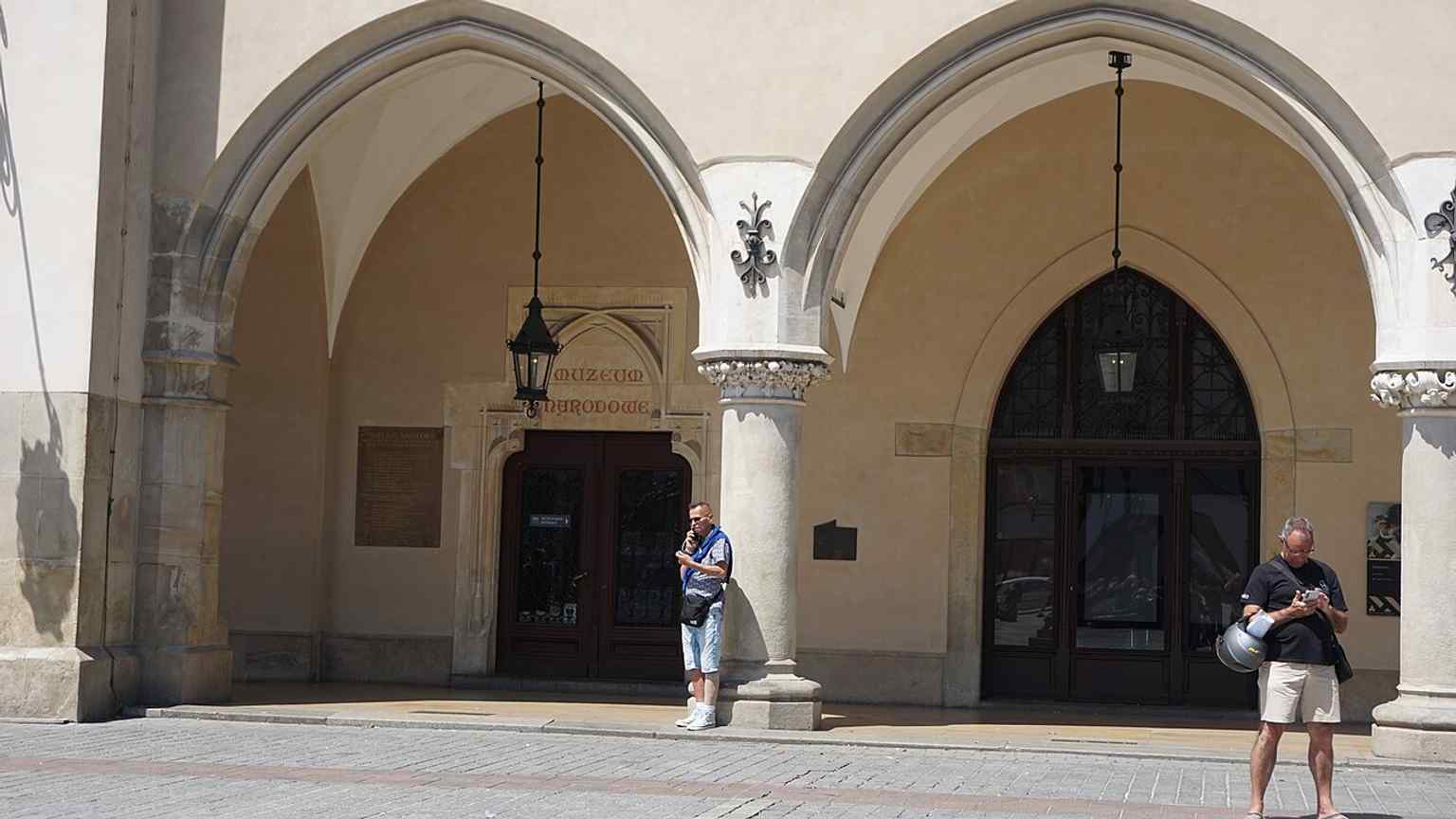
That year also mattered for the whole country: on the seventh of October, eighteen seventy-nine, Kraków created the first National Museum in Poland here. Henryk Siemiradzki helped give it stature by donating his huge painting Nero’s Torches. Even the famous ground-floor café, later known as Noworolski, began humbly, with benches against the walls and little chains holding three tin spoons. Luxury, clearly, was a developing concept.
And the building kept adapting. After the war, conservators restored Matejko’s Prussian Homage here. In nineteen sixty-one, Maria Niedzielska even set up a small chemical lab inside, so an old trading hall quietly became a place for science as well as memory. Today, shops still line the ground floor, the gallery still fills the upper level, and below it all the underground museum traces the medieval routes that came first.
If you want to go inside later, the galleries are generally open from Tuesday through Sunday, ten to six, and closed on Monday.
When you are ready, turn your attention beyond the market center to the line of old defenses that once protected everything gathered here... the Barbican is about an eight-minute walk away.






.jpg)