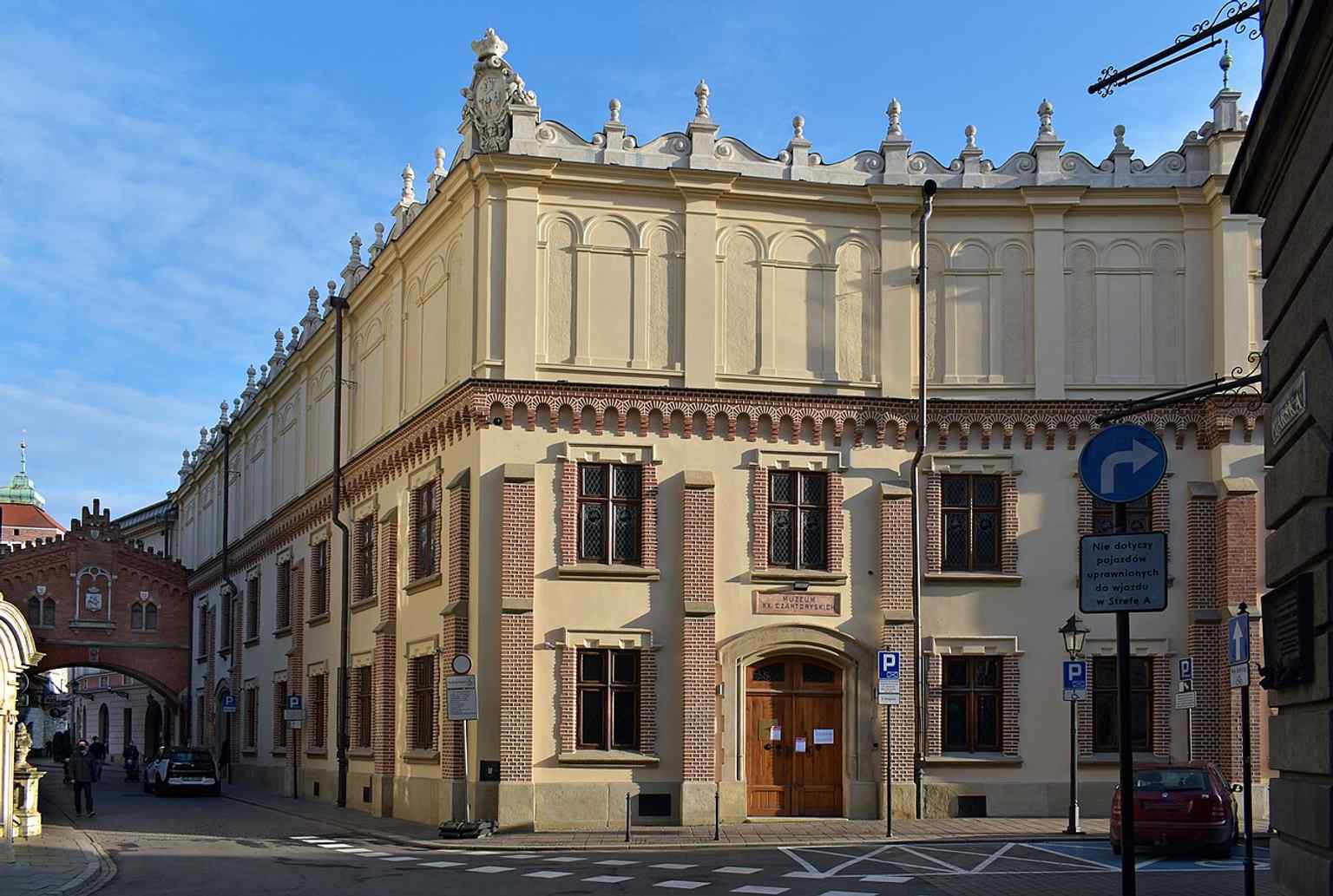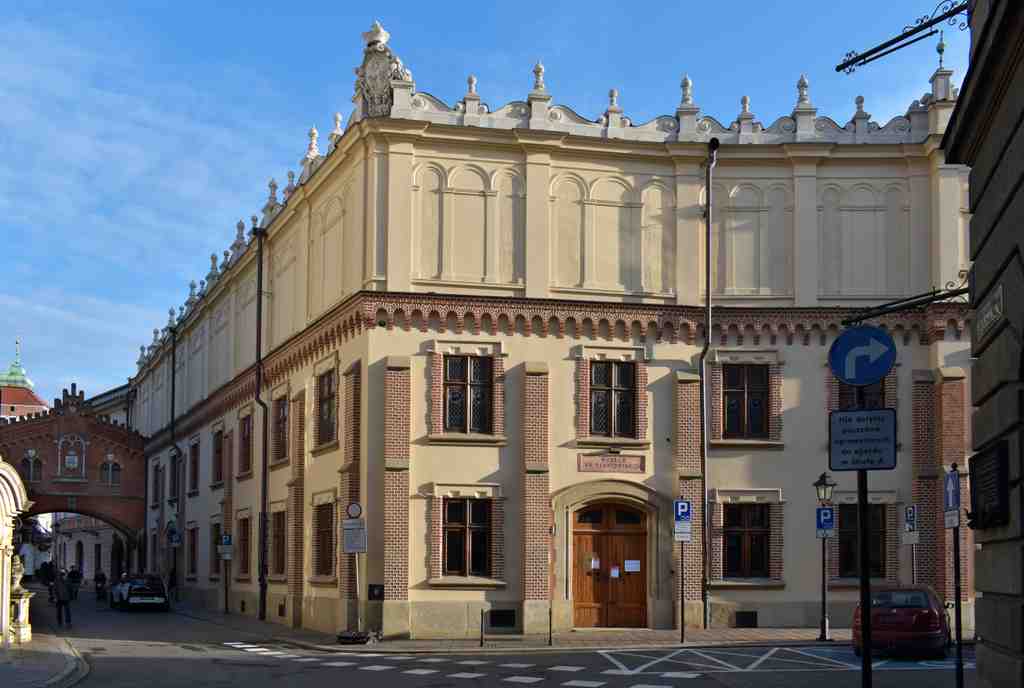
On your left is a pale stone palace facade, long and rectangular, with tall evenly spaced windows and a central arched doorway.
This museum is one of Kraków’s clearest examples of memory that refused to stay put. It began far from here, in seventeen ninety-six, when Princess Izabela Czartoryska opened her collection to the public in Puławy. Her motto was “The Past to the Future,” which sounds noble because it was... and because she meant it as a practical job description. Poland had been partitioned, its political body cut apart, so she started preserving what could still be gathered: royal relics, national souvenirs, trophies from the victory over the Turks at Vienna in sixteen eighty-three, manuscripts, books, and objects meant to hold a people together.
If you glance at your screen, you can see the Temple of the Sibyl in Puławy, the first home of that idea made solid.
Izabela also collected with a very Romantic streak. She bought what was said to be Shakespeare’s chair in Stratford-upon-Avon... because of course the nineteenth century would turn literary admiration into furniture worship. Scholars later spent years sorting fact from legend, and that tells you something important about this collection: it never preserved only objects. It preserved stories, claims, hopes, and sometimes a little wishful thinking too.
Her son, Prince Adam Jerzy Czartoryski, added one of the great prizes: Leonardo da Vinci’s Lady with an Ermine, bought in Italy around eighteen hundred. For years, people admired the painting without firmly knowing the sitter’s identity. Only around nineteen hundred did archival work tie the face to Cecilia Gallerani. So even a masterpiece here needed patient detective work, not just reverence.
Then came the hard part Kraków knows so well: saving things by moving them. After the November Uprising of eighteen thirty, the family lost its estates, parts of the collection were destroyed, and much of what survived went into exile in Paris at Hôtel Lambert. There it became, in effect, a museum for a country without a state.
The man who brought that wandering memory here was Prince Władysław Czartoryski. After the Franco-Prussian War, he chose Kraków as the collection’s safer home. The city offered him the old arsenal in the medieval wall, and in eighteen seventy-eight, a little more than eight decades after Izabela’s first museum, he opened the new museum here. If you look at the image in the app, the former arsenal building on Pijarska Street helps you picture that nineteenth-century Kraków chapter.
The collection kept surviving by inches. During the Second World War, General Marian Kukiel tried to save the treasures; German officials seized many anyway, and Hans Posse selected the most important pieces for Hitler’s planned museum in Linz. The Raphael vanished. Hundreds of objects never returned. What did come back helped define postwar Kraków: not untouched treasure, but rescued treasure.
After years in legal limbo, the museum reopened after major restoration in twenty nineteen, and Lady with an Ermine returned to her room behind glass. That feels right here. This city keeps choosing not just to admire inheritance, but to repair it, argue over it, and carry it forward.
Now head toward St. Florian’s Gate, where the story shifts from saved culture to the old machinery that once guarded the city itself. If you want to come back inside later, the museum is usually open Tuesday through Sunday from ten to six, and closed on Monday.