
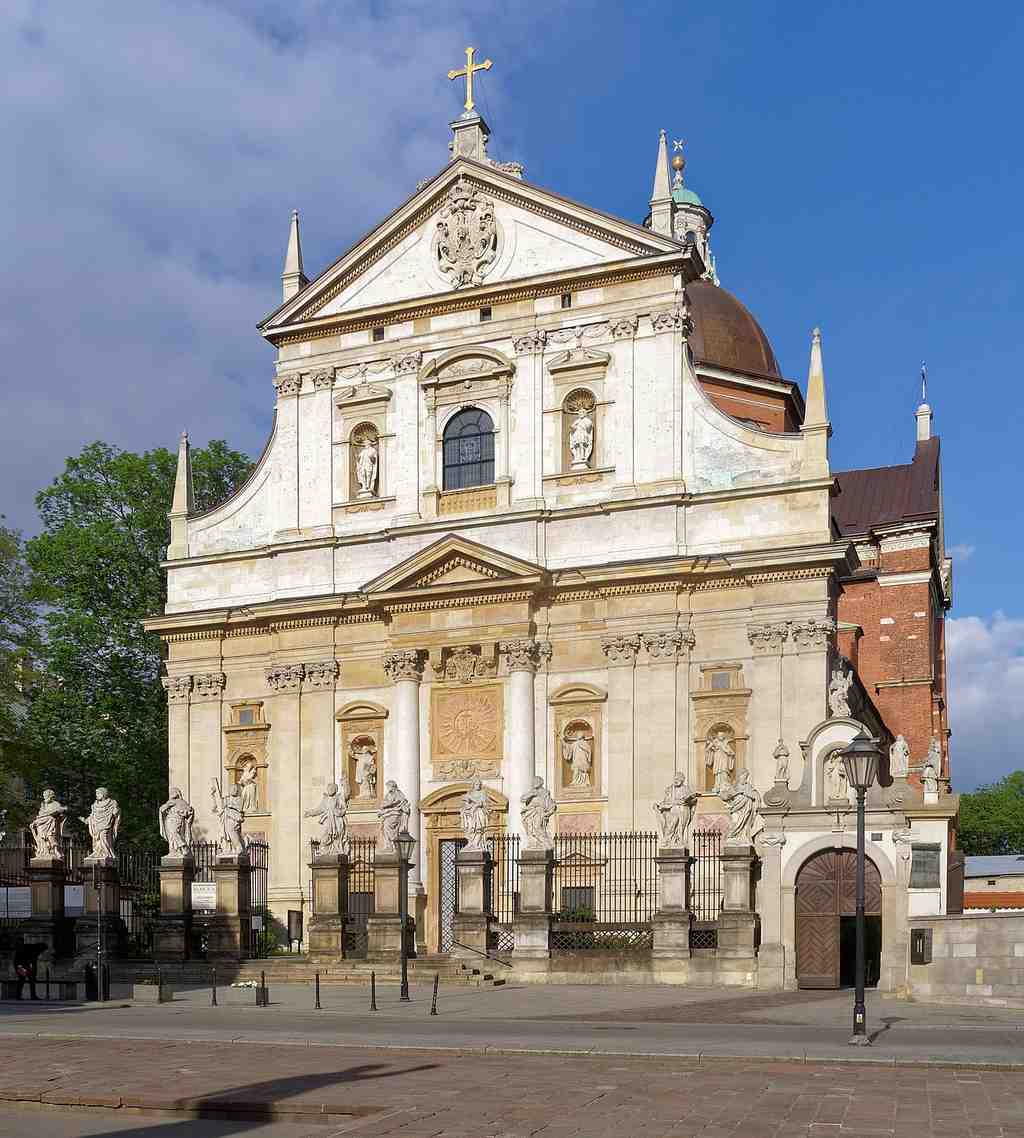
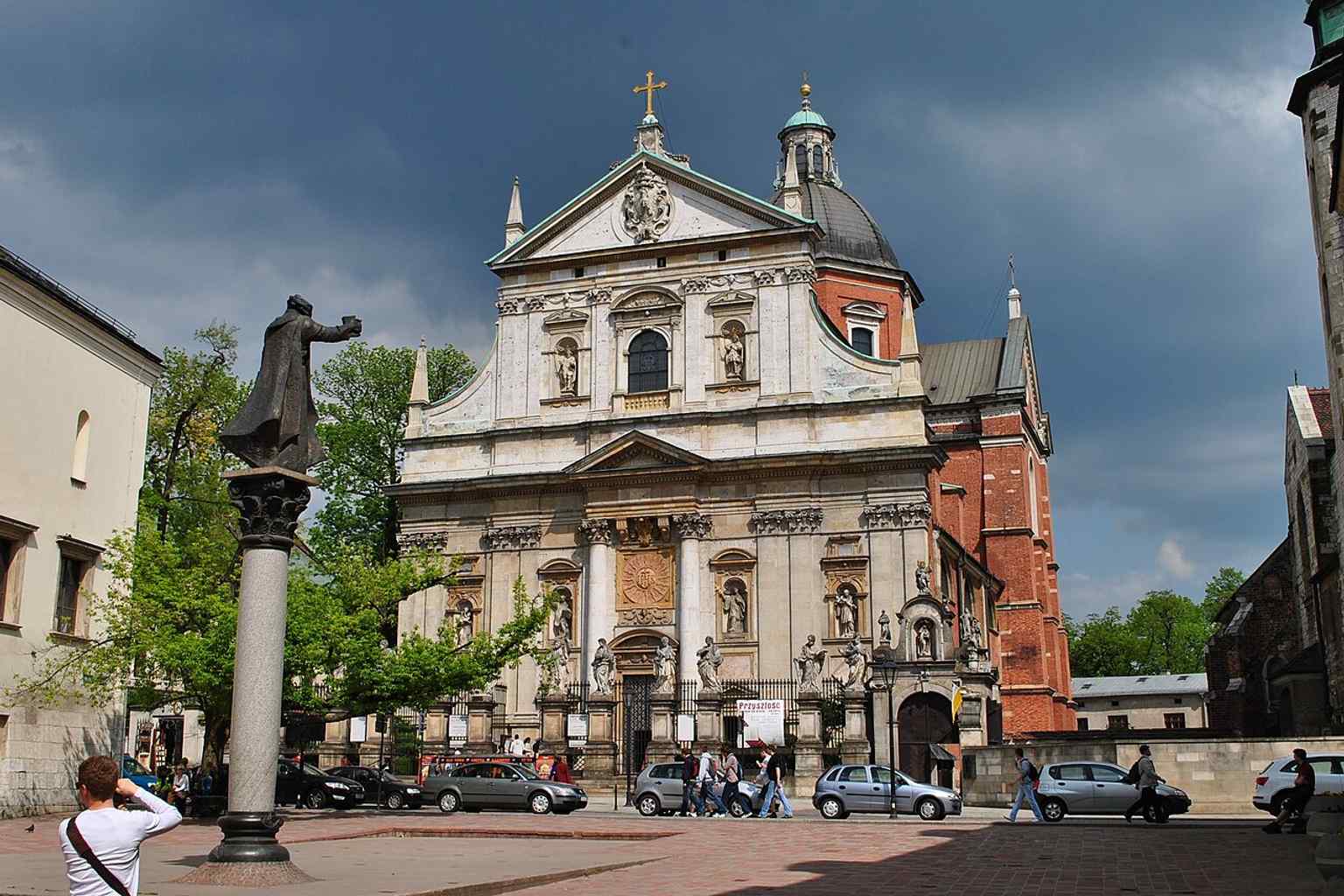
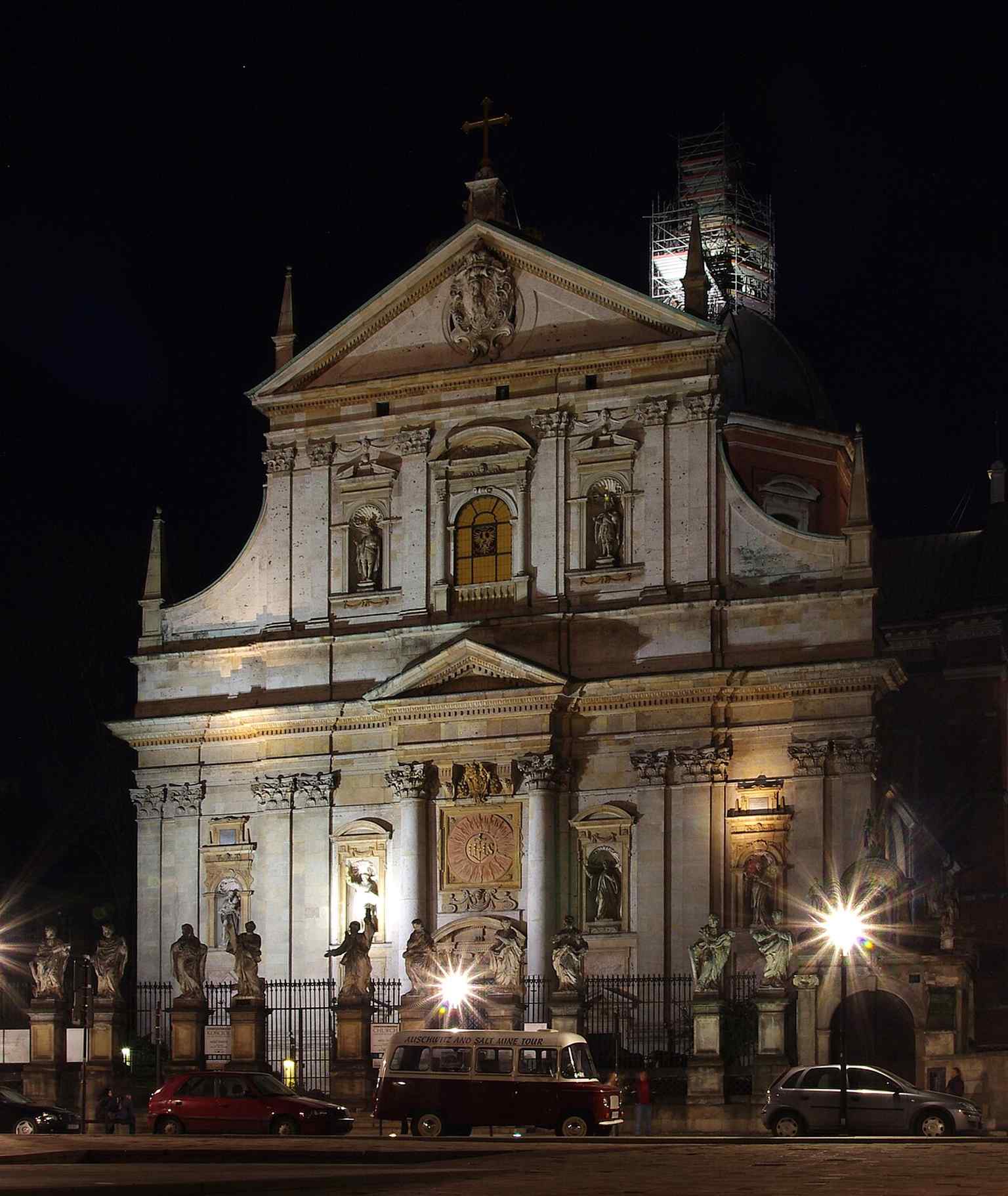
On your left, look for the pale dolomite façade rising in two stacked tiers, framed by stone saints and topped with a royal coat of arms.
This church marks a change in Kraków’s tone. After the older, defensive church nearby, all thick walls and caution, this one steps forward like a public argument. The Jesuits arrived here as strategic builders and educators, men who understood that architecture could teach, persuade, and impress before a sermon even began. Subtlety was not really the assignment.
King Sigismund the Third Vasa backed the project, and work began in the late fifteen nineties. Several Italian architects passed the plans along, but Giovanni Trevano gave the church its final shape between sixteen ten and sixteen nineteen, especially the façade, the dome, and the interior drama. What you see is Kraków’s first full Baroque church: a style built for movement, emotion, and confidence. If the older city had learned to brace itself, this building learned how to perform.
The man who made the whole scheme possible was Piotr Skarga. He was a famous Jesuit preacher, but here he also played fixer, organizer, and determined real-estate negotiator. He bought up neighboring houses, including a townhouse owned by Marcin Stadnicki and a manor linked to Joachim Ocieski, so the Jesuits could expand their church and college. That part rarely makes the postcards... but cities are often reshaped by whoever has the patience to knock on doors and acquire the lot next door.
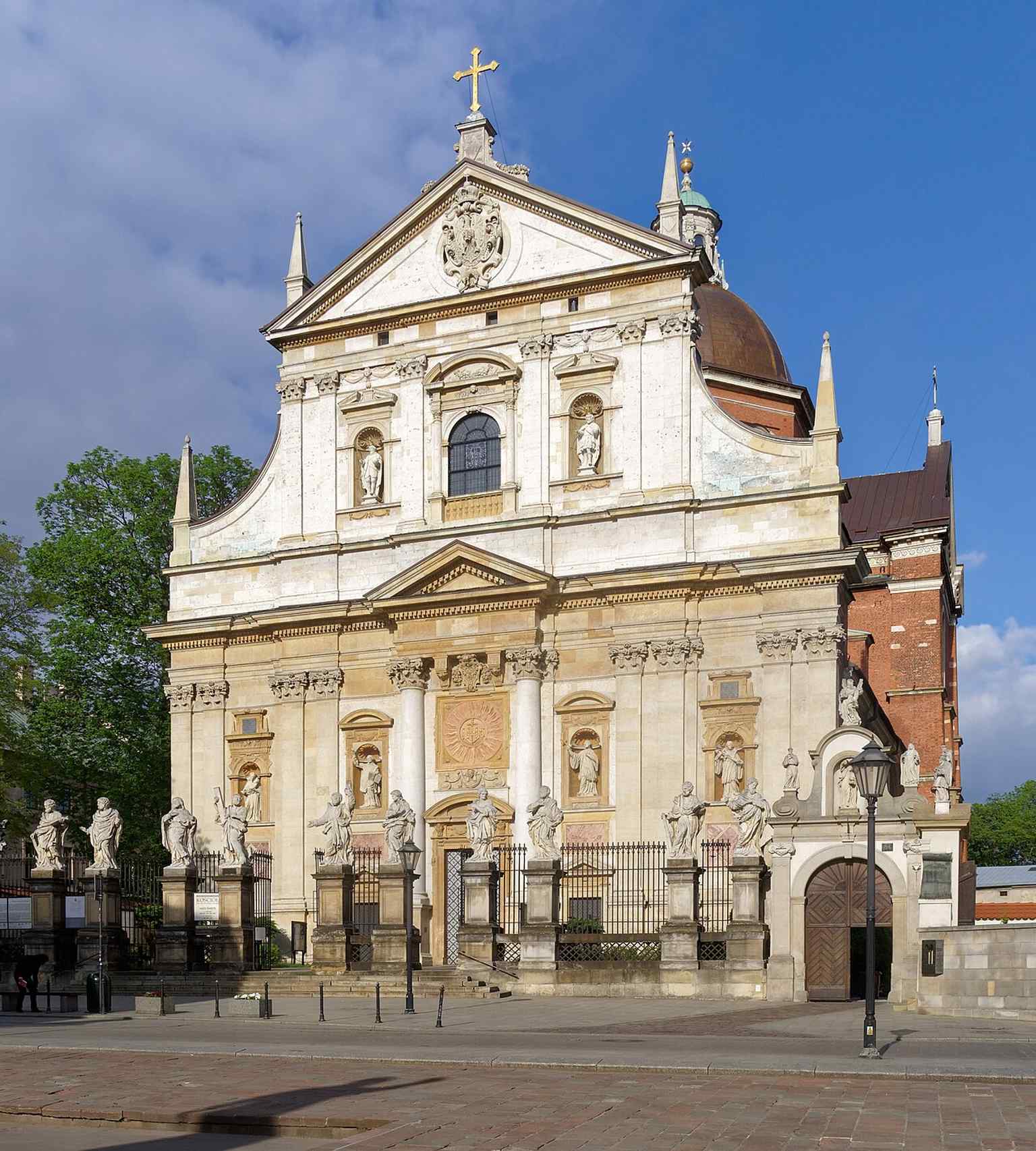
Look up at the façade and you can still read the message. Above the main portal sits the Jesuit emblem. In the niches stand Jesuit saints including Ignatius of Loyola and Francis Xavier. Higher up are Saint Sigismund and Saint Wenceslas, and at the very top the founder’s royal arms. If you want a closer look, check the façade image on your screen. It borrows from Roman models like Il Gesù and Santa Susanna, which was the point: Kraków was not closing itself off here. It was joining a bigger Catholic and artistic conversation.
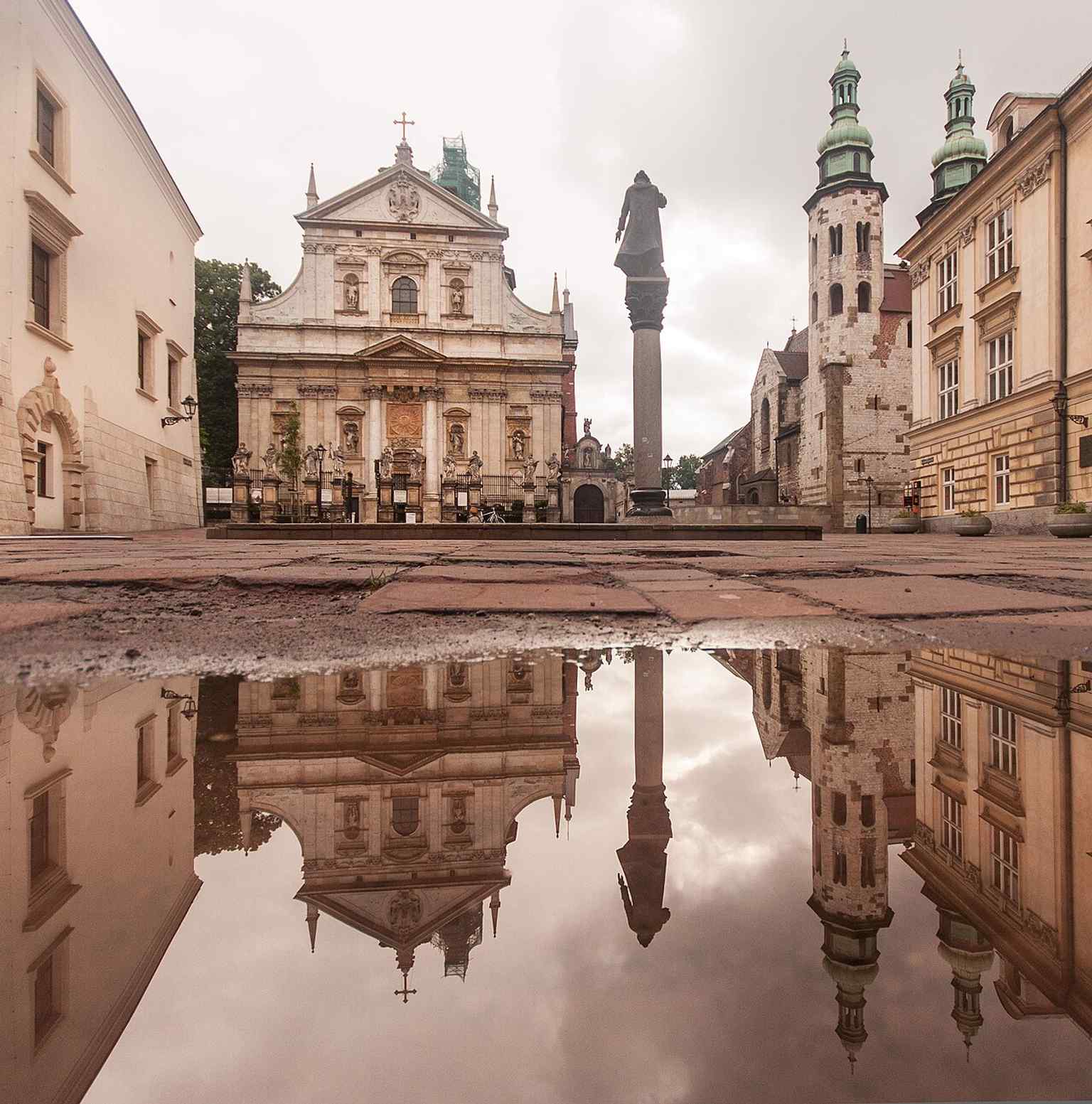
Even the fence tells a story. The apostles along it look eighteenth-century, but the figures outside today are copies. Acid rain damaged the originals so badly that their faces began to dissolve. Kraków keeps replacing what it must, while trying not to lose the old script.
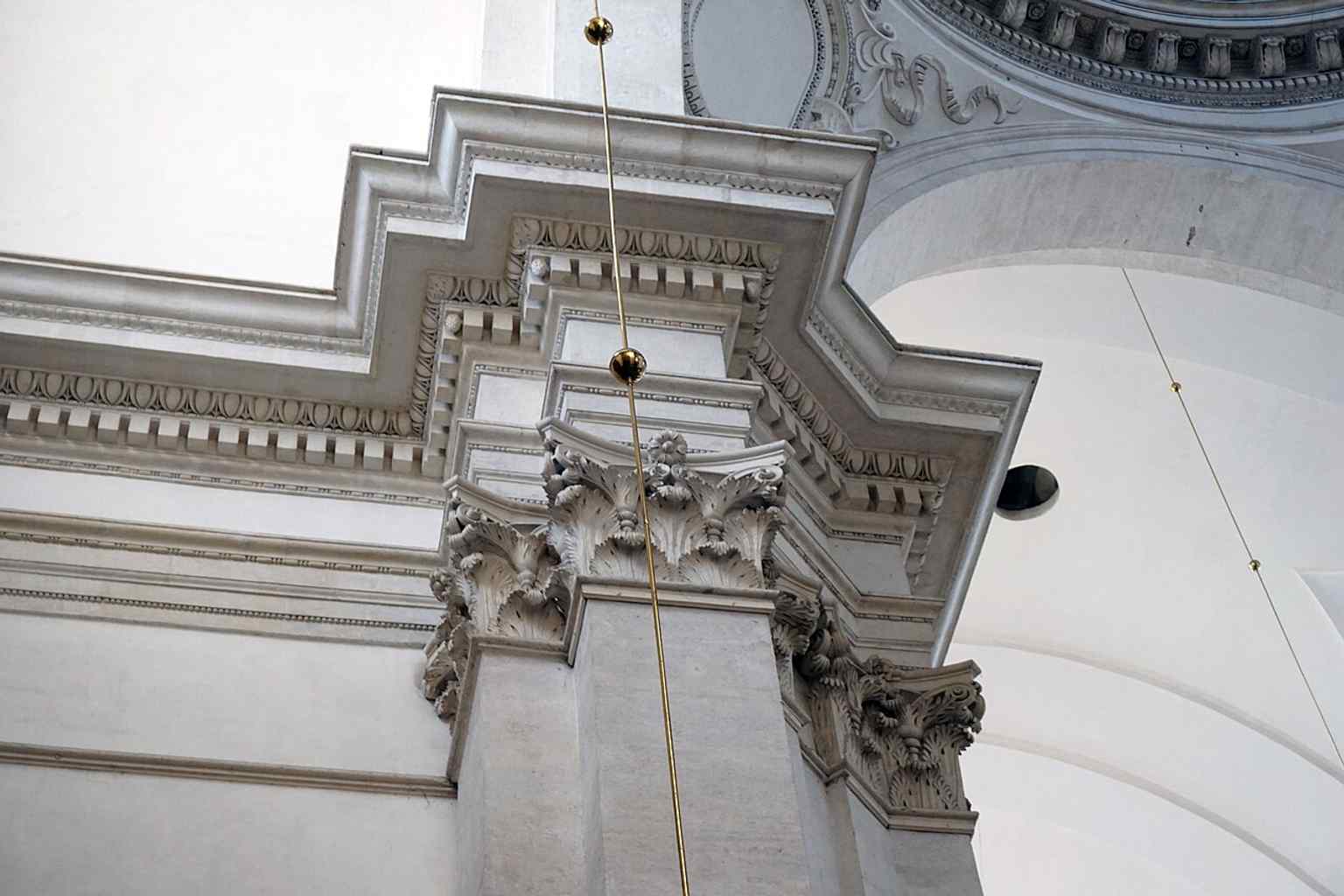
Inside, the church becomes a Baroque stage set. The nave, the main central hall, leads your eye toward a late Baroque high altar from the seventeen thirties. Stucco swirls over the vaults, side chapels open like private theaters, and light was arranged to focus attention on the priest at the altar while the great piers under the dome acted like stage wings. Take a glance at the interior photo in the app.
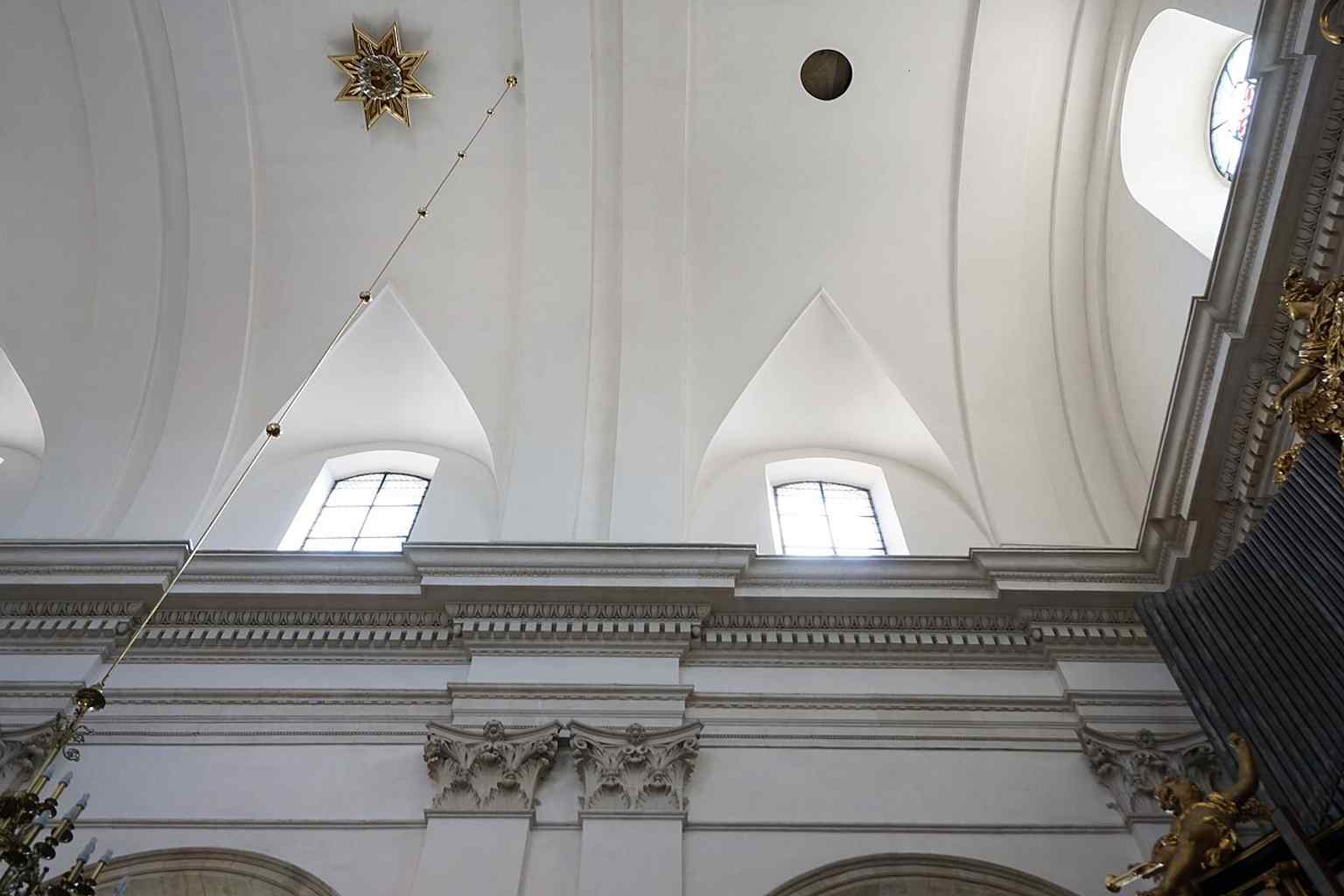
And here is the detail locals like to spring on people: inside this richly theatrical church hangs Poland’s longest Foucault pendulum, forty-six and a half meters long. On Thursdays, they demonstrate it to show the Earth turning on its axis. A scientific instrument swinging through a Jesuit church... that is Kraków in one image, really. Prayer, persuasion, and observation sharing the same ceiling.
Below ground, Piotr Skarga is buried in the crypt, later turned into a place of memory all its own. So this church has kept changing roles: Jesuit stronghold, merchant congregation, Orthodox church for a few years, parish church, and now also a national burial place in its underground pantheon.
Next, we trade Jesuit persuasion for Franciscan inwardness and a different kind of artistic reinvention at the Basilica of Saint Francis of Assisi, about a six-minute walk away. If you plan to go inside here later, it generally opens from late morning to late afternoon, with different hours on weekends.






.jpg)


