
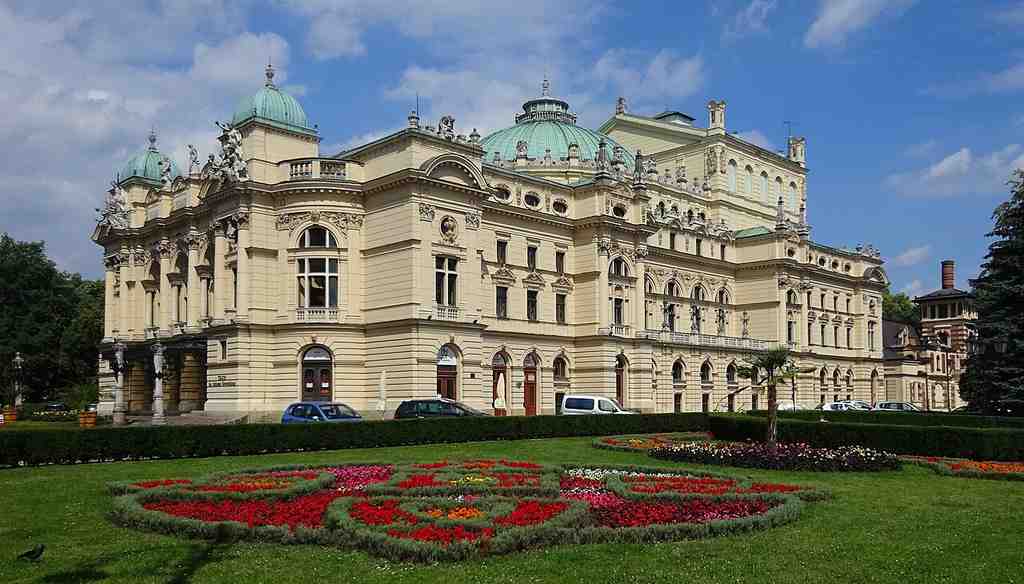
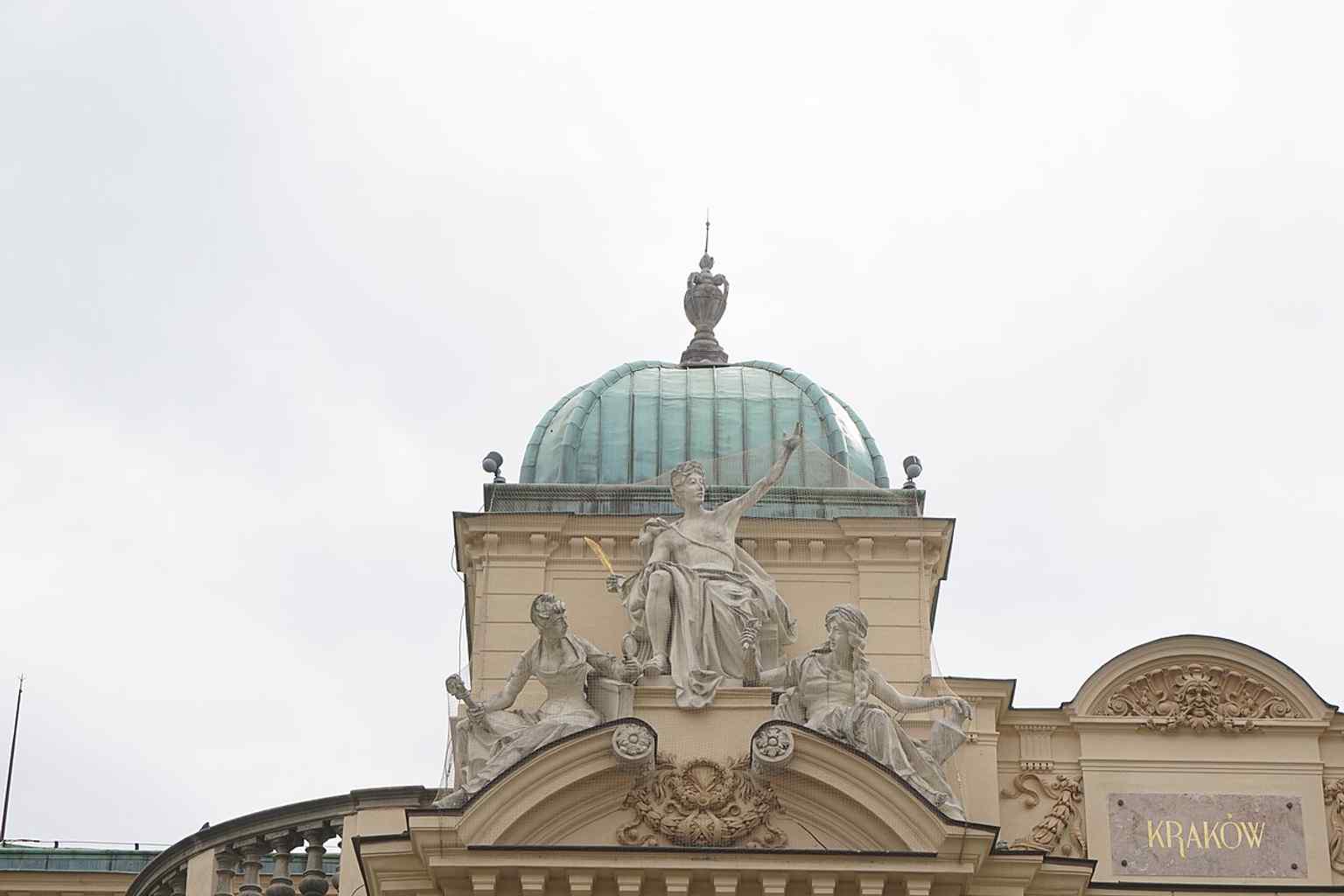
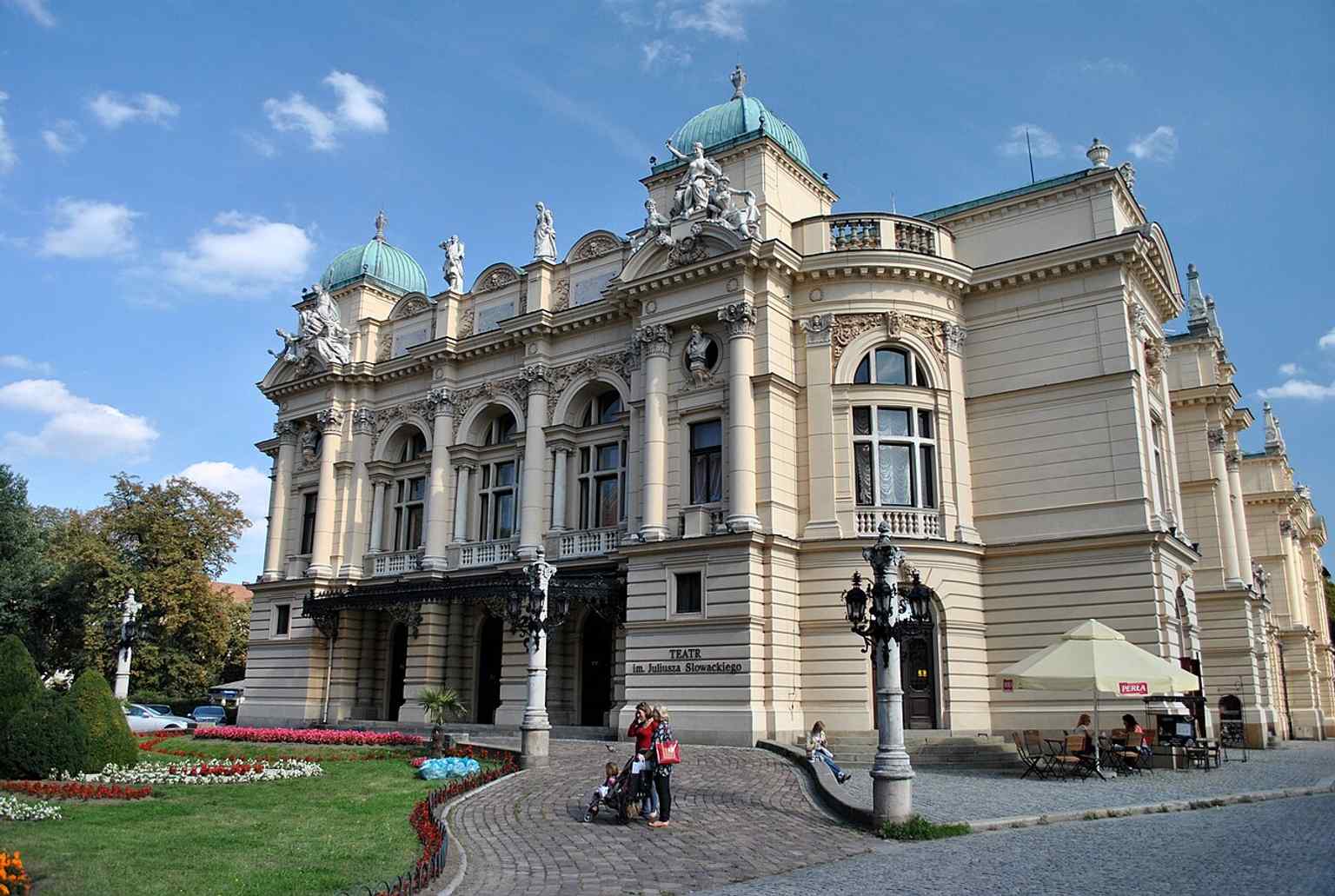
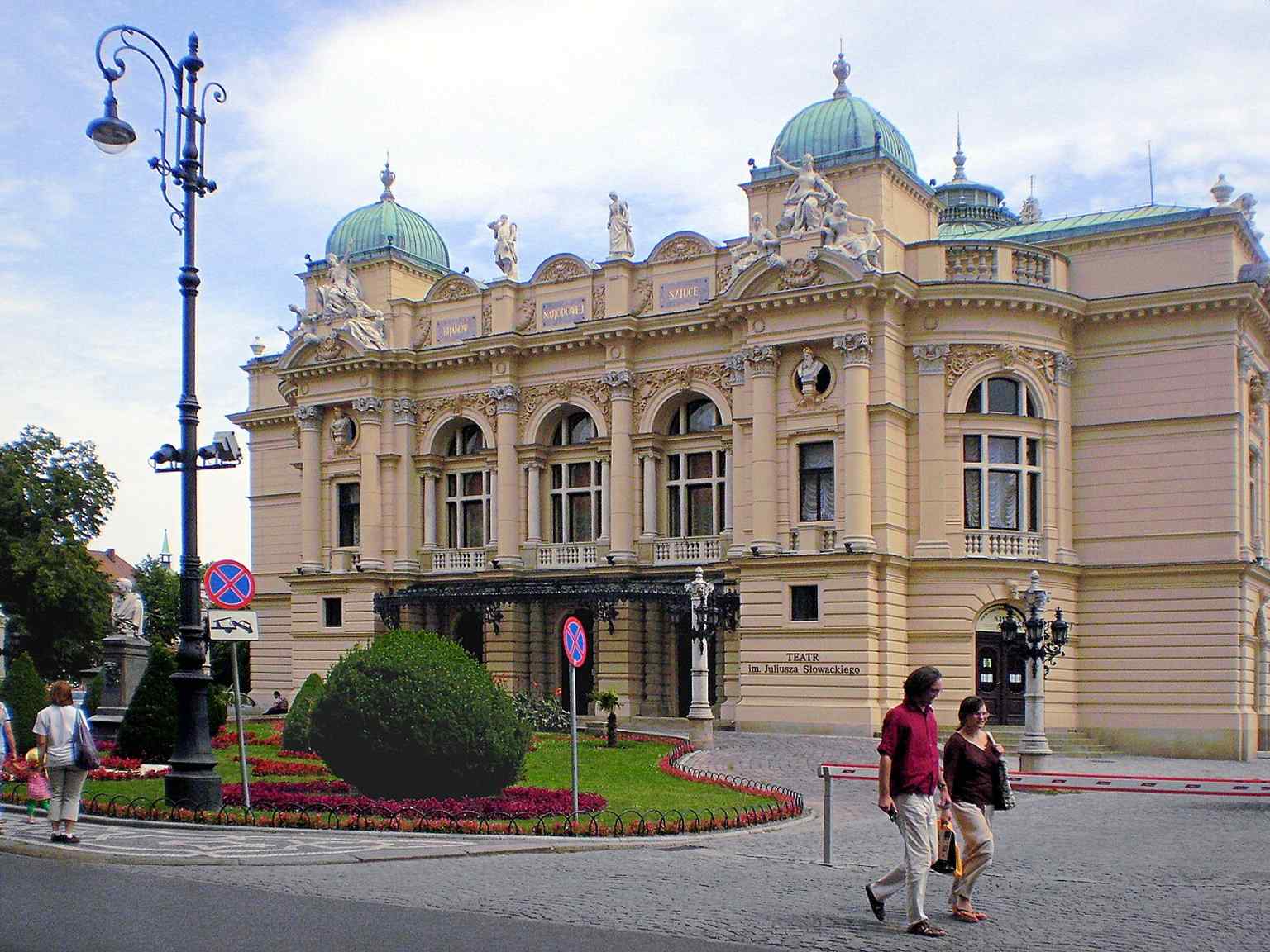
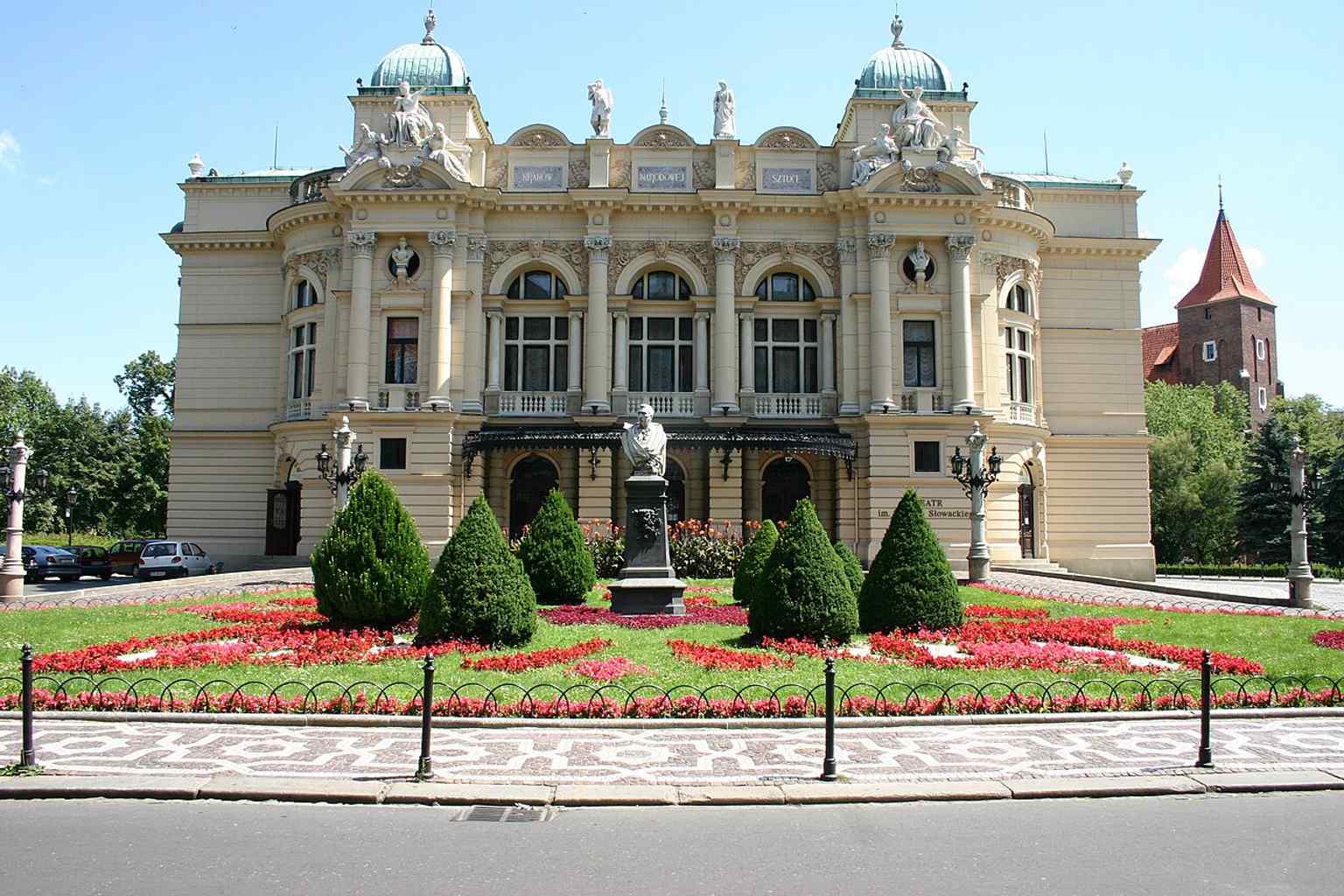
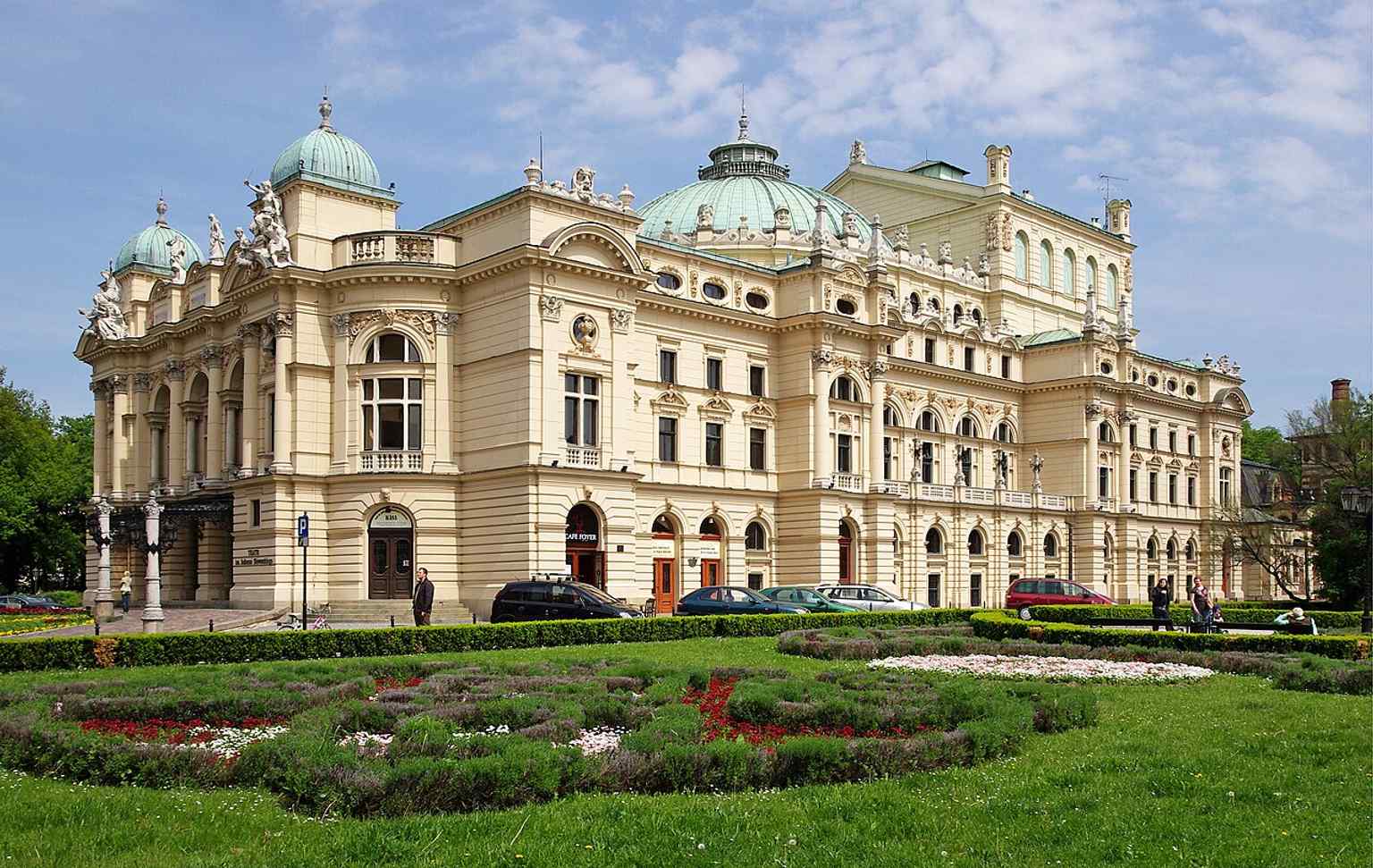
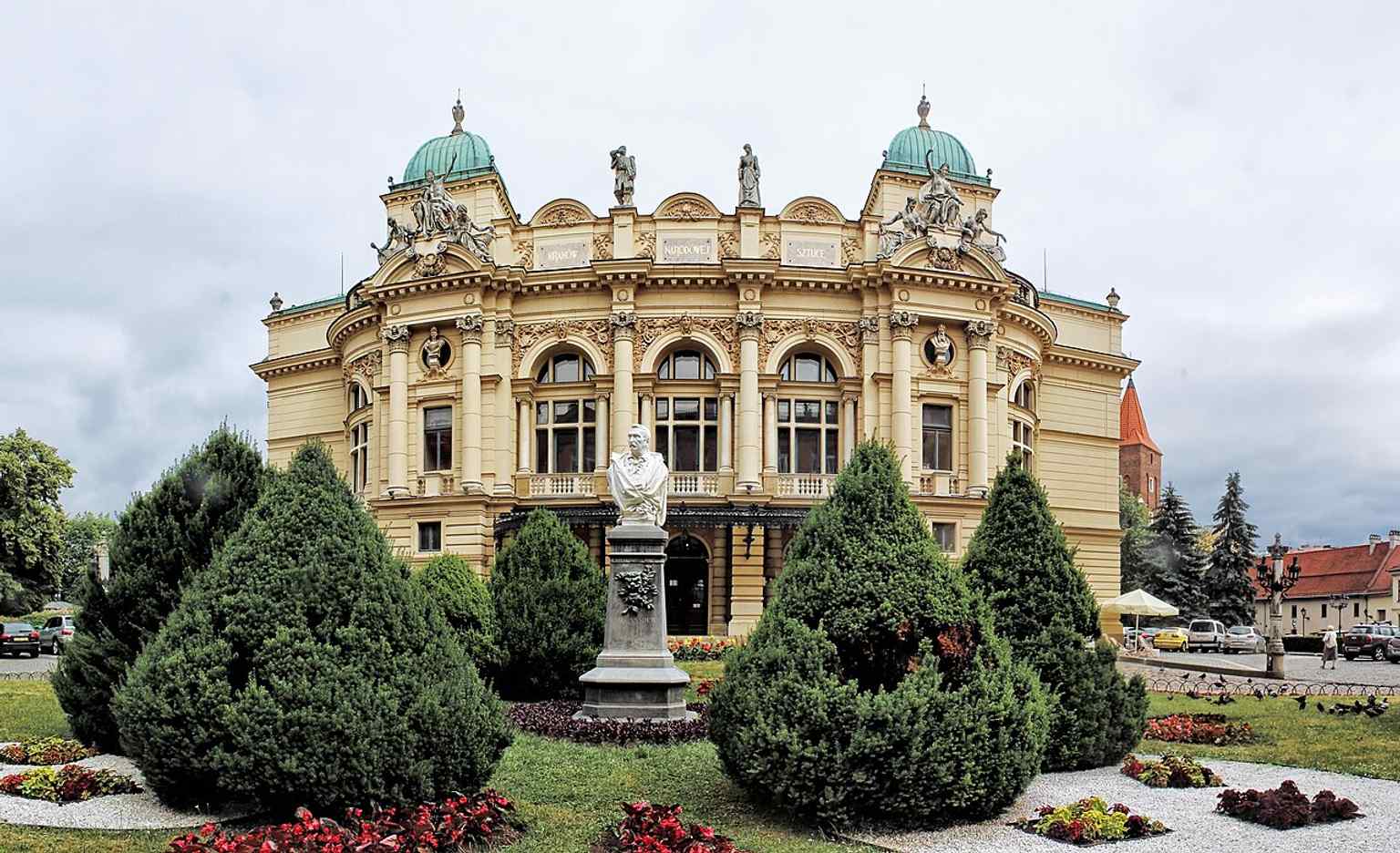
On your left, look for the pale stone façade with its rounded neo-Baroque wings and rooftop figures above the inscription “Kraków narodowej sztuce,” a grand civic theater wearing its ambitions quite openly.
Most people admire the theater and never suspect what stood here before: the Church of the Holy Spirit. Kraków chose, very deliberately, to replace sacred ground with a national stage. That tells you a lot about this city. It did not only inherit identity here... it staged it.
The push came from Walery Rzewuski, a photographer and city councilor who kept pressing City Hall from the eighteen seventies onward. He had the organizational energy of a Piotr Skarga type, only with committee meetings instead of sermons. The city finally agreed, and a thirty-six-year-old architect, Jan Zawiejski, won the job. He designed this building between eighteen ninety-one and eighteen ninety-three to echo the Paris Opera and the Vienna Opera, so Kraków would read as confidently European, not provincial.
That confidence showed from the start. This was the first building in Kraków with electric lighting. The foundation stone went down in June of eighteen ninety-one, with Helena Modrzejewska and Antonina Hoffmann placing documents beneath it. When the theater opened on the twenty-first of October, eighteen ninety-three, the first program offered Mickiewicz, Słowacki, and Fredro, and for five weeks the repertoire stayed entirely Polish. In nineteen oh nine, the house took the name of Juliusz Słowacki.
And then it became more than handsome architecture. Around the turn of the century, this stage helped reinvent Polish theater. Stanisław Wyspiański premiered Wesele here in nineteen oh one, one of the great shocks in Polish culture, and he staged all parts of Dziady here too. Actors shifted away from grand nineteenth-century declamation toward quieter speech, tension, even meaningful silence. Theater people love calling that innovation. Audiences usually call it “finally, someone sounds human.”
If you check the interior image in the app, you’ll see the auditorium and the famous painted curtain by Henryk Siemiradzki, part of the theater’s own mythology of grandeur.
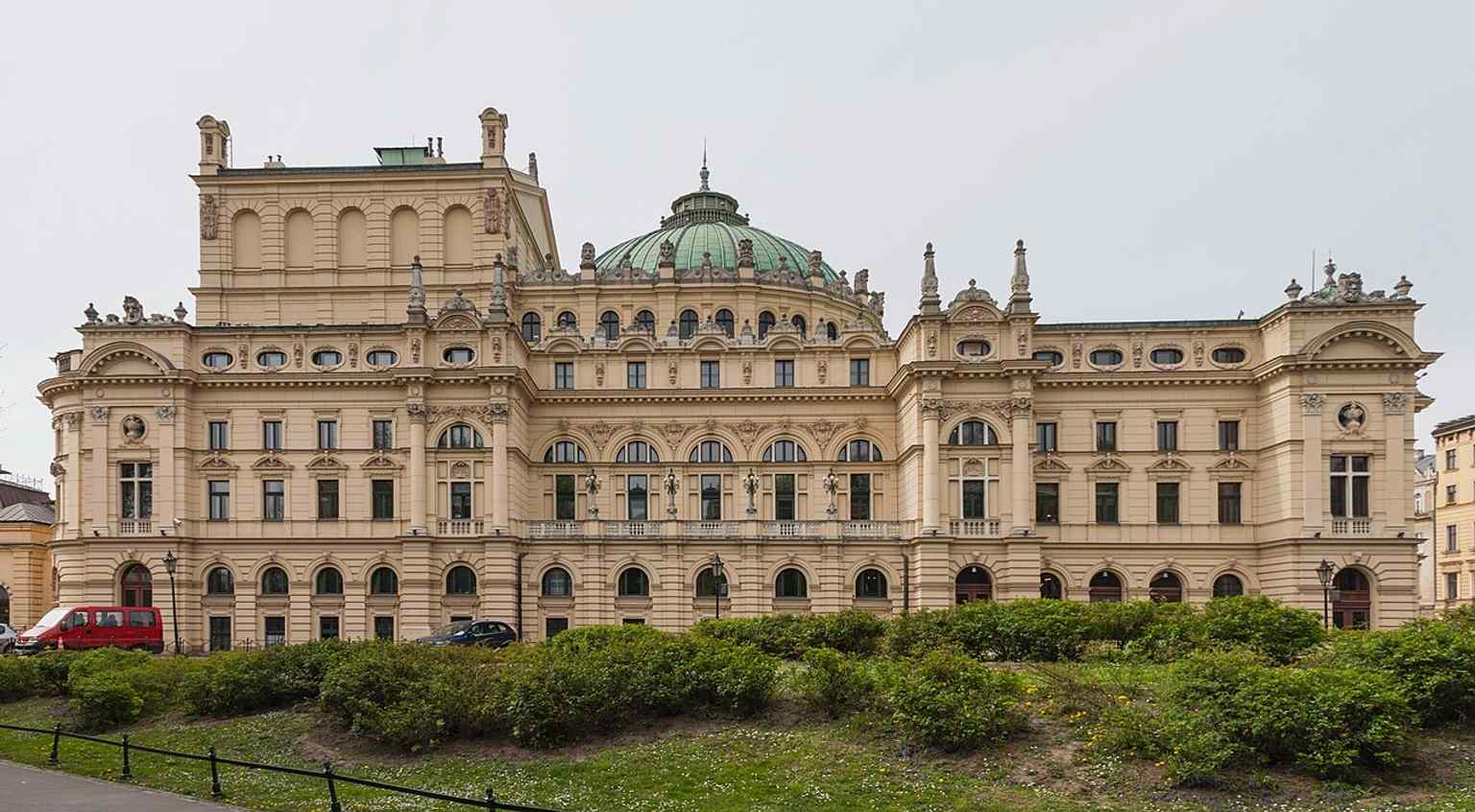
This square changed too. In older views, traffic pushed right up toward the façade; now the building faces a calmer public space, more fitting for a theater that wants an entrance, not a parking problem. Take a quick look at the comparison image in the app.
The story did not stay elegant. During the occupation, the Germans took over the building for their own theater, while a small group of Polish technical staff quietly saved treasures inside, including Solski’s decorated dressing room and the theater library. Later generations restored the house again and again, even returning the auditorium closer to Zawiejski’s original layout.
From here, we leave the public stage and head toward a museum of things Kraków chose to rescue rather than lose: the Czartoryski Museum, about four minutes away. If you plan a return, the theater’s listed visitor hours are Monday through Friday from ten to four, and it closes on weekends.






.jpg)
.jpg)


