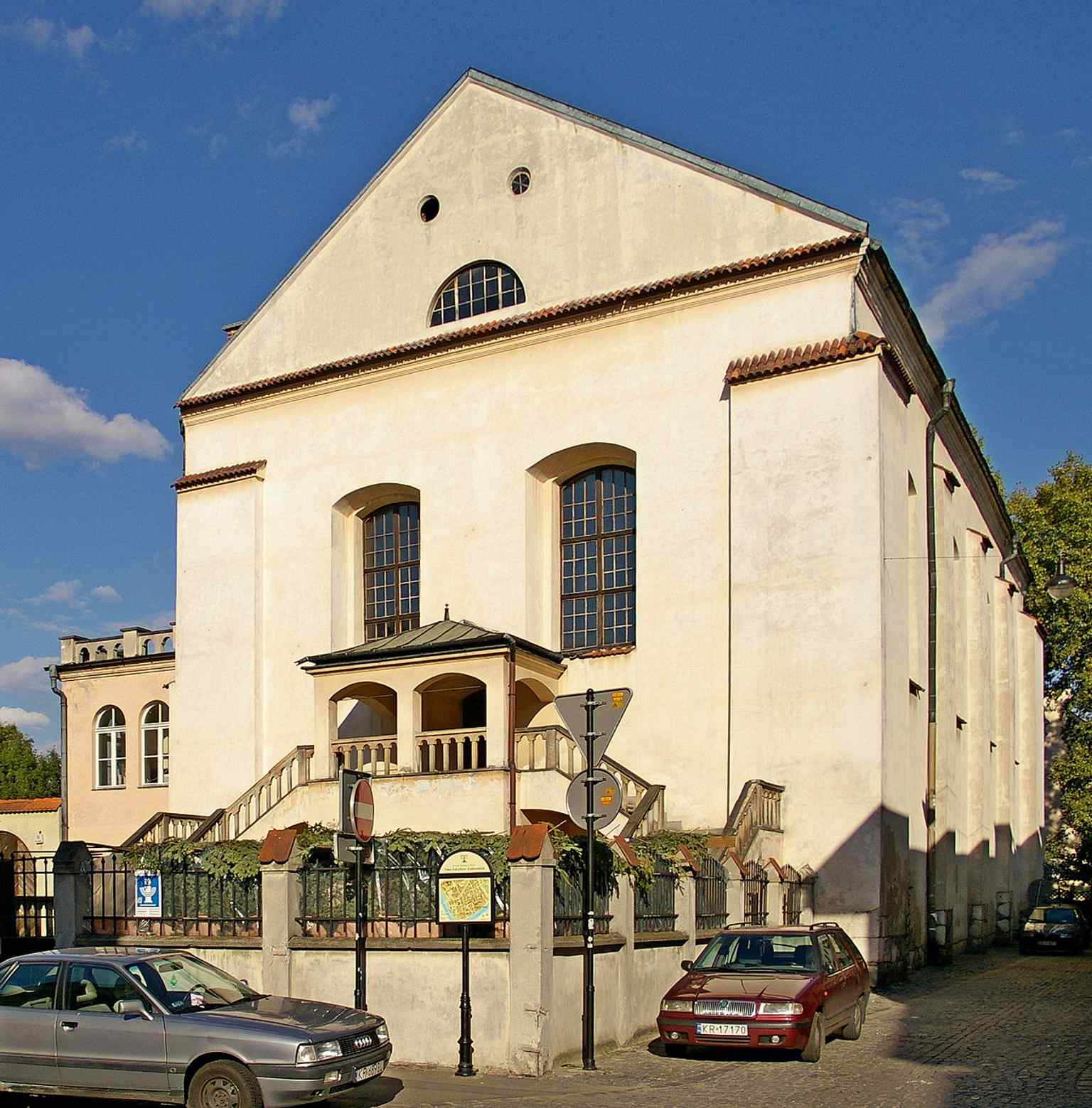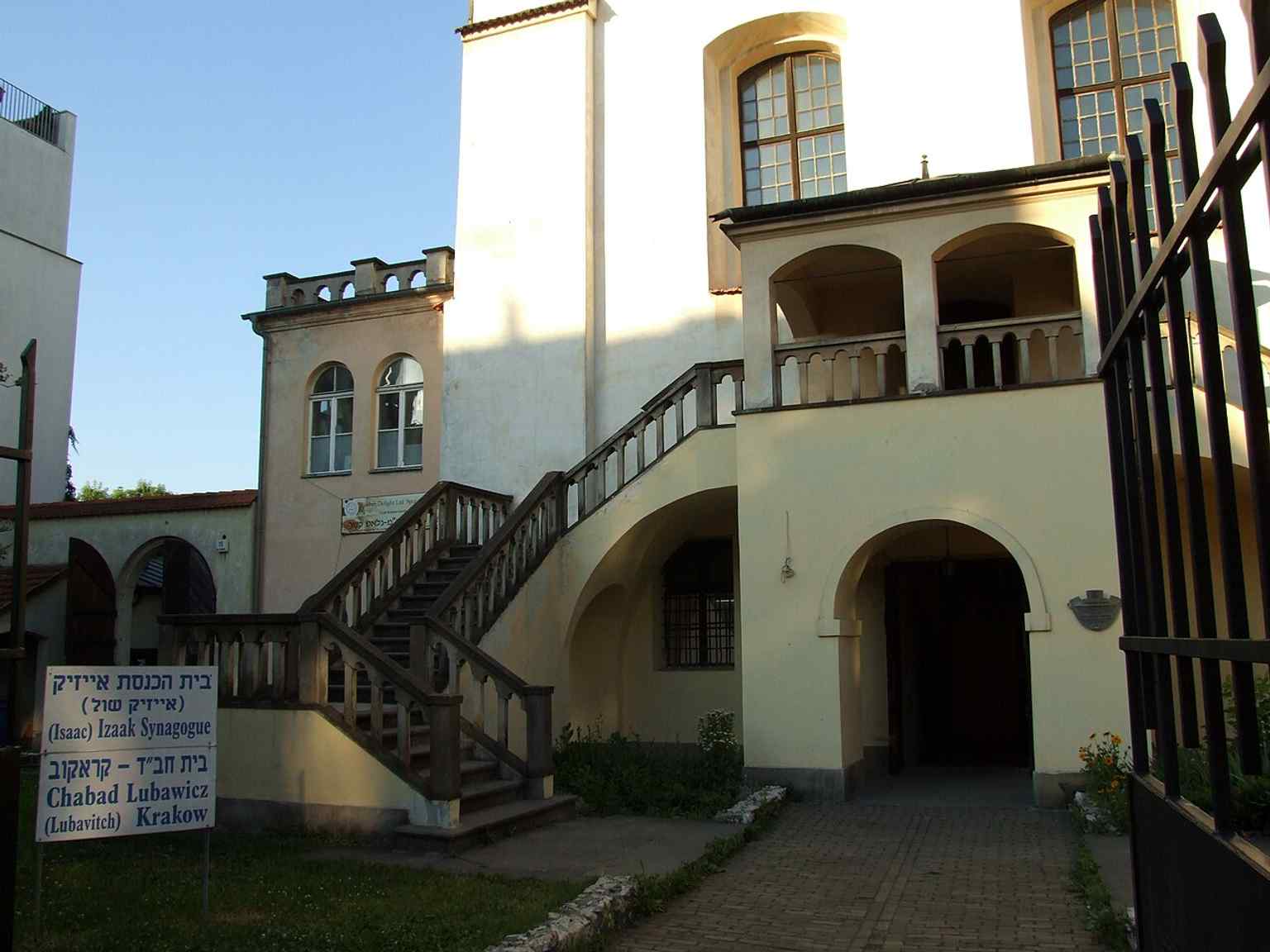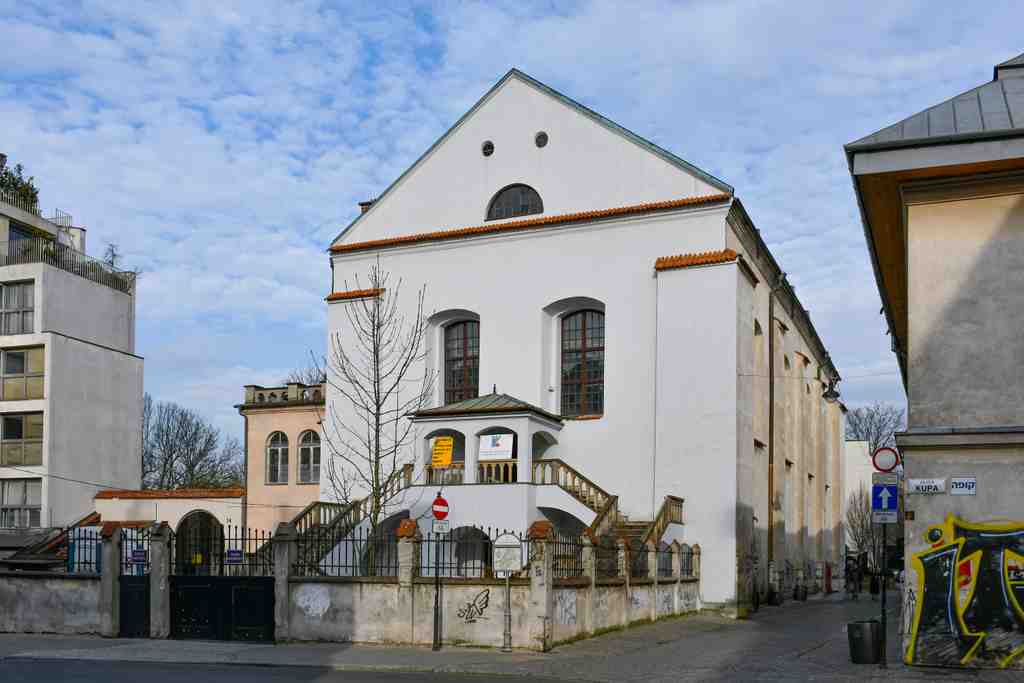
On your right, look for a pale stone-and-plaster synagogue with a tall rectangular facade, arched windows, and a broad exterior stairway rising to the women’s gallery.
This is the Izaak Synagogue, one of the grandest Jewish buildings in Kazimierz, and from the very start it asks a rather good question: did this place begin with a dream, with family gratitude, or with official paperwork? The honest answer is all three.
Its founder, Izaak Jakubowicz, known as Isaac the Rich, served as banker to King Ladislaus the Fourth. He had the means, and he hired Francesco Olivierri to design this early Baroque synagogue, completed in sixteen forty-four. But locals quietly keep another version alive. They say Izaak’s wife, Braindla, urged him to found it in thanks for her family’s good fortune, even rescue. Most visitors hear about the wealthy donor. Fewer hear the domestic motive, a wife turning gratitude into architecture.
And that matters in Kazimierz, because Jewish monumental life here did not grow in comfort. After the fire and expulsion of fourteen ninety-four from medieval Kraków, Jews were pushed out of the old city and concentrated here. Over time, this district filled with prayer houses, schools, cemeteries, trade, argument, and memory. In other words, the community did not simply arrive and build; it had to rebuild its world after being forced to move.
Even this synagogue had to be negotiated into existence. When the roof was already on, the parish priest of Corpus Christi, Marcin Kłodziński, objected and halted the work. He complained that Christian clergy carrying the sacrament might have to pass the synagogue on a nearby street. Izaak appealed to Bishop Jakub Zadzik, who upheld the royal permission to build, and only then did the project move toward completion. So before a single prayer was said inside, the building had already become a public argument about who might be visible, and where.
Then there is the famous legend. A rebbe, Simcha Bunim of Peshischa, retold the story of poor Ayzik Jakubowicz, who dreamt of treasure under a bridge in Prague. He travelled there, found soldiers guarding the bridge, confessed his dream to an officer, and heard the officer laugh that he himself had dreamt of treasure in the oven of a poor Jew in Kazimierz named Ayzik son of Jacob. Ayzik returned home, broke apart his own oven, found the treasure, and became rich. It is a marvellous tale, slightly absurd and perfectly serious at once: search the world, and you may discover the thing you needed was at home.
If you glance at the image on your screen, you can see how this synagogue still commands its patch of Kazimierz. Inside, conservators later uncovered painted prayers on the walls, and restored traces of the lost interior. The Aron Kodesh, the sacred cabinet that holds Torah scrolls, was once especially admired here; another image shows that vanished splendour. The Nazis destroyed the furnishings, including the bimah, the raised platform where the Torah is read, and later the building served as a sculptors’ workshop and even a theatre space, with Tadeusz Kantor working here as a set painter. In Kazimierz, sacred spaces rarely keep just one identity; conflict, damage, repair, and retelling keep pressing new layers into them.
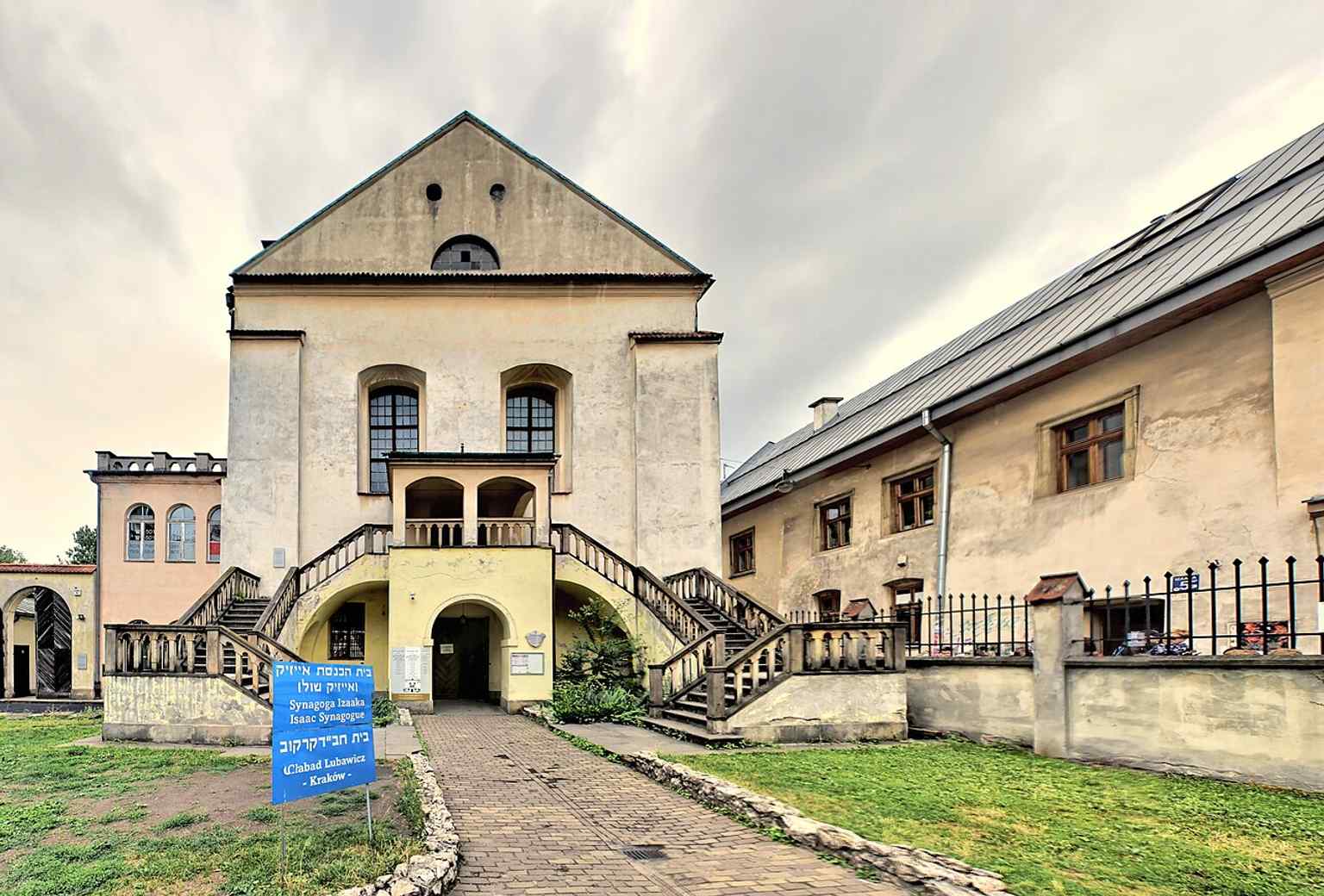
So here, even before you cross the threshold, a synagogue already stands as a contest between dream and document, prayer and public law. In about one minute, we’ll continue to the High Synagogue. If you plan to look inside here another time, it generally opens from ten in the morning, and stays closed on Saturdays.