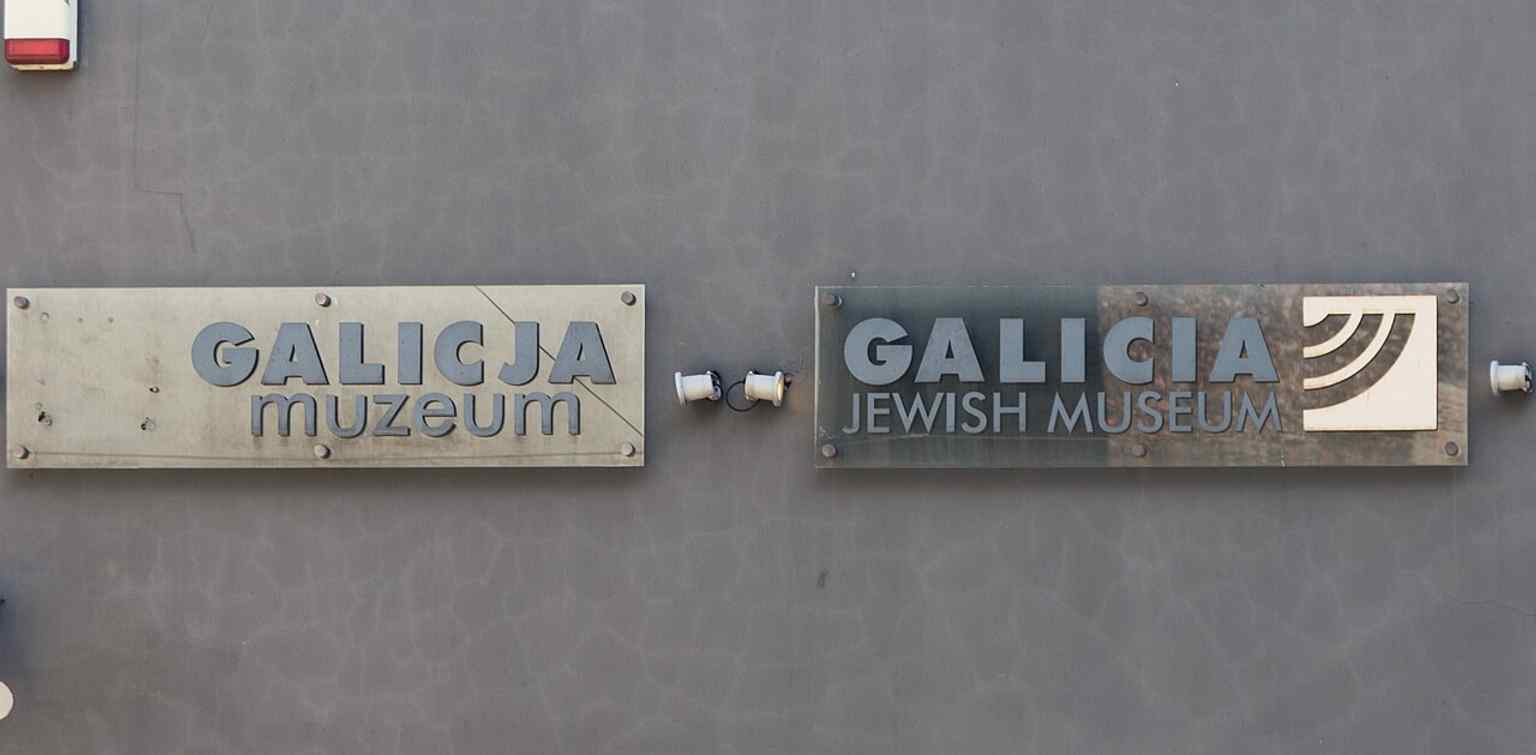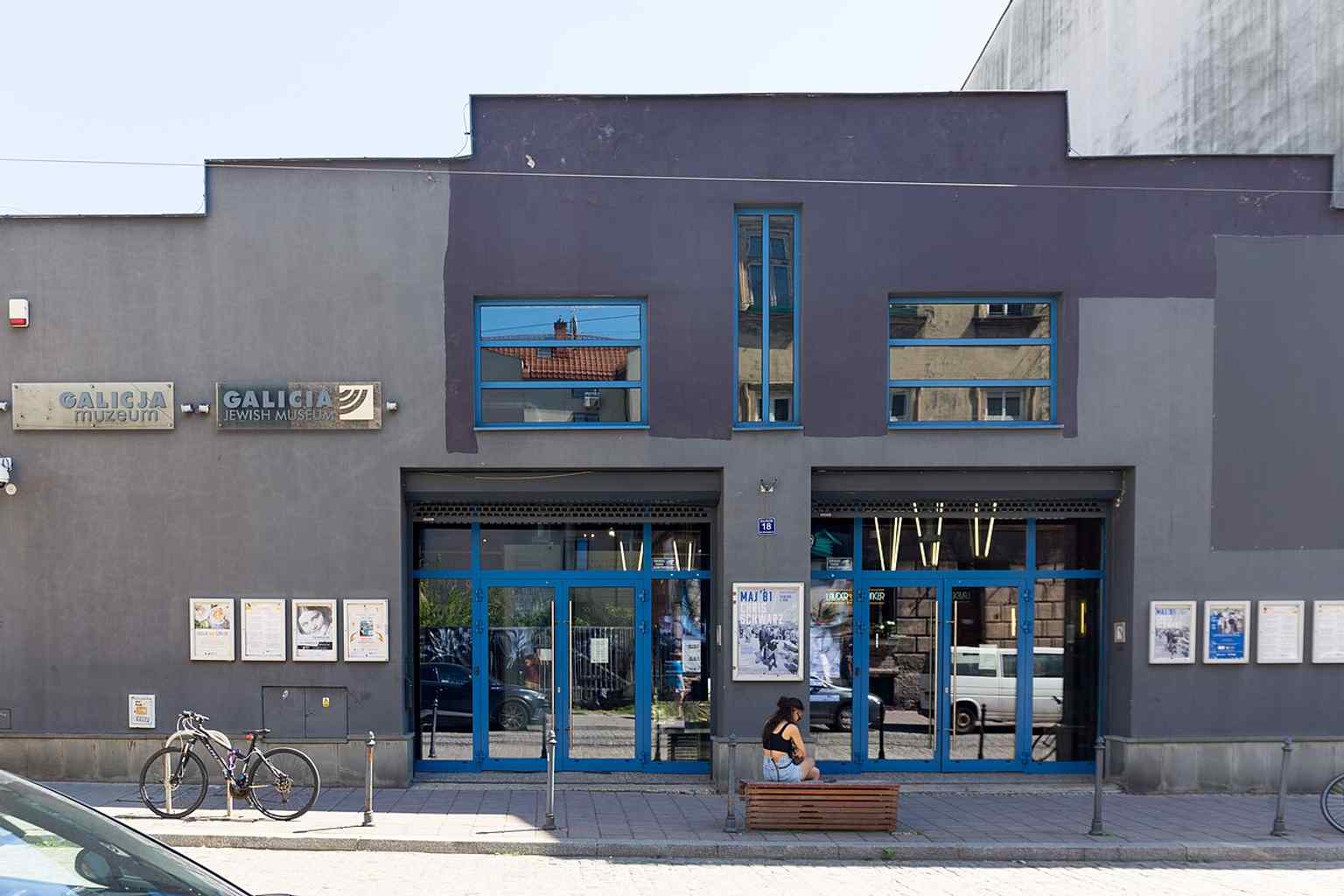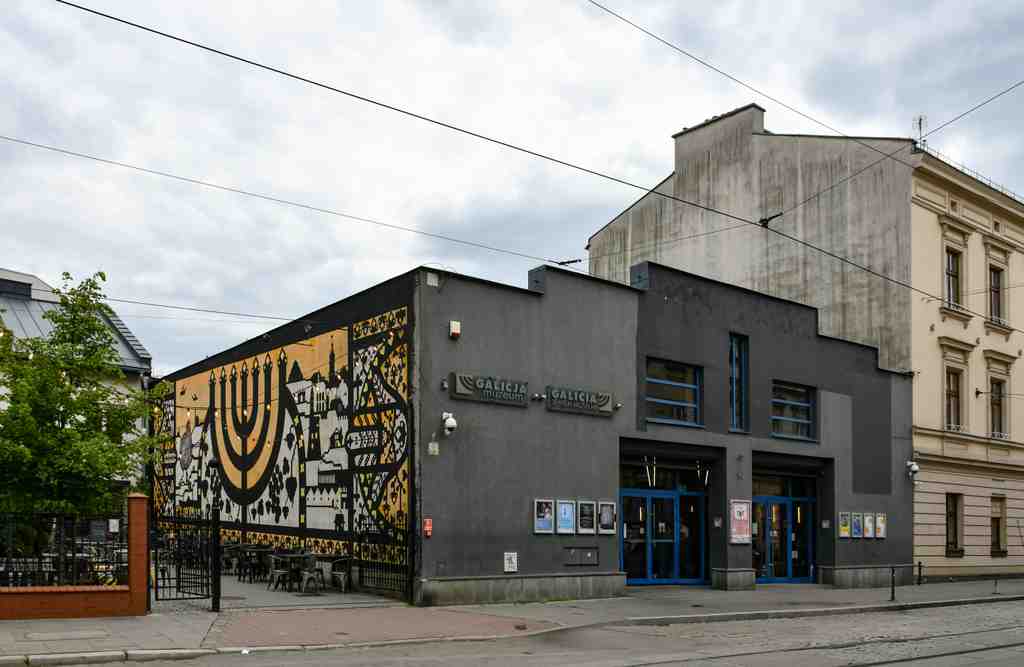
On your left, look for a clean modern facade of pale brick and broad glass rectangles, with a recessed entrance marked by the museum’s name.
From where you stand, the building looks restrained, almost careful. That is quite fitting, because this museum does not try to replace what was lost. It tries to make loss readable.
The Galicia Jewish Museum opened here on Dajwór Street in April, two thousand and four. A British photojournalist, Chris Schwarz, created it with Professor Jonathan Webber, working with UNESCO, the United Nations Educational, Scientific and Cultural Organization. Schwarz’s connection was personal: his father came from Lwów, and Schwarz did not approach Galicia as a neat historical subject. He approached it as unfinished family terrain. Webber later recalled that Schwarz had already turned his own house in Britain into a cultural salon, with concerts, films, lectures, and workshops. Then he sold that house and moved to Poland to help finance this place. There is something rather bracing about that. Not a committee first, not a grand state plan. One man deciding memory required bricks, salaries, and a front door.
His great project here was Traces of Memory, a twelve-year collaboration with Webber. Schwarz travelled through roughly one hundred and fifty towns and villages, taking about one thousand photographs of synagogues, cemeteries, ruined prayer houses, massacre sites, and surviving fragments of Jewish life across Galicia. He waited for the right light. He crossed deep snow in Birkenau. He worked with the stubborn patience of a field naturalist, except what he was tracking was human presence after catastrophe. The exhibition does not simply say, “Here is what once existed.” It asks five harder questions: how Jewish life survives in ruins, what culture once looked like, how the Holocaust marked the landscape, how people remember, and who is making memory now.
If you glance at the image in the app, the interior galleries are spare and photographic, almost disciplined, so the evidence can do the talking. Another image shows a klezmer concert here, which reminds you this is not only a place of mourning but a working cultural house.
That mattered even more after Schwarz died in two thousand and seven, aged fifty-nine. Rabbi Michael Schudrich said he had constantly fought for funding, because an independent institution like this still felt unusual in Poland. Kate Craddy, who became director after him, said Schwarz had put procedures in place so the museum could continue. That sounds mundane, but it is not. Filing systems, budgets, bilingual programming in Polish and English, school workshops, survivor meetings, lectures, concerts: these are the quiet mechanics that keep memory from collapsing into sentiment.
And the museum kept adjusting. By two thousand and twelve, it recognised that the landscape Schwarz documented had changed. Some synagogues had been restored, new memorials had appeared, and Jewish life had begun to show itself again. So the museum updated its core work rather than pretending the story had frozen.
That, perhaps, is the real lesson here. Heritage does not preserve itself. Someone frames it, someone pays for it, someone argues over it, and someone keeps it legible for the next person who arrives. In about three minutes, we’ll continue to the Old Synagogue, where that question of survival takes on stone and weight. If you plan to come back inside, the museum is open every day from ten in the morning until six in the evening.