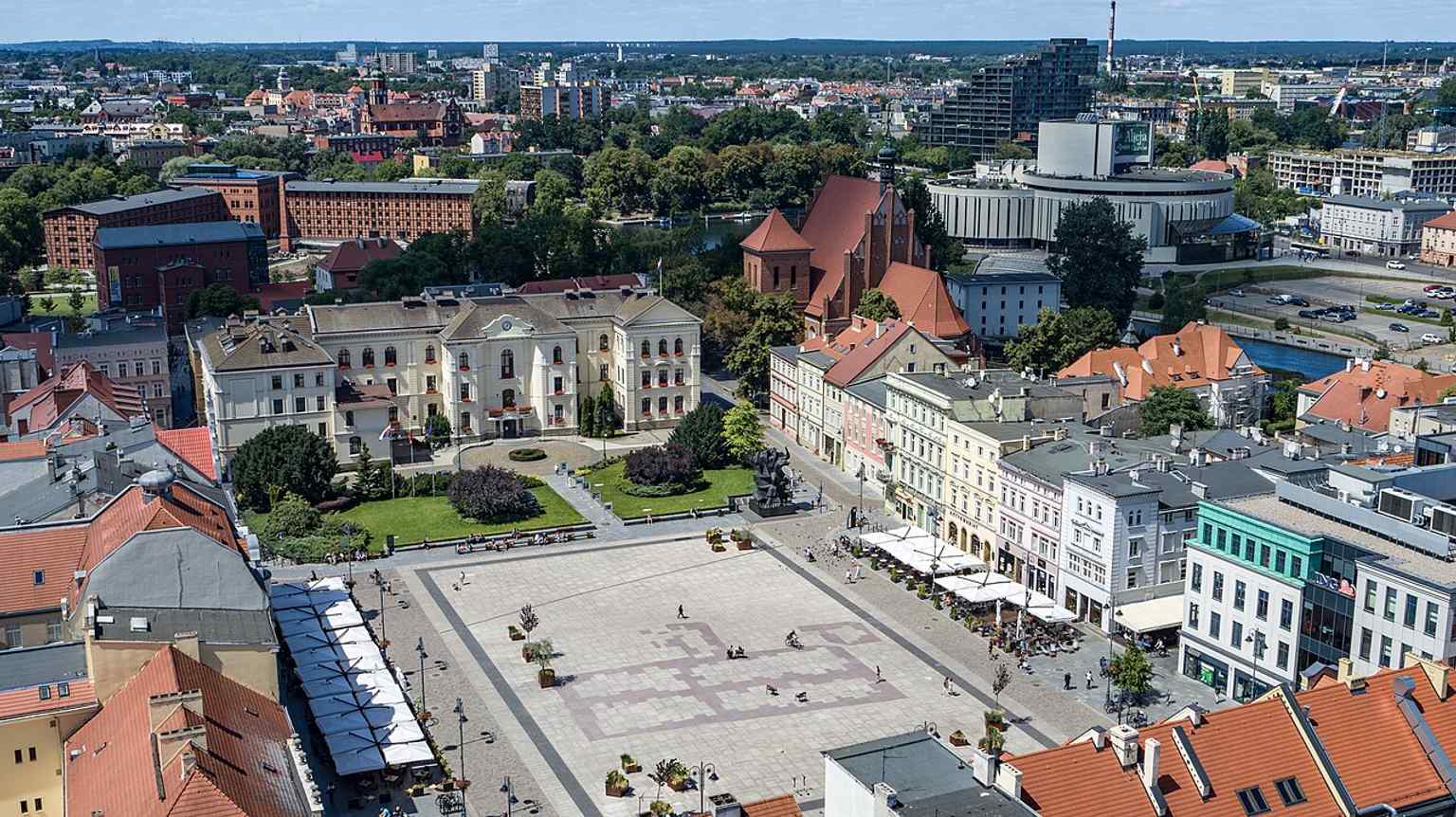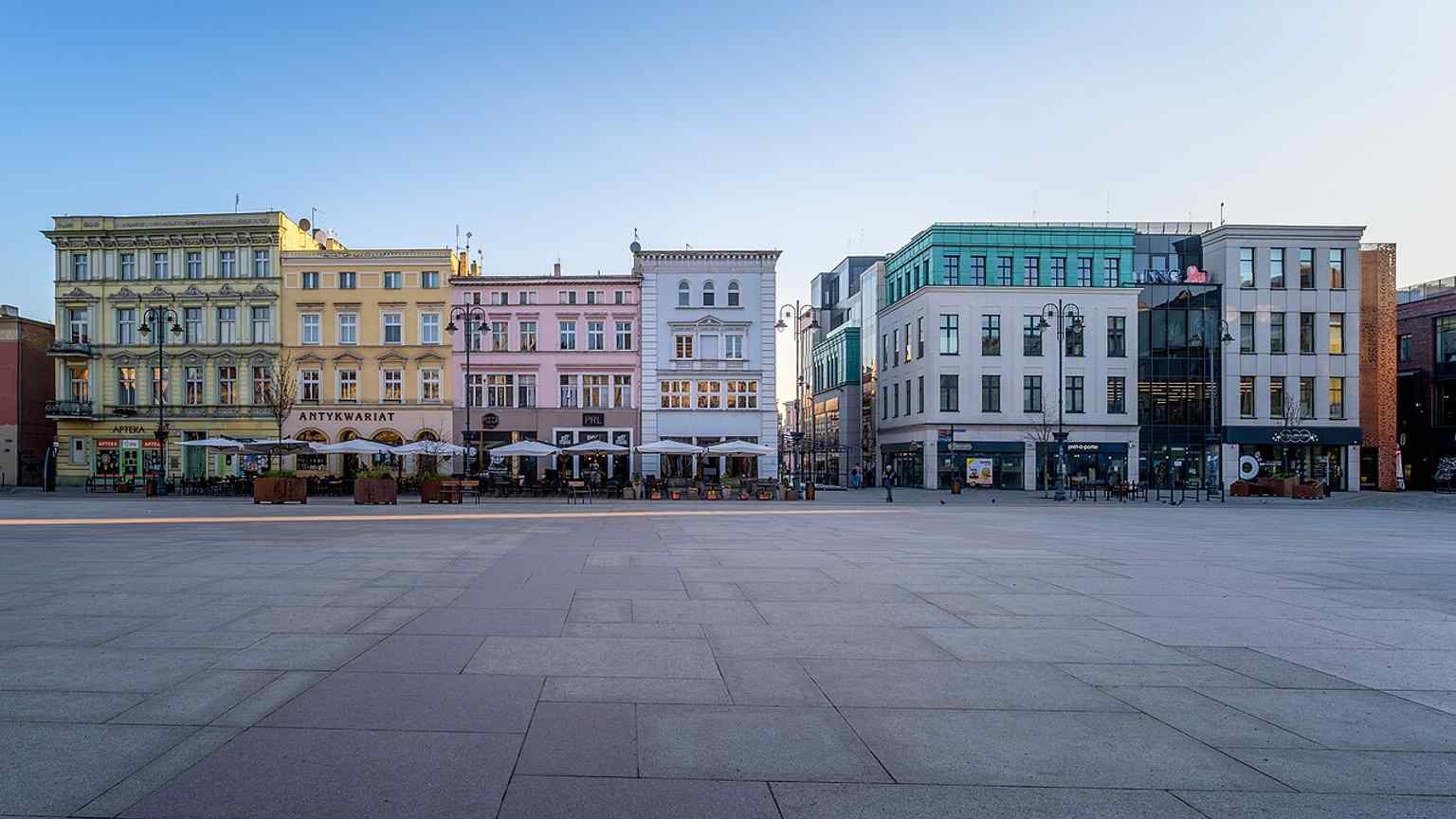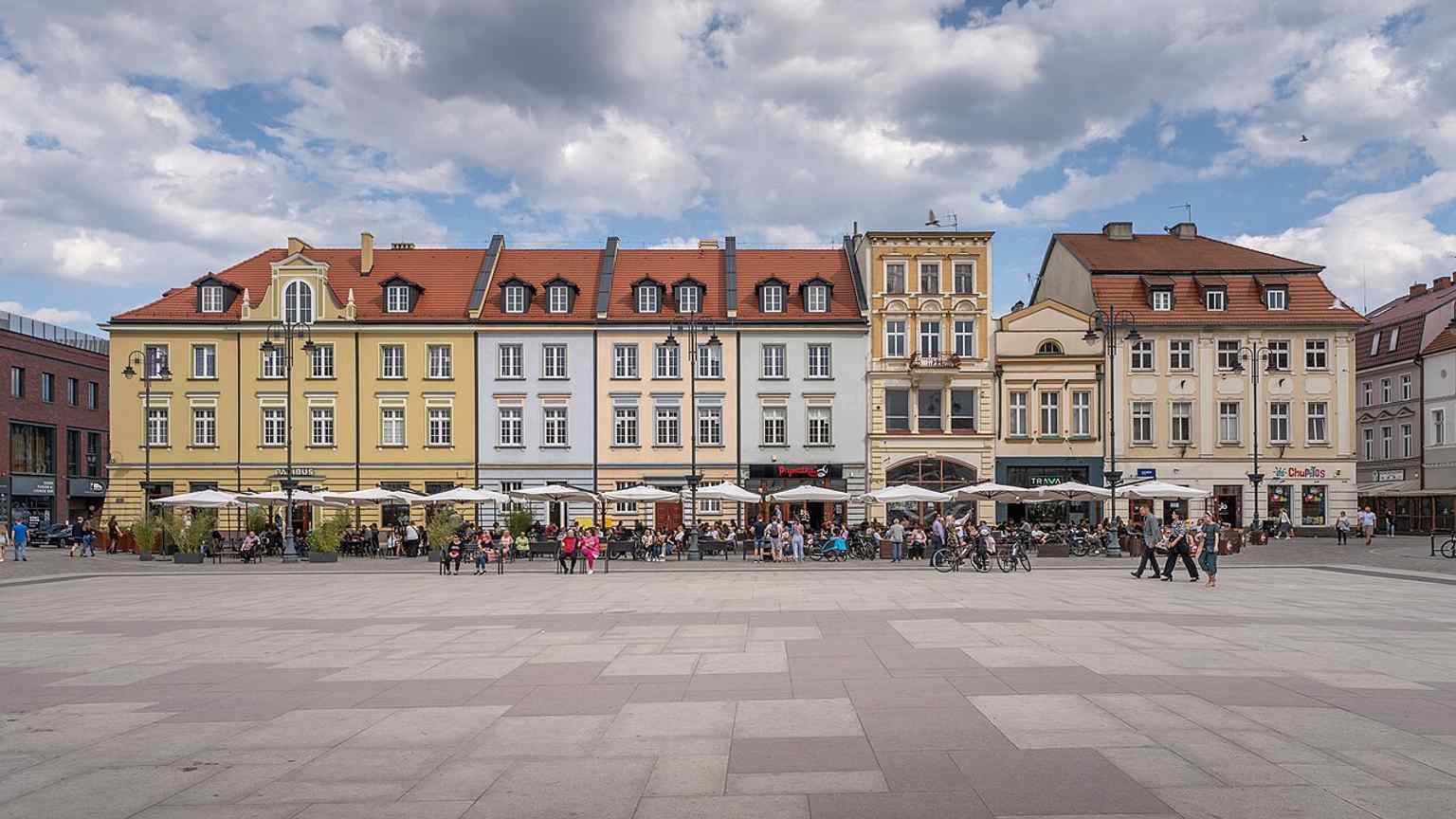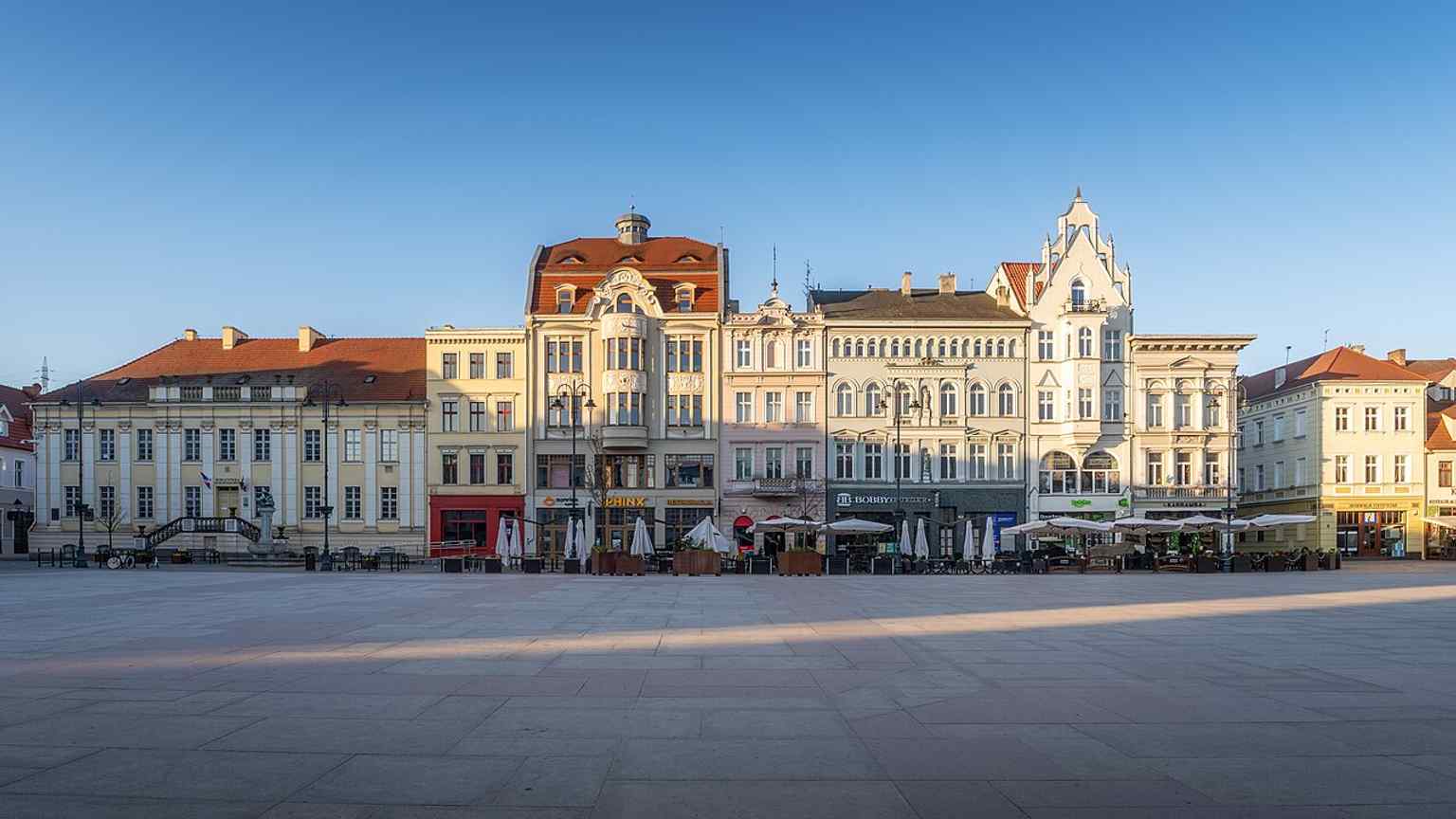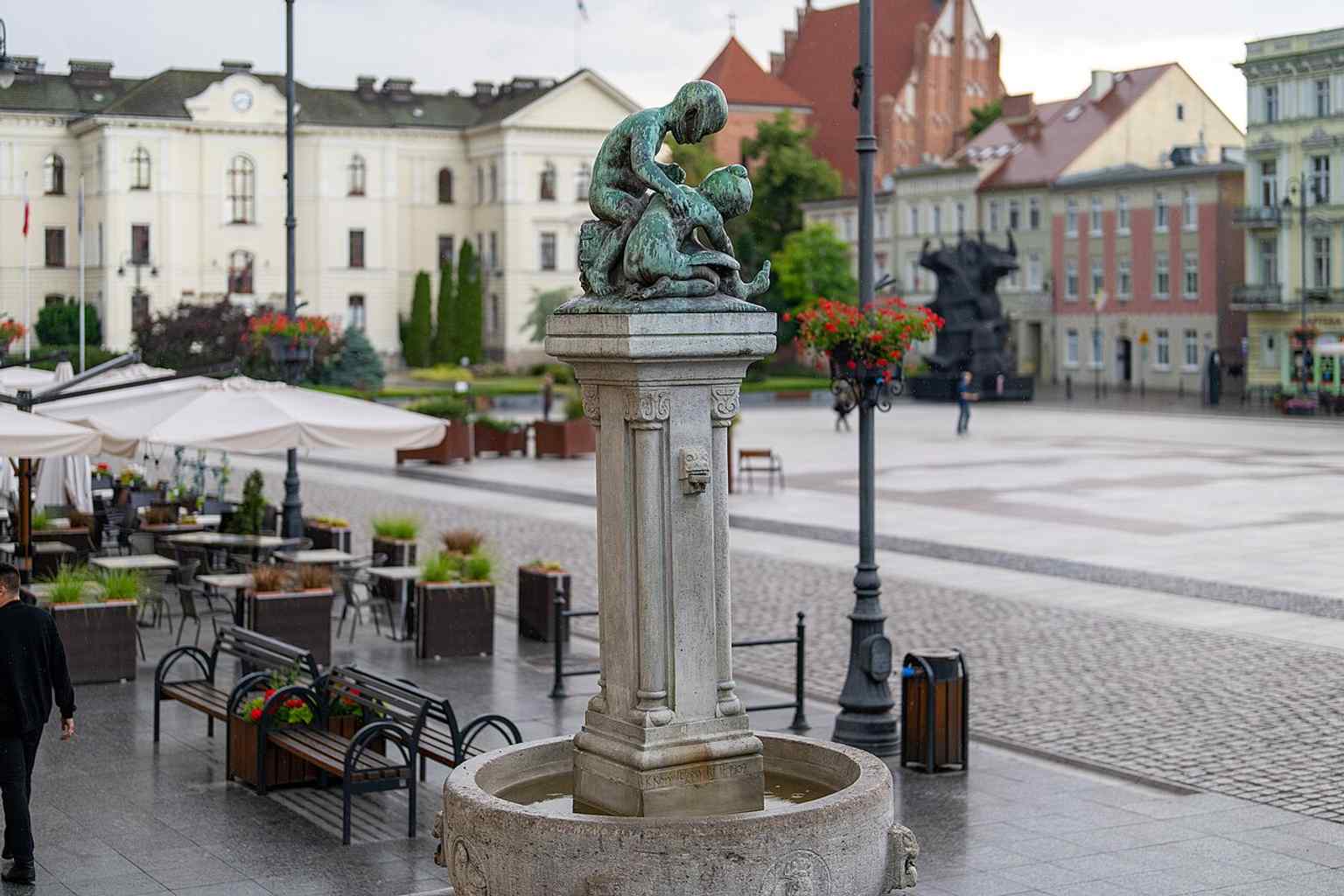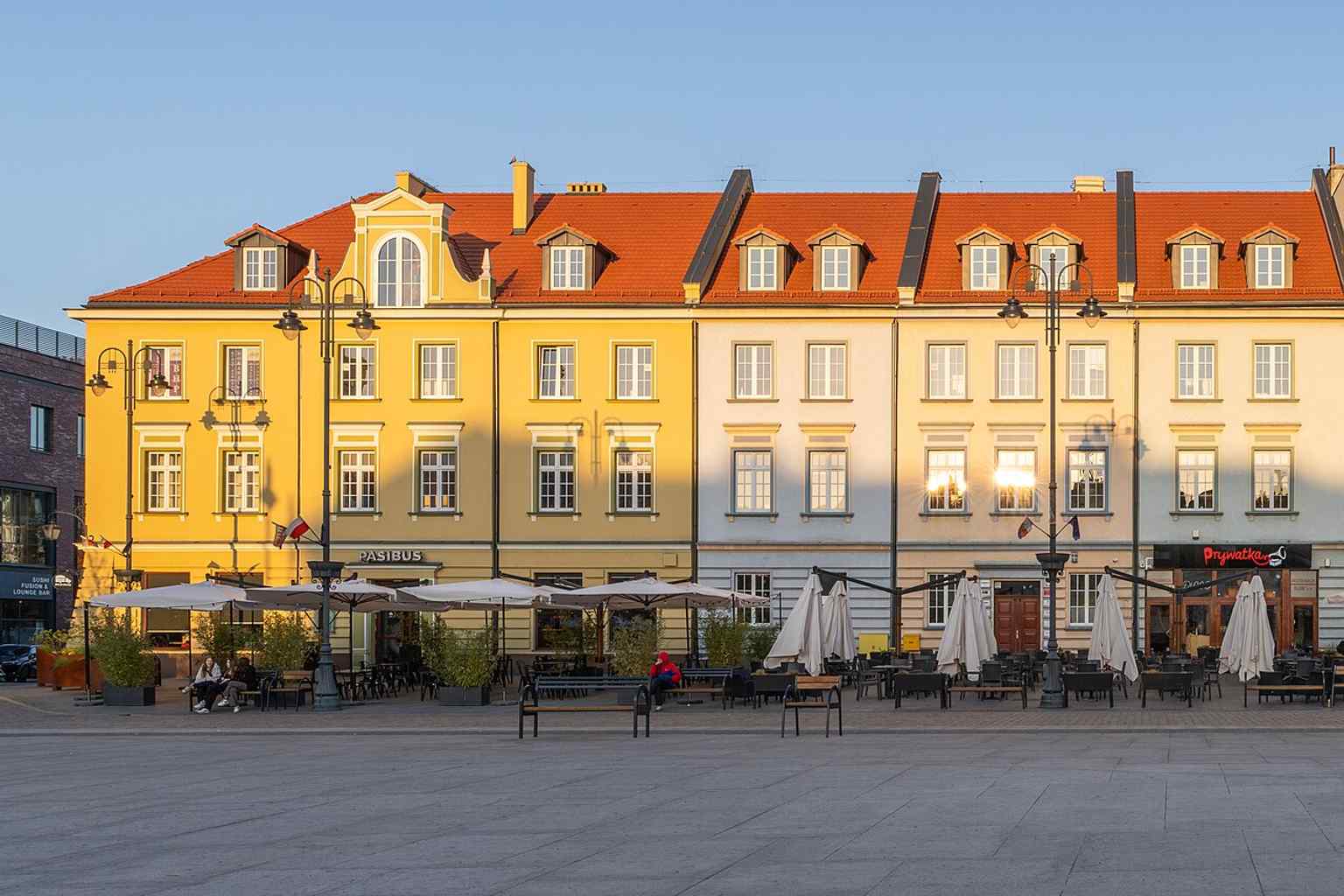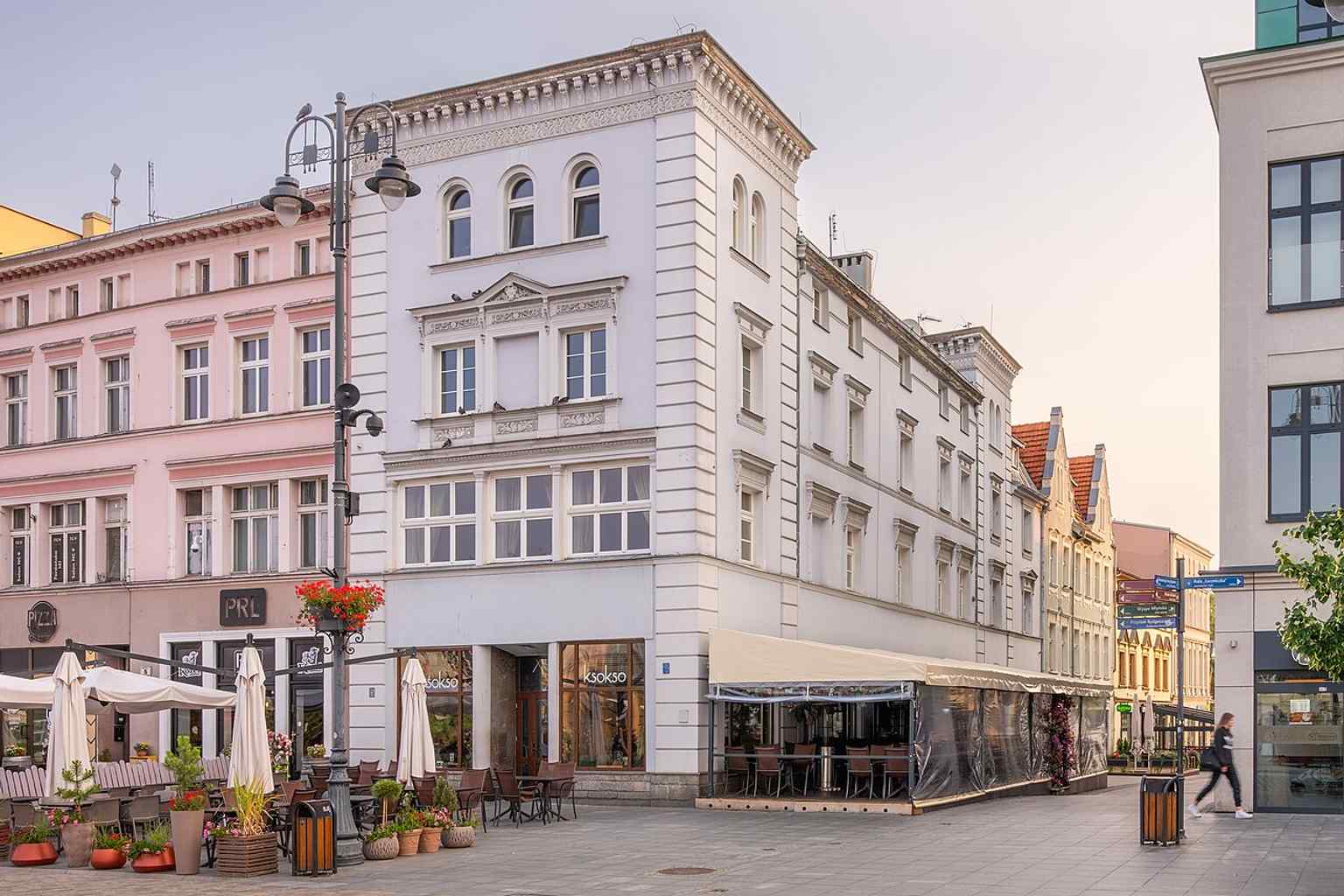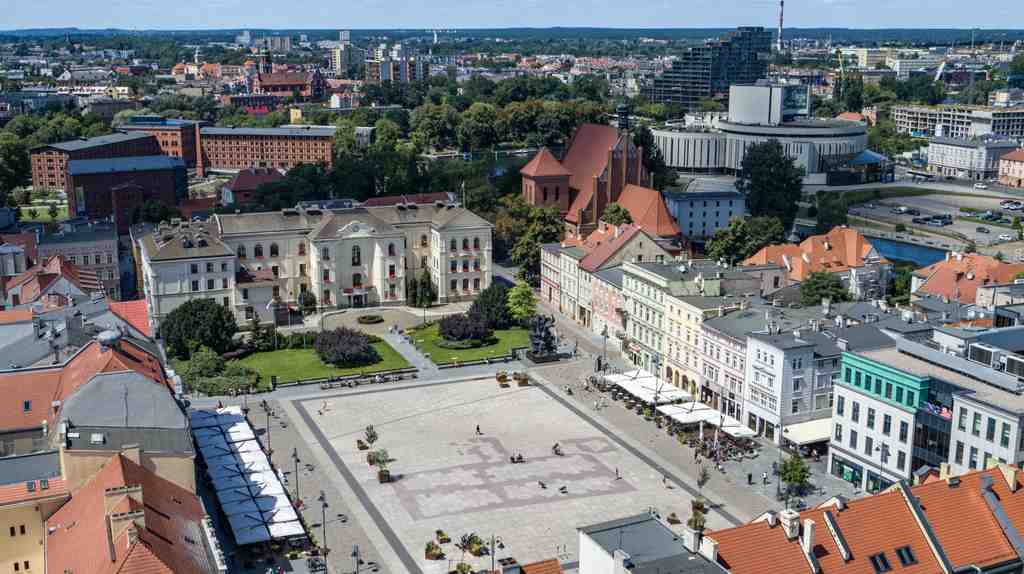
Look to your left for a broad rectangular stone-paved square framed by historic townhouses, with the long classical facade of the library and the little goose fountain giving the space its unmistakable shape.
This is Stary Rynek, the Old Market Square, the old heart of Bydgoszcz... and it has been doing that job since King Casimir the Great ordered the chartered town laid out in thirteen forty-six. The square is almost a perfect working machine: about one hundred by one hundred twenty-five meters, big enough for trade, public life, arguments, celebrations, and, yes, some very grim business too.
If you glance at the image in the app, you can really see the geometry of it all, that clean rectangle planted at the center of the old town plan. What feels open now once sat inside a much tighter world. Rivers and water channels wrapped around this district so completely that, until the eighteenth century, the market and the chartered town effectively stood on an island.
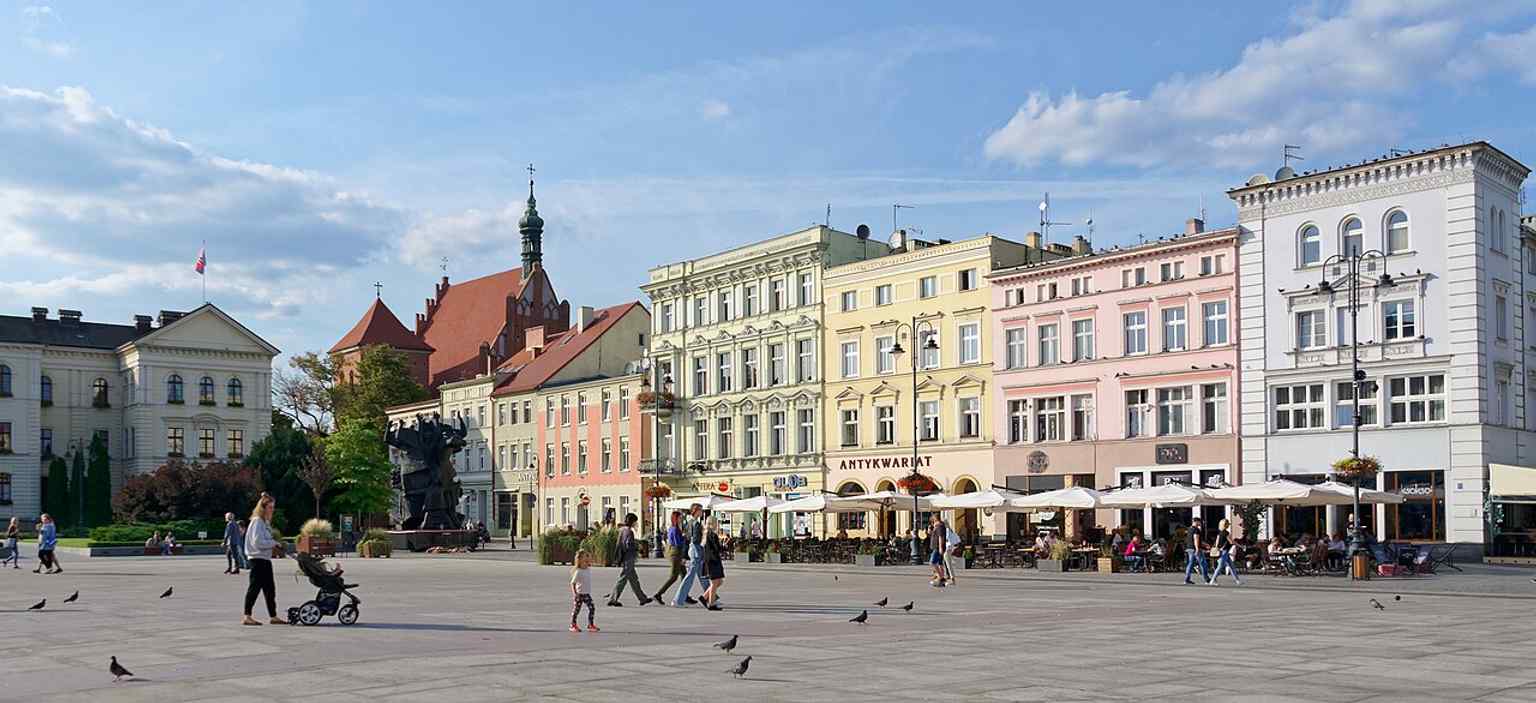
Now here’s the wild part: for centuries, the square had a town hall right in the middle. Not off to the side, not tucked away... right in the center like the city’s beating drum. First came a wooden one, then a Gothic brick hall, and after a fire in fifteen eleven, the city raised a grander replacement designed by Jan of Gdańsk. Around sixteen hundred, they finished it with a tall Renaissance tower, topped with an onion-shaped dome, a clock, alarm bell, and lookout galleries. Chronicles bragged about it, and honestly, they had reason. Today, the old footprint survives below your feet, and the darker paving marks the outline of those lost foundations.
This square sold everything that kept a town alive. Bread, salt, herring, hops, cloth... the whole daily circus. Weekly markets started in the Middle Ages, and royal permission later added fairs on feast days. So if the place feels like it was built for bargaining, gossip, and somebody trying to talk you into one more sack of grain, that instinct is dead on.
But the market also carried power. On the west side stood the Jesuit church and college, once the great showpiece of the square. In sixteen fifty-seven, negotiators for King Jan Casimir and the Brandenburg elector met here, and the treaties of Wehlau and Bydgoszcz were sworn on this very square. If you want a visual for the missing western wall, check the app image showing that side. The emptiness there is part of the story.
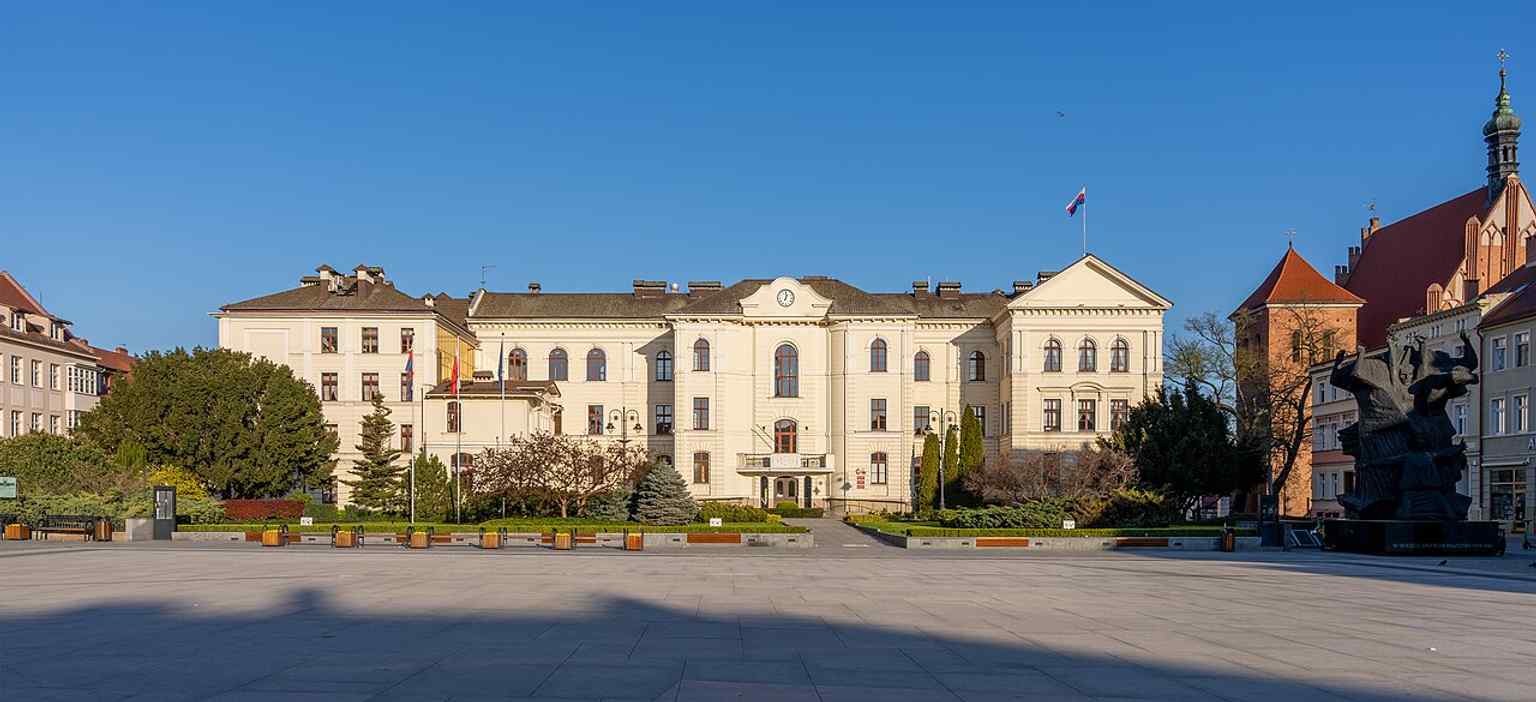
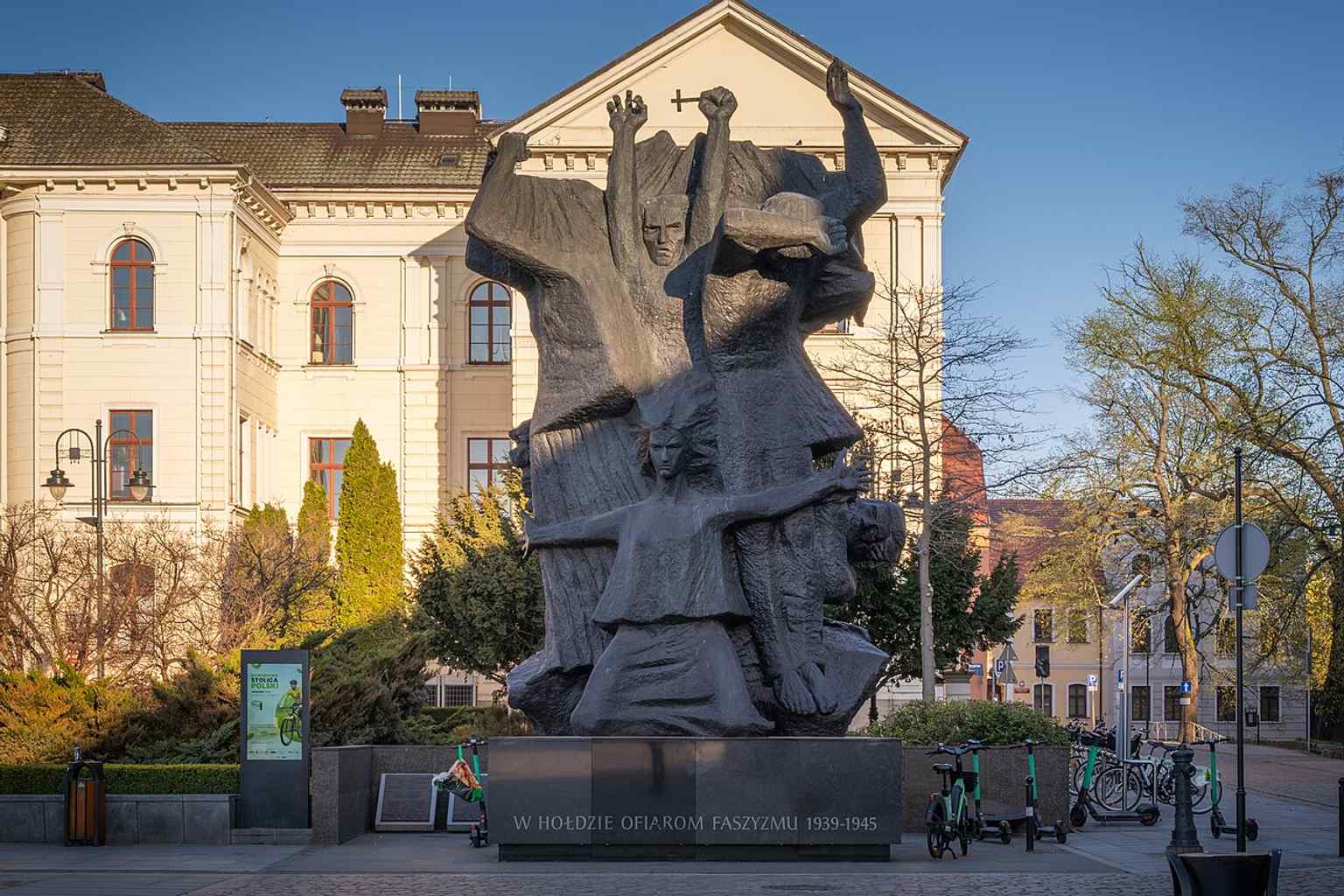
And the story turns dark. In September of nineteen thirty-nine, German occupiers publicly executed Bydgoszcz residents here, near the western frontage. Then in nineteen forty, they demolished the Jesuit church and the whole west side, planning a monumental Nazi-style city hall and a parade route. The monument standing there now marks that wound, not as decoration, but as memory.
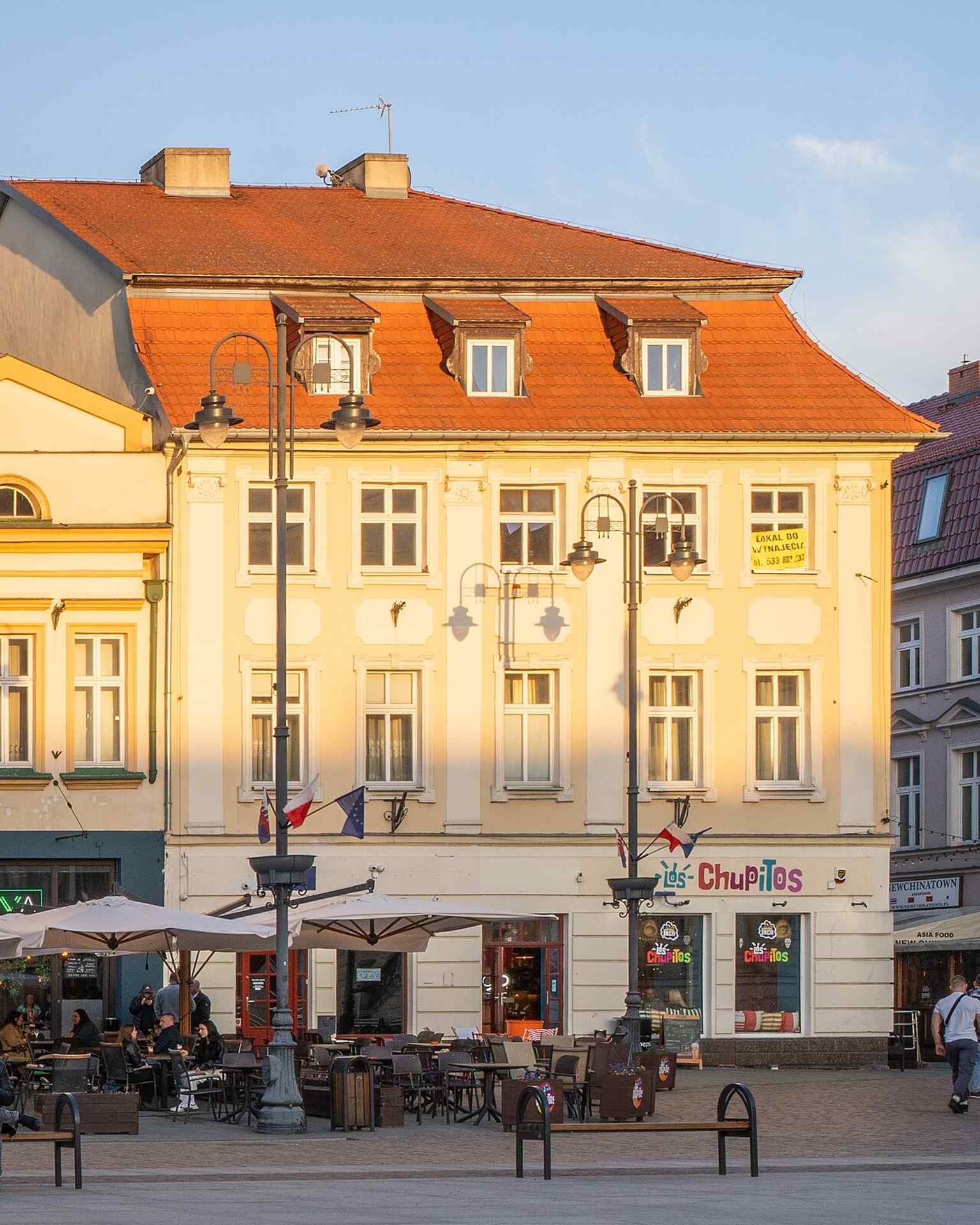
There are gentler notes too. Near the library sits the fountain called Children Playing with a Goose, a gift from pharmacist Alfred Kupffender in nineteen oh nine. And over on the eastern side, legend says Pan Twardowski once stayed in a townhouse here and left behind one of those wonderfully suspicious stories that cities keep like family secrets.
This square is really a stone scrapbook: medieval trade, royal politics, wartime trauma, and everyday city life all layered in one place.
Take a second and let the whole rectangle settle in. When you’re ready, we can wander on to the cathedral.