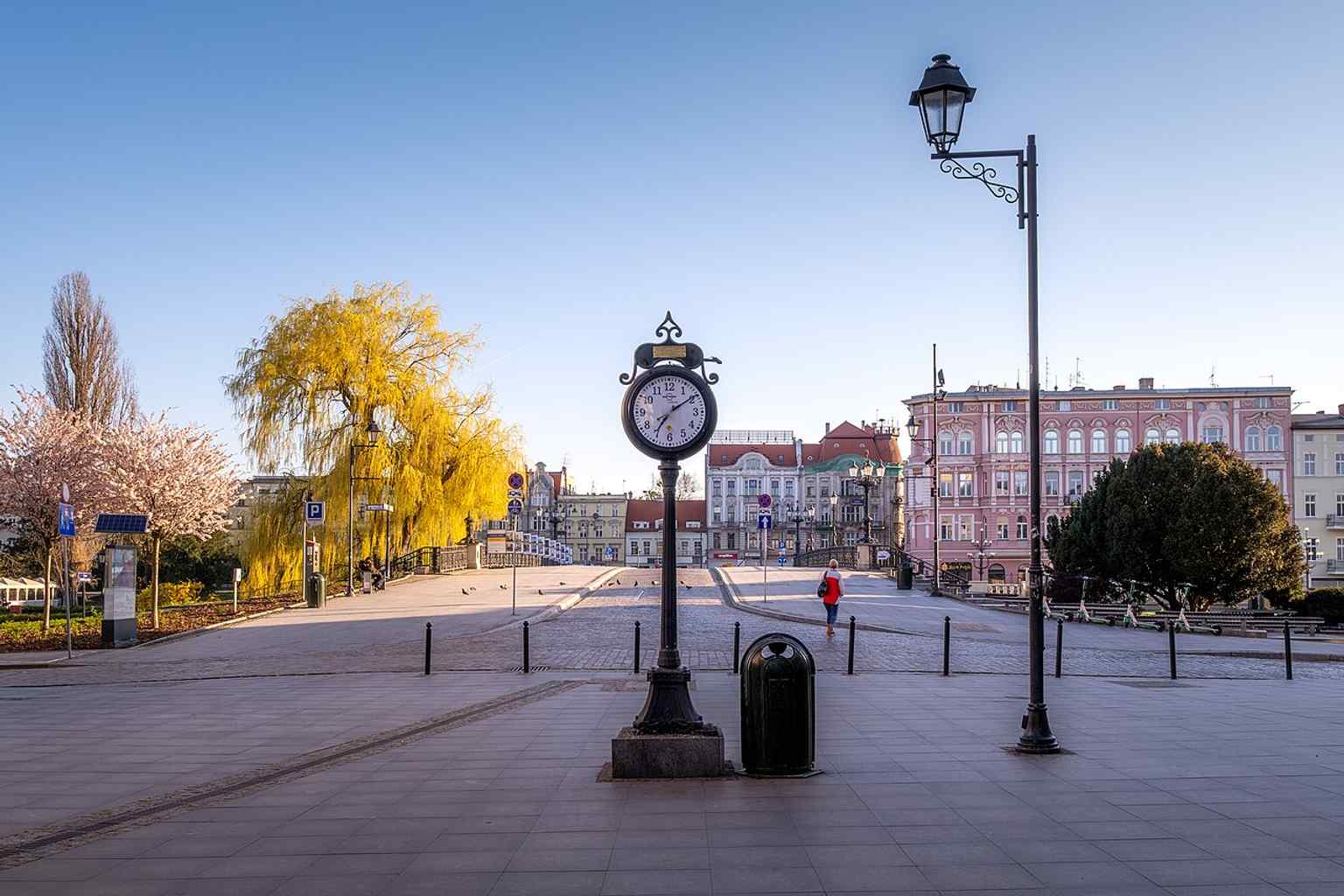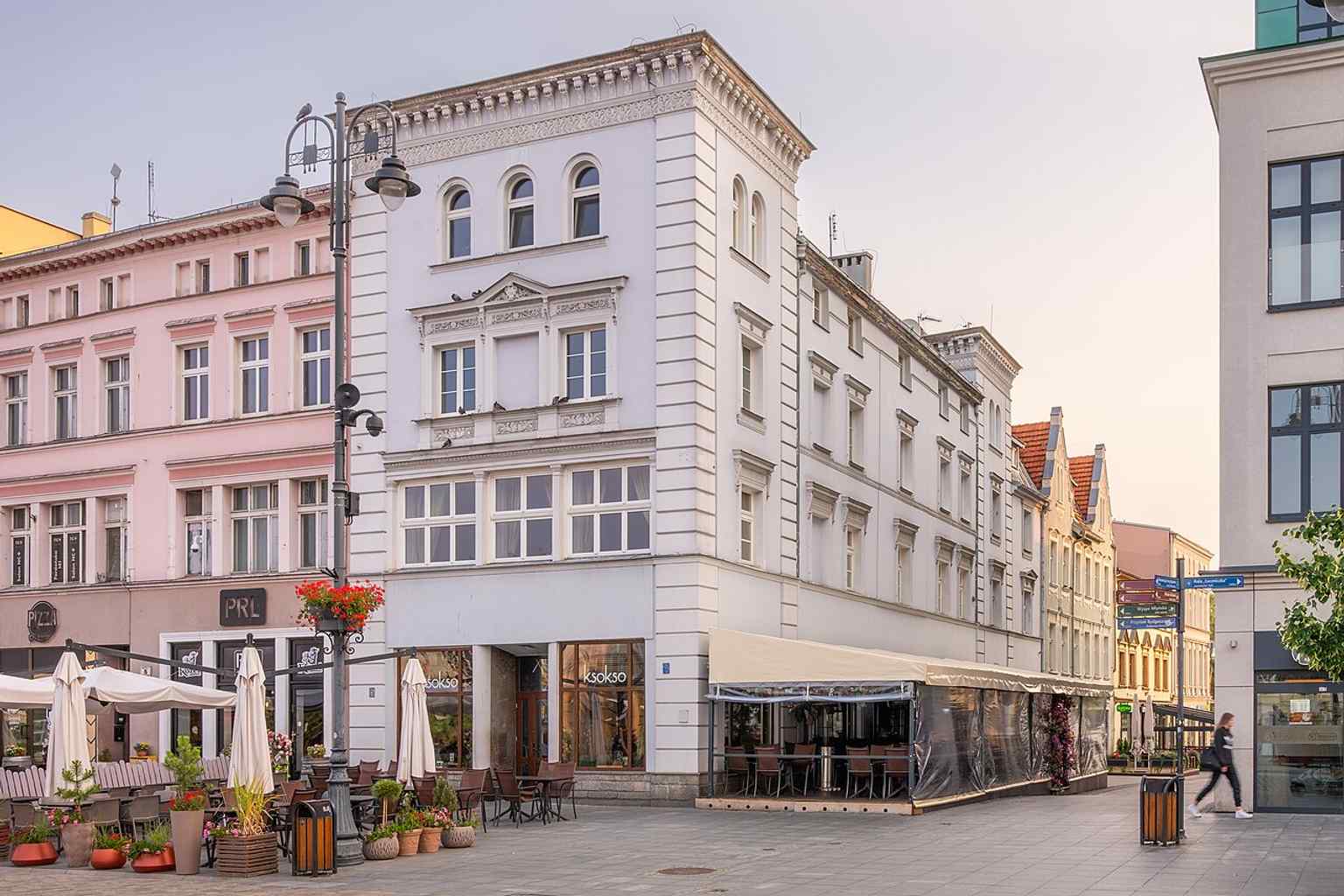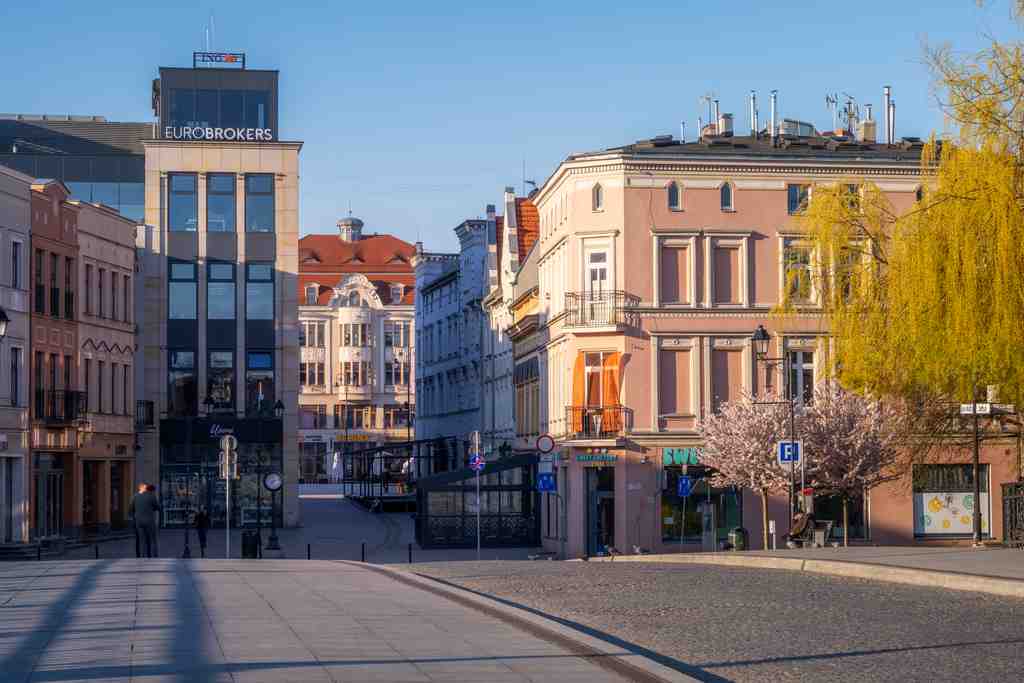
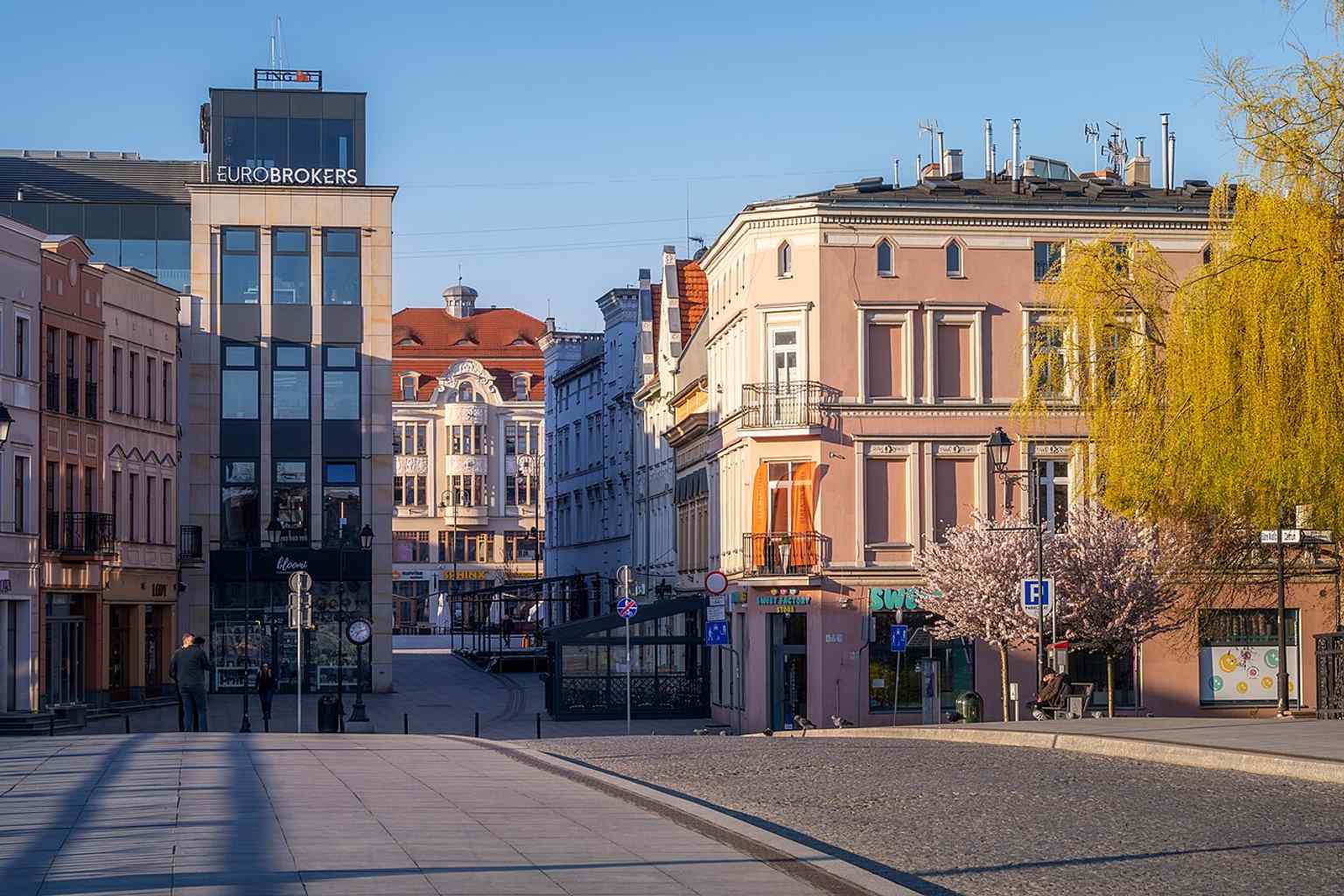
Look for the straight stone-paved street lined with plaster-and-brick townhouses, with a wedge-shaped corner tenement anchoring the Old Market Square end.
Mostowa sounds simple... just Bridge Street. But this slim stretch carried the pulse of Bydgoszcz for centuries. City planners laid it out in the mid-fourteenth century, when they shaped the new chartered town and needed one clear line from the Old Market Square to the bridge over the Brda, then onward to the Gdańsk suburb. The crossing that gave the street its name stands on the oldest bridge location in Bydgoszcz. Trade rolled through here from Gdańsk toward Inowrocław, Gniezno, and Poznań, so this was never just a local lane. It was a funnel for merchants, travelers, rumors, and money.
And here comes the surprise: in thirteen forty-six, when the town was founded, this ground was marshy, empty, and repeatedly flooded by the river. Under your feet there was once mud, water, and stubborn reeds. The town claimed it bit by bit. Archaeologists digging here in two thousand and six found traces of the first wooden buildings from the late fourteenth century, along with a square oak-lined well from the end of that century. They also uncovered the little everyday things that make history feel less like a textbook and more like a pocket emptied onto a table: pottery with potters' marks, whole medieval shoes, hundreds of leather scraps from a shoemaker's workshop, belts with metal buckles, knife sheaths, keys, locks, crossbow bolts, spurs, and coins from both Poland and the Teutonic state.
So Mostowa did not begin in elegance. It began in planks, puddles, and hustle.
By the early seventeenth century, records called it platea pontialis, basically "the bridge street." Wooden houses stood beside brick ones. A Scot woman turns up in a property dispute from sixteen twenty-five. Later came a tailor named Tomasz Żelazko, a helmsman named Wojciech Kloska, and a man named Jan Czech. That is my favorite kind of history: one short street, and suddenly half of Europe seems to be renting a room here. Nobles lived here too, alongside brewers and craftsmen. For a time, the Szydłowski family controlled almost the whole western side, including adjoining plots, a brewery, and a townhouse.
If you peek at the image in the app, you can spot that surviving western frontage. It is one of the few historic sides left after the devastation of nineteen forty, when German occupation authorities demolished the block between Mostowa, Jatki, the market square, and the Brda to create a wide parade route for Nazi marches. They destroyed some of the grandest houses near the bridge, including the building with the Bristol café and cinema.
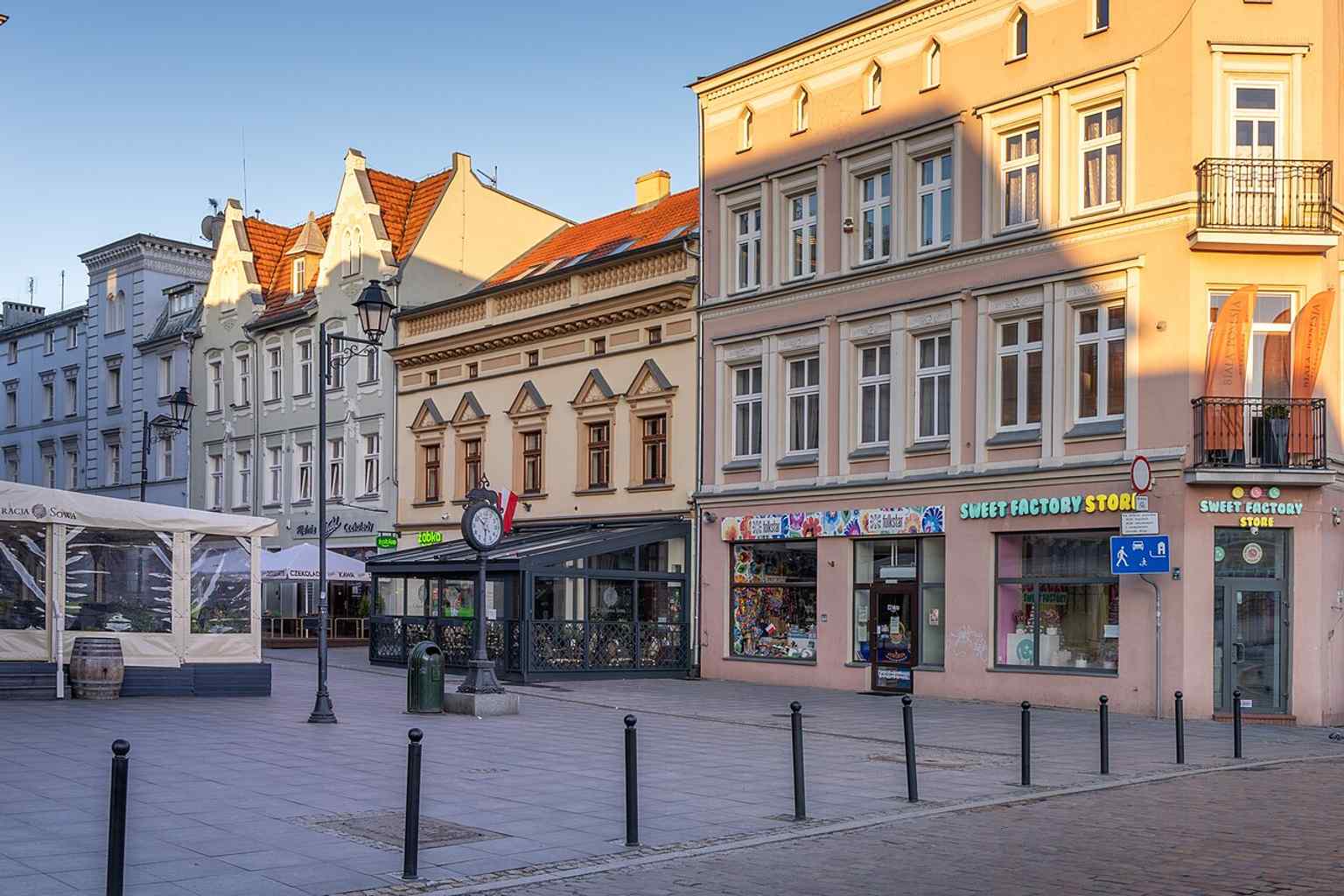
Another image on your screen shows the street's straight, old trade-axis perfectly. Later, the city turned part of Mostowa into a pedestrian zone, and in the two thousands it rebuilt sections of the eastern side with stylized facades that nod to the lost townhouses. Even the surviving houses on the west side tell that layered story, borrowing from older fashions with neoclassical order and neo-Renaissance symmetry, meaning later architects revived earlier historical styles.
And for decades, trams clattered right through here, first horse-drawn from eighteen eighty-eight, then electric from eighteen ninety-six, until the last one passed in nineteen seventy-four.
Mostowa is a street that remembers everything, even what is missing.
Take a moment to soak it in, and when you're ready, we can head on to the next stop.