
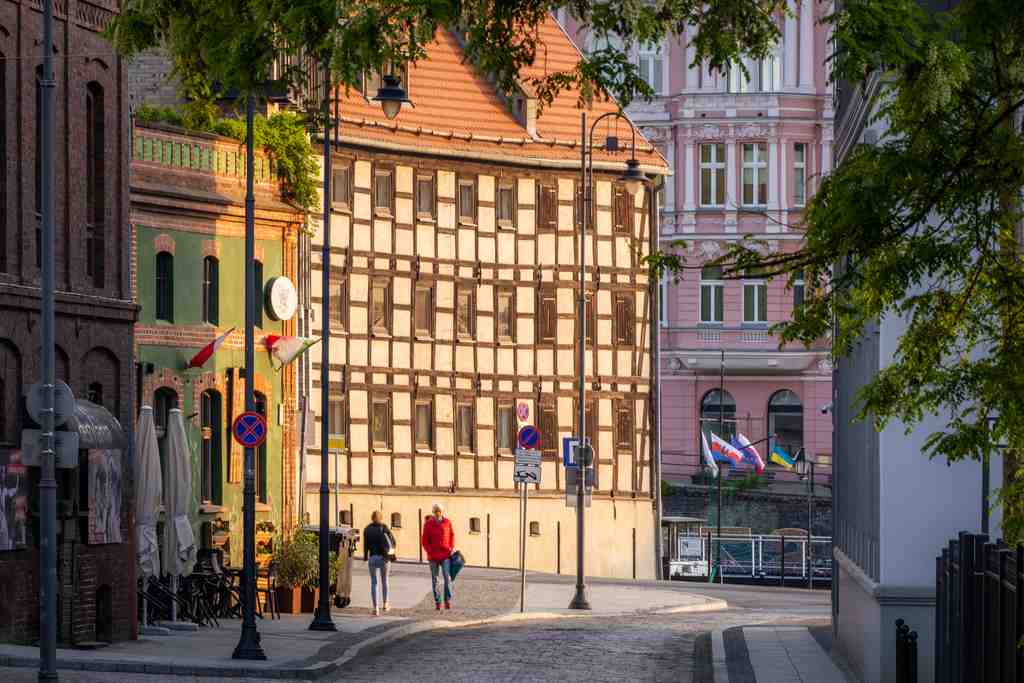
Look for a narrow street lined with plaster-and-brick townhouses, marked by a long straight run and the red-brick market hall with its steep roof and neo-Gothic shape.
Podwale is one of those places that seems quiet until history starts talking... and then it really does not shut up. You’re standing on the old eastern edge of Bydgoszcz’s Old Town, along a strip that medieval town planners never originally laid out. This street appeared later, in the early modern period, right beside the castle moat - that defensive water ditch that separated the chartered town from the older stronghold area where King Casimir the Great ordered a castle in the fourteenth century.
So this was a borderland. Not the poetic kind... the muddy kind. For a long time, the ground on the eastern side was barely stable land at all, more like the slowly filled remains of an old river channel turned into a moat. Archaeologists found that in the fourteenth and fifteenth centuries the water reached deep into what are now the plots along this side of the street. That explains why people did not build here earlier. There simply wasn’t much solid ground to trust.
If you want a good overview, take a quick glance at the image in the app. It helps you see Podwale the way historians do: not just as a street, but as the seam where town, castle, and water once rubbed against each other.
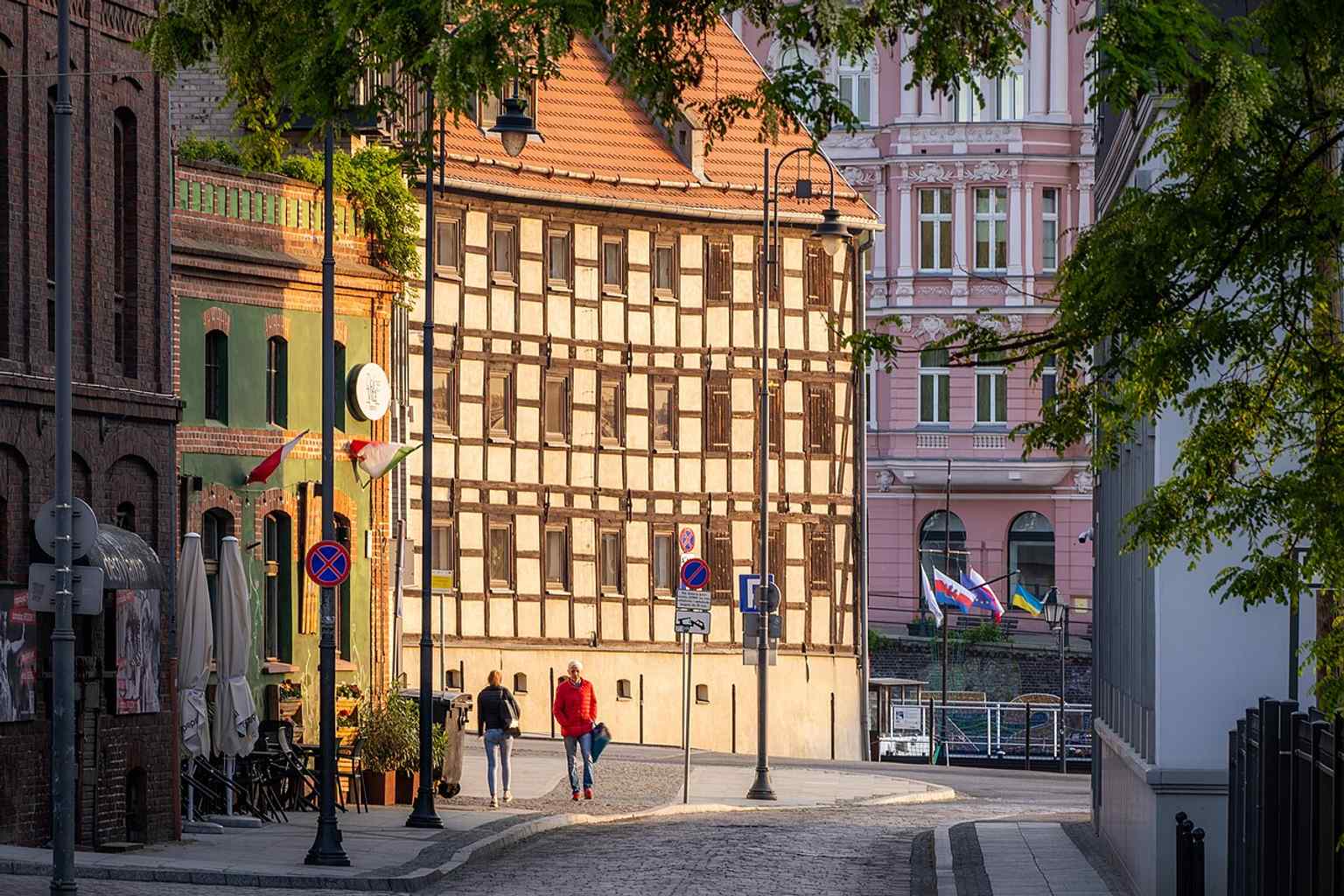
And then came the discoveries. During works in two thousand eighteen and two thousand nineteen near the corner with Grodzka Street, archaeologists led by Robert Grochowski uncovered the remains of a sixteenth-century wooden city gate and fragments of the bridge that once led toward the castle. Construction had to stop on the spot. Out of that old moat mud they also pulled something extraordinary: a broken medieval sword from the turn of the fourteenth and fifteenth centuries. Researchers believe it may have seen combat during the war with the Teutonic Knights, possibly in fourteen oh nine, when King Władysław Jagiełło retook the Bydgoszcz castle. Imagine that for a second... one violent moment, one dropped weapon, then six hundred years of silence in the silt.
Podwale also carried traffic, noise, and commerce. A major trade route passed through here from Gdańsk through Świecie toward Inowrocław and farther south, crossing the city between the Gdańsk Gate and the Kuyavian Gate. If you peek at the second image, you can picture that old transit line more clearly.
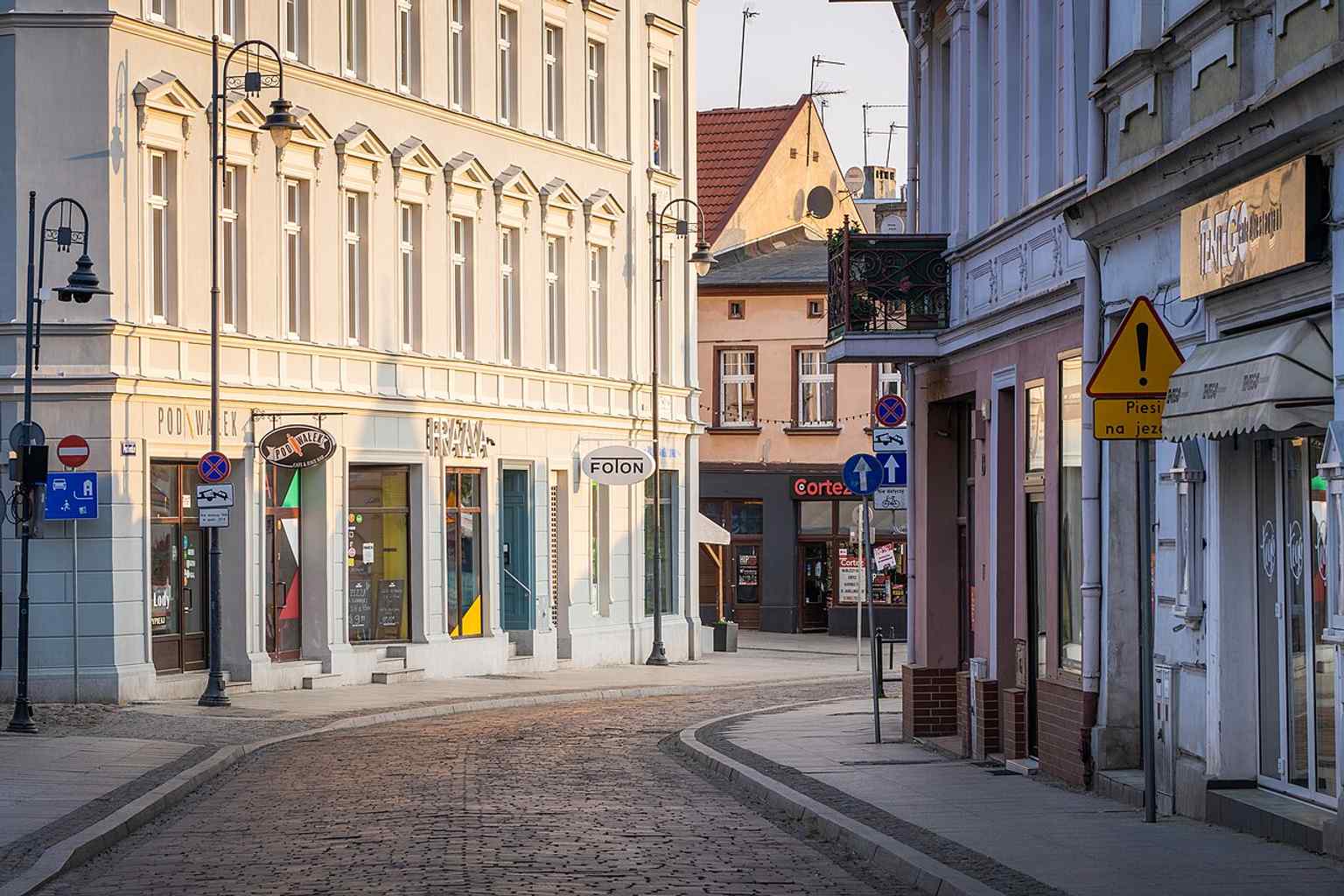
The street even had an older name: Żabia, or Frog Street. Not as an insult - just honest branding. The castle moat bred so many frogs that their croaking became the neighborhood’s defining soundtrack. Later, the name shifted to Podwale, tied to the filled-in area beside the former moat and the visible earthworks linked with the castle landscape.
Architecturally, most of what you see dates from the late eighteenth to early twentieth century. The big showpiece is the municipal market hall, designed by the Berlin firm Boswau and Knauer and opened in the early nineteen hundreds. It was modern for its day: ninety-six stalls, stone counters, meat and fish upstairs, poultry and dairy in the cellars, and a bell to announce trading hours. More recently, the city restored it and tried turning it into a modern food hall, but high prices and a mismatched concept sank the project, and another attempt failed too, leaving the old hall waiting for a better chapter.
Podwale is really a street about edges - between land and water, castle and town, everyday trade and buried memory.
Take a second to let that settle in, and when you’re ready, we can continue on to Grodzka Street.






