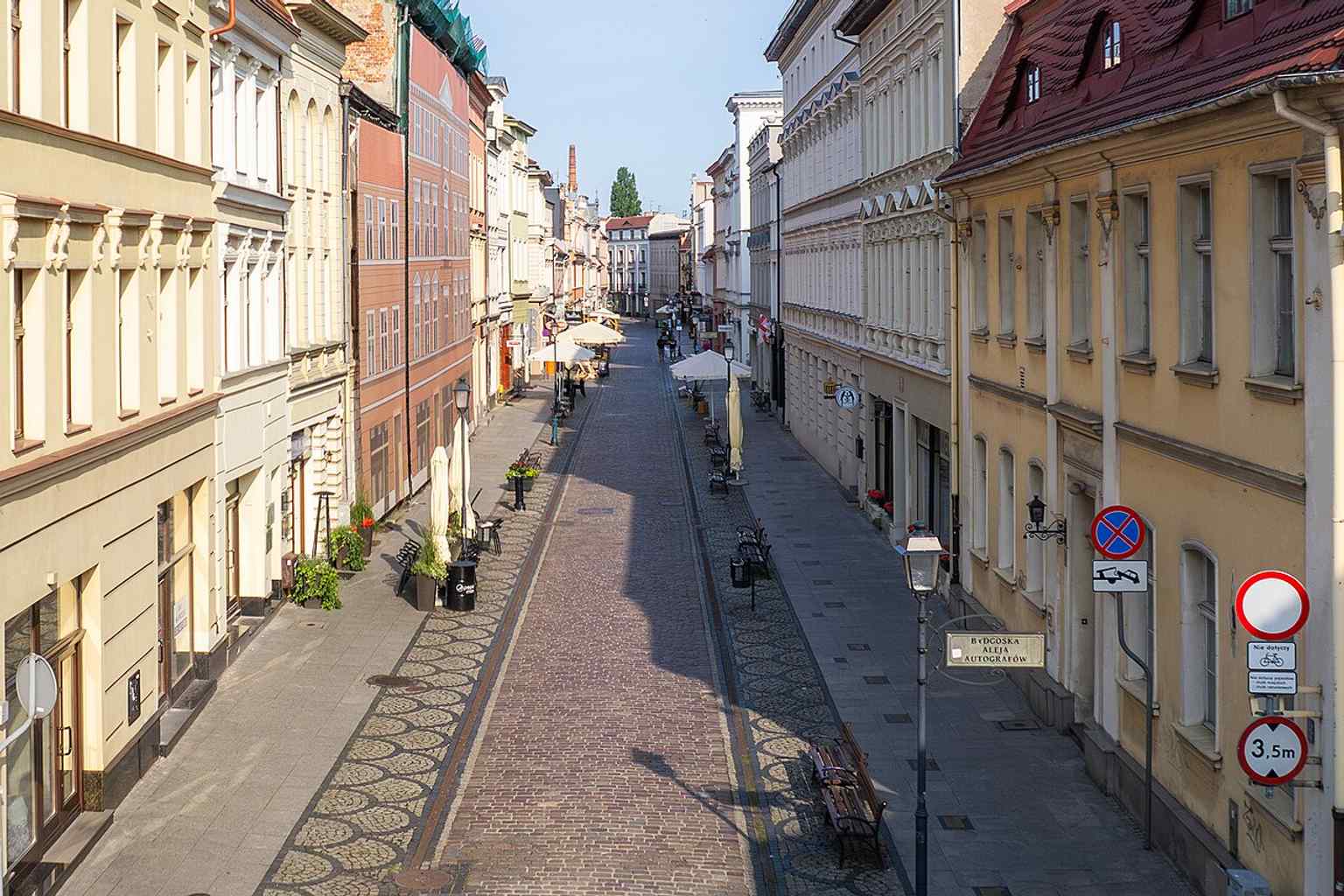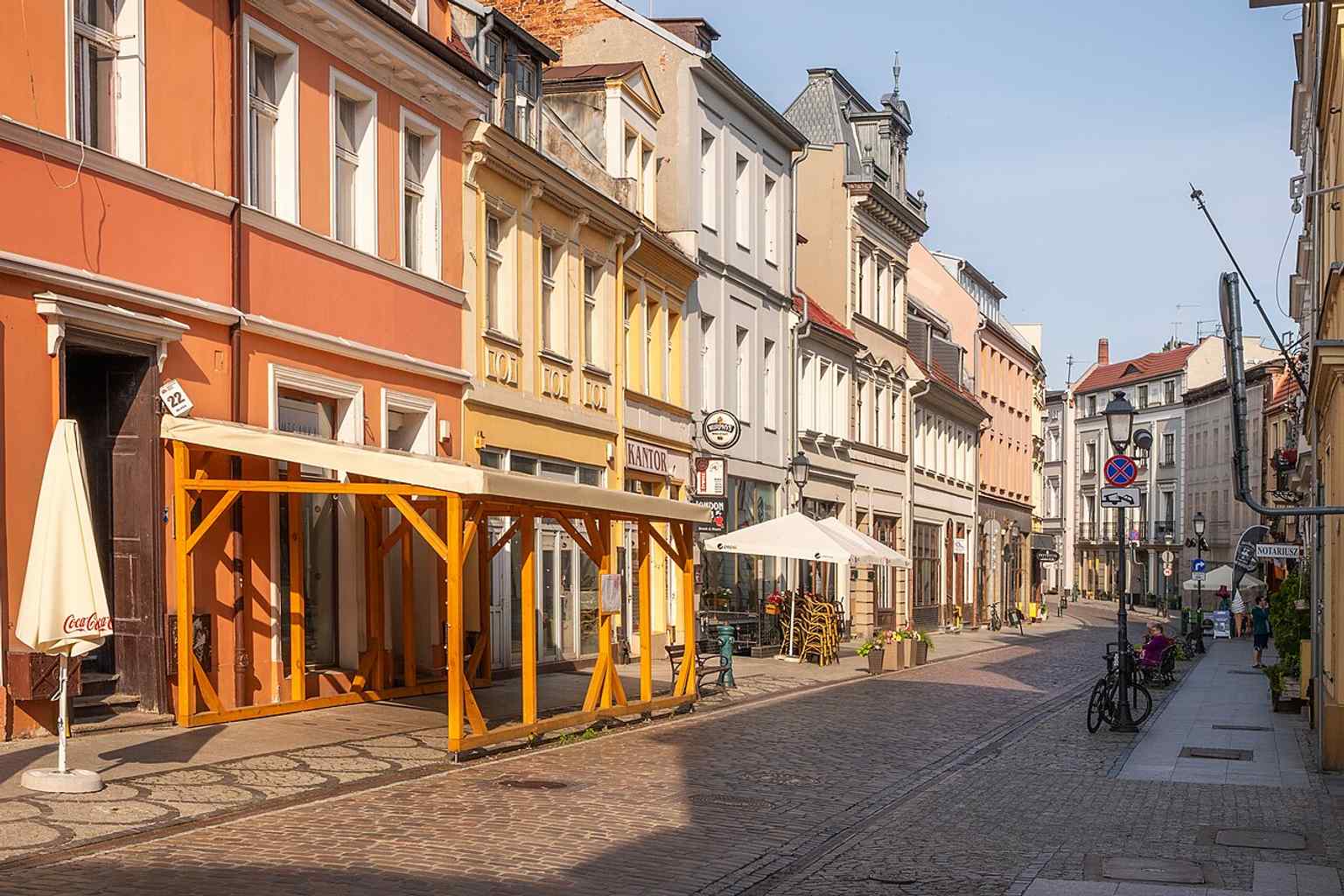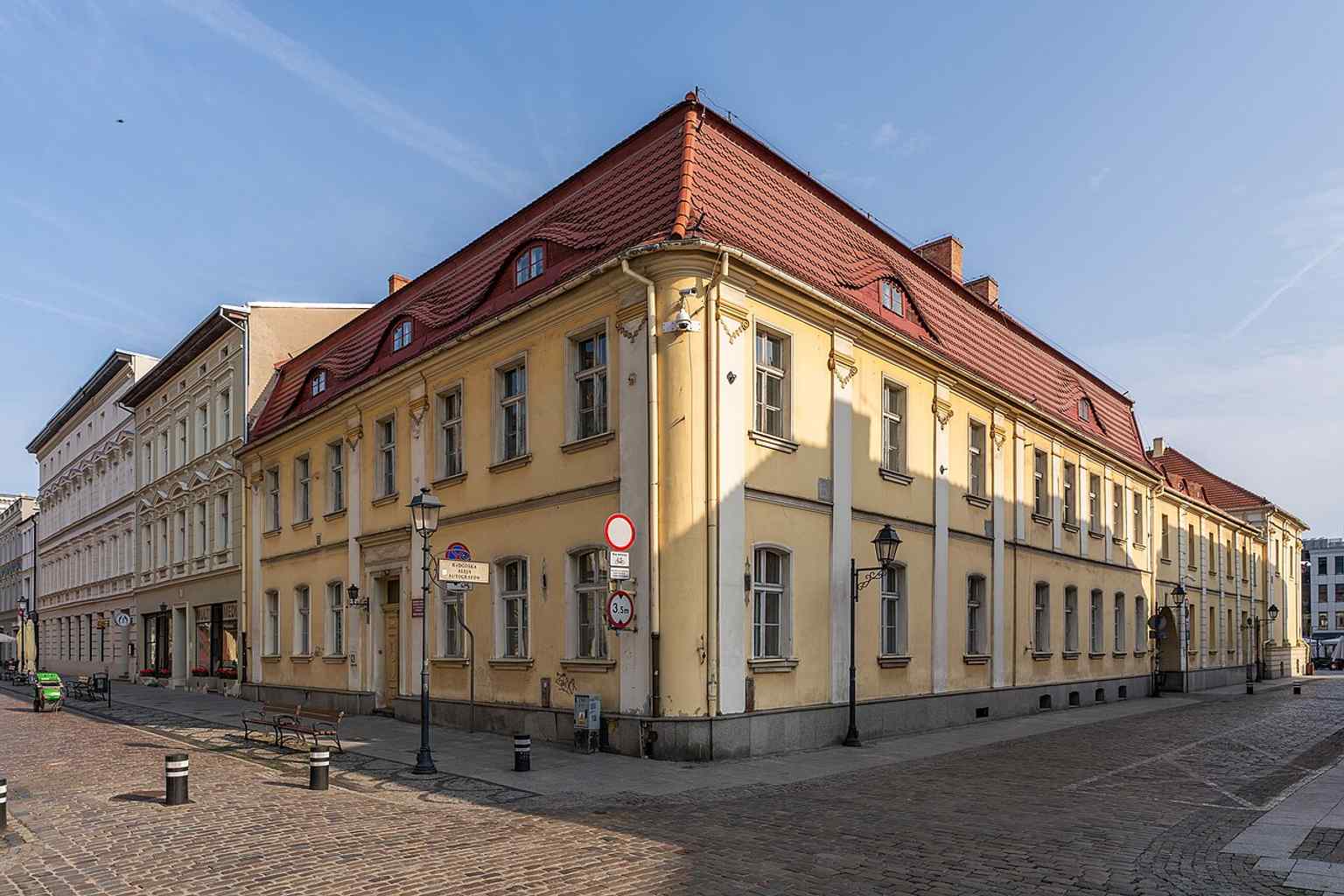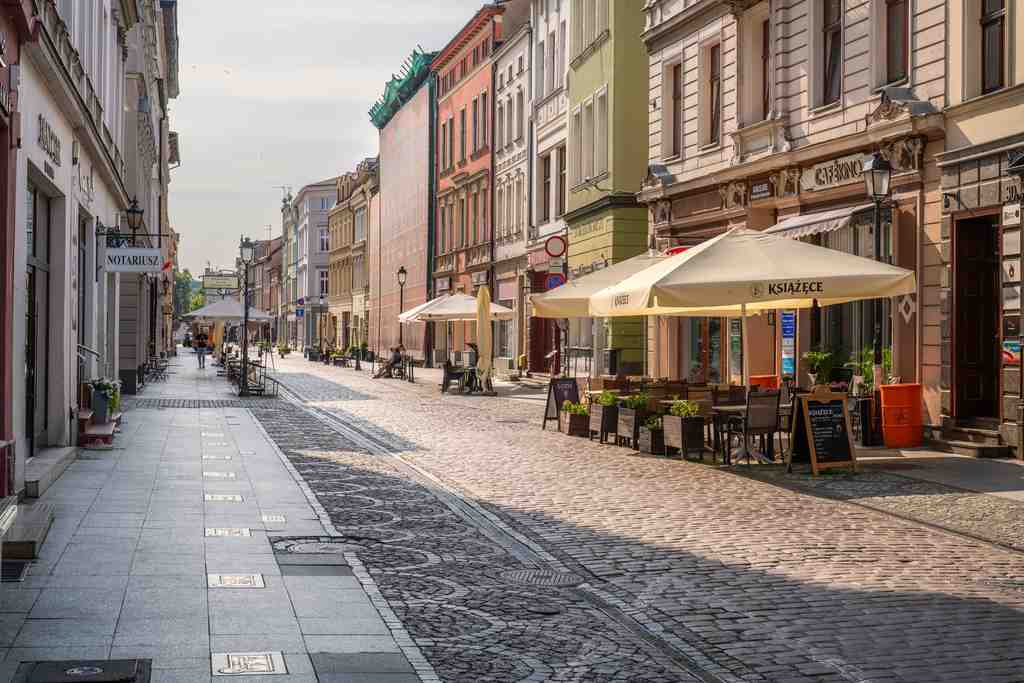
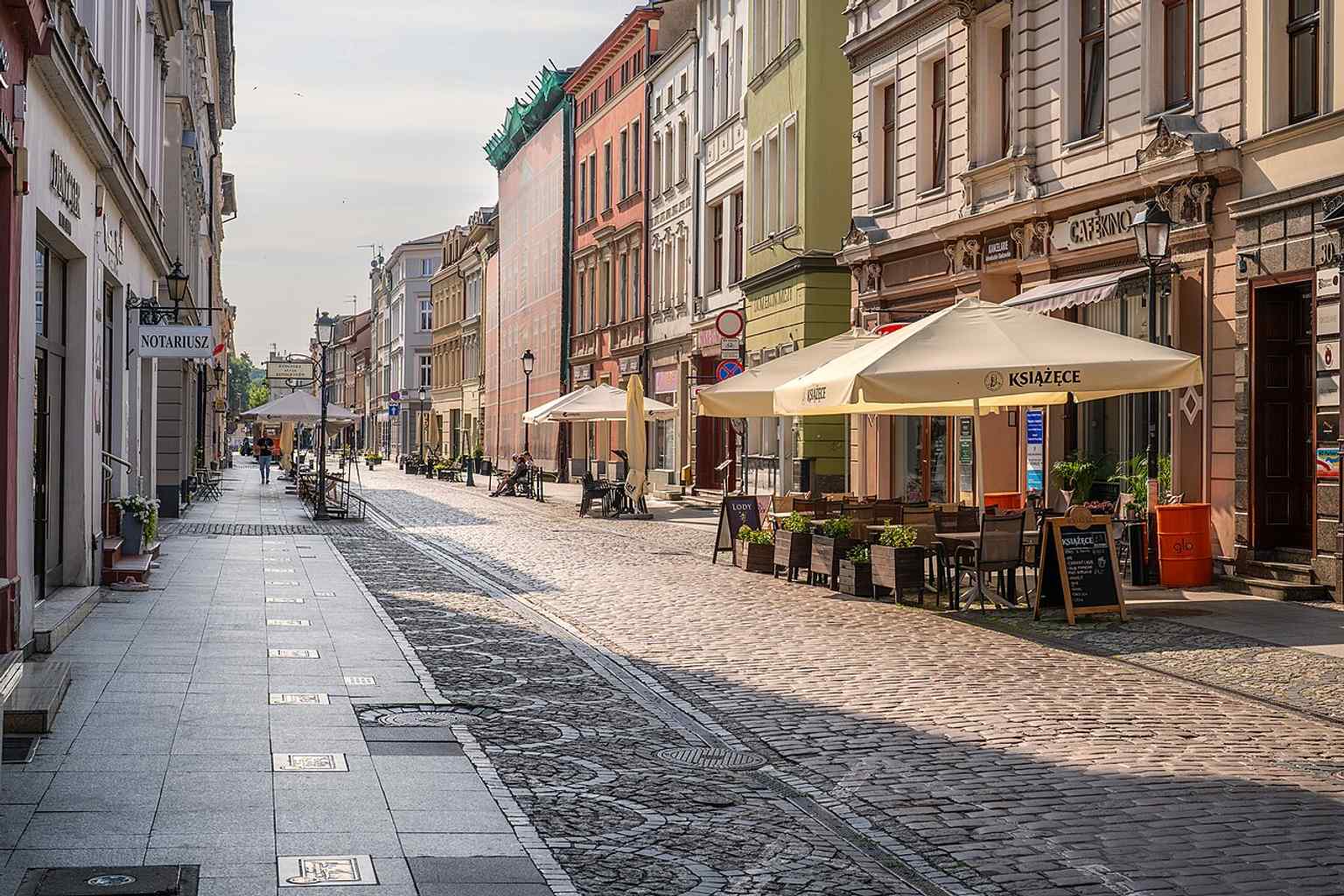
Look to your right for a long, straight street framed by stucco-and-brick townhouses, topped with varied gables and dormers, and marked by bronze autograph plaques set into the pavement.
This is Długa Street, the longest street in old chartered Bydgoszcz, stretching a little over six hundred and fifty meters, and for centuries it worked like the city’s spine. In the Middle Ages, it linked two gates in the town walls: the Kuyavian Gate to the east and the Poznań Gate to the west. So if you had goods, gossip, grain, tools, or trouble... sooner or later, it all passed through here.
Back in the fourteenth century, the first houses along Długa were wooden or half-timbered, meaning timber frames packed with lighter material. Brick townhouses arrived later, around the fifteenth century, and the street gradually traded rough edges for a more ambitious face. Behind the main fronts ran little service lanes, Pod Blankami on one side and Zaułek on the other, where deliveries came in and horses waited in stables. The polished storefront world out front had a practical backstage.
And here’s a detail I love: in the sixteenth century, people laid a wooden water system along this street. Archaeologists found tree-trunk pipes running almost the whole length of Długa, buried not far below the surface. Imagine the confidence of that move... a proper urban artery, carrying water under a road already important enough to keep clean and passable.
The street also held a whole human mosaic. Alfred Cohn, a doctor and writer who grew up at the corner of Długa and Jana Kazimierza, remembered this place as the landscape of his “unfading happiness.” His father ran an iron goods shop, and around him lived a confectioner named Kraeger, the tobacco seller Janowski, and the jeweler Schroeter. In the nineteenth century, the middle stretch of Długa became a center of Jewish business life, while Polish shops clustered on other sections. It wasn’t some tidy little postcard of harmony... it was a real commercial street, layered, proud, competitive, alive.
If you want a visual for one of Długa’s later inventions, glance at your screen and you’ll see the Autographs Alley, a project started in two thousand and seven that set the signatures of notable people into the pavement itself. It’s such a cool idea: the street literally asks memory to walk with you.
Długa knew politics too. At number fifty-two, the Polish paper Dziennik Bydgoski fought Prussian pressure under editor Jan Teska. When the authorities forced him into the German army during the First World War, his wife Wincentyna kept the paper going and even printed his letters from the front. That’s grit, plain and simple.
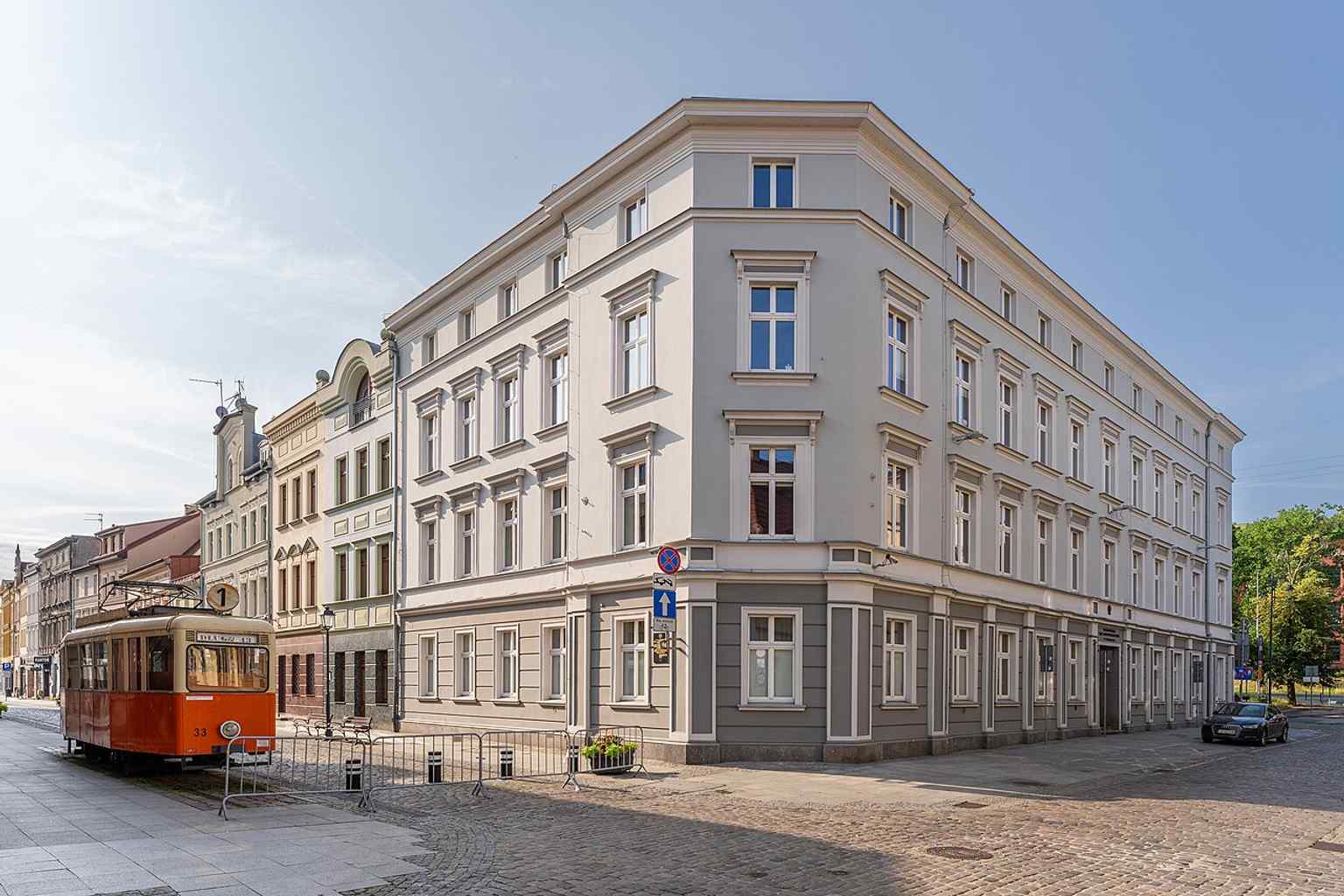
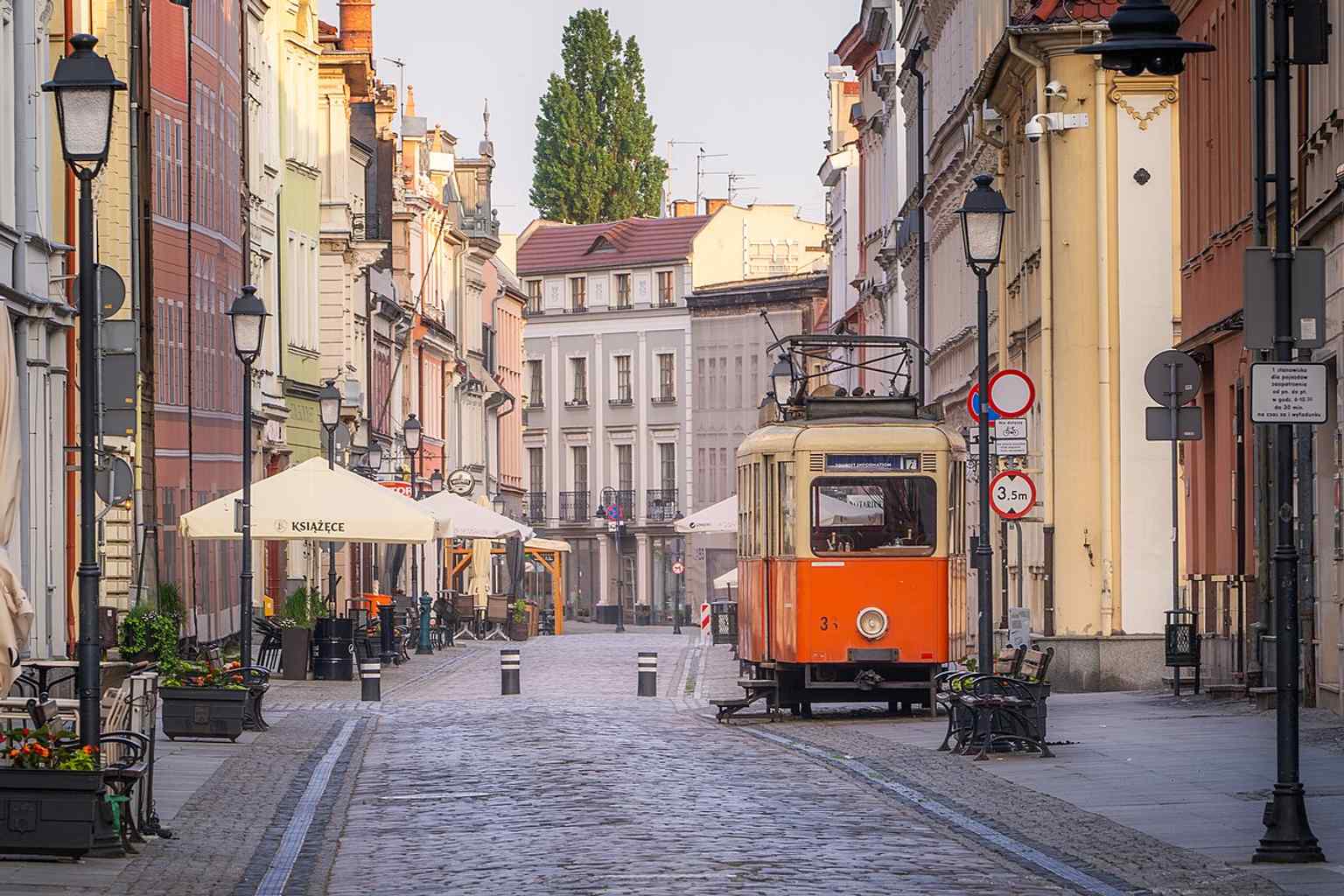
And then there were the trams, threading through this narrow spine for decades before the line finally disappeared. If you check the photo in the app, you can spot the preserved vintage tram that still nods to that chapter.
Długa Street is basically Bydgoszcz in one long sentence... merchant road, civic stage, tram line, memory lane.
Take your time with it, and when you’re ready, we can drift on toward Podwale Street.