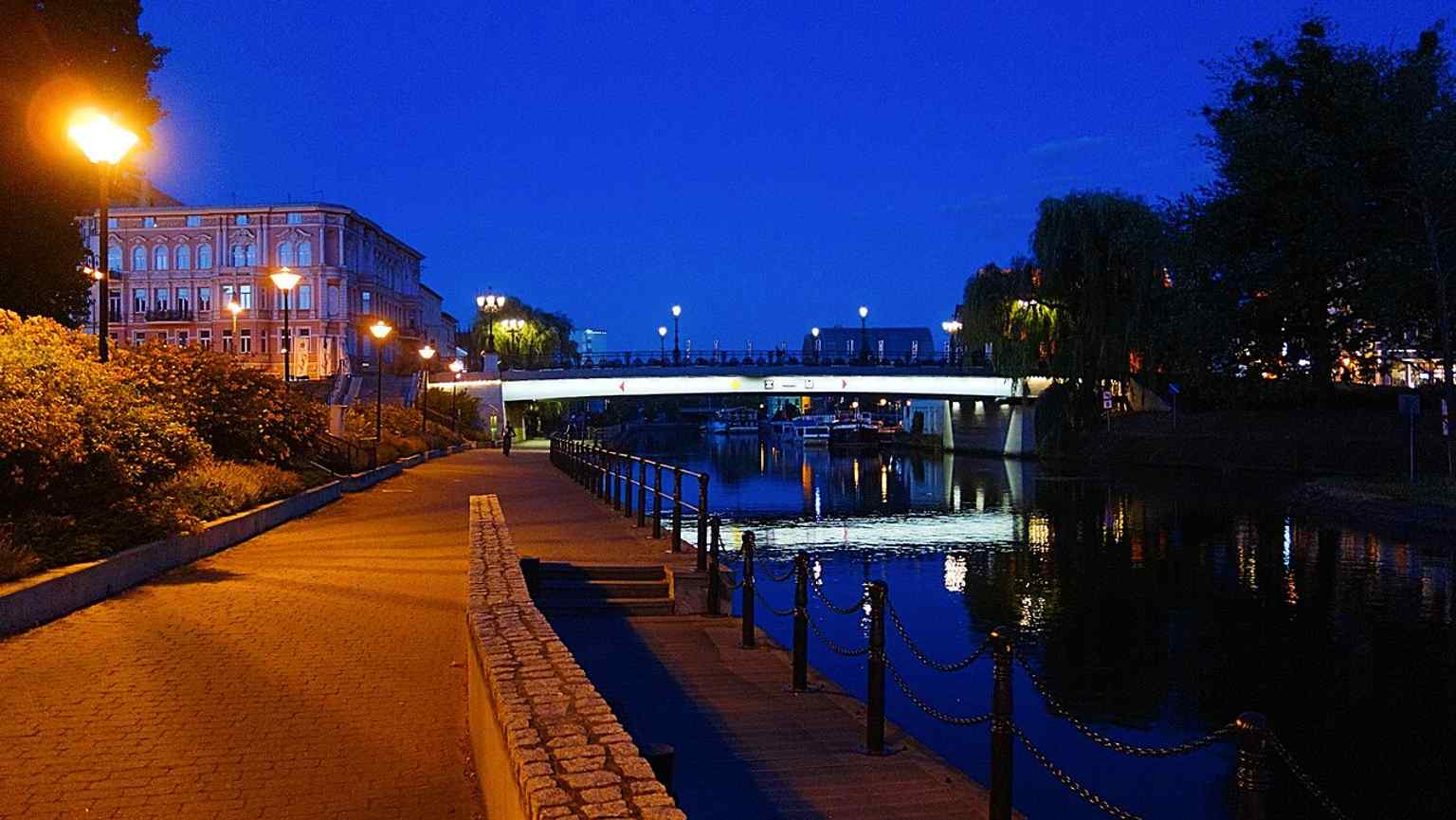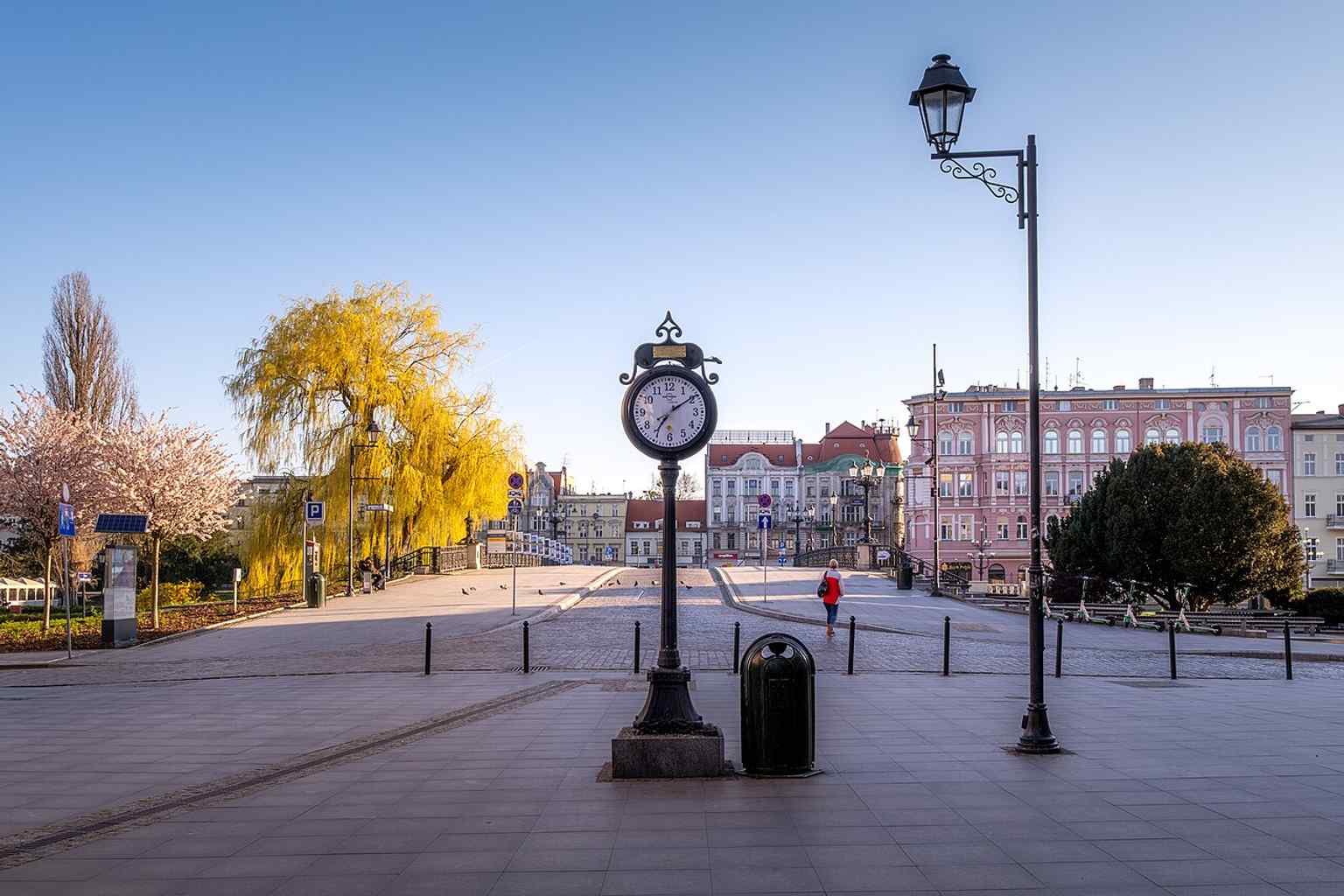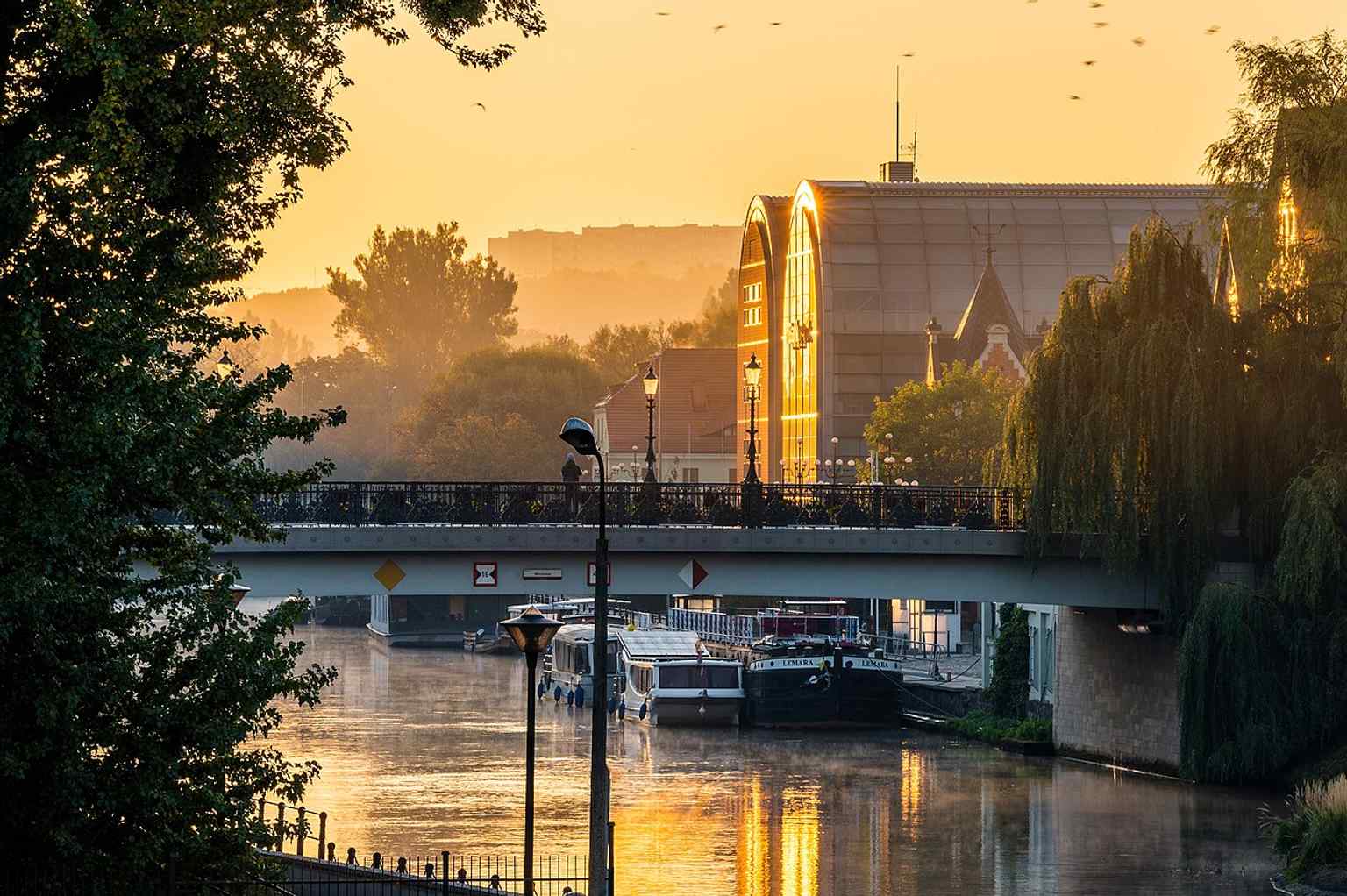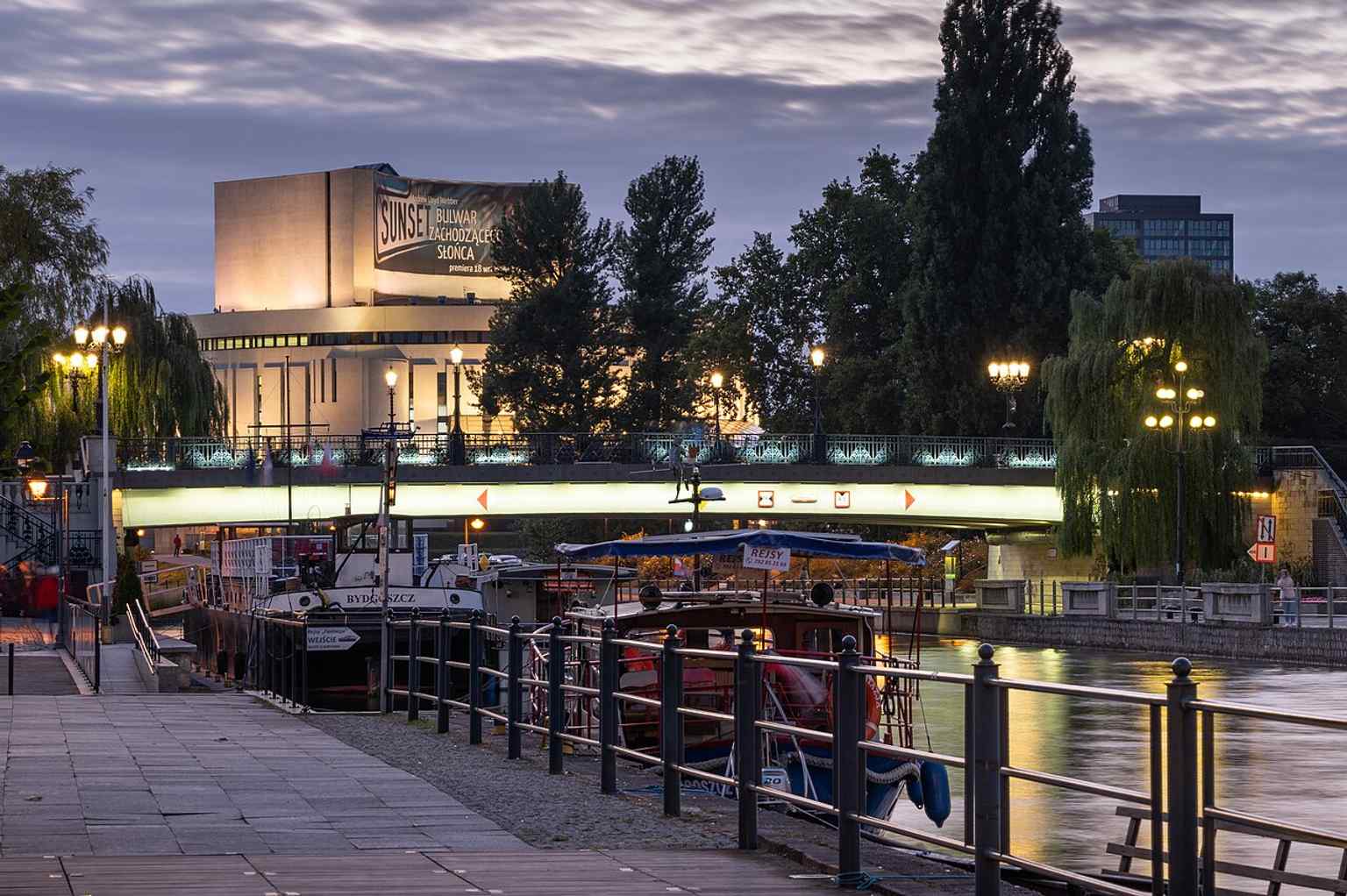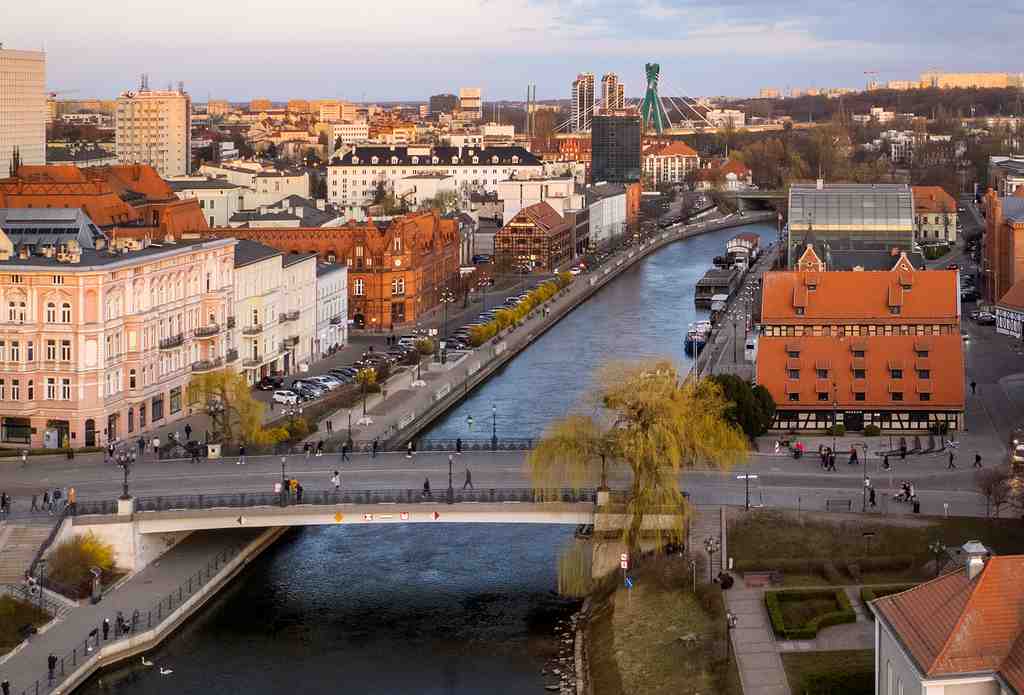
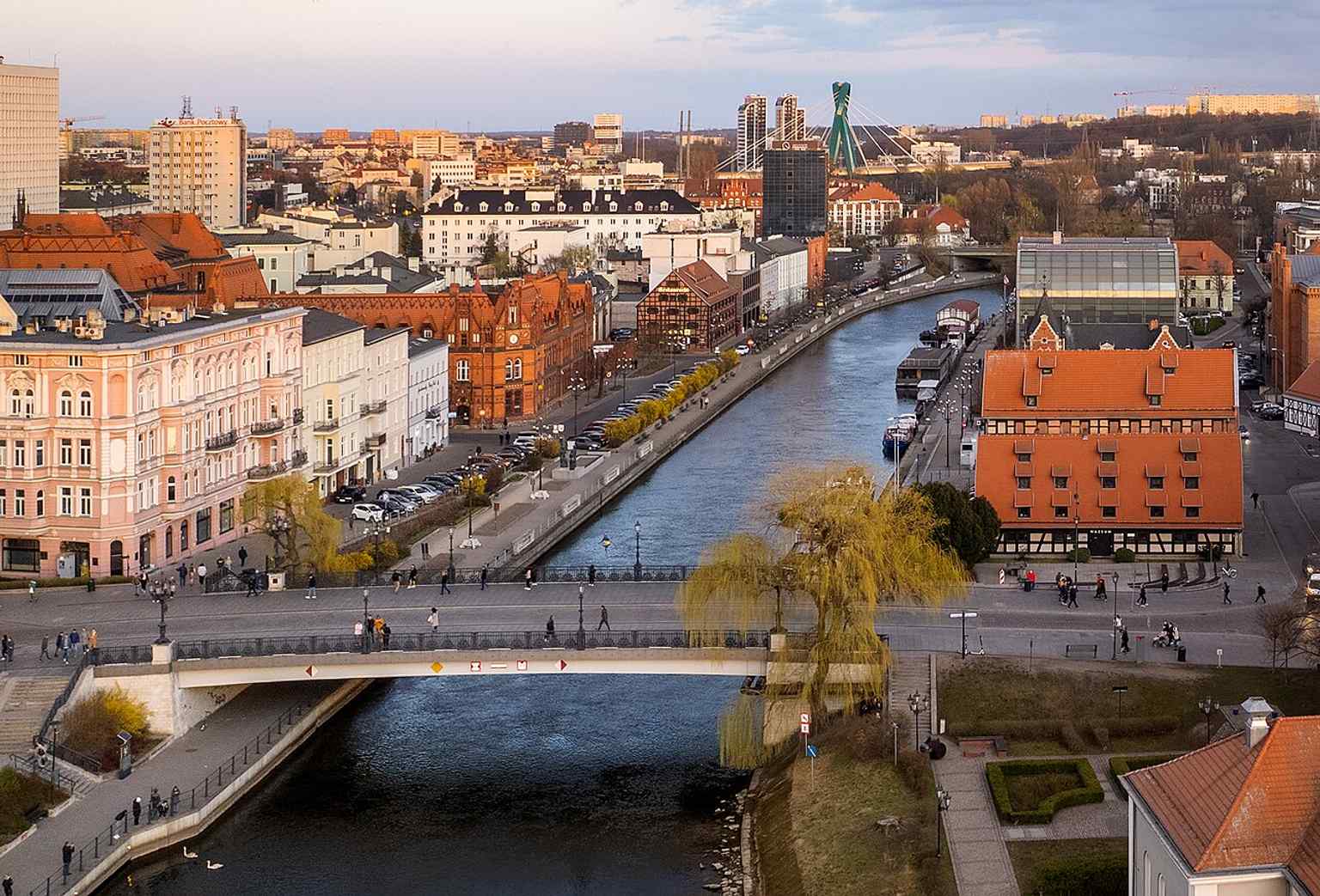
Look for a broad concrete bridge with one low, straight span, dark metal railings, and lantern-style lamps set on solid stone bases.
This is Bydgoszcz’s oldest bridge site in the Old Town, and it has carried the city’s weight for centuries. A document from the year twelve fifty-two already mentioned a permanent bridge near the local stronghold, with customs collected from goods moving toward Gdańsk. After King Casimir the Great founded the chartered town in thirteen forty-six, the main crossing shifted onto the line of Mostowa Street... right here.
And this was no quiet little footbridge. It handled trade on a serious scale. In the fifteenth, sixteenth, and seventeenth centuries, merchants used this crossing as part of the grain trade, even pouring grain straight from the bridge into boats below, then sending it down the Brda and Vistula rivers to Gdańsk. So yes, this bridge acted like a street, a toll gate, and a loading dock all at once.
Its name kept changing as history kept rearranging the map: Gdańsk Bridge, Theatre Bridge, Roman Dmowski Bridge, Old Town Bridge, and now the Old Town Bridge of Jerzy Sulima-Kamiński. Every name catches a different version of Bydgoszcz.
One of the fiercest episodes came on the second of October, seventeen ninety-four. During the Kościuszko Uprising, Polish artillery opened fire on Prussian hussars trying to cross here. Their commander, Colonel Székely, suffered fatal wounds, and the battle ended with a Polish victory. For one bridge, that is a lot of drama.
Then the future rolled in on rails. A horse-drawn tram crossed here in eighteen eighty-eight, and electric trams followed in eighteen ninety-six. That made Bydgoszcz an early adopter of electric trams. Not bad for a river crossing.
War hit the bridge hard. Polish sappers blew it up on the fourth of September, nineteen thirty-nine during their retreat. The Germans patched it with timber, then blew it up again on the twenty-second of January, nineteen forty-five as they withdrew. The bridge in front of you rose in nineteen sixty and nineteen sixty-one, wider than the older versions and planned for cars, pedestrians, and tram tracks. In two thousand fourteen, the city gave it some character back with stylized gas lamps and railings decorated with one thousand six hundred metal leaves and flowers.
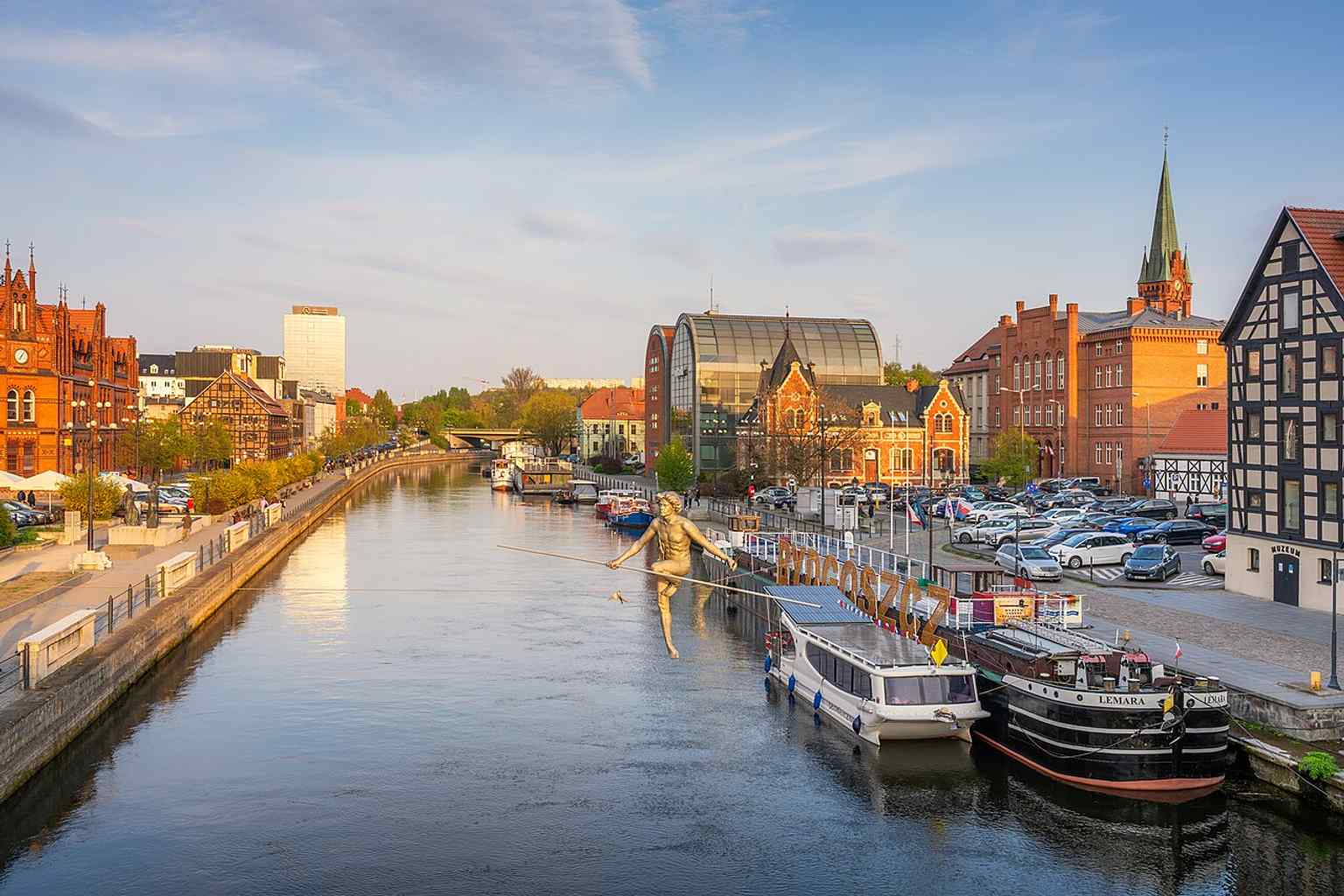
If you glance at the app, the aerial photo makes its job crystal clear: this span stitches the Old Town to the city center in one clean line. And that postcard-style riverside view shows why people keep falling for this panorama.
Since it’s a public bridge, you can cross it anytime, day or night.
This bridge feels less like a structure and more like Bydgoszcz telling its story out loud.
When you’re ready, let’s drift onward to Mostowa Street.