
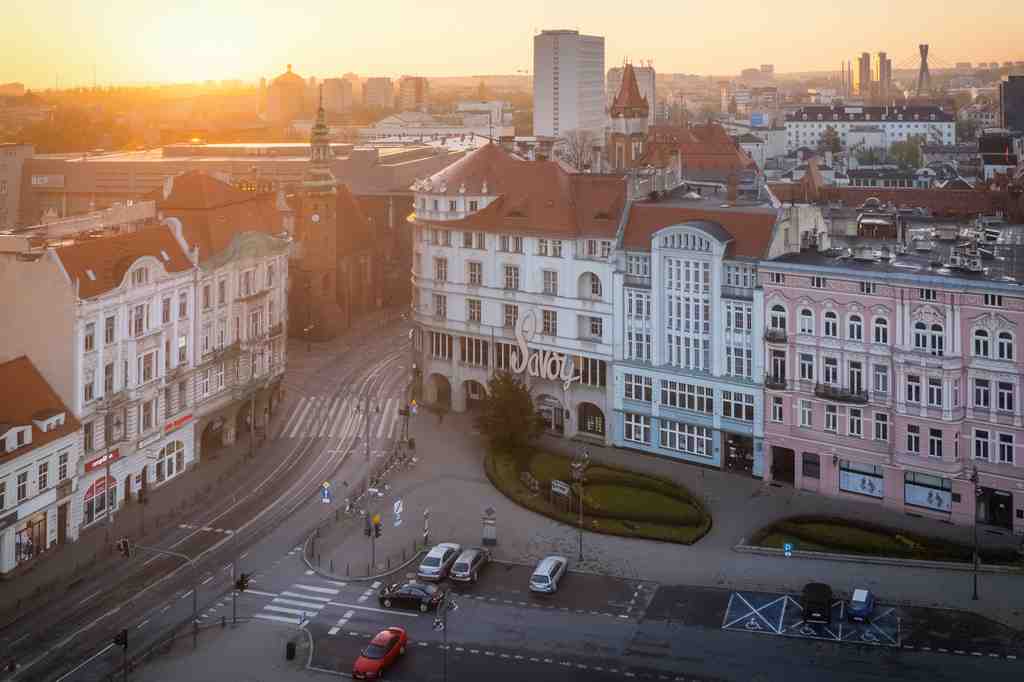
You’re looking at a broad green square by the Brda, edged with tram lines and roadway, with a wall of tall stone townhouses along the eastern side.
This place feels a little strange on purpose... because Theatre Square is really a space shaped by something missing. Under your feet lies a stack of vanished worlds. In two thousand and nine, archaeologists found burial urns here from the Pomeranian culture, reaching all the way back to the Iron Age. Long before city traffic and tram bells, this was a burial ground.
By the late fourteenth century, the Carmelites moved in and built a monastery and a church dedicated to the Virgin Mary. In the sixteenth century they rebuilt both in masonry, and their walls even joined the city’s defenses. The Gdańsk Gate stood at the northern edge, folded right into that fortified line. So yes... this calm square once worked like a monastery yard, a church precinct, and part of the city wall all at once.
Then the whole script changed. Prussian authorities dissolved the Carmelite order in eighteen sixteen. In eighteen twenty-two, workers tore the church down to its foundations and raised Bydgoszcz’s first theater here. Fire destroyed that building, then another fire wrecked its successor. So in eighteen ninety-five the city went big and hired Berlin architect Heinrich Selling for a grand Municipal Theatre. It opened in October of eighteen ninety-six with Emperor Wilhelm the Second in attendance. The façade carried twin towers and a loggia, which is basically an open gallery built into the front, and inside it seated eight hundred people.
If you glance at the image in the app, the aerial view makes the story click: this open gap near the river is the footprint of a lost landmark.
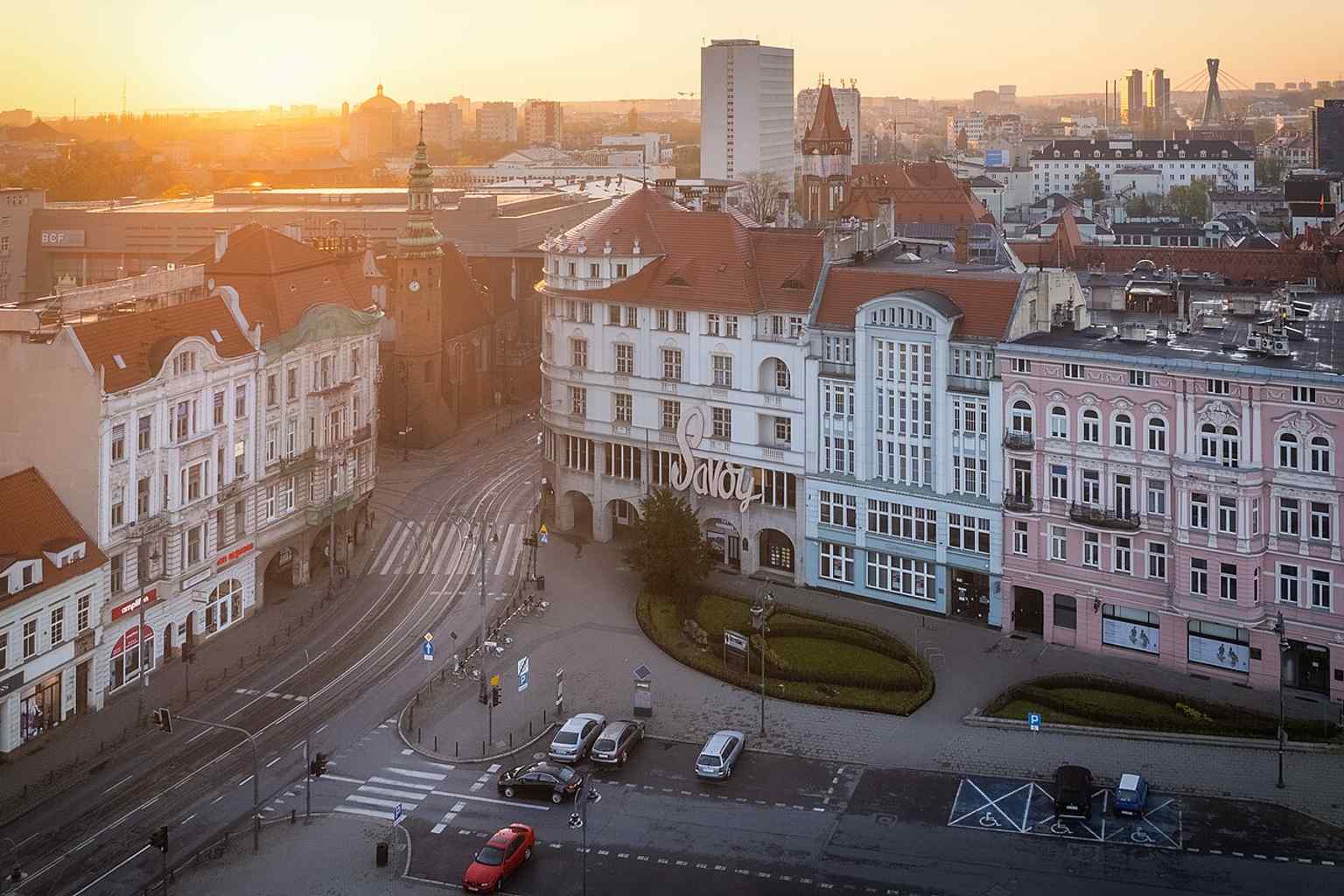
The square became a kind of urban switchboard. Horse trams rolled through in eighteen eighty-eight, electric trams followed in eighteen ninety-six, and before the Second World War all four daytime tram lines crossed here. Imagine the sound of steel, conversation, and theater crowds all mixing together.
In the interwar years, actress Wanda Siemaszkowa tried to turn this stage into a home for ambitious Polish drama. Money problems and audience taste pushed things toward lighter operettas and farces, but the theater still pulled off a technical marvel: in nineteen thirty-seven it installed a revolving stage, the biggest in Poland and the second biggest in Europe.
Then came nineteen forty-five. Polish soldiers shelled the building while trying to force out German defenders inside. Days later, Red Army soldiers lit a bonfire on the wooden stage to warm themselves, and the whole interior burned. The outer walls survived well enough to rebuild, but city officials demolished them in nineteen forty-six anyway. Locals still repeat the story that millions of bricks traveled from this theater to help rebuild Warsaw.
So this square is beautiful, but also haunted by its own missing center... and it never really closes, since it stays open all day and all night.
Take one last look across the empty space, and when you’re ready, we’ll wander on to the next stop.





