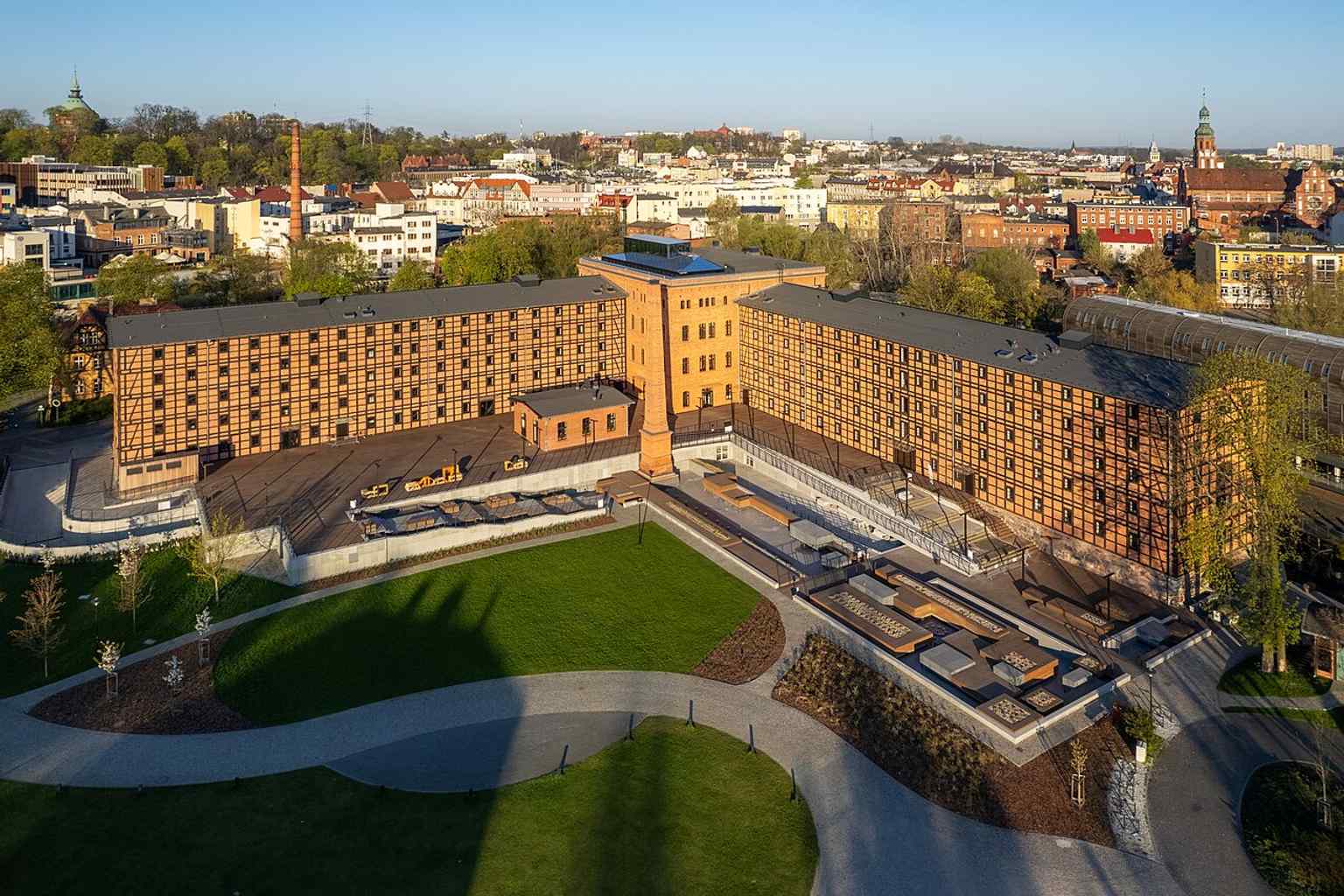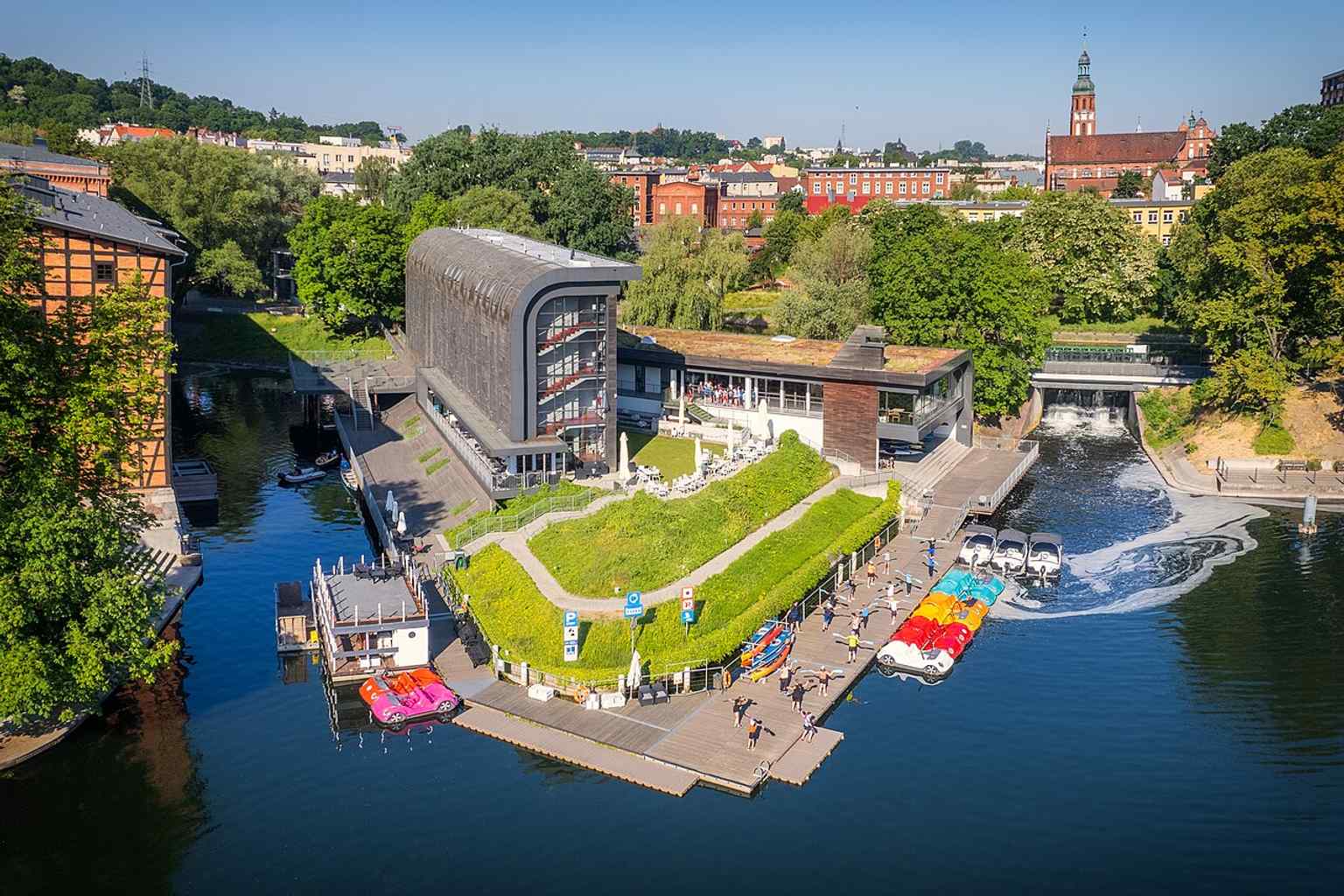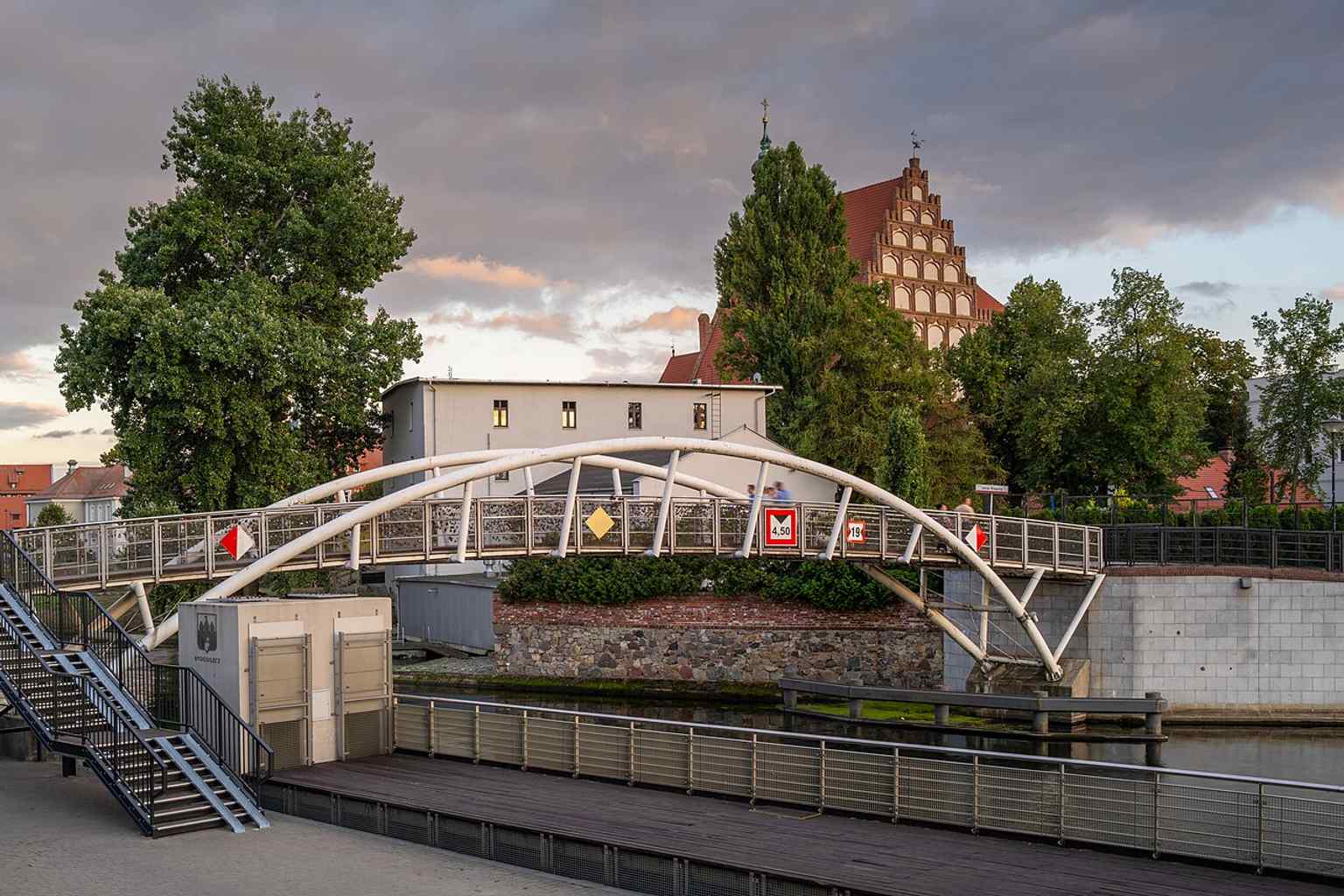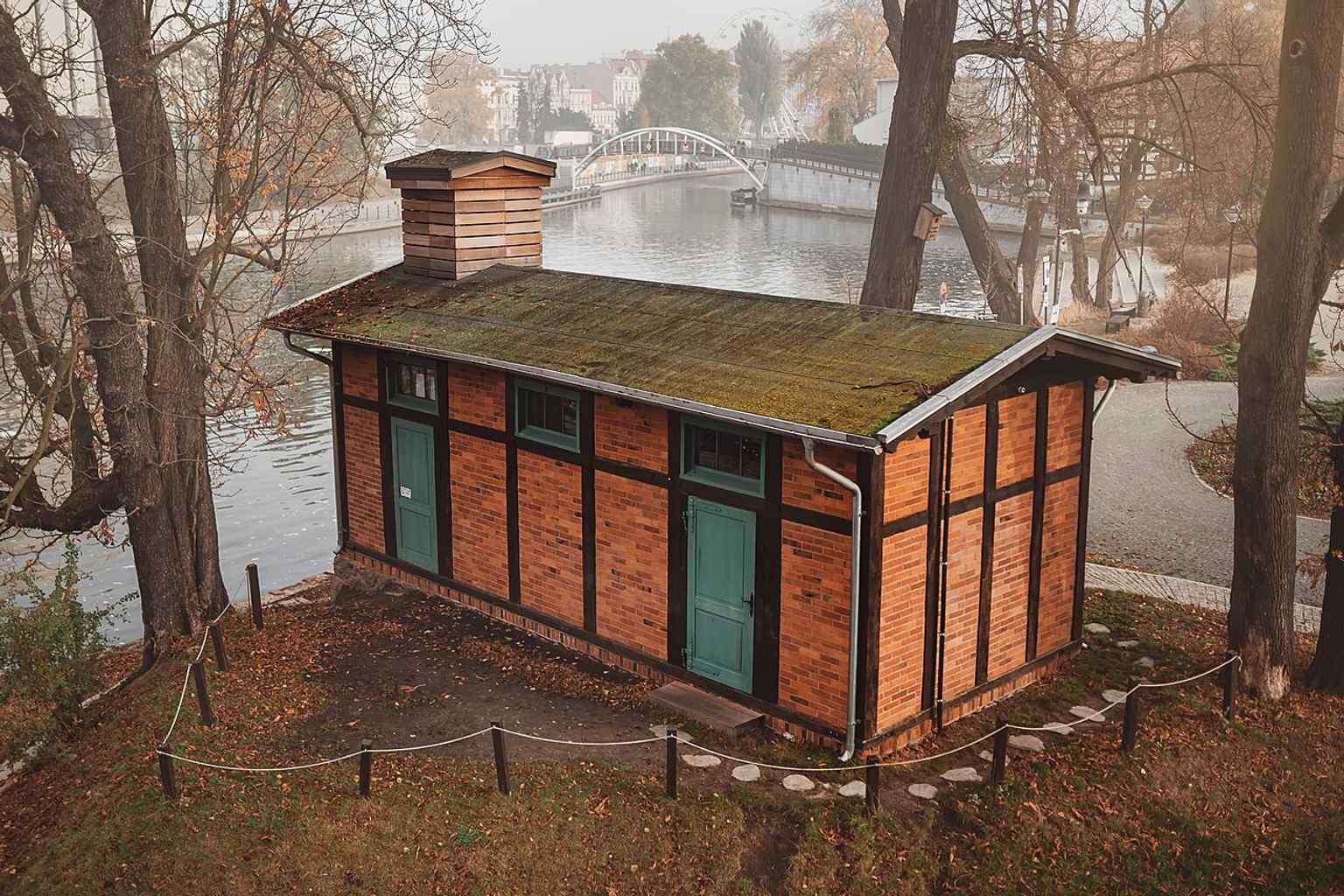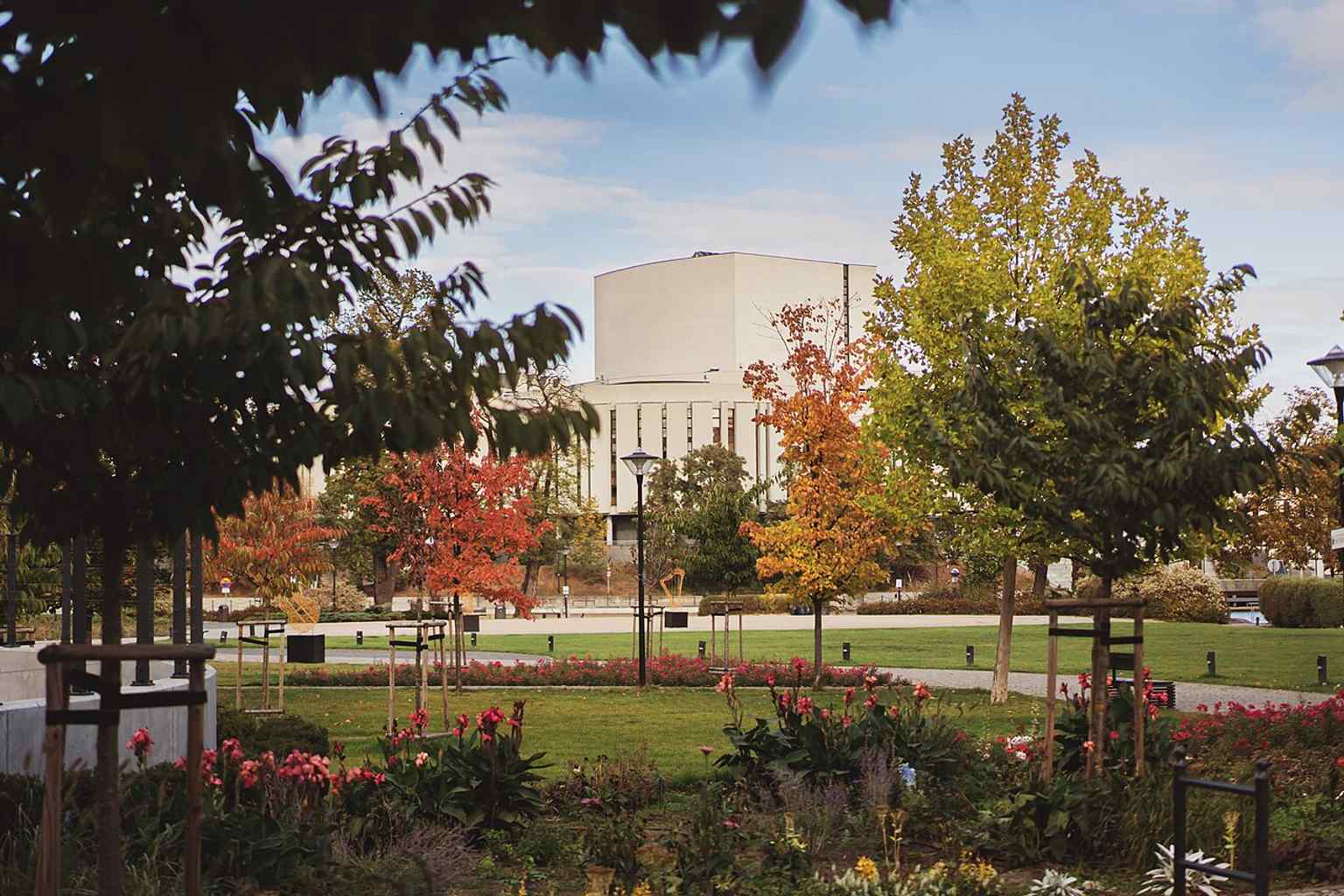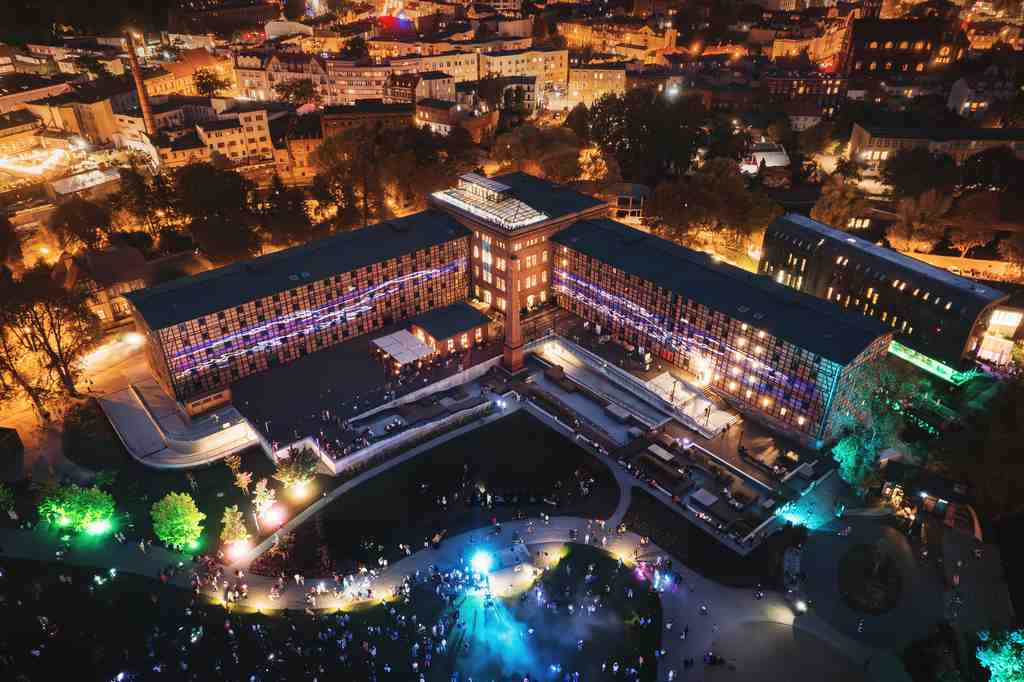
Look for the low island edged by stone quays and long brick mill buildings, with the chunky red-brown mass of Rother’s Mills as the unmistakable marker.
Mill Island is where Bydgoszcz lets you read its heartbeat in brick, water, and old engineering. It sits between the Brda and a leat, which is just a controlled branch of the river, shaped so water could power machines. For centuries, this was not some decorative patch of green. It was the city’s working engine, once called Royal Island, where mills were already grinding away by the fourteenth century while quieter corners held gardens.
Then money entered the picture... literally. Along Mennica Street - mennica means mint - a royal mint operated here from the late sixteenth century into the late seventeenth. Coins struck on this island traveled far beyond Bydgoszcz, so this little patch of land helped feed people and finance kingdoms at the same time.
The water made that possible. Medieval builders carved channels, raised the Parish Weir - a weir is a low dam that controls water level - and kept tuning the flow until the island became a tight knot of mills, granaries, workshops, and locks. In the eighteenth and nineteenth centuries, Prussian planners pushed the place into a bigger industrial age. The boldest move came with Rother’s Mills in the mid-nineteenth century: a huge brick complex that moved from water power to steam and then electricity, turning Bydgoszcz into a serious grain-processing center with exports reaching Britain and even Brazil.
If you look at your screen for a second, the White Granary’s cellar reveals one of the island’s hidden survivors: Gothic cross-vaults resting on thick brick pillars under an eighteenth-century granary.
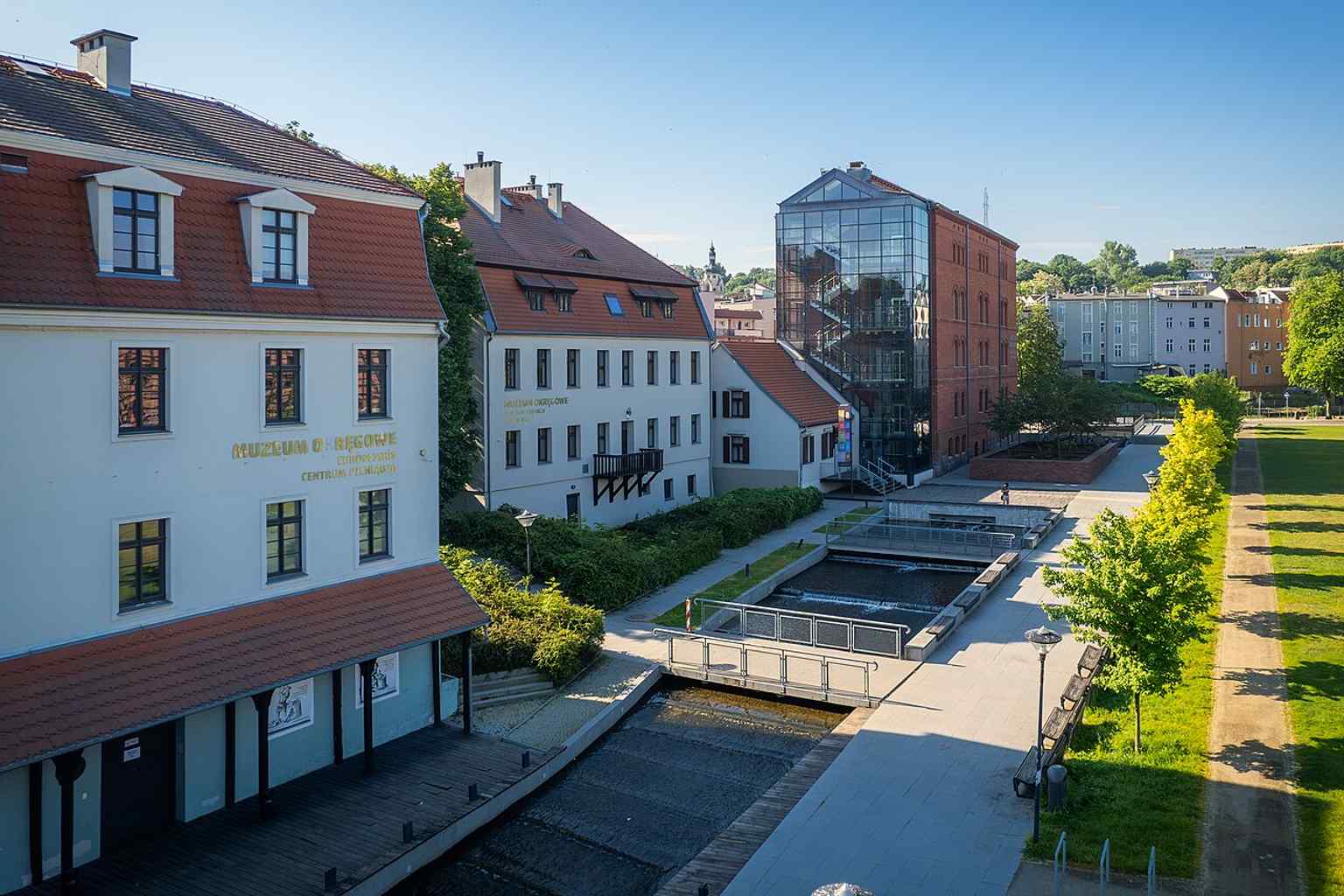
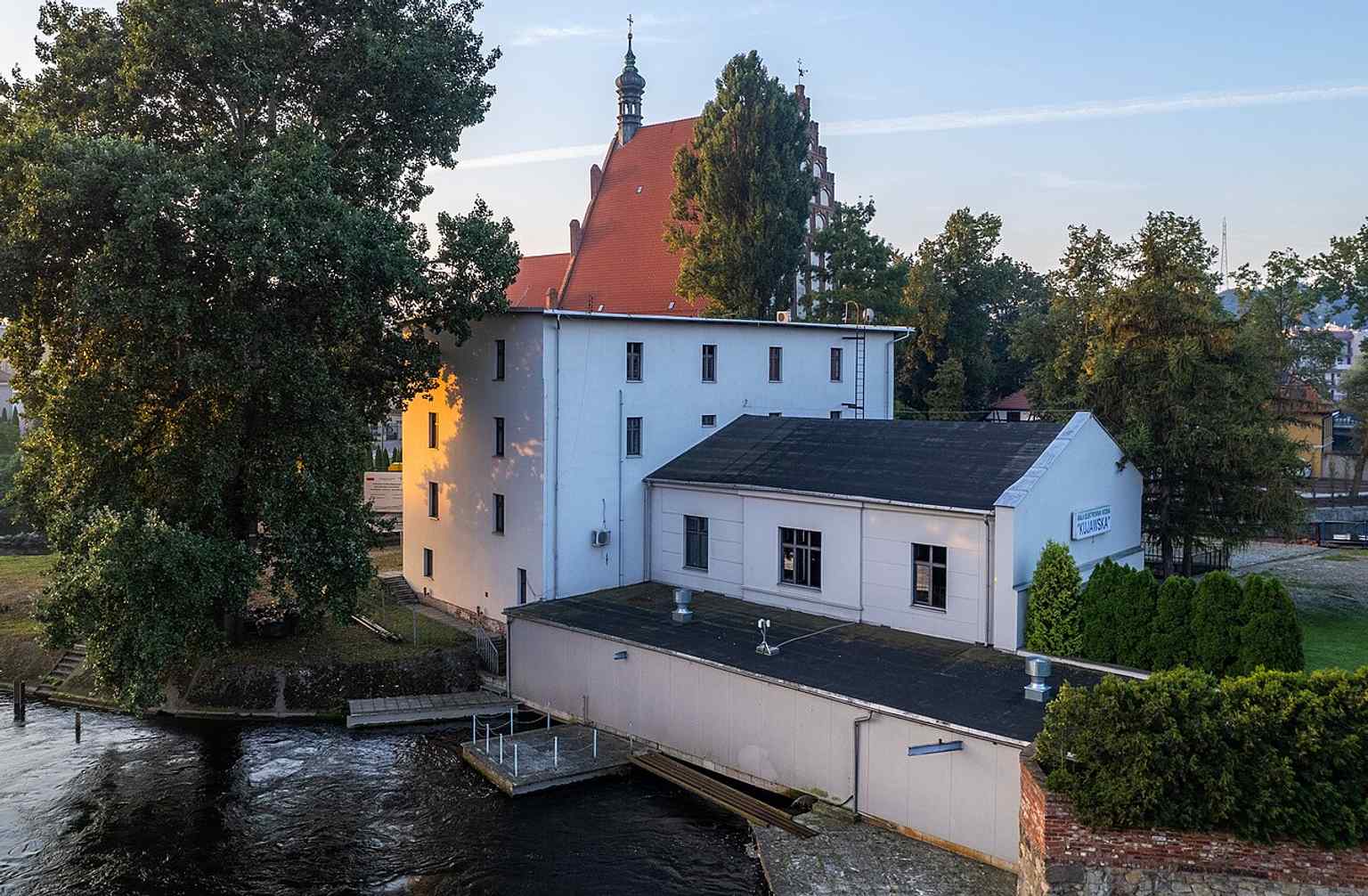
What makes this place sing is its second life. The White Granary now holds archaeological collections. The Red Granary, once the Camphausen mill, became a gallery for modern art. An old mills administration building turned into an education center. A former officials’ villa became the Leon Wyczółkowski museum. Even the Kujawska hydropower plant, created in the early twentieth century to supply electricity to the mills, now also tells the story of energy itself. That’s the Mill Island trick: every hard-working building gets another chapter.
The island kept changing shape, too. In the late nineteen sixties, parts of its historic waterways were filled in. Then, after two thousand and four, the city launched a big revival. Quays were repaired, footbridges stitched the island back into the city, the Międzywodzie channel returned as a cascade, and museums and waterfronts opened up the old industrial core to everyone. By two thousand and twelve, the Polish Tourist Organisation named Mill Island the best tourist attraction in the country.
If you want a quick time jump, check the before-and-after image of Wilhelm Kopp’s old dyehouse across the water; it really shows how this waterfront keeps reinventing its working past.
So what you’re seeing is not just a pretty island. It’s the place where Bydgoszcz learned to turn water into bread, money, power, and culture.
Mill Island is basically the city in miniature: practical, creative, and quietly dramatic. It’s open twenty-four hours a day, every day. Take a moment to soak it in, and when you’re ready, we can head on to the next stop.