
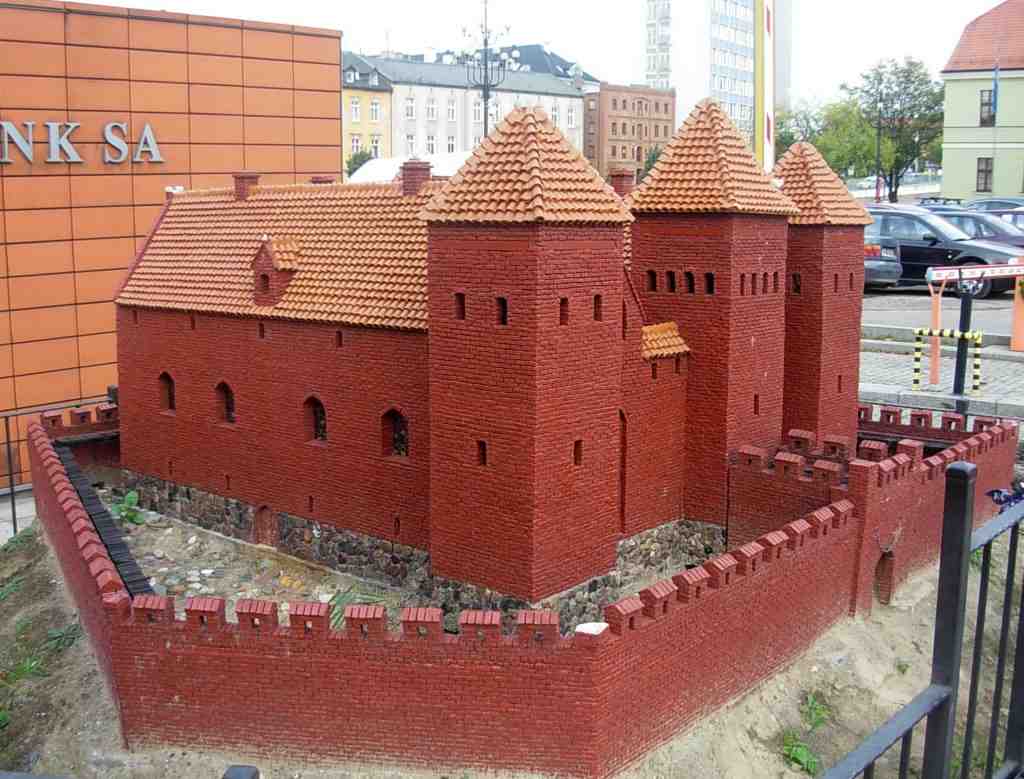
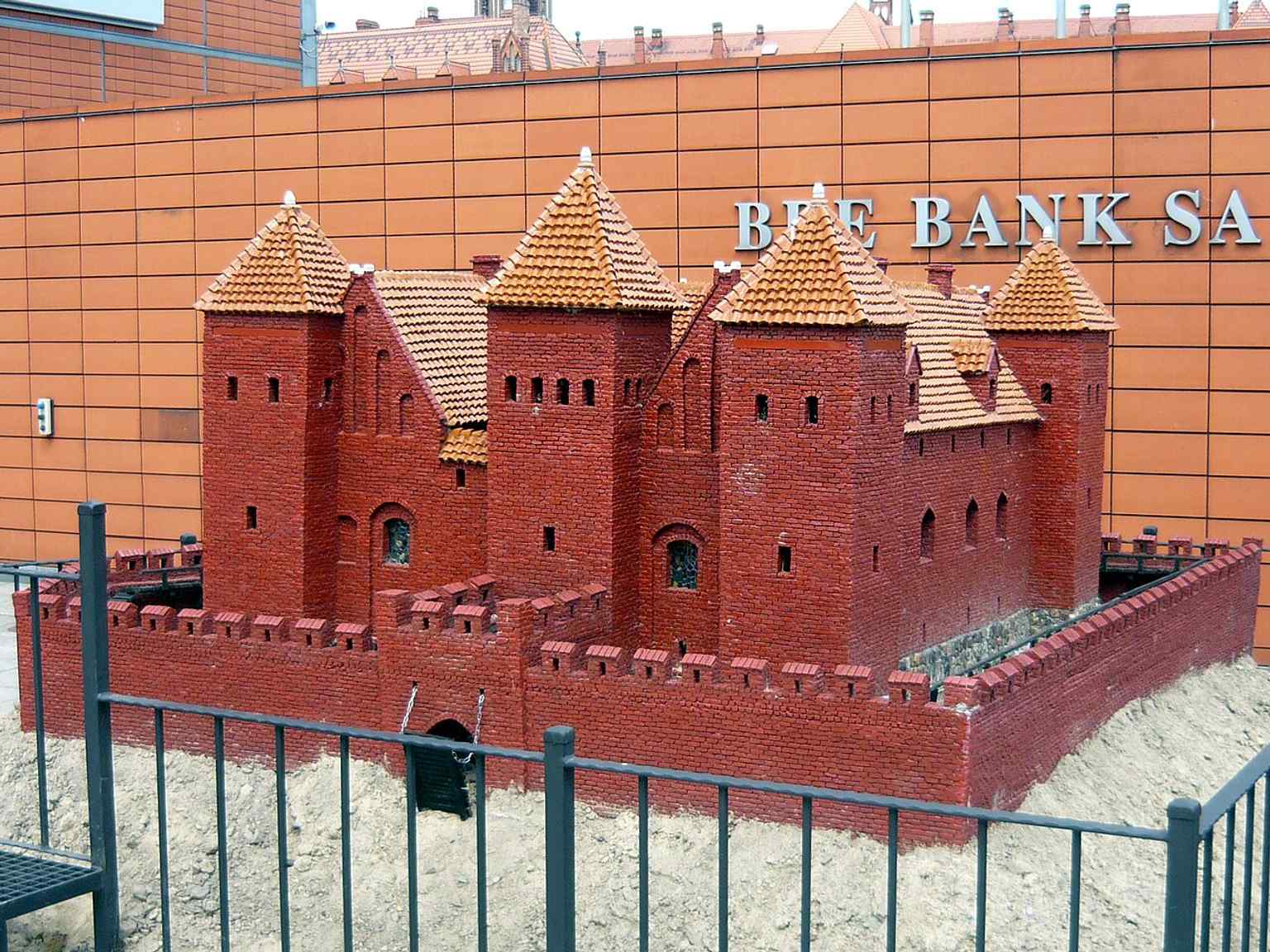
On your right, imagine a red-brick rectangular fortress with steep gabled roofs, corner towers, and a chunky gate tower guarding the entrance.
That missing castle shaped Bydgoszcz for more than three centuries. King Casimir the Great ordered it in the mid-fourteenth century, right on the hill where an older stronghold had burned after a Teutonic attack in thirteen thirty. The location was pure strategy: the Brda River protected one side, and moats wrapped around the others, turning this hill into a hard little knot of power.
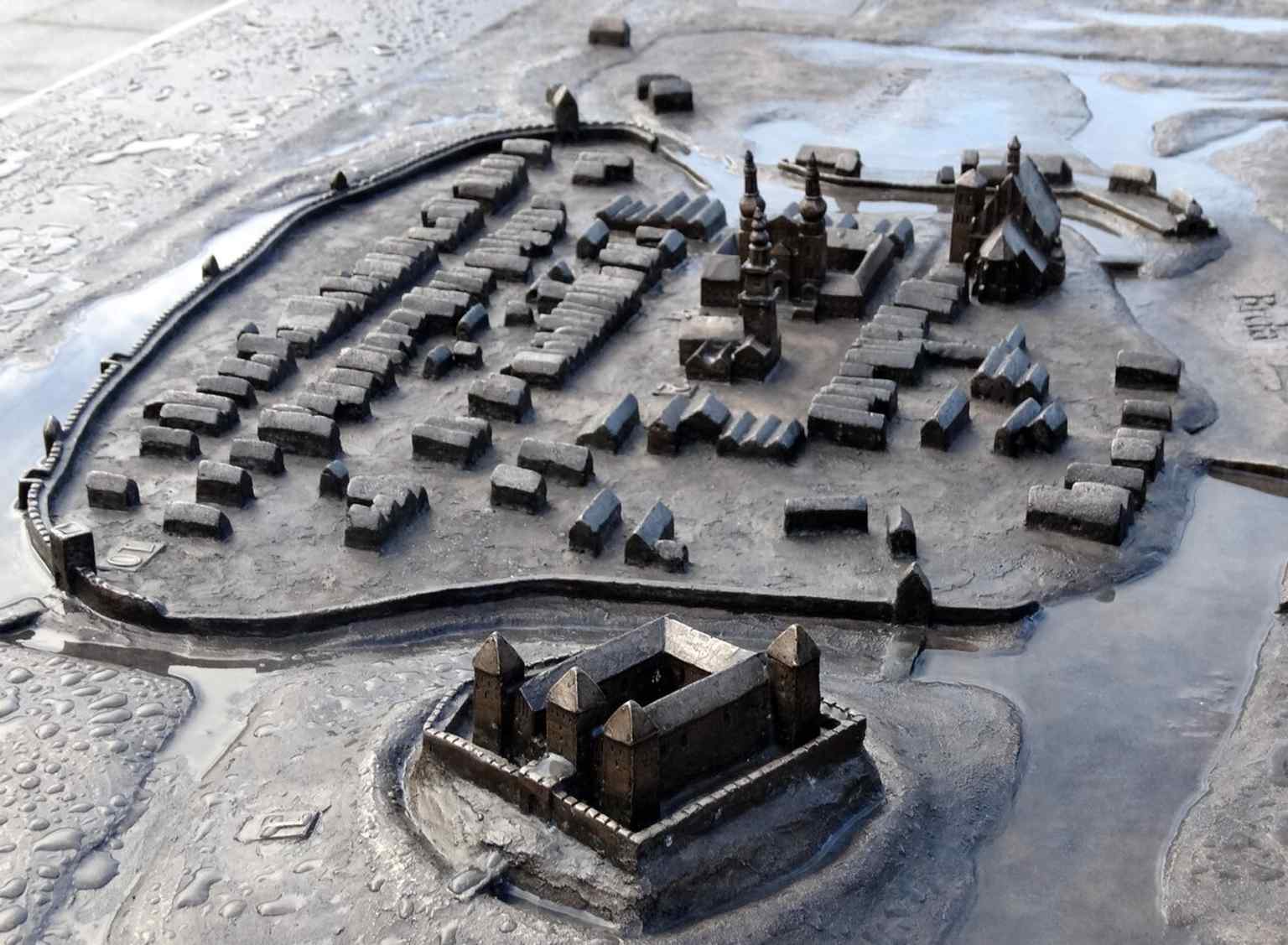
If you glance at the image in the app, you can see how serious the place once looked. The castle followed a rectangle plan, big by northern Polish standards, and builders copied the tough red-brick style of Teutonic castles. Inside stood three heavy residential wings, three stories tall, around an inner courtyard. A brick gate tower controlled the way in, three corner towers watched the edges, and a long outer wall carried a crenellated top - that tooth-like parapet soldiers used for cover. There was a chapel, living quarters, offices, and stores of weapons all packed inside.
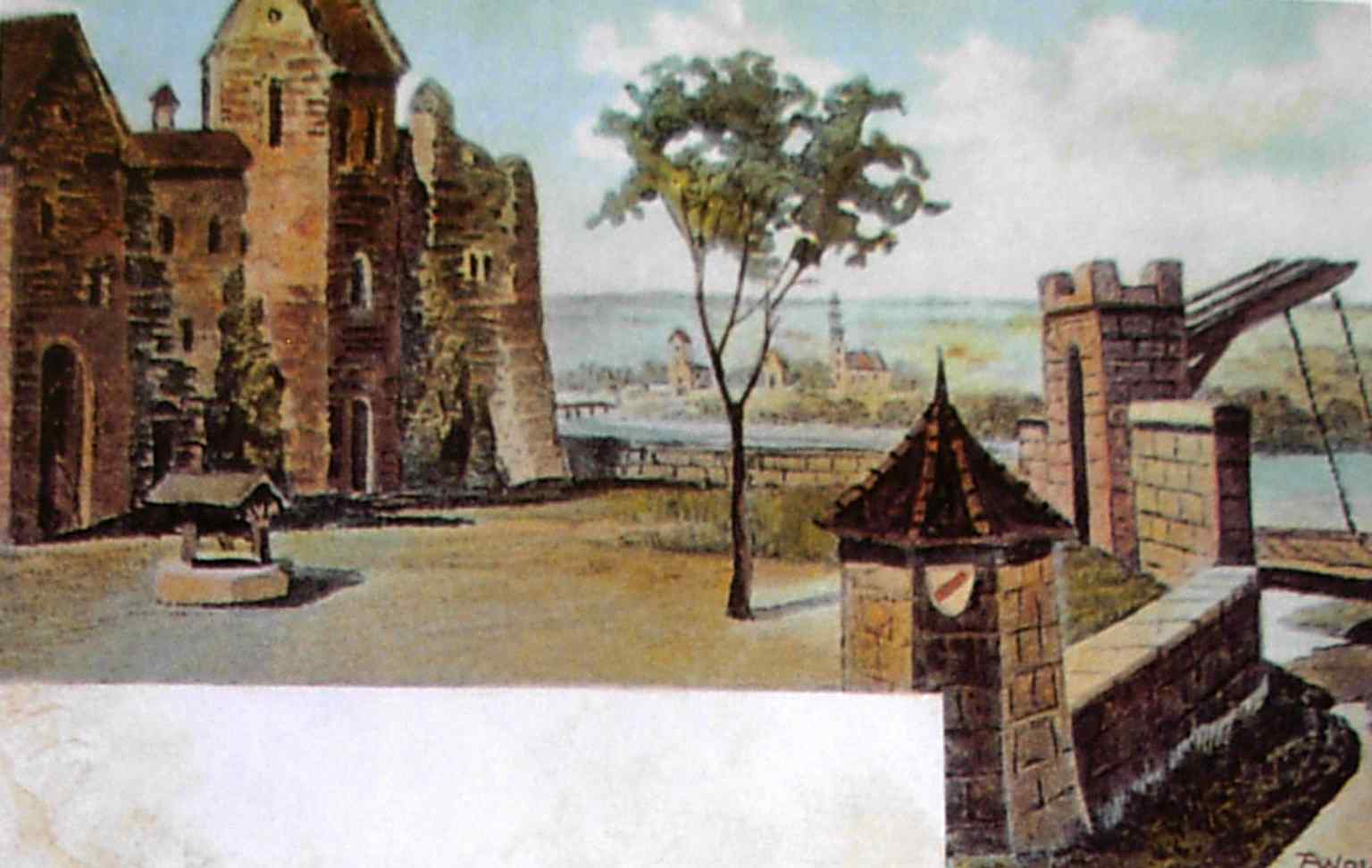
And this wasn’t some sleepy outpost. Nearly every major Polish king passed through. Władysław Jagiełło fought to retake the castle from the Teutonic Knights in fourteen oh nine, storming it over eight days, from late September into early October. After that, he signed a truce here with Grand Master Ulrich von Jungingen - a pause before the war rolled on toward Grunwald. Later, Casimir Jagiellon came here again and again during the Thirteen Years’ War, and King Stefan Batory even lived here for three months in fifteen seventy-seven.
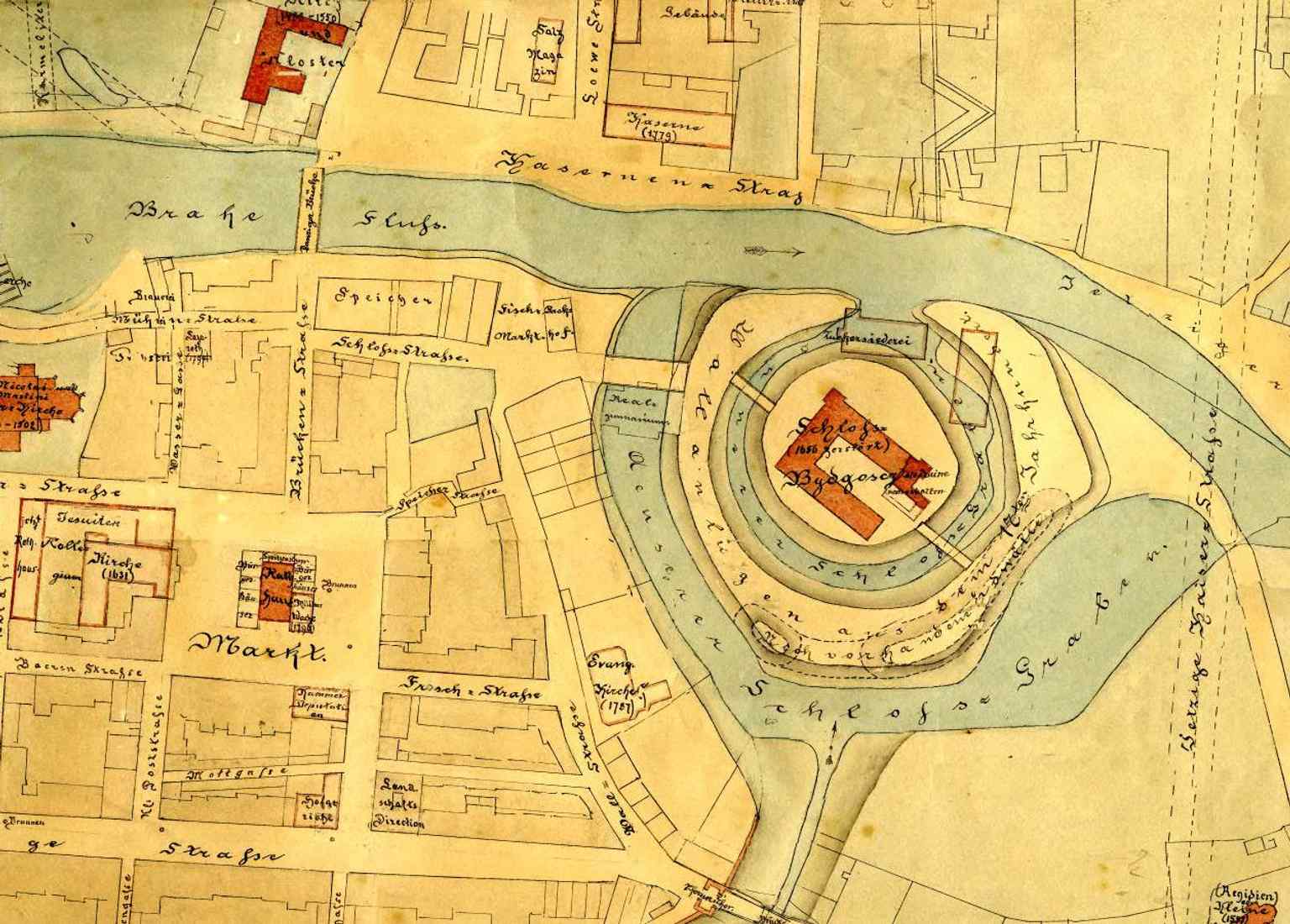
Then the border shifted, and the castle slowly lost its sharp military edge. In the seventeenth century, Jerzy Ossoliński tried to toughen it up with bastions - earthen-and-brick gun platforms protecting the road and bridge. You can check the layout on your screen if you want a map of how the castle, moat, and town fit together.
But the real breaking point came in the Swedish Deluge. Swedish troops took the fortress in sixteen fifty-five, lost it, took it again, and during the fighting in October sixteen fifty-six, the stronghold blew apart. The explosion wrecked the living wings and smashed the surrounding bastions. After that, nobody truly brought it back.
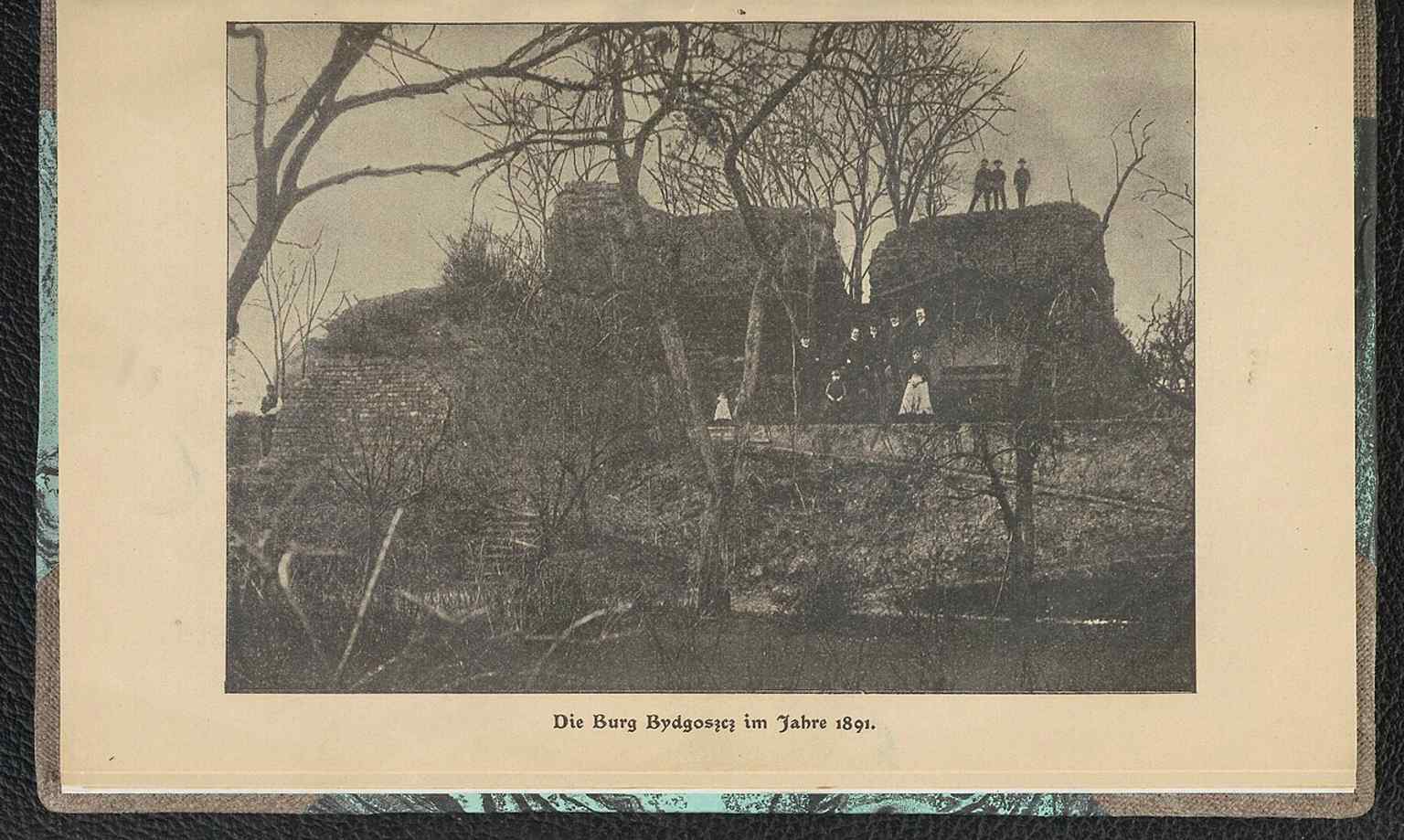
What happened next feels almost brutal in its practicality. Prussian authorities pulled down more of the ruins, reused the brick for hussar barracks, and later the castle’s material ended up in city buildings, especially houses on Długa Street. By eighteen ninety-five, the last visible remains were gone. Even so, archaeologists kept finding traces - cannonballs, Gothic bricks, tower foundations, even a liturgical vessel of gold sheet - little hard facts refusing to disappear.
The castle is gone, but this patch of ground still feels like Bydgoszcz’s old command center.
You can visit this site anytime, since it’s open around the clock.
Take that in for a second. When you’re ready, we can wander on to Kościeleckich Square.






.jpg)