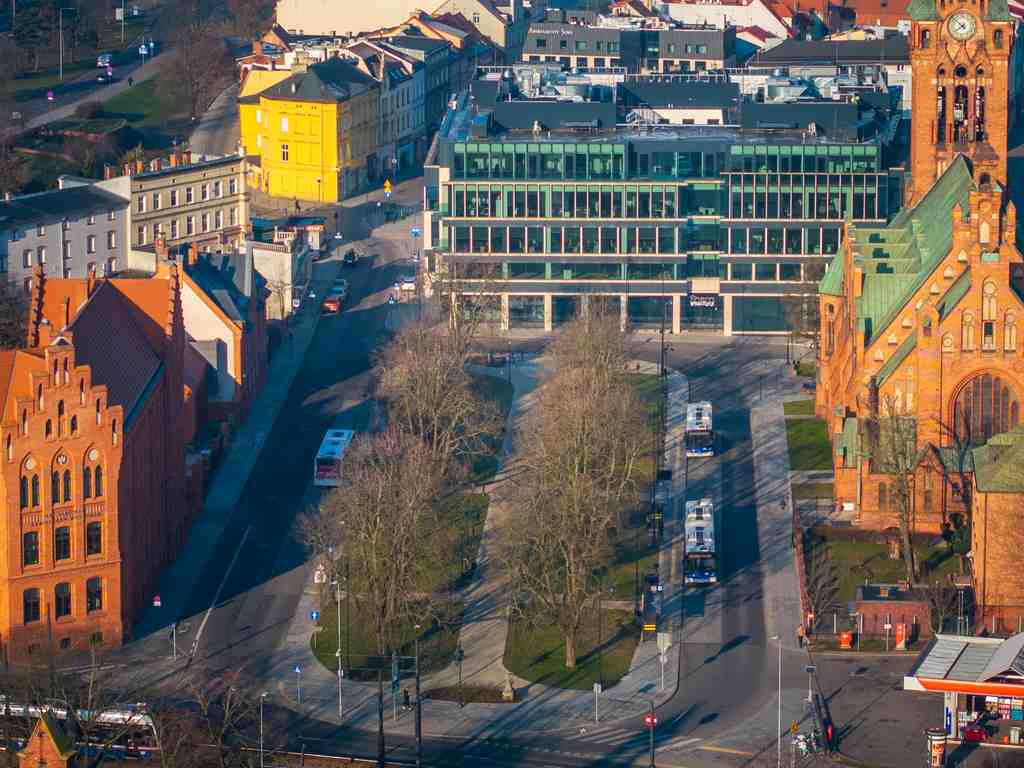
Look for a broad rectangular square paved in pale stone, crossed by straight paths and geometric beds, with rows of chestnut trees as its signature marker.
Plac Kościeleckich feels calm now, but this patch of ground has lived a bunch of different lives. For centuries, it sat beside a swampy arm of the Brda. Just north of here stood the early Bydgoszcz stronghold, and after its destruction in the fourteen hundreds, King Casimir the Great pushed up a brick castle ringed by a moat. That fortress mattered in the Polish-Teutonic wars, then the Swedish Deluge blew it apart with mines. After that... the place drifted into neglect, part wasteland, part garden plots.
And here is the wild part: for decades, children at the little Alf kindergarten nearby played above those buried royal walls without knowing it. Only after the building came down in two thousand and twenty-four did archaeologists uncover remarkably well-preserved castle remains. So this square is not just near history... it is sitting on top of it.
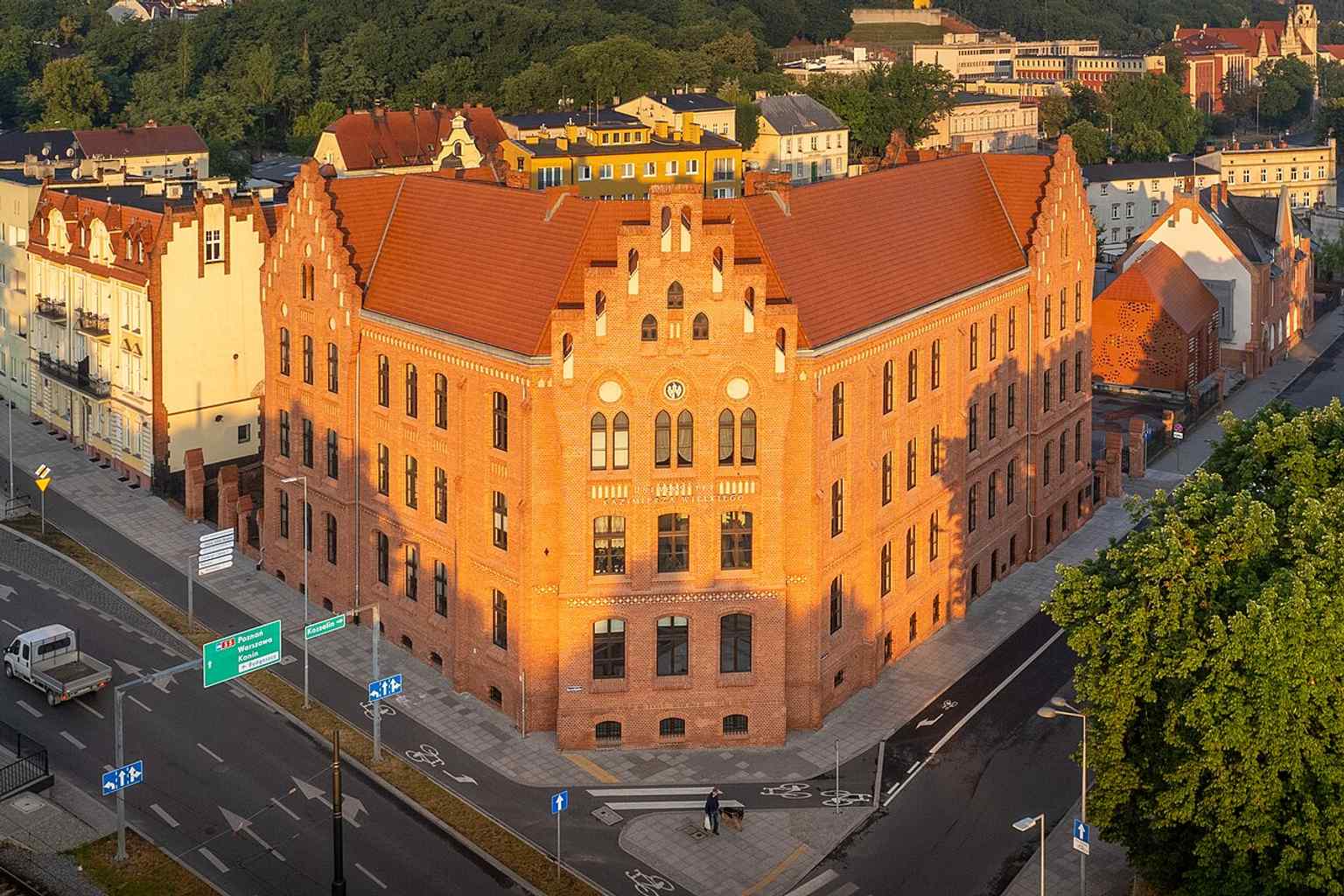
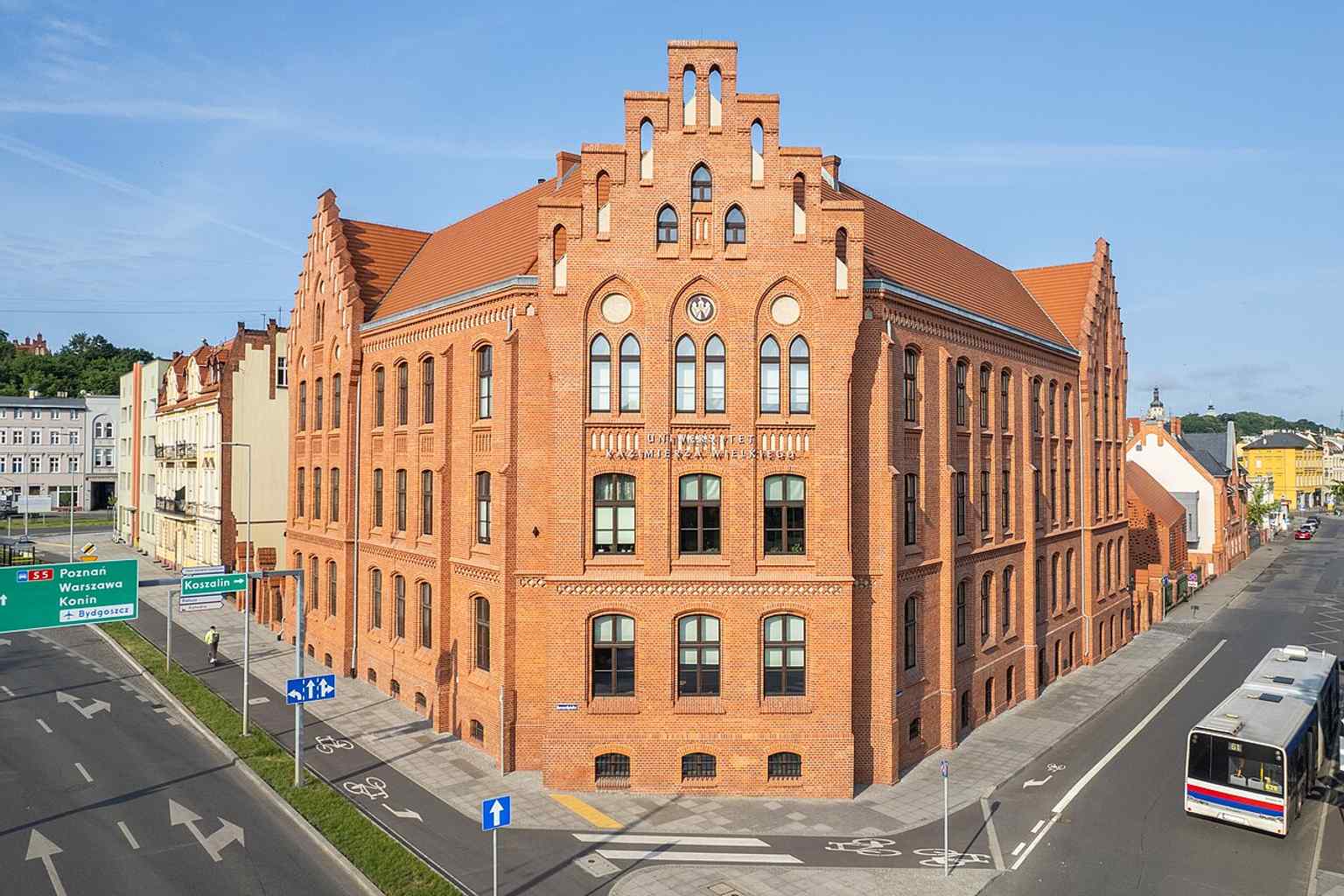
The square itself arrived much later. In eighteen ninety-nine, Prussian officials reshaped the old castle hill and laid out this urban space. The big northern anchor became the new neo-Gothic Evangelical church, finished in nineteen oh five and designed by Heinrich Seeling. Along the south side, Carl Meyer gave the square two more important neighbors: a former folk school and, in nineteen oh eight to nineteen oh nine, the Auguste-Victoria-Heim, an infant shelter that answered a grim problem of the era, high infant mortality. Today that building serves culture instead of medicine, which is a pretty graceful second act.
If you want the bird's-eye version, take a peek at the app image showing the renewed layout and the chestnut rows from above. Those trees matter. Gardeners planted chestnuts here in ordered rows in nineteen oh eight, and they became the square's signature. When the city tried to remove more of them in two thousand and seventeen, locals fought back hard. Conservation officials stepped in, the surviving trees stayed, and the recent renewal let them remain the stars.
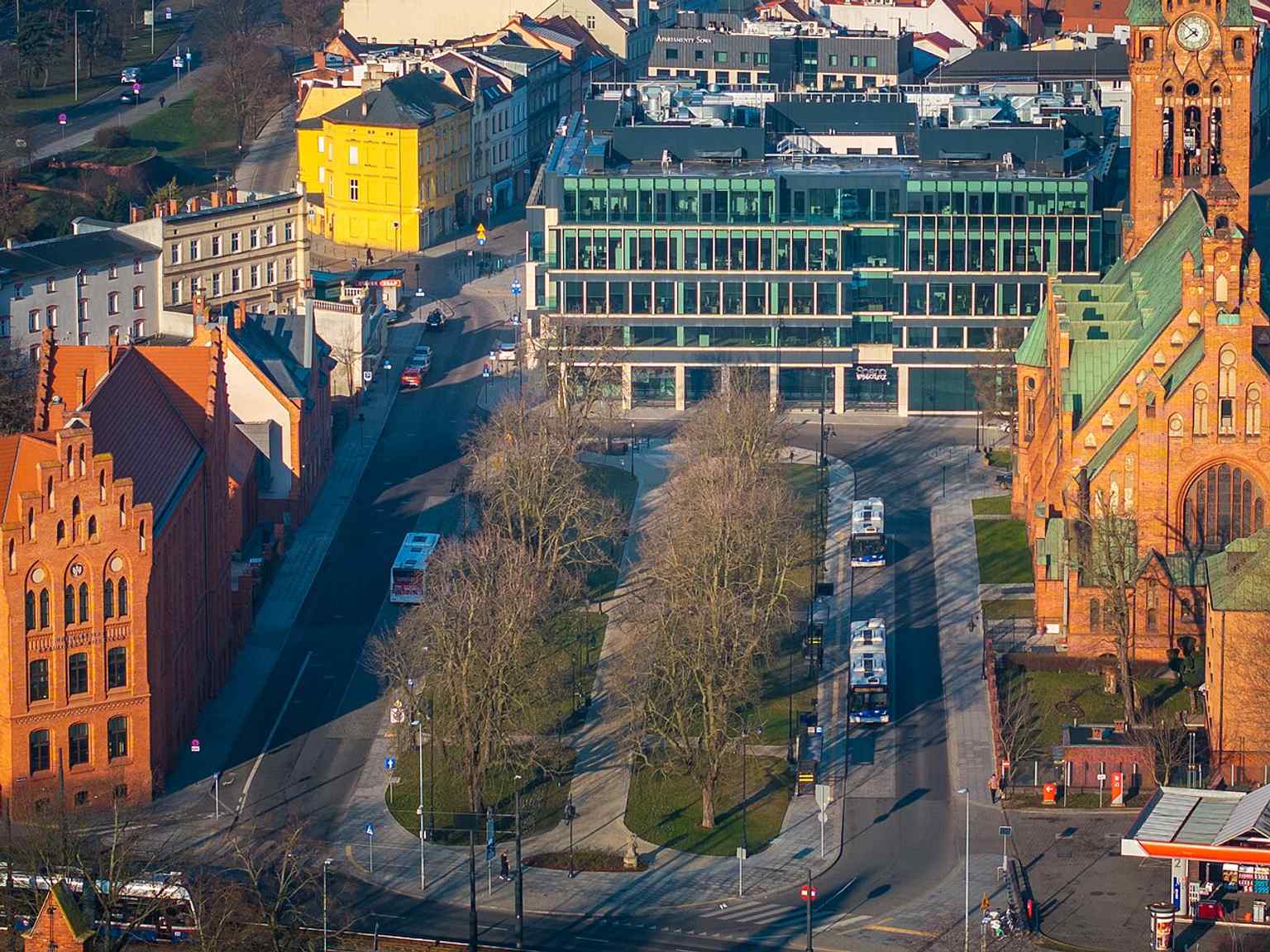
This place also had a loud, practical chapter. From nineteen thirty-five into the nineteen seventies, Plac Kościeleckich served as Bydgoszcz's bus station. That happened after the old station at Stary Port proved almost absurdly dangerous: in nineteen thirty and again in nineteen thirty-one, buses rolled straight into the Brda. In one case, a gas station worker's mistake sent a vehicle backing into the river. So the city moved the hub here, to dry ground. Later, the terminal vanished, and a modern glass-and-granite office block rose on part of that site; you can spot it in the app if you like.

The name Kościeleckich honors the Kościelecki family, royal governors who helped Bydgoszcz thrive in its golden age. Somehow that fits. This square keeps turning old ground into new purpose... and never quite gives up its secrets.