
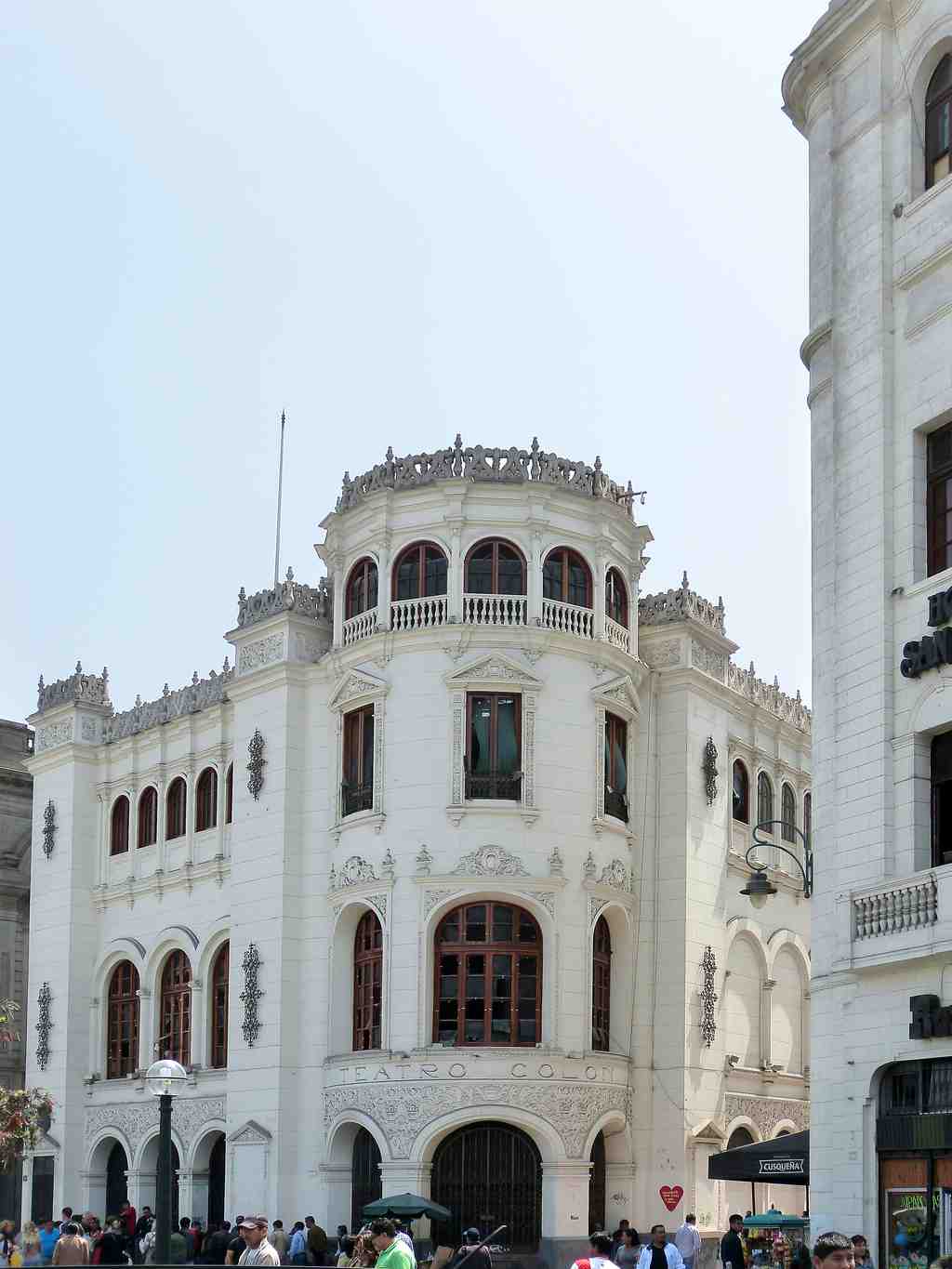
Construction of the theater began in 1911 and was completed in 1914. The architect behind this impressive structure was Claude Sahut, a French architect who also designed and built various other works in Lima during the early 20th century. The theater was inaugurated with its first play, "Los Fantoches," performed by the "Fabregas" Theater Company.
During its early years, the theater hosted a wide range of shows and performances by small theater companies, both local and international. However, in 1921, it shifted its focus to film screenings and gradually became exclusively for film reproduction by 1927.
In an effort to adapt to its new role as a cinema and enhance its appearance, the theater underwent a remodeling process in 1936. This included the removal of independent boxes on the first floor and the addition of another floor to the structure. These changes aimed to create a more harmonious look with the surrounding buildings.
In 1972, the theater was expropriated by the Revolutionary Government of the Armed Forces of General Juan Velasco Alvarado and later declared a National Monument, becoming part of the Immovable Cultural Heritage of the Nation. Unfortunately, in the 1980s and 1990s, the theater fell into decline and became an adult movie theater due to the economic crisis and the decline of cultural spaces in Lima.
However, in 2004, the Teatro Colón was auctioned and acquired by the Theater Directorate of the Ministry of Culture. A project called "Proyecto Cultural Colón Theater" was established in 2005 with the goal of restoring the deteriorated structure and transforming it back into a cultural space.
The Teatro Colón's facade stands out with its soft lines and elegant design. Its interior is described as small but elegant, with simple and artistic decoration. The architecture offers a graceful and cheerful atmosphere, complemented by a beautiful view over the now-disappeared Plaza Zela.
Today, the Teatro Colón is located in front of San Martín Plaza, between the Giacoletti Building and the Club Nacional. It serves as a physical reminder of Lima's vibrant cultural heritage and is a testament to the rich history and resilience of this captivating city.
Shall we move on to our next stop?


