
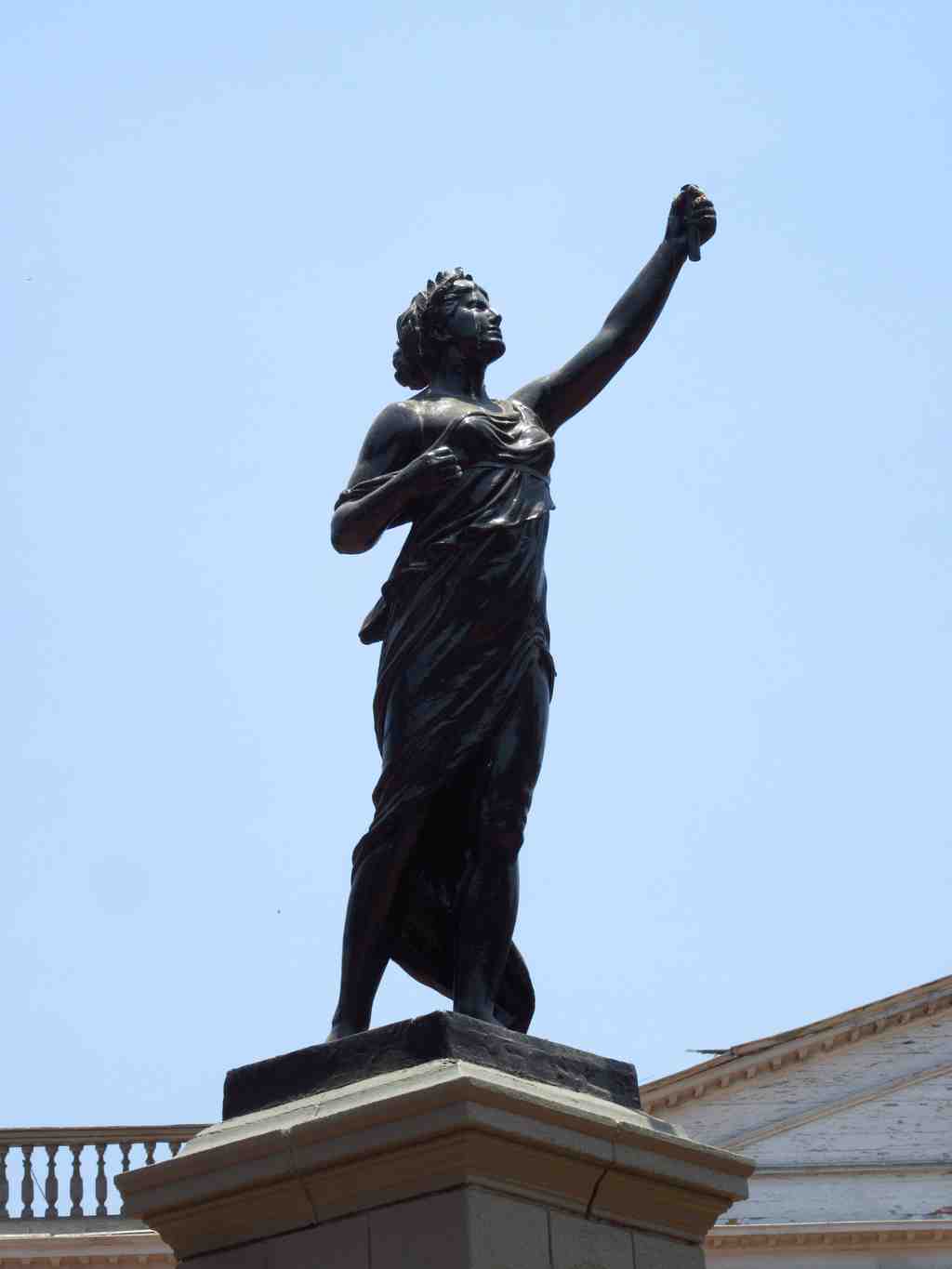
The statue portrays a standing female figure, adorned in a light tunic and wearing a laurel wreath on her head. It is placed on a 4.30 meter high pedestal, giving it a commanding presence in the plaza. In fact, both the sculpture and the Plaza Francia were declared a monumental urban environment in 1972, recognizing their cultural significance.
In 2018, La Libertad was declared Cultural Heritage of the Nation, solidifying its importance in Peru's history. The statue has a fascinating backstory tied to the celebration of Peru's Centennial of Independence in 1921. Various foreign colonies in Lima planned to gift something to the city for this milestone event. Among them, the French colony intended to give a sculpture that was initially meant to be placed in the Plaza Mayor. However, due to delays, they were unable to present their gift on time.
In 1925, the project for the statue was revived and a new commission, led by French engineer Michel Fort, was formed to raise funds for the work. A competition was held in Rome to select the sculptor, and René Bertrand-Boutée emerged as the winner. He had a remarkable portfolio of bronze sculptures and busts to his name.
The installation of the statue and its base was carried out by Florentino Palma, using white granite from Amancaes. Additionally, four ornamental chandeliers made of bronze and iron, standing at 4.55 meters tall, accompanied the sculpture. A bronze plaque was also cast and carved, which read "Homage from the French colony to the Republic of Peru on the first centenary of its Independence."
Over the years, the location of the Statue of Liberty has undergone changes. Initially, it was placed in the Plaza de la Libertad, which was built by the government in 1922. The inauguration ceremony was attended by President Augusto B. Leguía, the Archbishop of Lima, Emilio Lissón, and the diplomatic representatives of France.
In 1935, the sculpture was moved to its current location in Plaza Francia, previously known as Plaza de la Recoleta. It stands near the facades of the Manrique Hospice and the Church of the Sacred Hearts (Recoleta). The statue is oriented in such a way that Liberty points with her raised torch towards the east, embracing the new day and symbolizing freedom.
So, as you stand here in front of the Statue of Liberty, take a moment to appreciate the history and the symbolism it represents for the people of Lima and Peru as a whole.


