
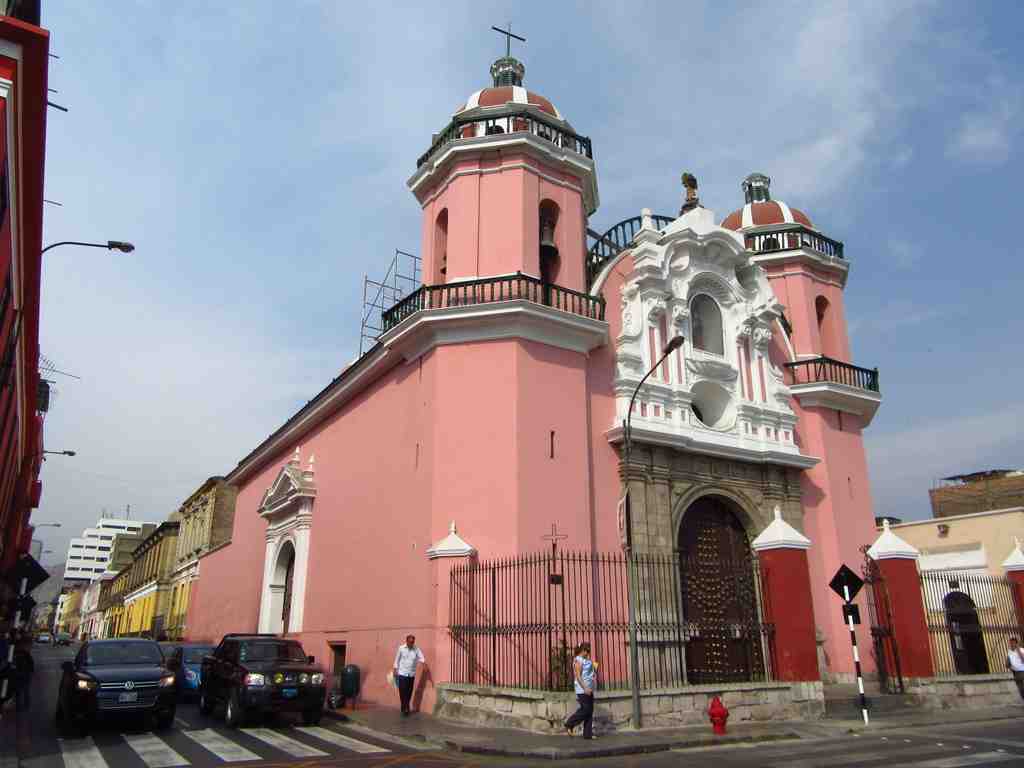
The history of this church dates back to the early 17th century when the first chapel was built in the area. It was financed by a Spanish man named Luis de Ojeda, known as 'Luis Pecador'. Initially, the chapel was connected to an orphanage, which is where it gets its name from, and it was dedicated to the Virgin of Atocha. In 1612, it was elevated to the status of a vice-parish.
Over the years, the church has undergone several changes. In 1657, the church was intervened but the details of the alterations remain unknown. The layout of the church changed significantly in 1685, with a different and inverse plan. Unfortunately, in 1687, the church was devastated by earthquakes, leading it to be used as a warehouse and stable for several decades.
In 1742, a new church was planned, designed by Manuel de Torquemada and built by Cristóbal de Vargas. However, the second structure collapsed during the earthquake of 1746, which occurred the same year it was completed. Interestingly, the current construction's plans correspond to those of the collapsed church. The Sacred Heart Church was inaugurated on April 6, 1766, with the design attributed to the Jesuit priest Juan Rehr.
What makes this church unique is its elliptical plan, similar to the Catholic temples in Austria, making it the only Catholic temple in Peru and Latin America with this design. It is built in the Rococo limeño style, with late Baroque ornamentation. The light blue vaulted roof, from the beginning of its construction, was intended to imitate the nuances of the sky. The main façade is adorned with twin bell towers and features an exquisite combination of curved and straight lines, creating a striking visual appeal.
Inside the church, you will find the subchoir, nave, and presbytery, along with four shallow niche chapels around the curvature. The side cover, added in the 19th century, showcases a neoclassical design, offering a blend of architectural styles within the church.
The Sacred Heart Church is not only a significant landmark in Lima but also a testament to the architectural beauty and historical importance of this iconic city.


