
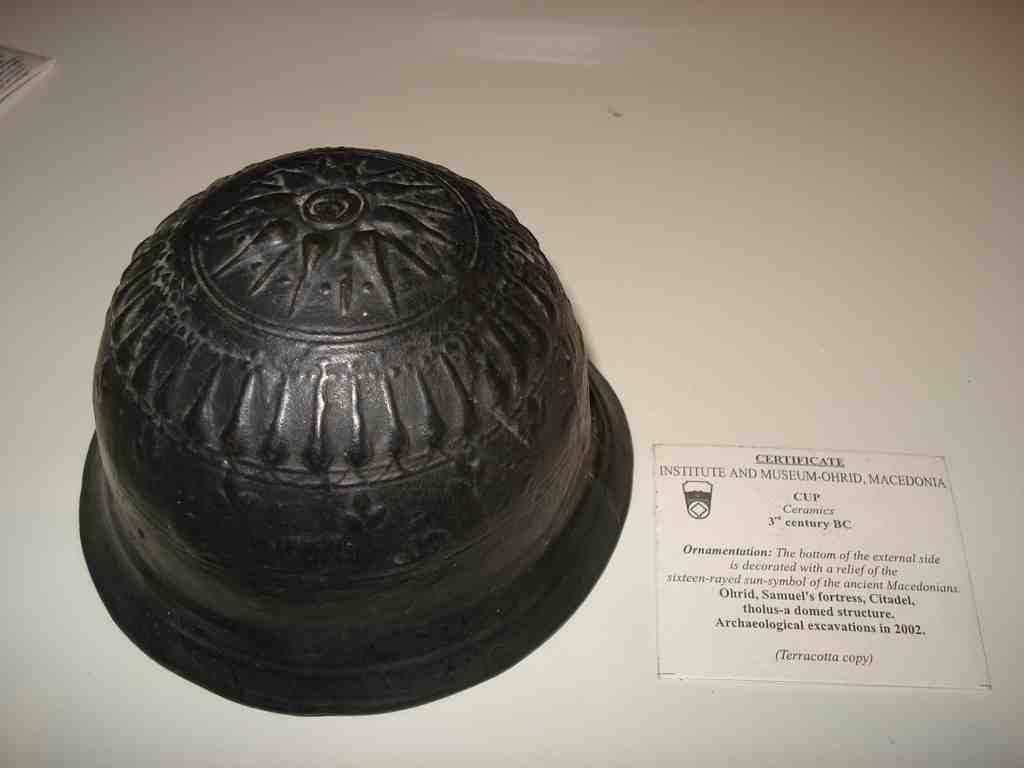
The Institute for Protection of Cultural Monuments and National Museum is right over on your left, identifiable by a permanent architectural emblem showcasing a dark, dome-shaped ceramic cup with a striking sixteen-rayed sun relief. When we were at the Robevi family house earlier, we saw how deeply this city cares about piecing its broken fragments back together, a stubborn survival instinct that runs right through the veins of this very institution.
Long before places like the Louvre even existed, Ohrid had its own version of a museum. Starting way back in 1516, a nearby church safely held the treasury of the local Archbishopric, which is just a term for the headquarters of a high-ranking bishop. For centuries, that collection survived the endless tug-of-war of foreign empires trying to claim this land.
Then, in 1916, researchers digging through the archives made a massive discovery. They finally unearthed the official, original 1516 seal of that ancient general museum. It was an absolute triumph for the locals, a tangible piece of proof validating their long, proud cultural identity.
But they barely had a moment to celebrate. That exact same year, the army of the Bulgarian monarchy occupied the city during the chaos of World War One, aggressively plundering the treasury and carting its most precious valuables off to Sofia. It was a devastating blow to the community, and that incredibly rare 1516 museum seal is still separated from Ohrid today, sitting controversially in a foreign church museum.
Despite that heartbreak, the people here never stopped protecting their past. After the second World War, a local writer named Dimche Malenko put out a desperate, public call asking citizens to donate whatever historical artifacts they had. And the response was incredible. Families brought out hundreds of cherished heirlooms and antiquities they had kept completely hidden from occupying armies for generations. It was this massive act of community defiance that allowed the modern museum to officially open its doors.
The folks working here today even dive into the lake, doing risky underwater archaeology to pull Bronze Age settlements back to the surface.
If you want to check it out inside, they are open weekdays from seven thirty in the morning to three thirty in the afternoon, but are closed on weekends. For now, turn your attention upward toward the grand churches keeping watch over the city, and let us take a two minute walk up the path toward the Church of the Great Sorcerers.




