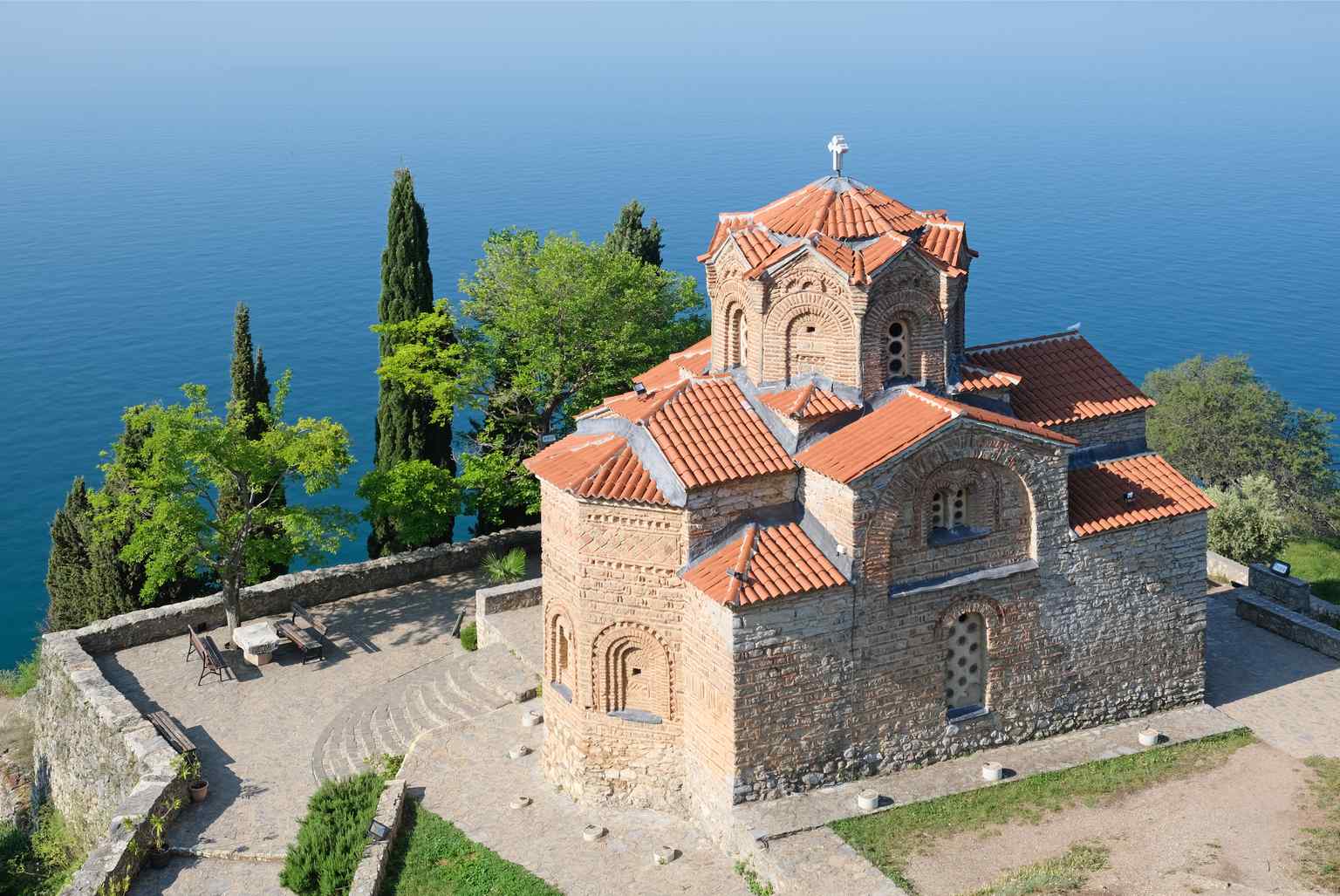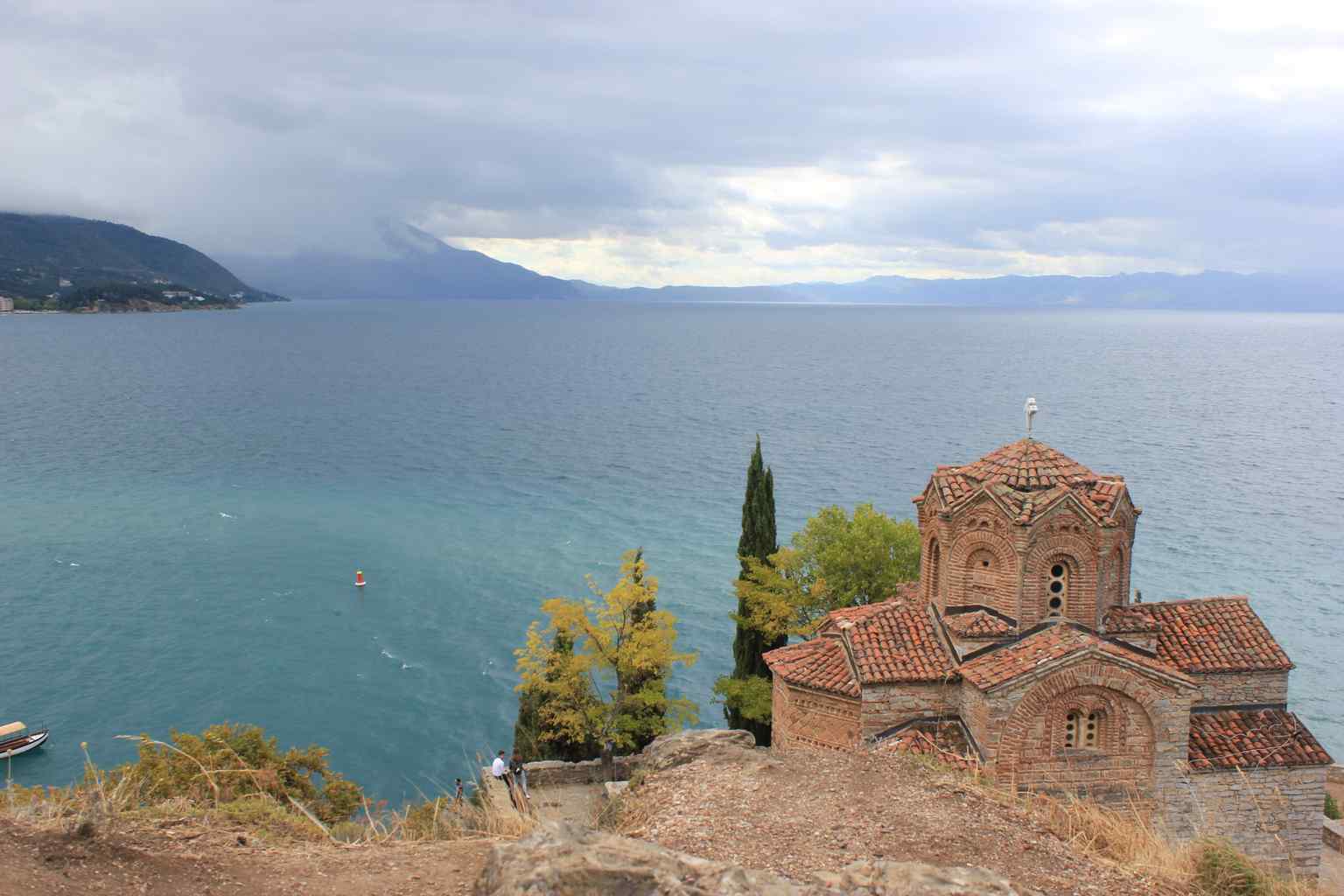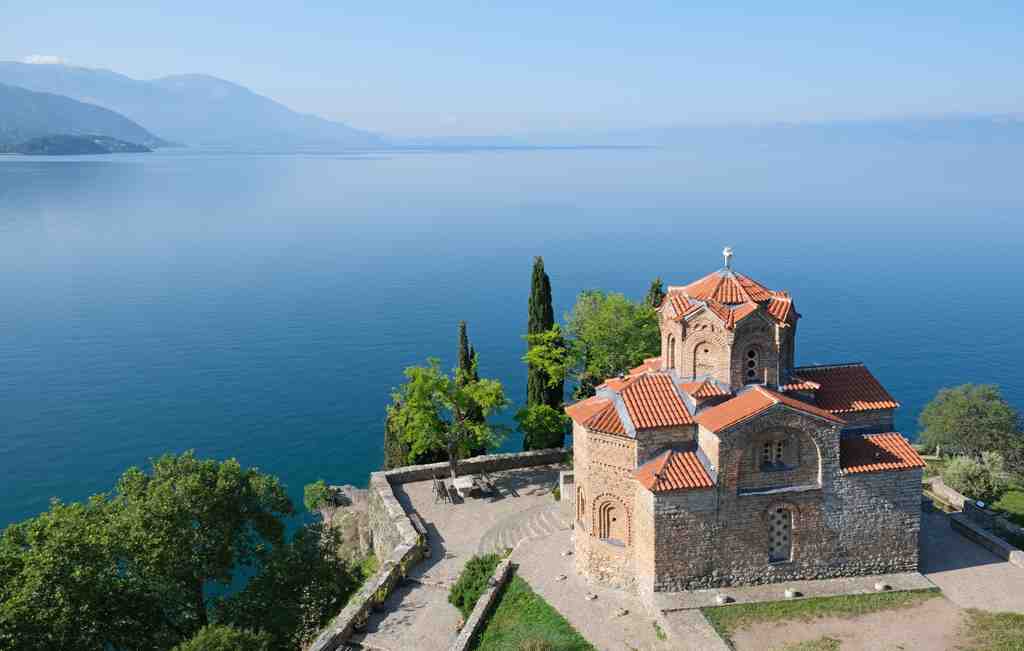
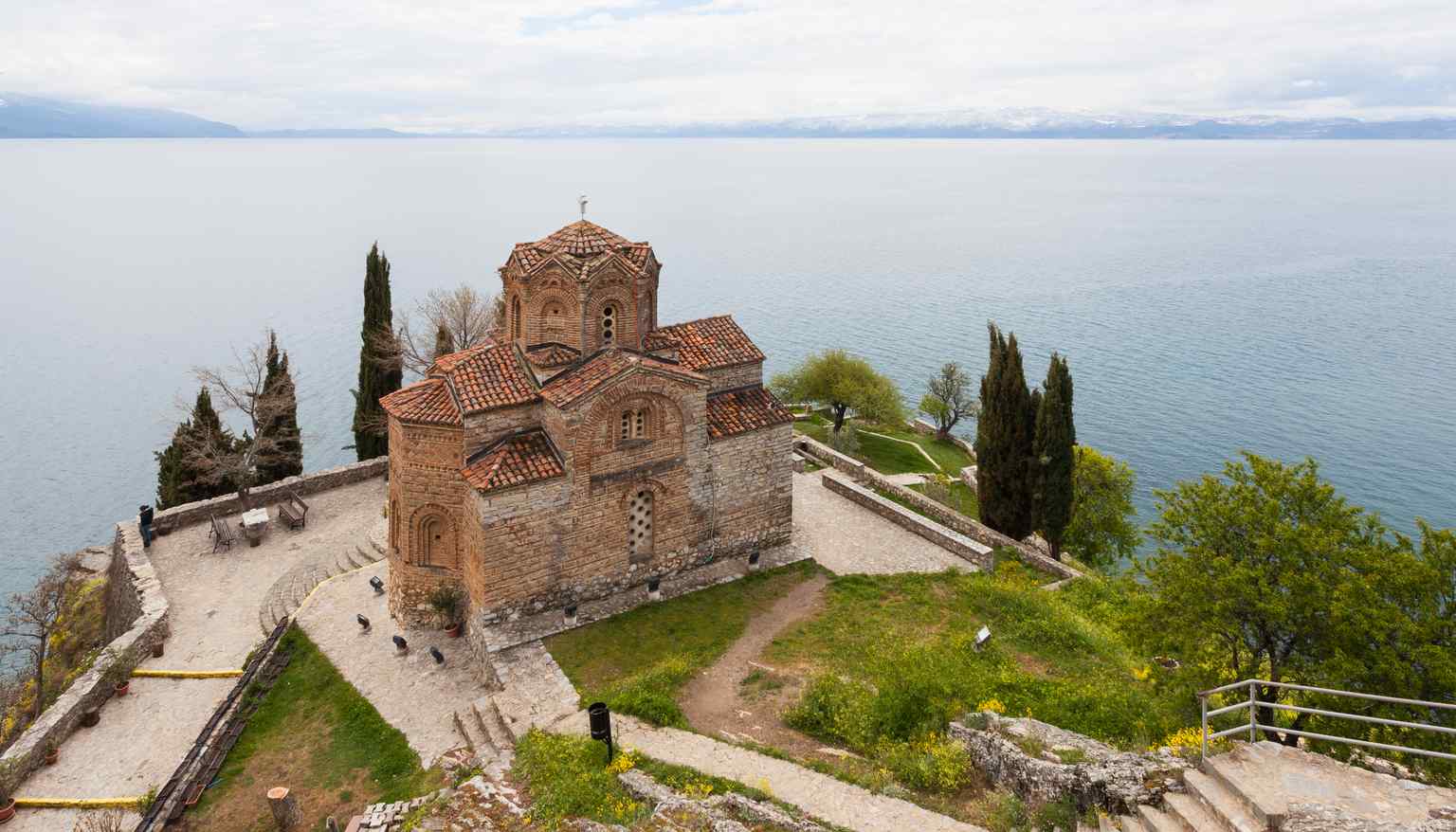
Perched on a plunging cliff to your left is a magnificent structure of layered stone and brick, topped with an octagonal dome and a bright red tile roof. This is Saint John at Kaneo, and its very name comes from the Latin word for silvery, capturing the way the lake waters catch the light at the base of the rock.
It looks so peaceful now, but do not let that fool you. This tiny, picturesque sanctuary was once the epicenter of a massive geopolitical earthquake. Back in the thirteenth century, the mighty Byzantine Empire was fractured after the fall of Constantinople. Everyone was scrambling for power. In the middle of this chaos, the head of the local church, an Archbishop named Demetrios, made a daring move. He brought a powerful ruler, Theodore Komnenos Doukas, right here to this cliff edge. Standing before the altar of this very church, the Archbishop boldly crowned him Emperor of Thessalonica. It was a direct act of defiance against rival powers, transforming this modest stone chapel into the beating heart of imperial ambition.
The people who built this stage for empires remain a mystery, but they left behind clues. If you check out the second picture on your screen, you can see the unique zigzag pattern along the edge of the dome, an architectural feature heavily inspired by medieval Armenian churches. It suggests the master builders traveled here from the far East, leaving a permanent mark of their homeland on the Balkans.
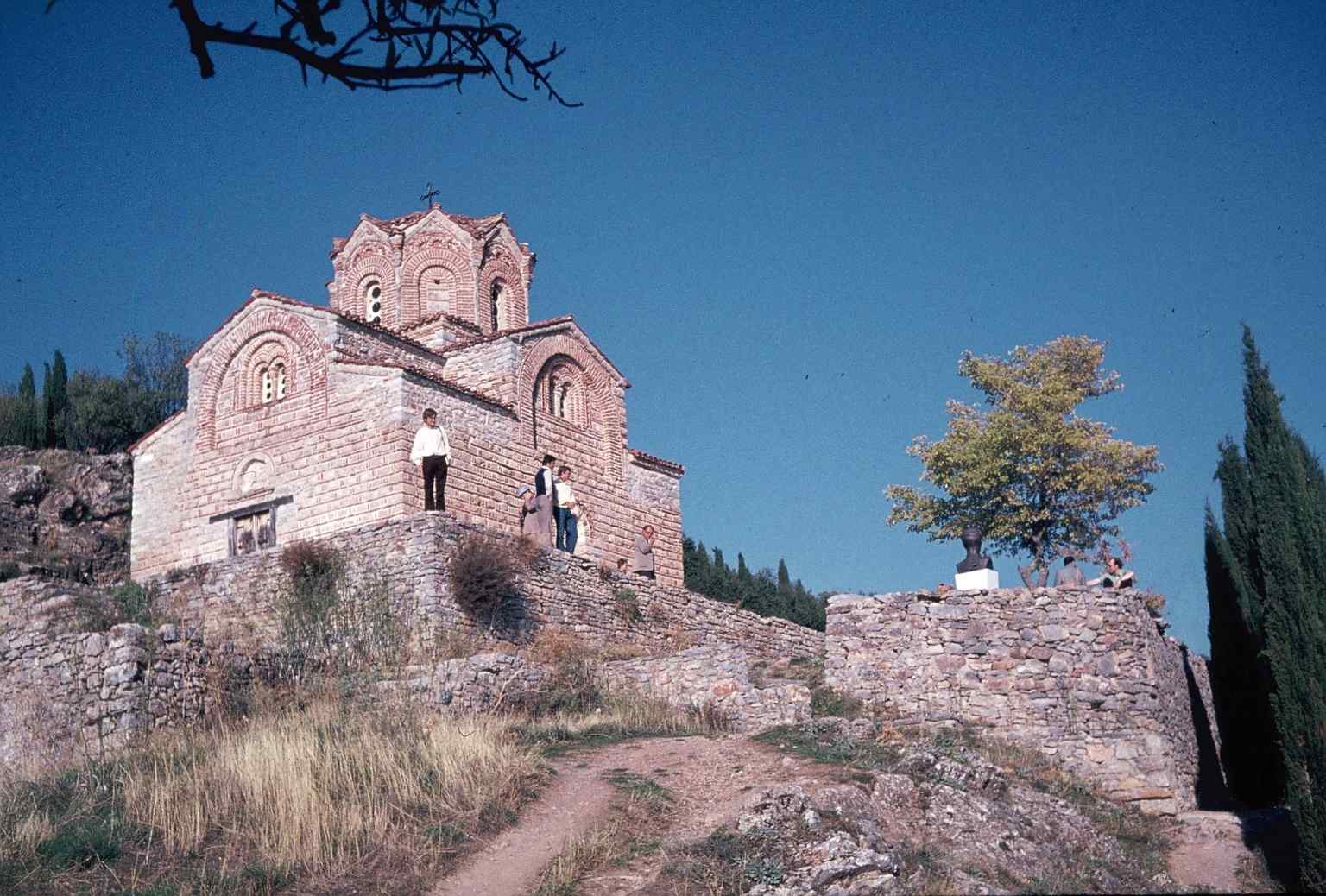
This place outlasted the emperors who tried to claim it. It survived periods of glory, gradual decay under Ottoman rule, and even complete abandonment between the seventeenth and nineteenth centuries. You can take a quick glance at your screen to see a photo of the church from nineteen seventy seven, showing its rugged silhouette before modern restorations replaced the lost arches.
Despite sitting empty for so long, the walls inside still hold brilliant frescoes. These ancient images silently unite the city's greatest figures, placing the third century missionary Saint Erasmus right next to tenth and thirteenth century leaders. It is a powerful visual message that, no matter what flag flew over the city, the deep roots of the people could not be erased. Today, this resilient little building has even achieved global fame as a stunning visual symbol in the Oscar nominated film Before the Rain.
Now... let us trace those deep roots back to their source. We are heading to the final resting place of Ohrid's greatest spiritual father, just a seven minute walk away at the Church of Saints Clement and Panteleimon.