
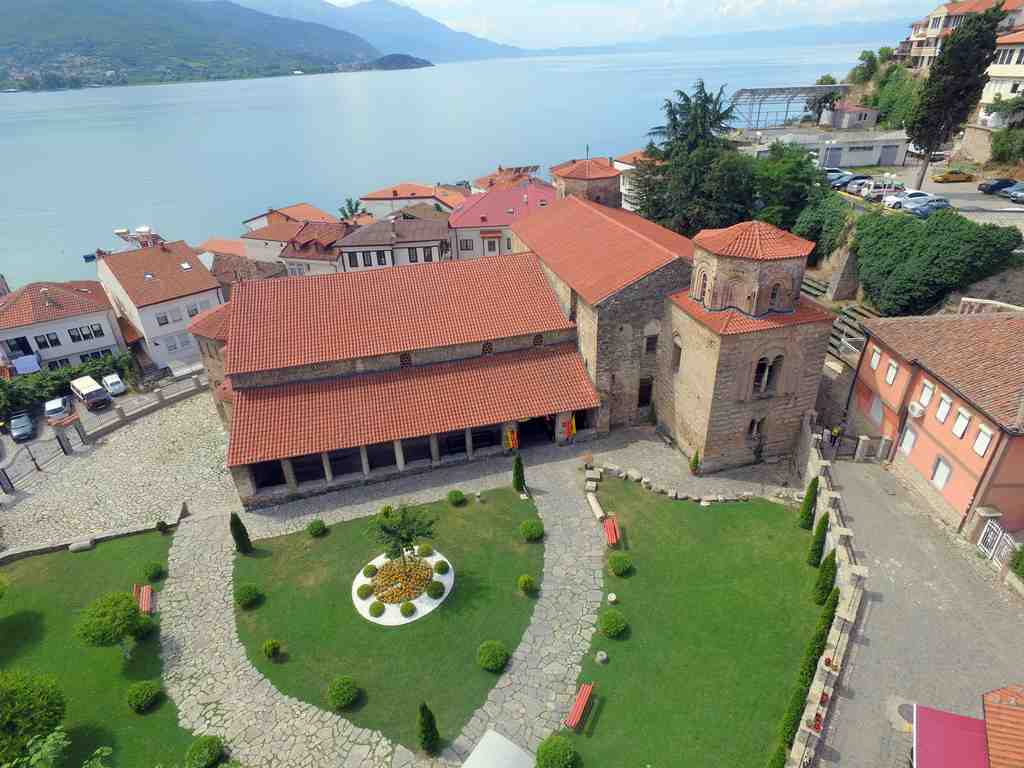
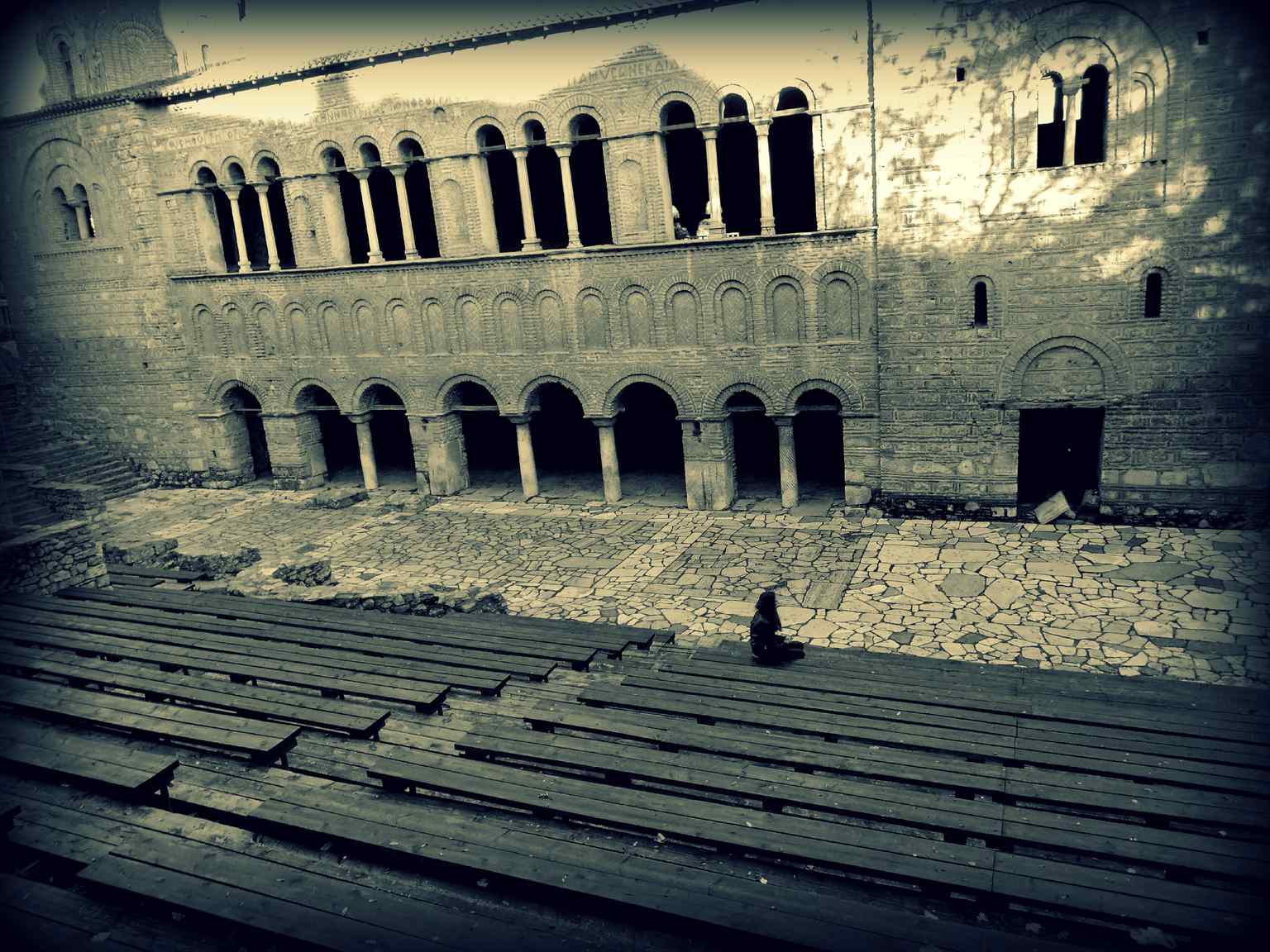
On your left is a massive stone structure defined by a sprawling, multi-level terracotta roof and a striking octagonal domed tower rising on the right side. This is the Church of Saint Sophia. It is one of the largest medieval churches in the region, a true heavyweight of history. Take a glance at your screen to appreciate the sheer footprint of this cathedral from above. Notice that long colonnade in the front. That is an external narthex, basically a grand entrance porch, added in the fourteenth century by Archbishop Gregory.
But the real magic happens inside those thick stone walls. The master builders of the eleventh century achieved absolute Acoustic Perfection here, shaping the interior vaulting so precisely that a single voice can fill the entire space with crystal clear resonance. It is the kind of sound quality modern engineers still chase. In August of 1961, the legendary opera singer Ana Lipša-Tofović stood under these vaults and sang works by Mozart and Beethoven. She later said she felt something almost mythical, something Orphic, in the air that night. That performance birthed the famous Ohrid Summer festival. Decades later, the celebrated Croatian pianist Ivo Pogorelić was so blown away by the acoustics that he called them perfect. The nave, the main central hall of the church, was too intimate to fit his massive crowds, so he actually had to schedule a second concert just to accommodate everyone.
The survival of this space is a story of incredible luck and resilience. In the late fifteenth century, the church was converted into a mosque. The grand dome was leveled, and the magnificent eleventh century frescoes, which are massive religious murals painted directly into the wet wall plaster, were completely smothered in thick, white lime. It sounds like a tragedy, right? Well, that plaster turned out to be a miracle. It acted as a perfect protective shell, sealing the vibrant colors of the Byzantine masters away from centuries of candle smoke, dampness, and destruction.
When restorers finally removed that plaster in the early 1950s, the process was highly emotional. As young conservators worked high up on wooden scaffolding, slowly chipping away the lime, they would sing to pass the time. Their voices bounced off the newly uncovered saints, creating strange, overlapping echoes. It was such a powerful scene that it inspired the famous poem, The Angel of Saint Sophia.
But they almost never got the chance to uncover them. During the Balkan Wars in 1912, this ancient, sacred masterpiece was bizarrely used as a weapons depot. One careless spark could have blown a thousand years of history right off the map.
Inside, those rescued paintings hold a brilliant piece of diplomatic history. The original patron, Archbishop Leo, commissioned a massive artwork of six Roman Popes standing alongside the leaders of the Eastern Church. He did this right before the Great Schism of 1054, making a desperate, beautiful plea for unity just as the Christian world was splitting in half.
If you want to experience the acoustics yourself, the doors are generally open from nine in the morning until six in the evening most days, though they close at four on Saturdays. For now, let us keep moving toward the cliffside, leaving the grand, massive scale of this cathedral behind for something a bit more dramatically isolated on an eight minute walk to our next stop.





