
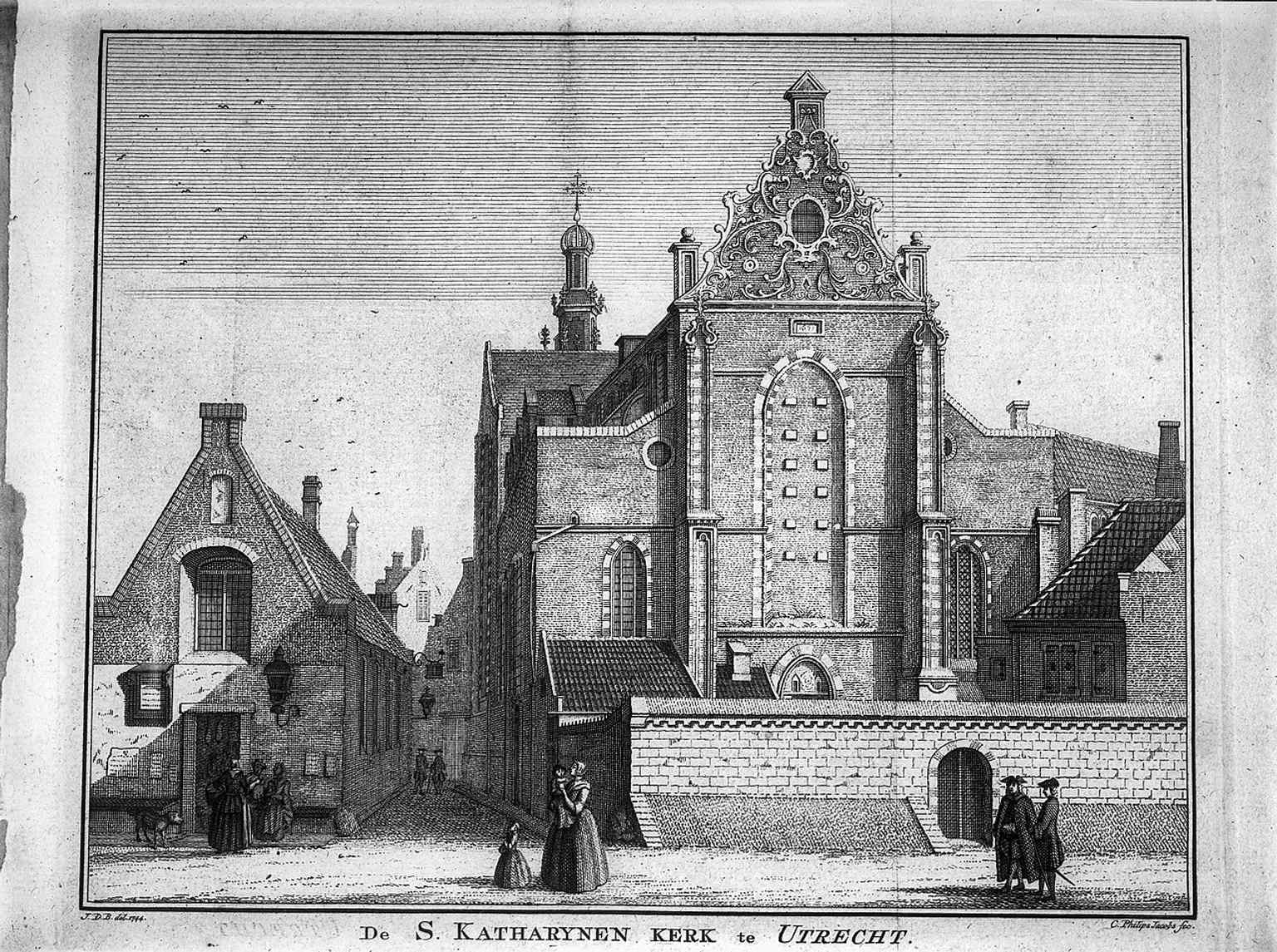
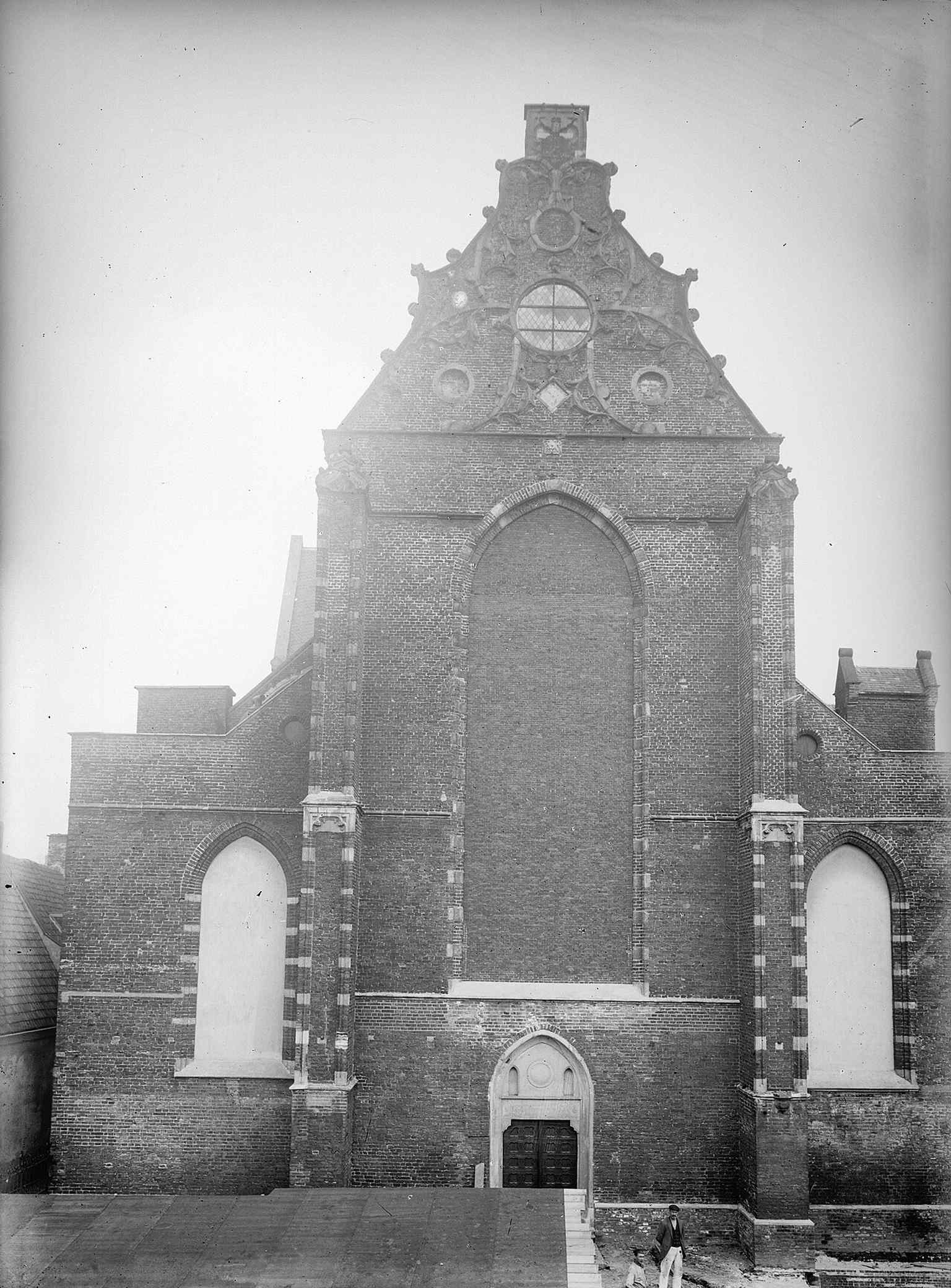
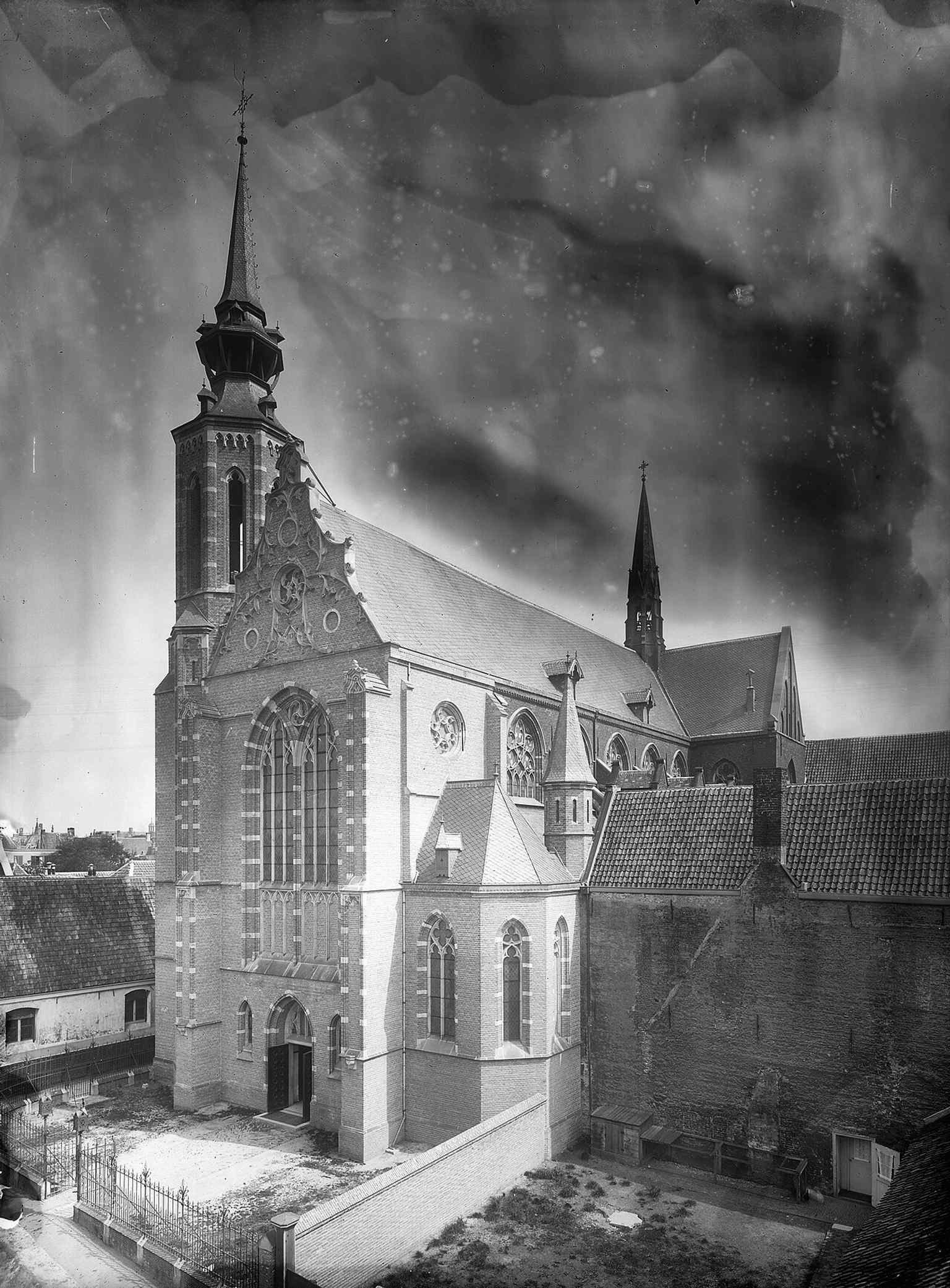
Look to your right, and you will see a towering brick facade defined by a sweeping, ornate stepped gable and a slender octagonal tower reaching into the sky.
This is Saint Catherine's Cathedral, and its history is a masterclass in architectural survival. In fourteen sixty-eight, an order of Carmelite monks started building a monastery right here. But before they could finish the job, Emperor Charles the Fifth decided he needed a massive castle on the other side of town. He evicted the Knights Hospitaller from their land to build his fortress, and forced them to move here. The Knights took over this half-finished monastery, finally completing the church in fifteen sixty.
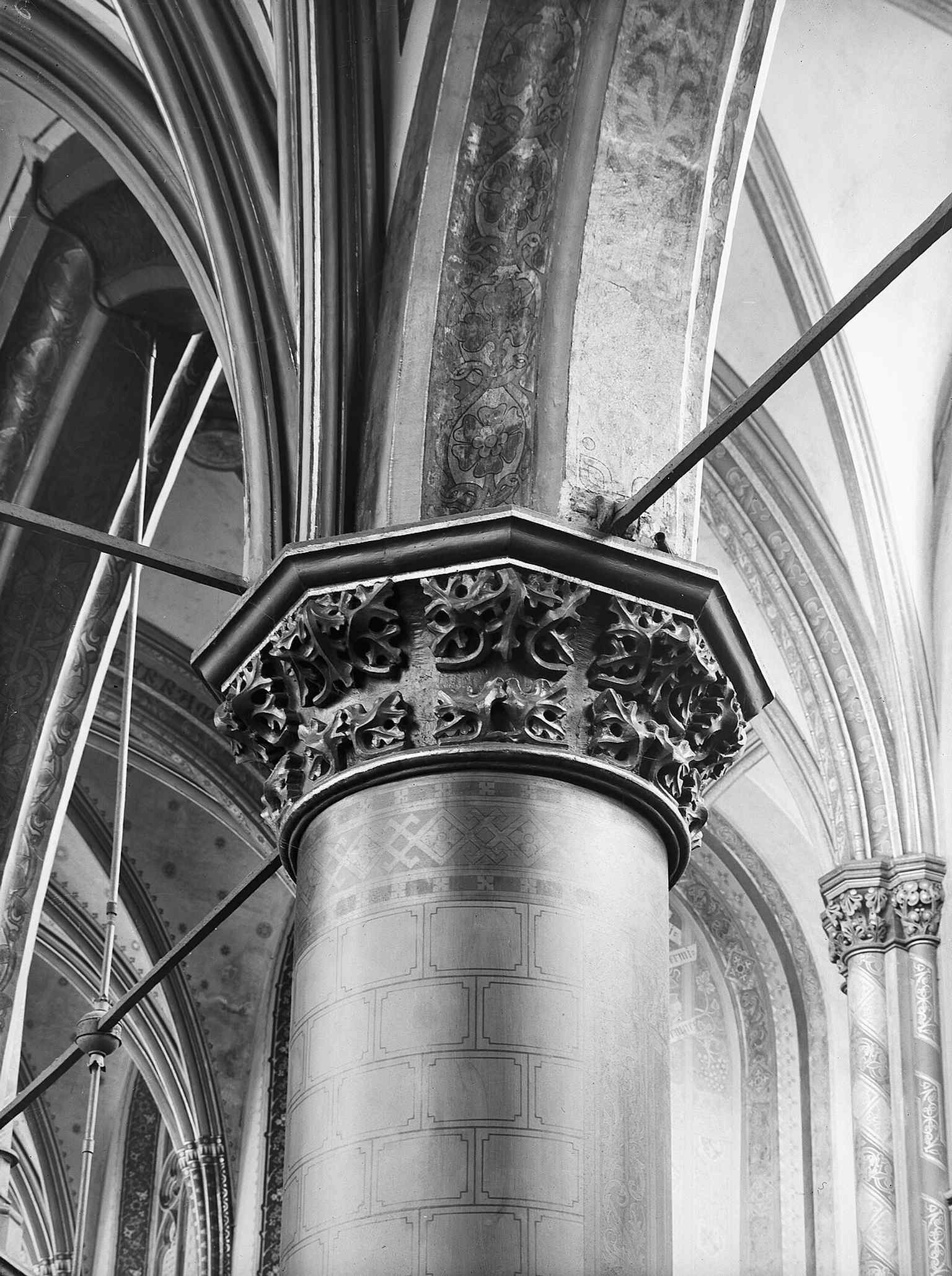
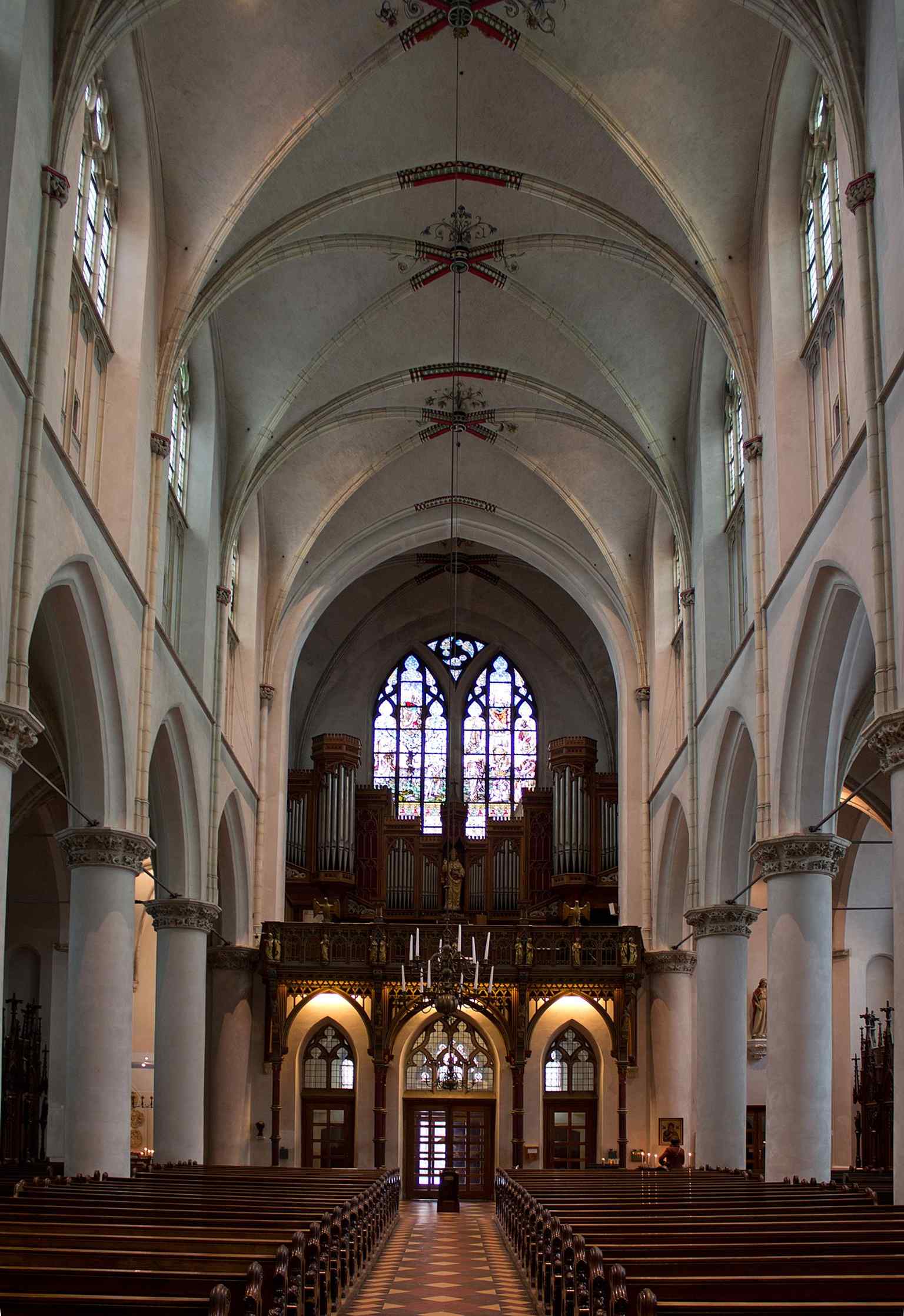
They built it as a grand cruciform church, meaning its floor plan is shaped like a cross. It was the very last medieval church constructed in Utrecht, built in a style called Brabantine Gothic, which is famous for tall, round columns and elaborate stone capitals carved to look like curling cabbage leaves.
But the Knights hardly got to enjoy their magnificent new home. Just twenty years later, the Reformation swept through the city. The Catholic church was stripped of its religious status and used for secular purposes, eventually becoming a Protestant church in sixteen thirty-six.
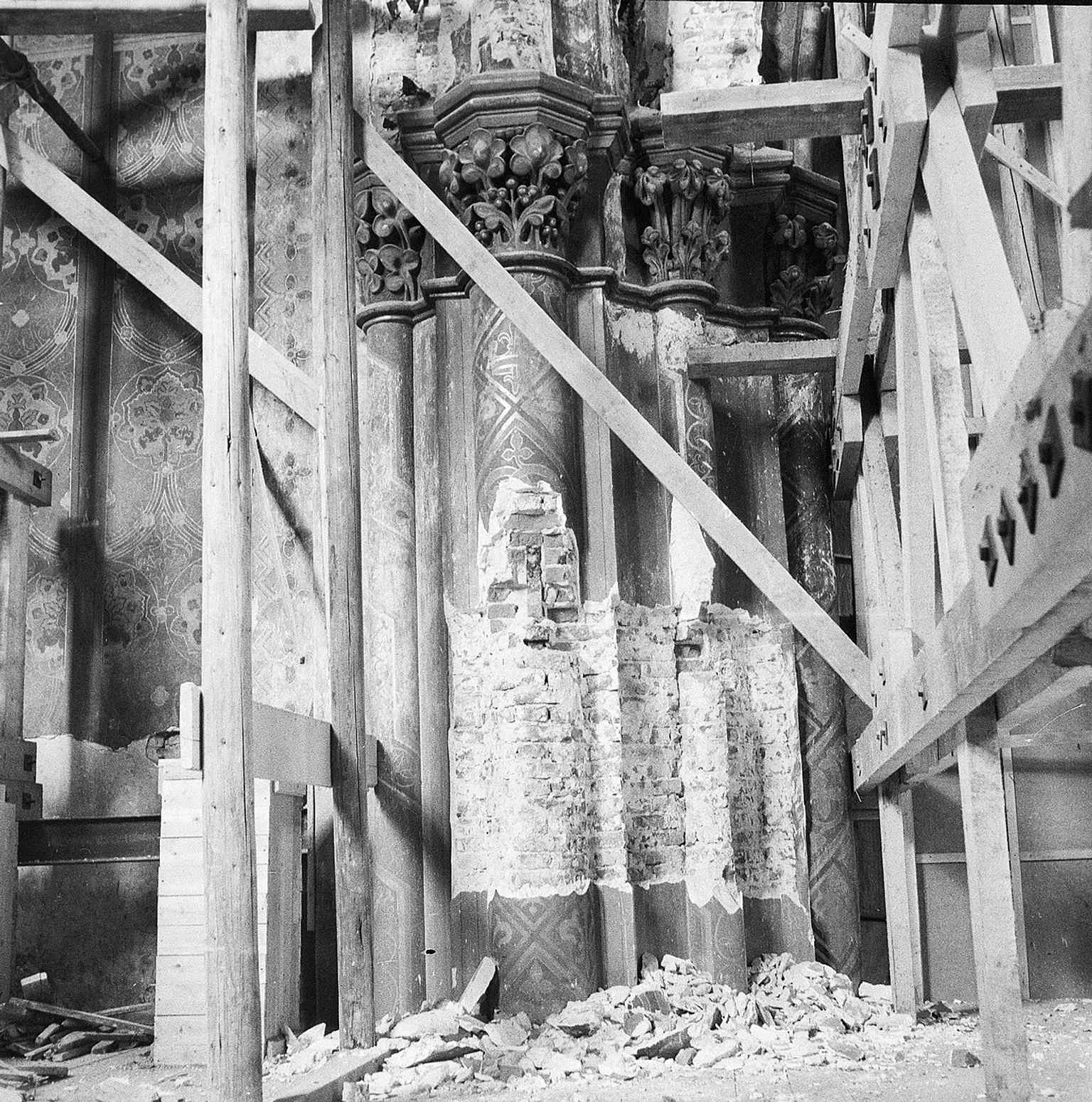
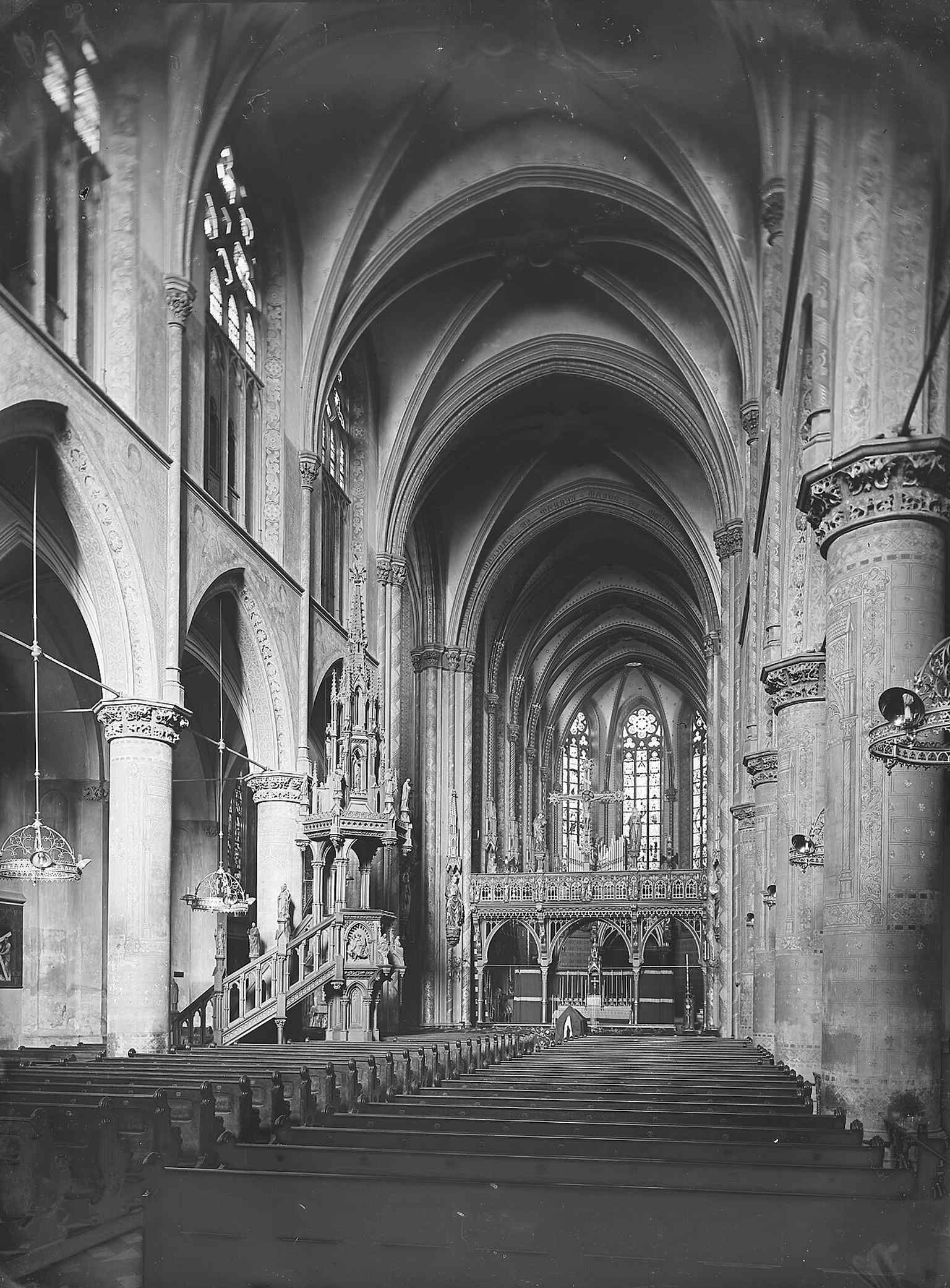
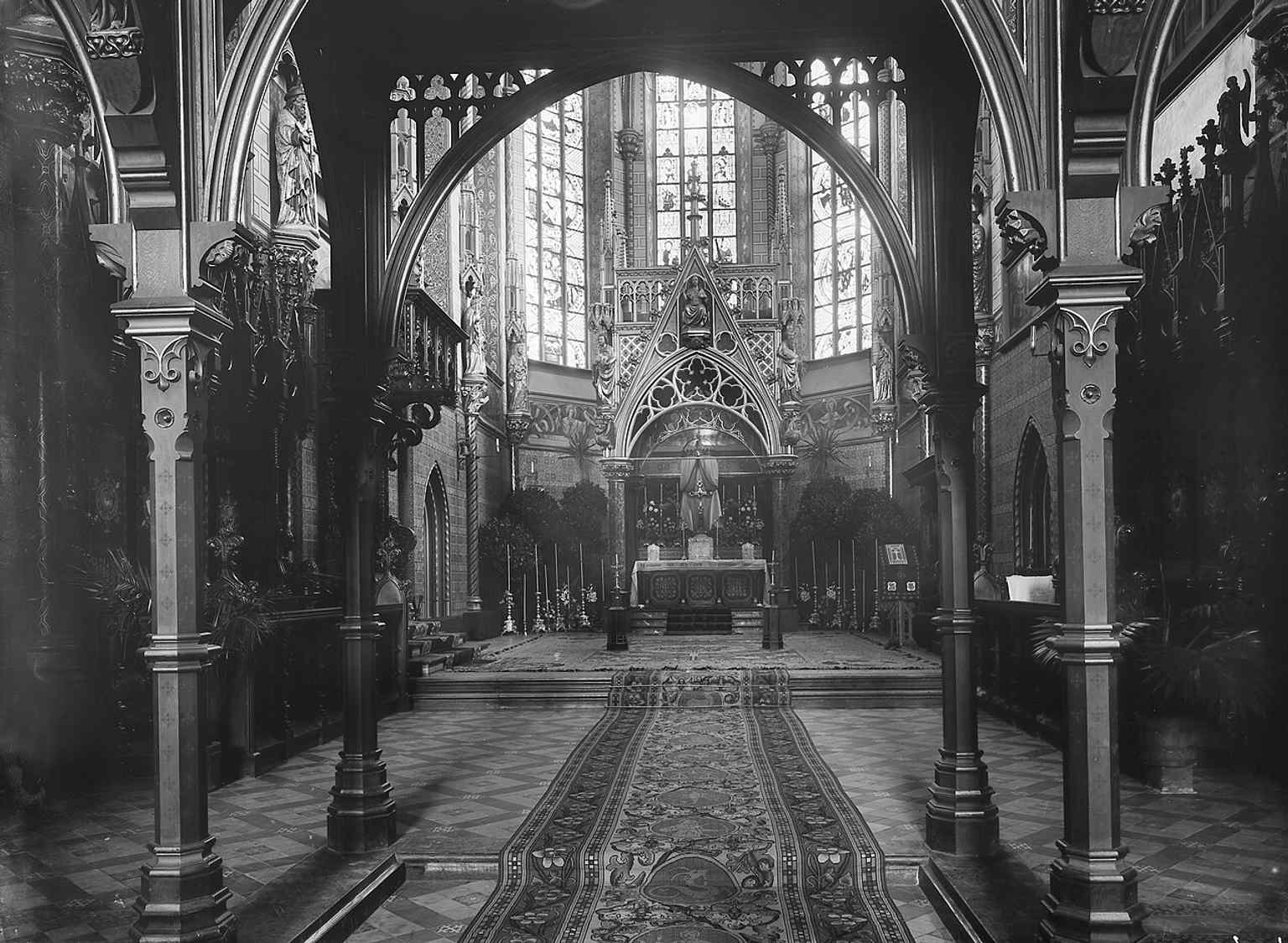
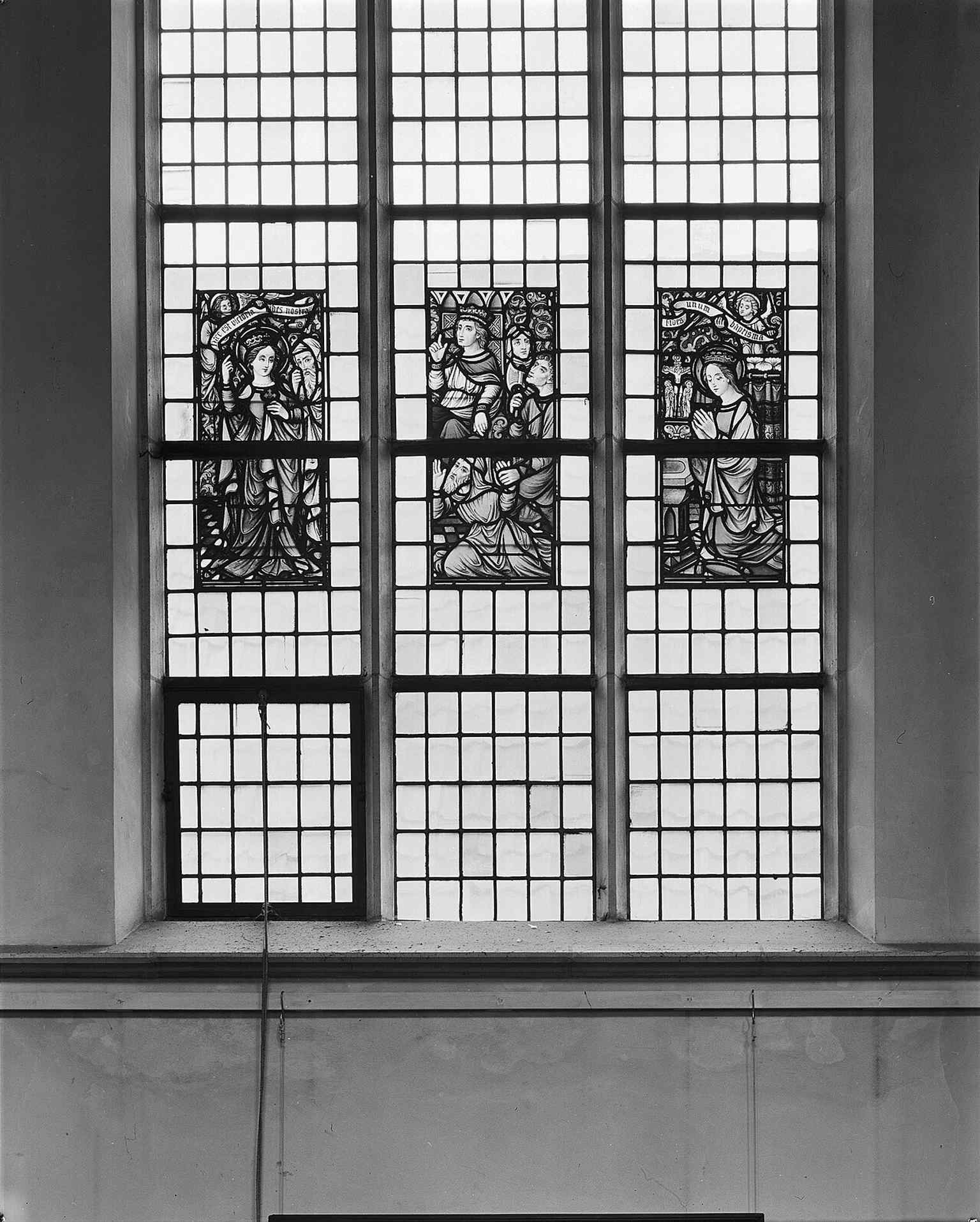
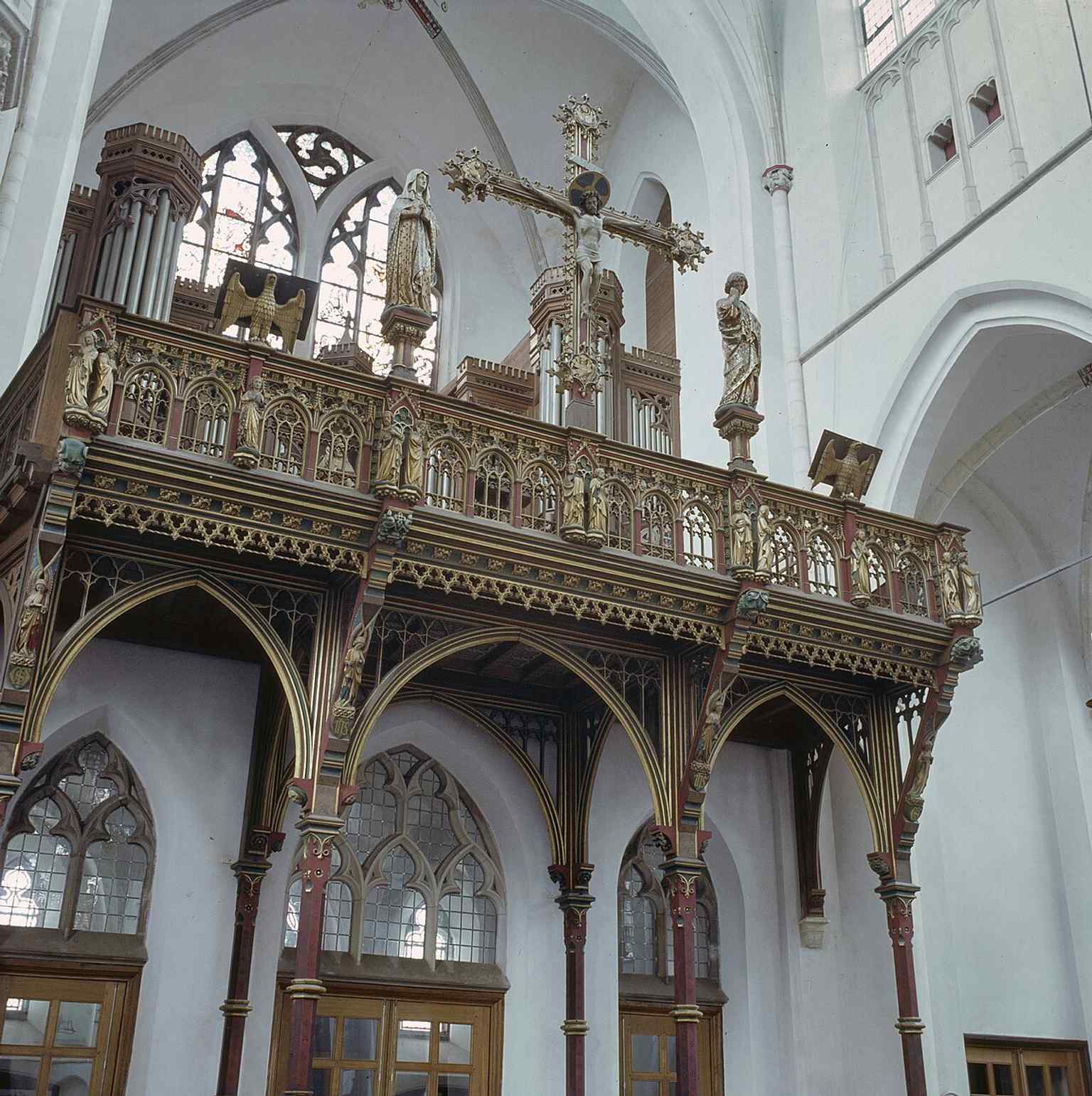
Jumping ahead to eighteen fifteen. In a very rare move, Saint Catherine's became the only medieval church in Utrecht returned to the Catholics. By eighteen fifty-three, it was elevated to a full cathedral. To celebrate its new status, the church brought in an artist named Friedrich Wilhelm Mengelberg to give the interior a dazzling Neo-Gothic makeover, filling the space with elaborate statues and decorations. Around nineteen hundred, an architect named Alfred Tepe extended the nave and added that striking fifty-three-meter tower you see outside today.
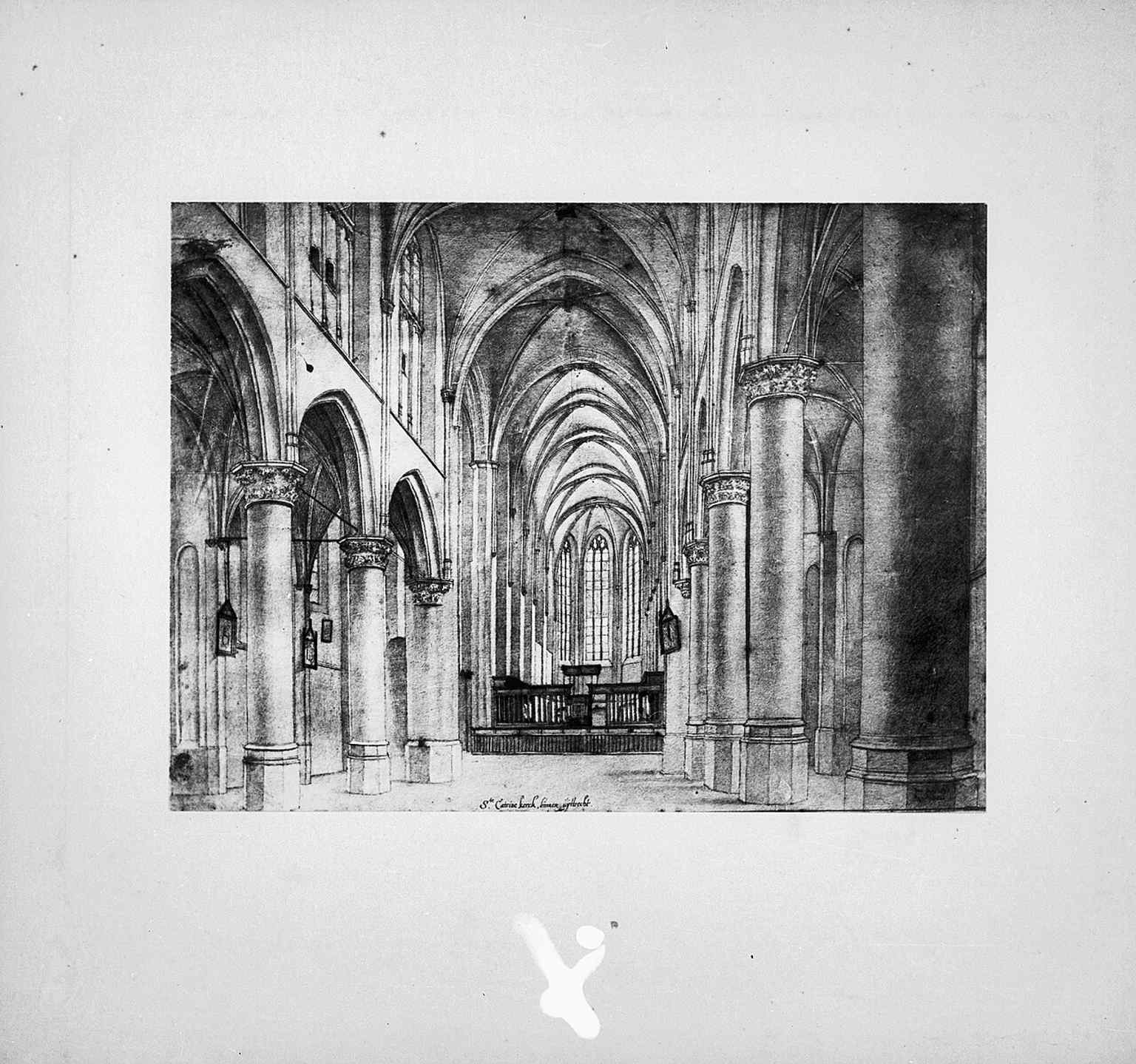
But architectural tastes can be brutal. In the nineteen fifties, a new generation of restorers decided they absolutely hated the Neo-Gothic additions. They stripped most of it out, trying to recreate the stark, bare interior captured in a seventeenth-century drawing by the artist Pieter Jansz Saenredam. Check out your screen to see Saenredam's original sketch of the interior, which became the blueprint for erasing decades of design. If you want to see how the nave evolved over those restless decades of restoration, you can pull up the historic comparison in your app to see the view looking east toward the choir in nineteen fifty-nine versus the year two thousand.
They have since realized their mistake and brought some of the gorgeous Neo-Gothic art back out of storage. And the drama never really stops here. In two thousand eighteen, the diocese announced they would close the cathedral due to budget problems. But the public outcry was so fierce that the Archbishop reversed the decision just a year later.
If you want to explore the interior, the cathedral is open daily starting at noon, though Sunday mornings open at nine fifteen AM and Mondays only offer evening hours. Appreciate this towering landmark. Whenever you're set, we can head to the next stop.






%20-%20Utrecht%20-%2020298812%20-%20RCE.jpg)

