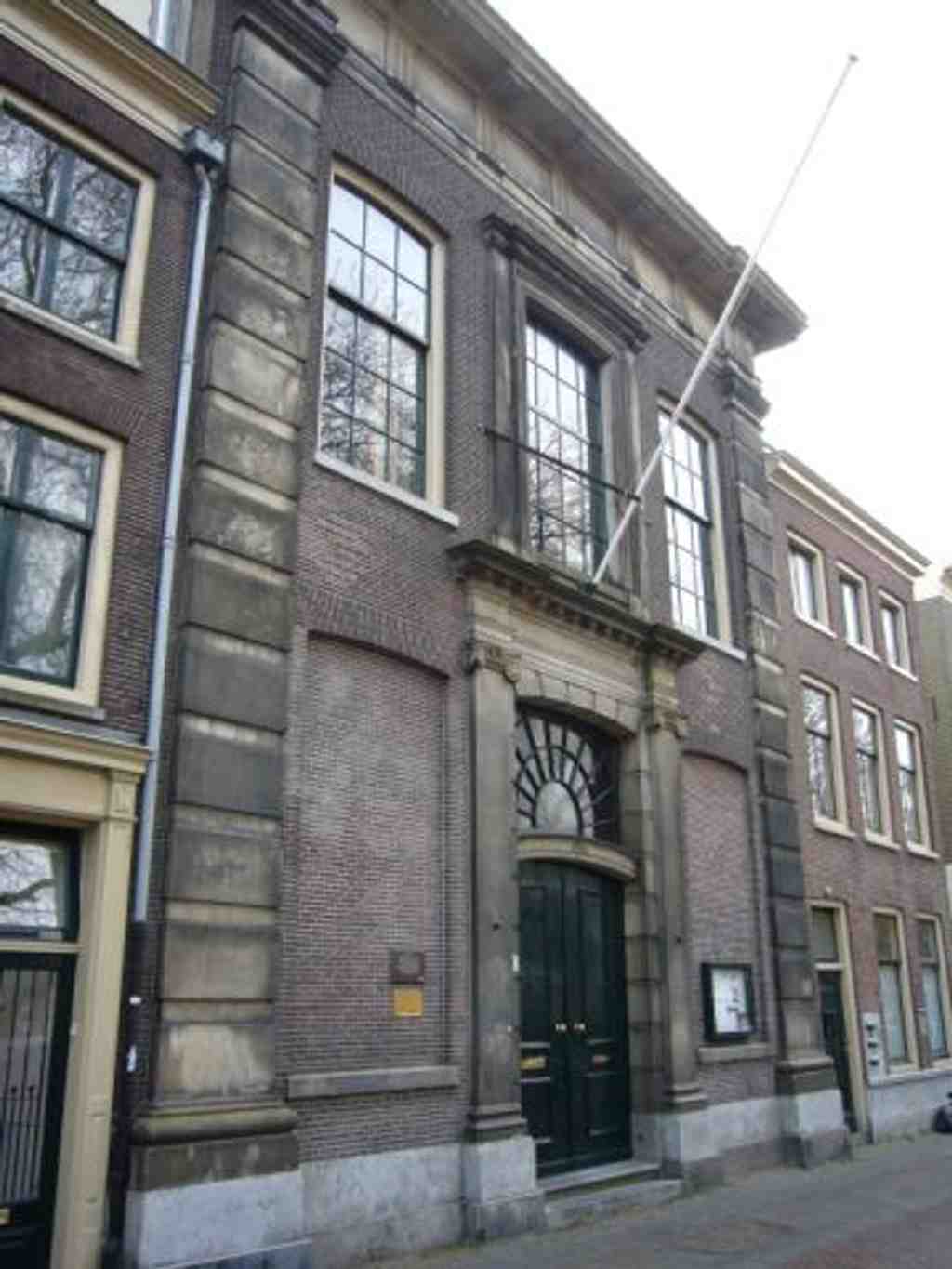
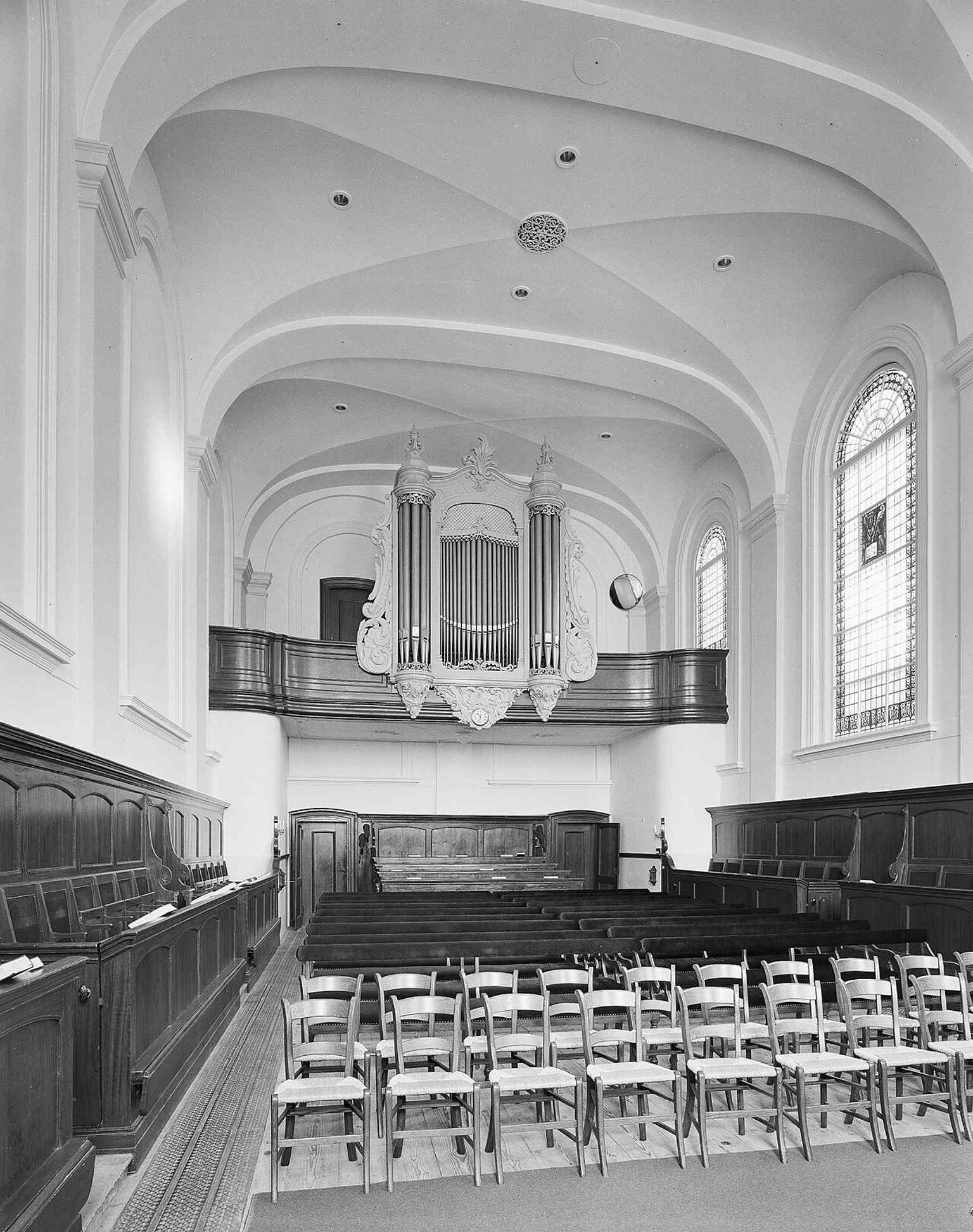
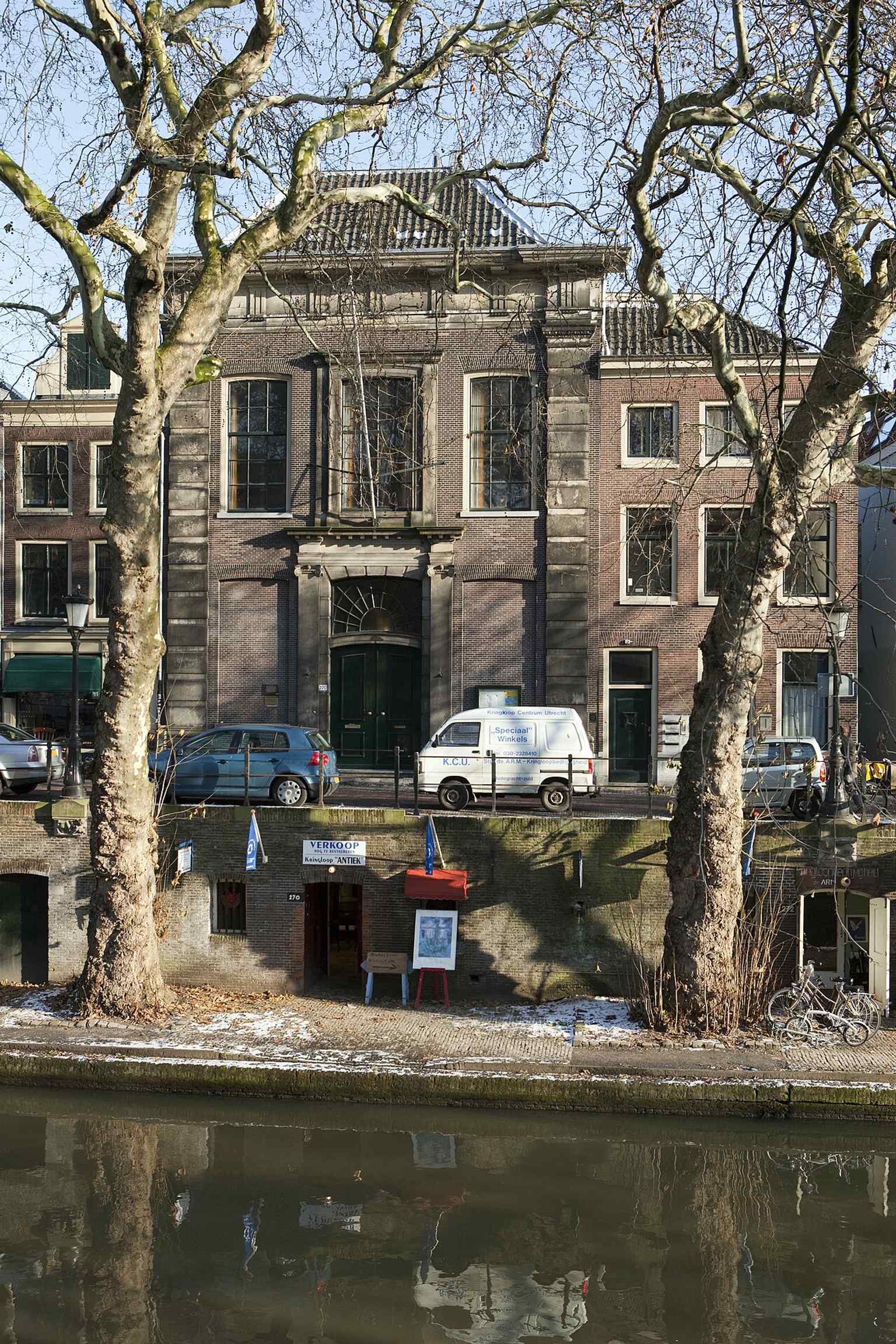
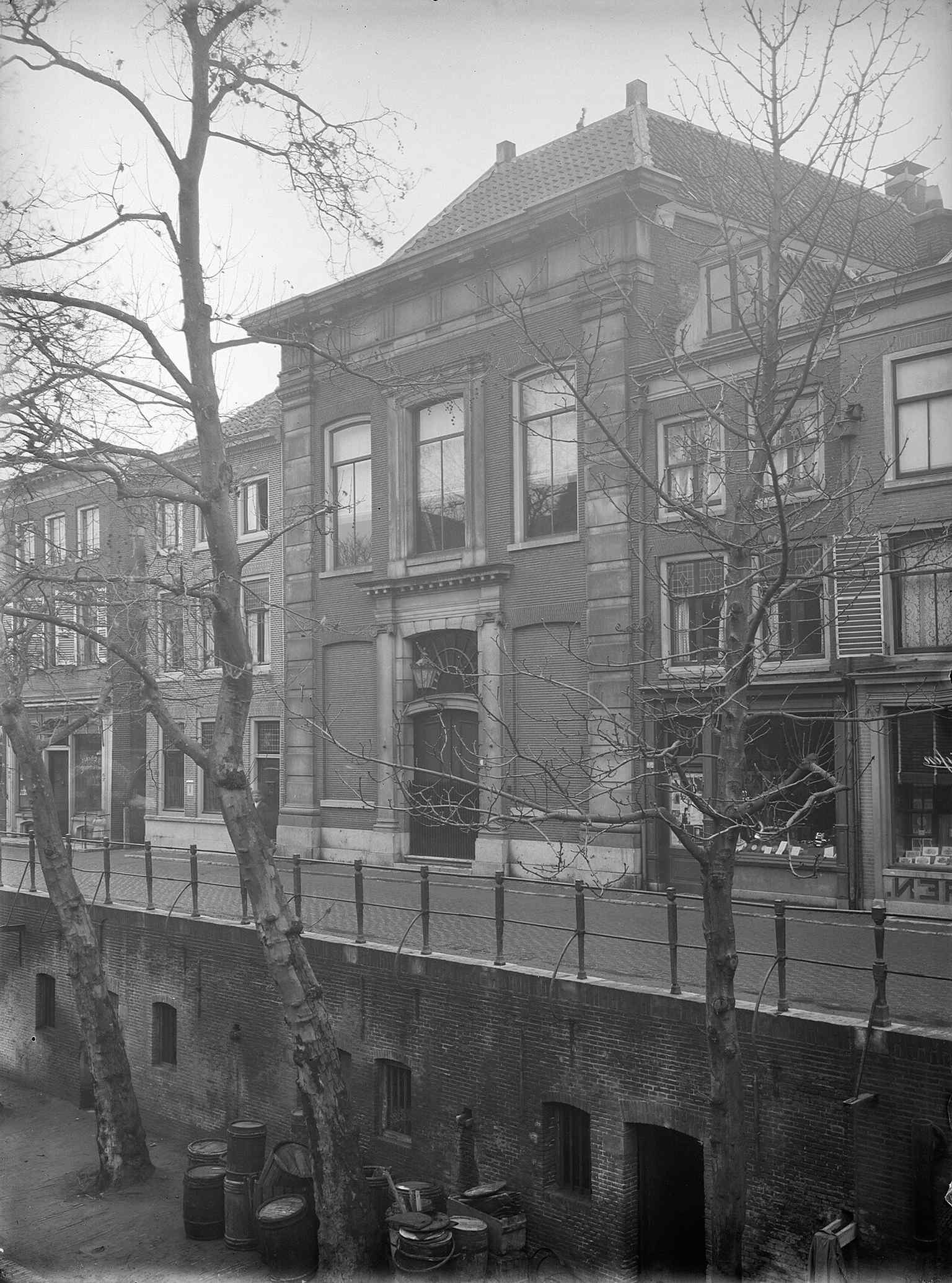
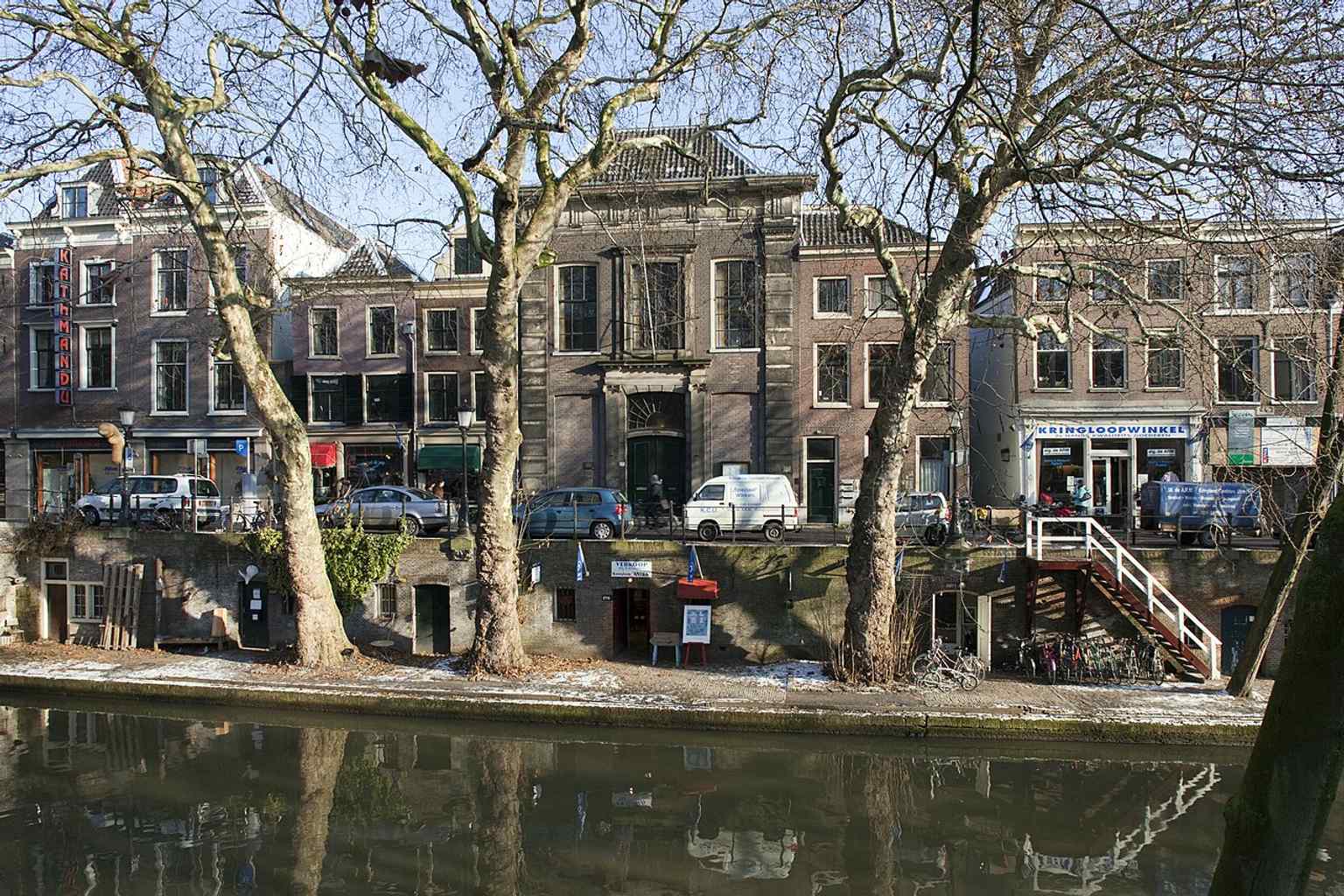
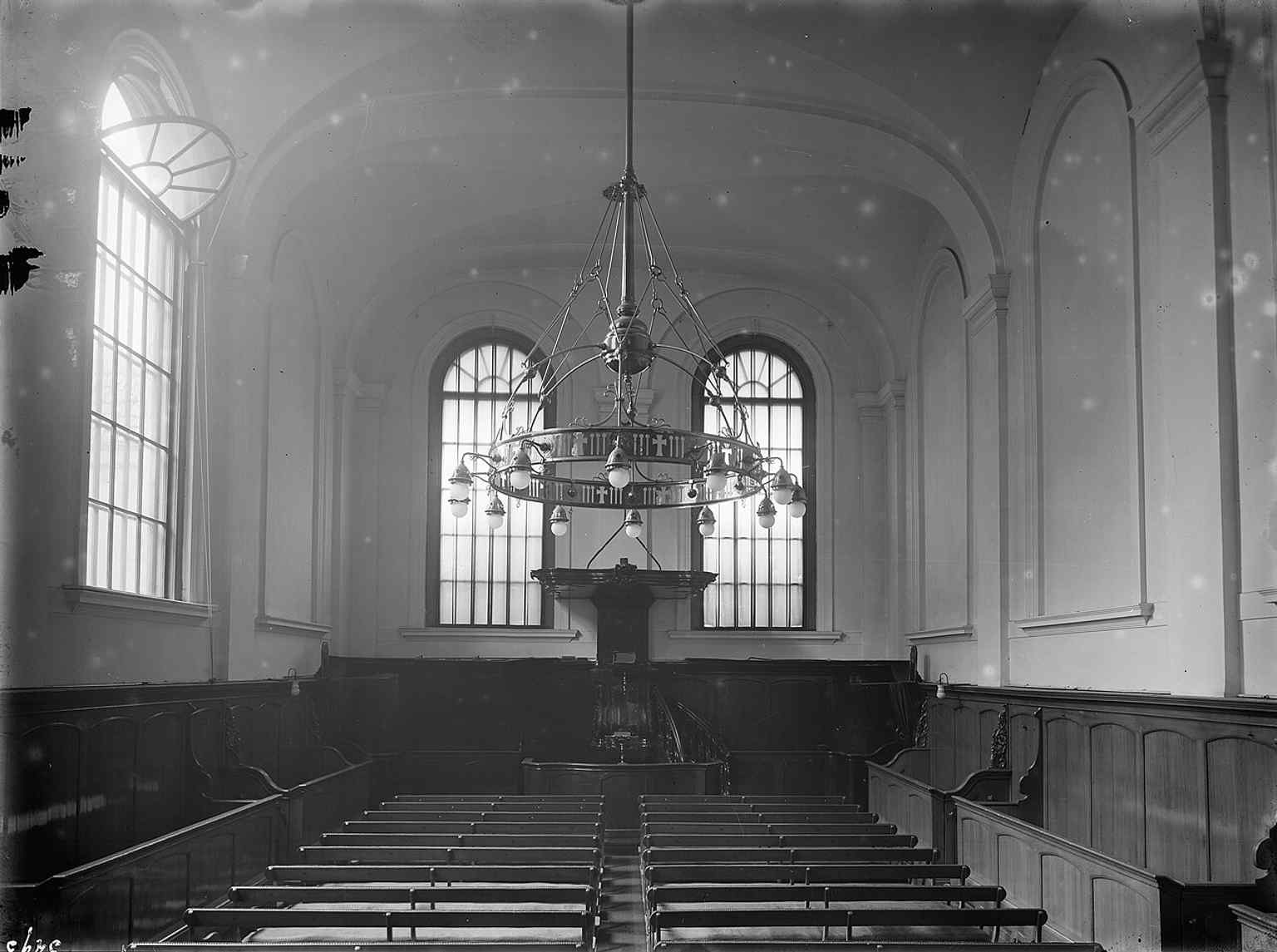
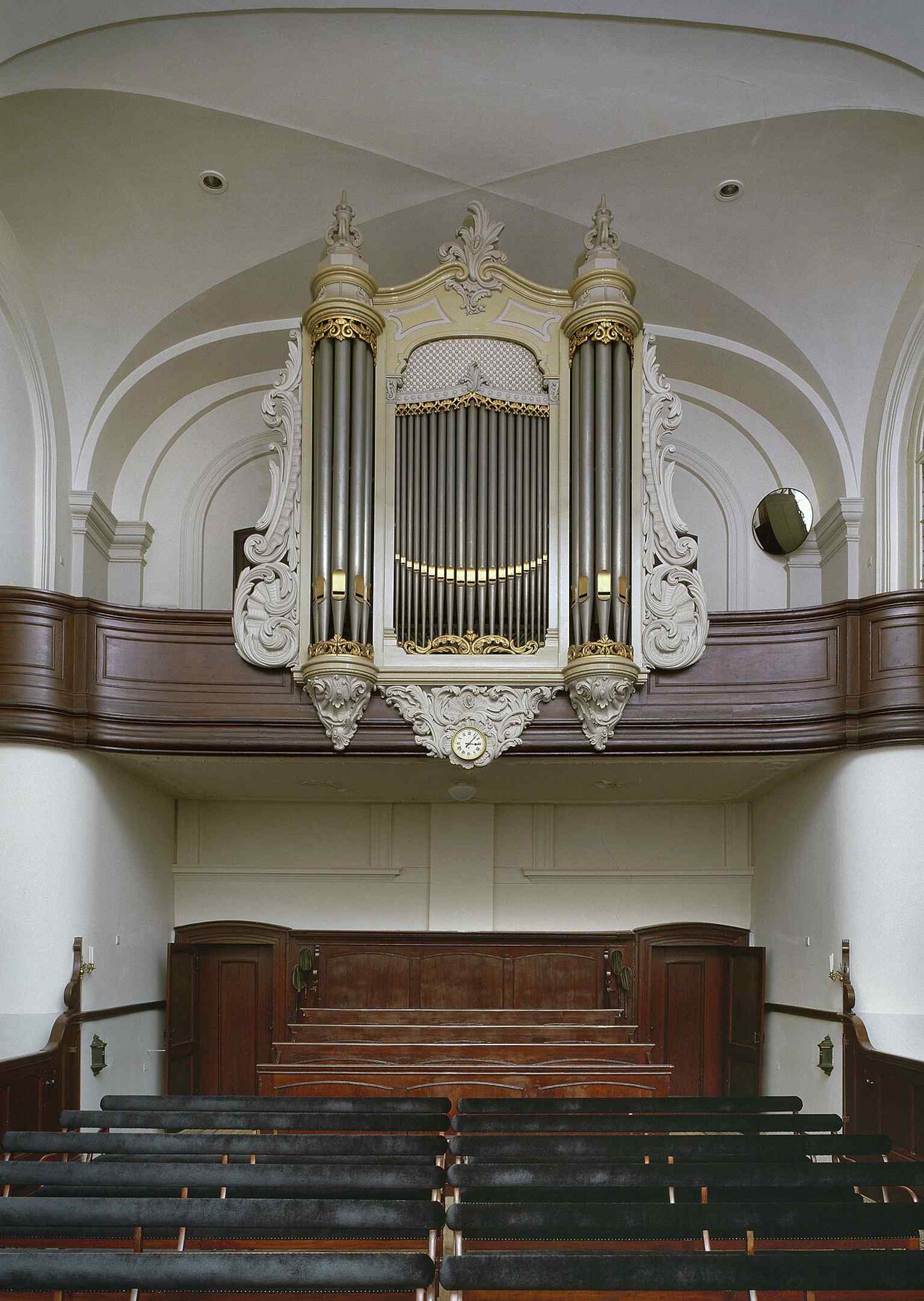
Look for the tall dark brick building framed by large stone pilasters and a grand double door topped with a fanlight window. This does not look much like a church, does it? In seventeen seventy-three, architect Willem de Haan gutted a medieval canal house to build this Mennonite Church. Because Mennonites, a peaceful Protestant group, were barely tolerated by the state, their places of worship had to hide in plain sight. De Haan designed this facade to look exactly like a stately mansion. You can see how perfectly this disguised western facade has held up over the decades by checking the comparison image on your screen. Inside, the space embraces the strict Louis the sixteenth style, favoring clean and simple geometric lines. Look at the photo on your phone to see the hidden sanctuary, featuring remarkable yellow windows from nineteen twenty-two and a magnificent Bätz organ built in eighteen seventy. The building is only open to visitors for an hour on Sunday mornings from ten to eleven A-M. It is a brilliant piece of architectural camouflage. Take your time admiring the disguise, and whenever you are ready, let us head to the next stop.
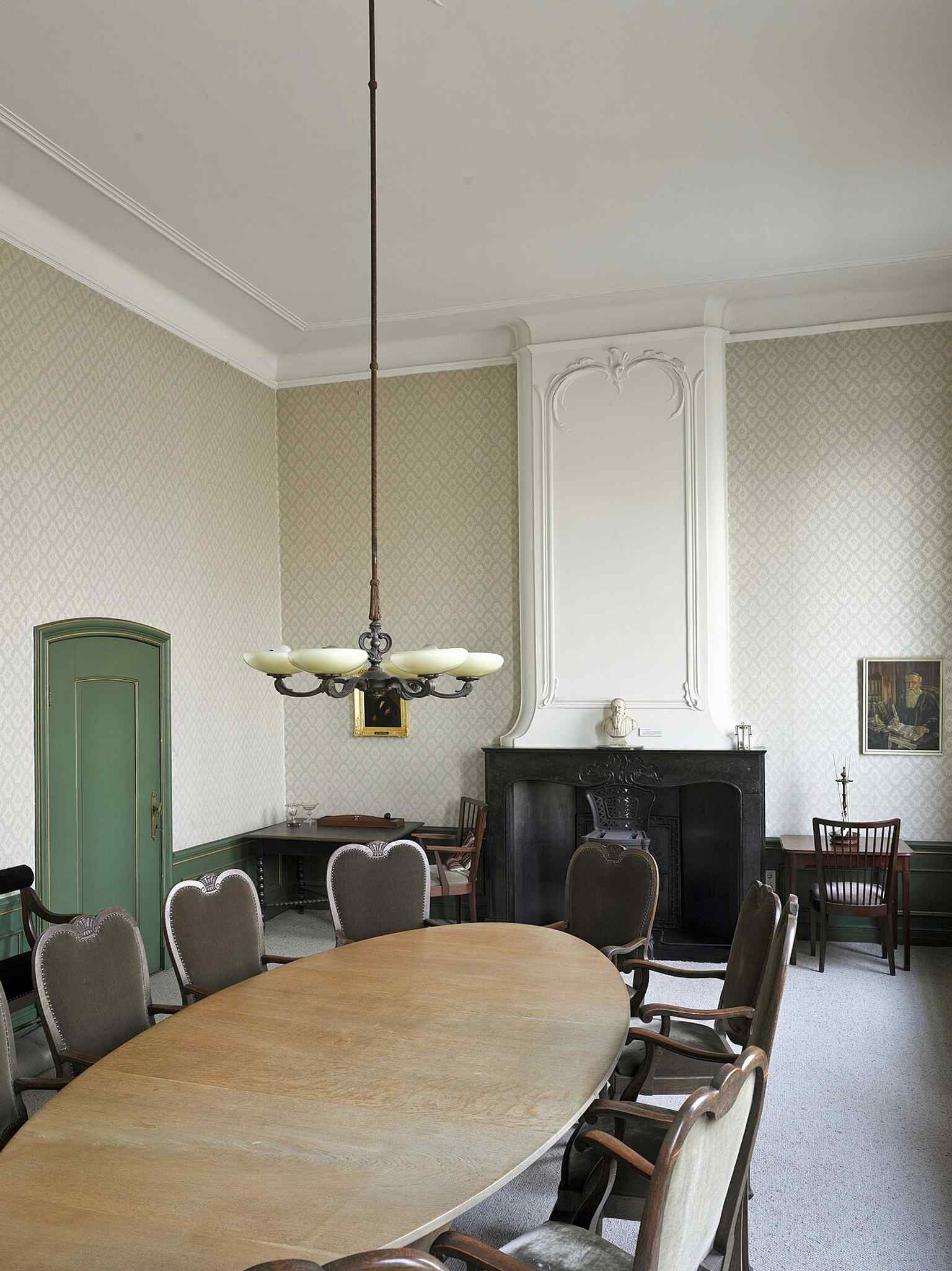
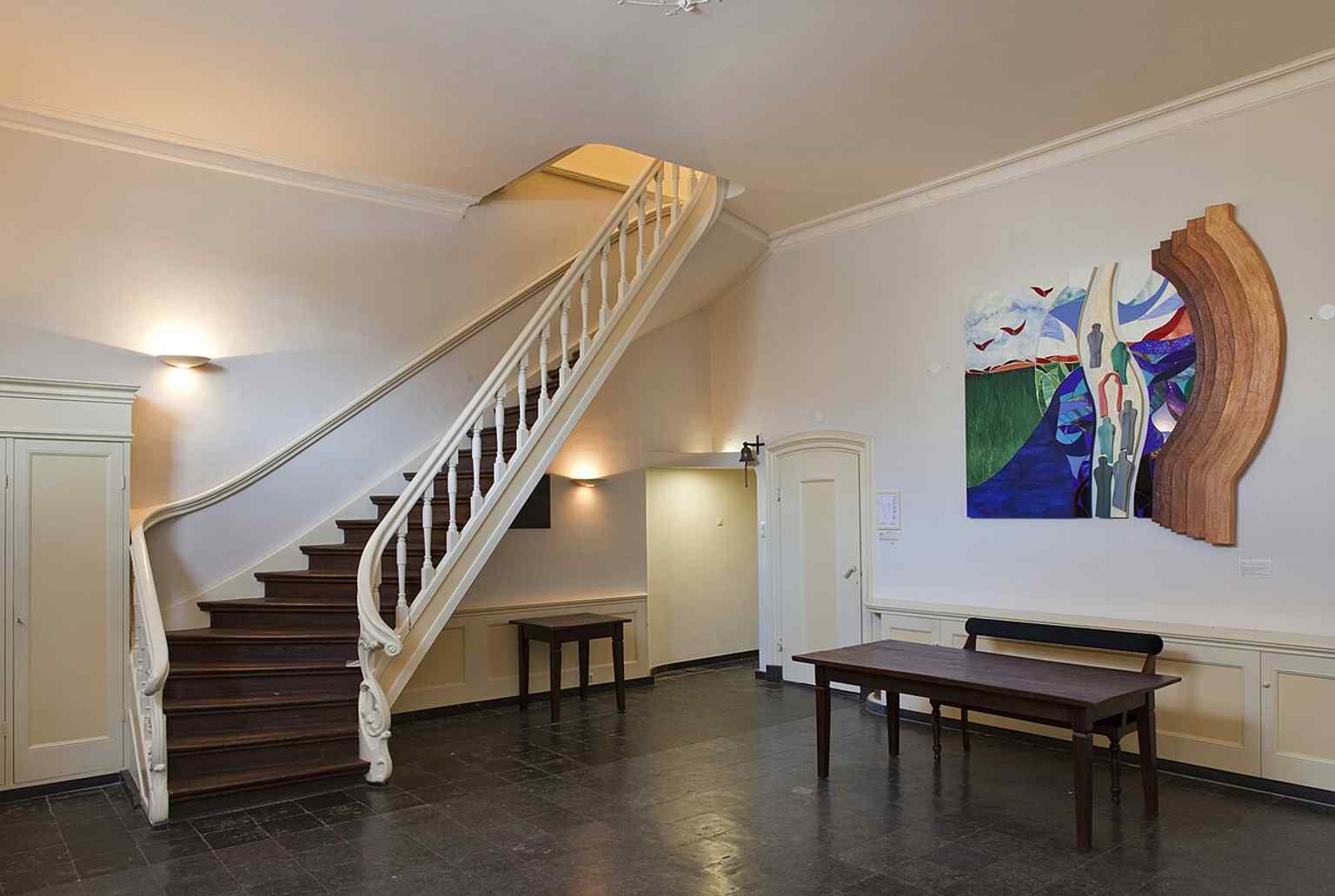
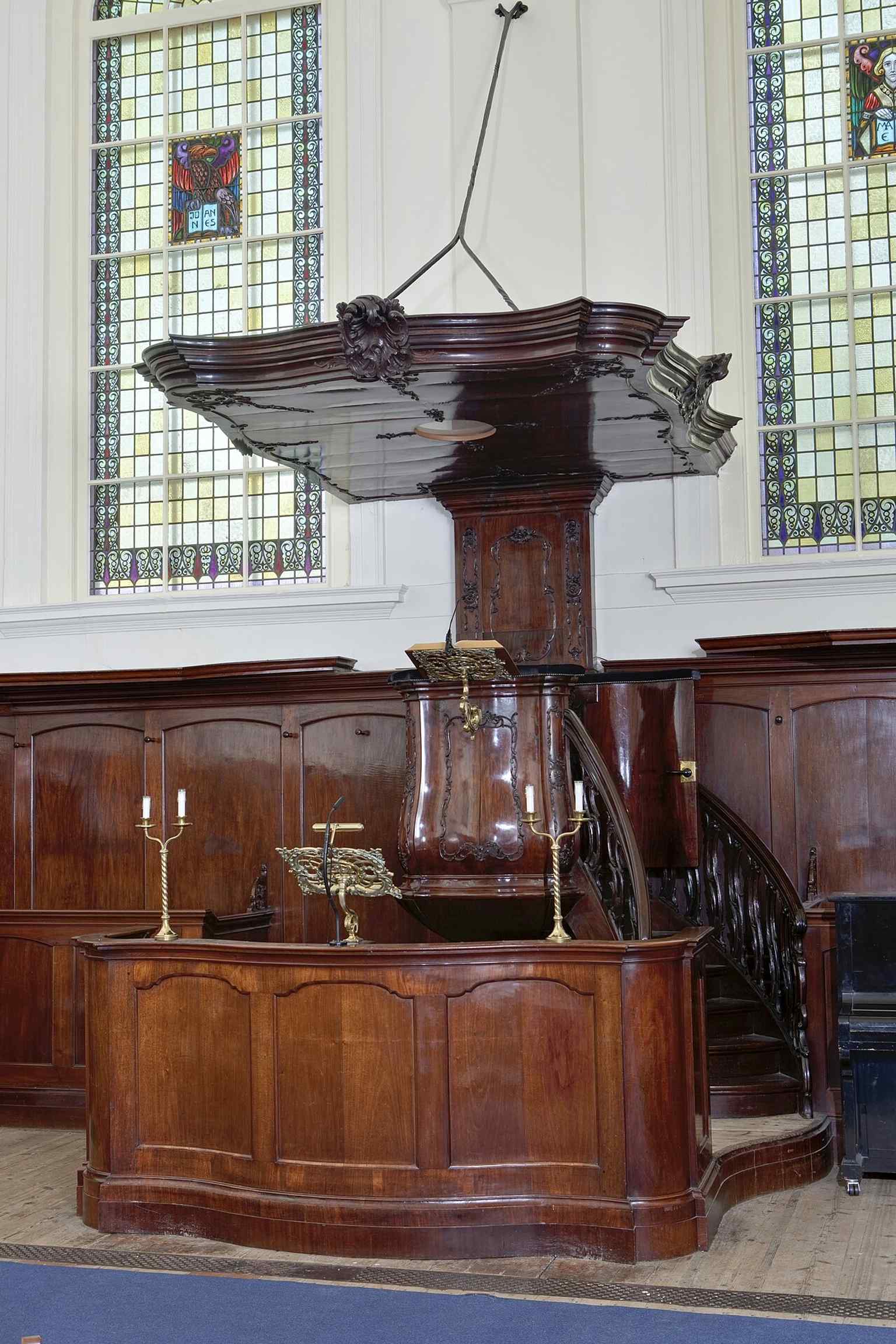
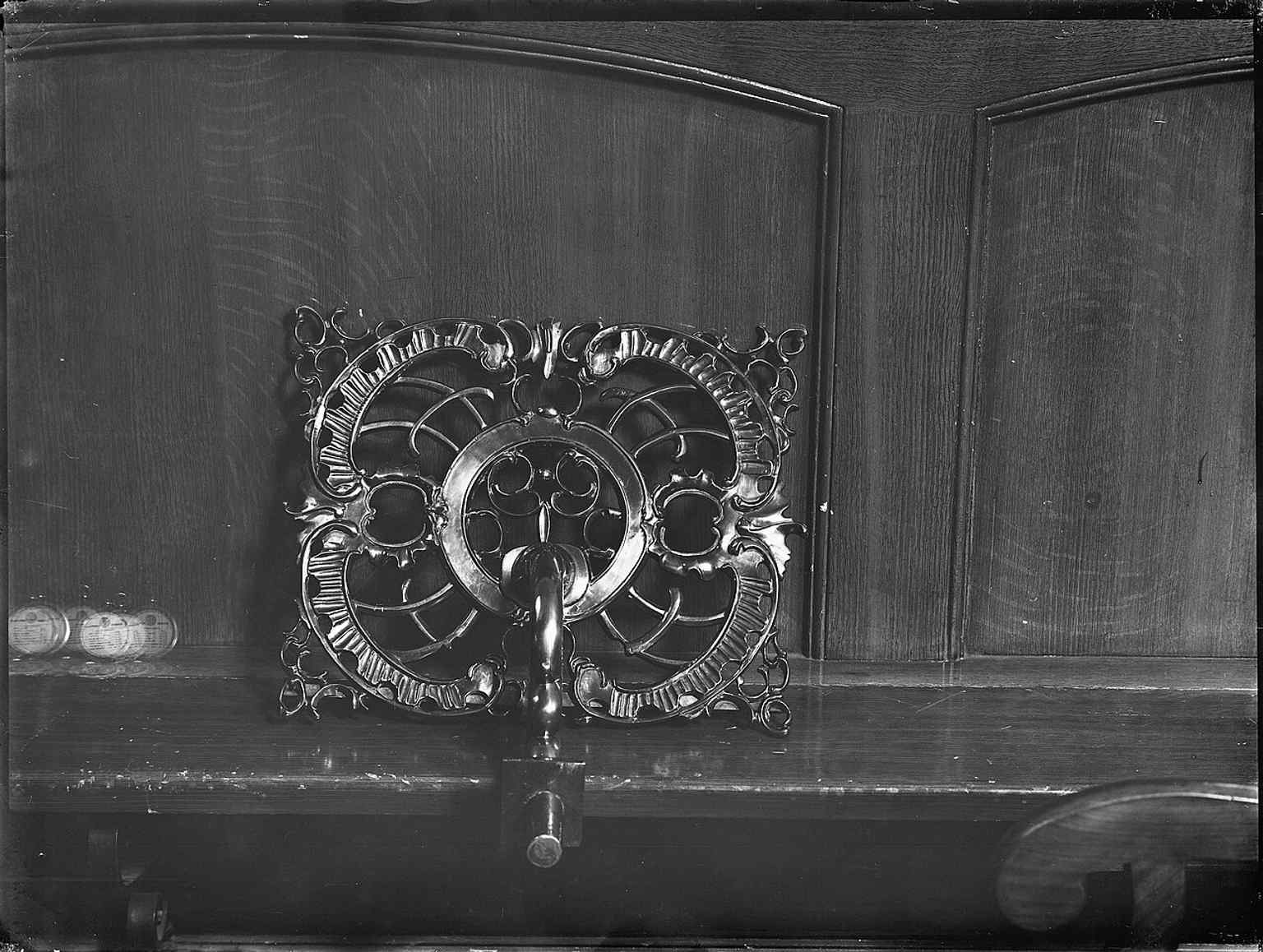
The elegant interior view towards the west, featuring the pews and the Bätz organ. This perspective likely includes the 'remarkable yellow windows' installed in 1922.Photo: A. J. van der Wal, Wikimedia Commons, CC BY-SA 4.0. Cropped & resized.The church's prominent facade on the Oudegracht, designed in 1773 to resemble a stately mansion rather than a visible church due to the Mennonites' tolerated status at the time.Photo: Kris Roderburg / Chris Booms, Wikimedia Commons, CC BY-SA 4.0. Cropped & resized.A historical view of the church's west facade from 1921, showing its discreet mansion-like appearance on the Oudegracht, an approach chosen when Mennonites were only tolerated.Photo: Unknown authorUnknown author, Wikimedia Commons, CC BY-SA 4.0. Cropped & resized.A wider exterior view of the church's west facade on the Oudegracht, illustrating its integration with the surrounding medieval canal houses.Photo: Kris Roderburg / Chris Booms, Wikimedia Commons, CC BY-SA 4.0. Cropped & resized.A general interior view of the small hall church from 1921, showcasing its simple yet strict Louis XVI style and the pulpit.Photo: Unknown authorUnknown author, Wikimedia Commons, CC BY-SA 4.0. Cropped & resized.The church council room on the first floor, featuring a fireplace (schouw) and showcasing more of the preserved 18th-century interior design and furniture.Photo: Kris Roderburg / Chris Booms, Wikimedia Commons, CC BY-SA 4.0. Cropped & resized.The church's entrance hall on the ground floor with a staircase leading to the first floor, reflecting the building's origin as a converted medieval canal house.Photo: Kris Roderburg / Chris Booms, Wikimedia Commons, CC BY-SA 4.0. Cropped & resized.A detailed view of the Bätz organ, built in 1870 with a neo-rococo style casing. Its predecessor is now located in Katwijk aan Zee.Photo: Unknown authorUnknown author, Wikimedia Commons, CC BY-SA 4.0. Cropped & resized.The simple yet elegant pulpit, a key feature of the church's 18th-century interior, executed in the strict Louis XVI style.Photo: Kris Roderburg / Chris Booms, Wikimedia Commons, CC BY-SA 4.0. Cropped & resized.A close-up of the copper lectern at the baptismal fence (doophek), an example of the preserved 18th-century furniture within the church.Photo: Unknown authorUnknown author, Wikimedia Commons, CC BY-SA 4.0. Cropped & resized.arrow_back Back to Utrecht Audio Tour: Timeless Treasures of Binnenstad’s Hidden Paths
Loved by travellers
Thousands of tours started. Plenty of opinions.
4.8 across the App Store and Google Play. Here's a few we keep coming back to.
starstarstarstarstar
This tour was such a great way to see the city. The stories were interesting without feeling too scripted, and I loved being able to explore at my own pace.
Started this tour with a croissant in one hand and zero expectations. The app just vibes with you, no pressure, just you, your headphones, and some cool stories.