
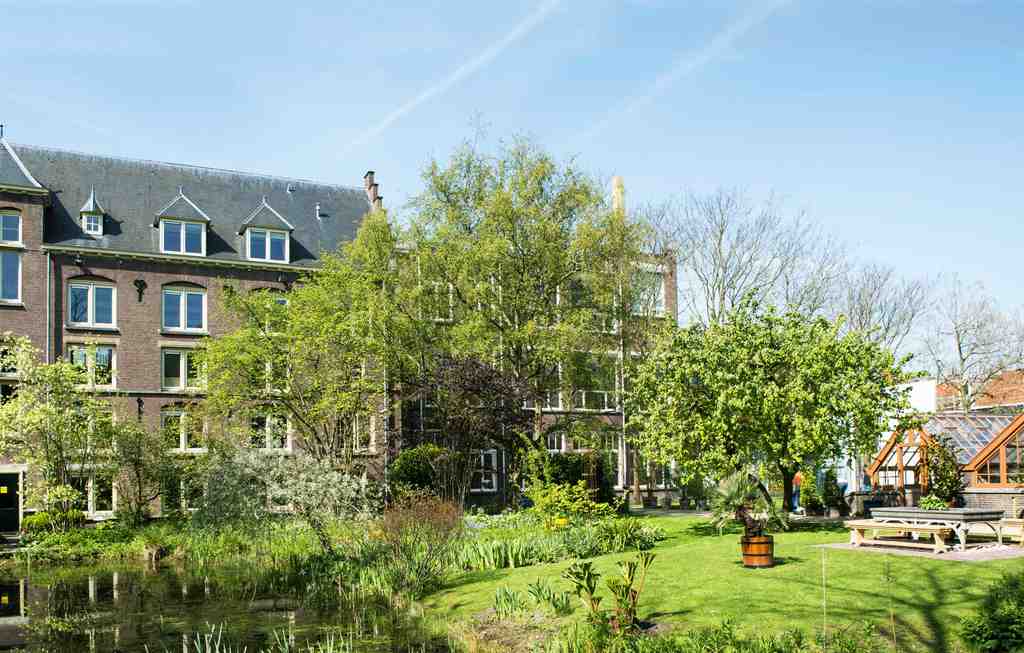
Look to your left and you will see a large, multi-story brick building with a dark, sloping slate roof dotted with dormer windows, bordering a green garden space that features a peaked glass and wood greenhouse in the background.
Welcome to the Old Hortus. You are standing right on the edge of a living timeline of botanical science. For centuries, this was the official botanical garden of Utrecht University.
The story actually starts way back in sixteen thirty-nine. The university was just three years old, and the city bought a plot of land for a hortus medicus, a medical garden. Back then, botany was all about survival. The first director, Henricus Regius, grew herbs specifically to train medical students in healing. He even published a catalog in sixteen fifty documenting six hundred seventy-eight different species!
By seventeen twenty-three, the garden outgrew its original plot and moved right here to this very spot. It became a true hortus botanicus, a garden dedicated to the science of plants itself. The legendary Swedish botanist Carl Linnaeus even visited here in seventeen thirty-five. A local professor, Evert Jacob van Wachendorff, completely redesigned this space to demonstrate his very own system of plant classification, tagging everything with numbers.
If you explore the grounds today, you can still trace this incredible history. You will find an eighteenth-century Ginkgo biloba, widely considered the oldest Japanese nut tree in all of Europe. You will also see two orangeries dating back to seventeen twenty-four and seventeen sixty-eight. These were specialized buildings designed to keep tropical and subtropical plants alive through the cold European winters.
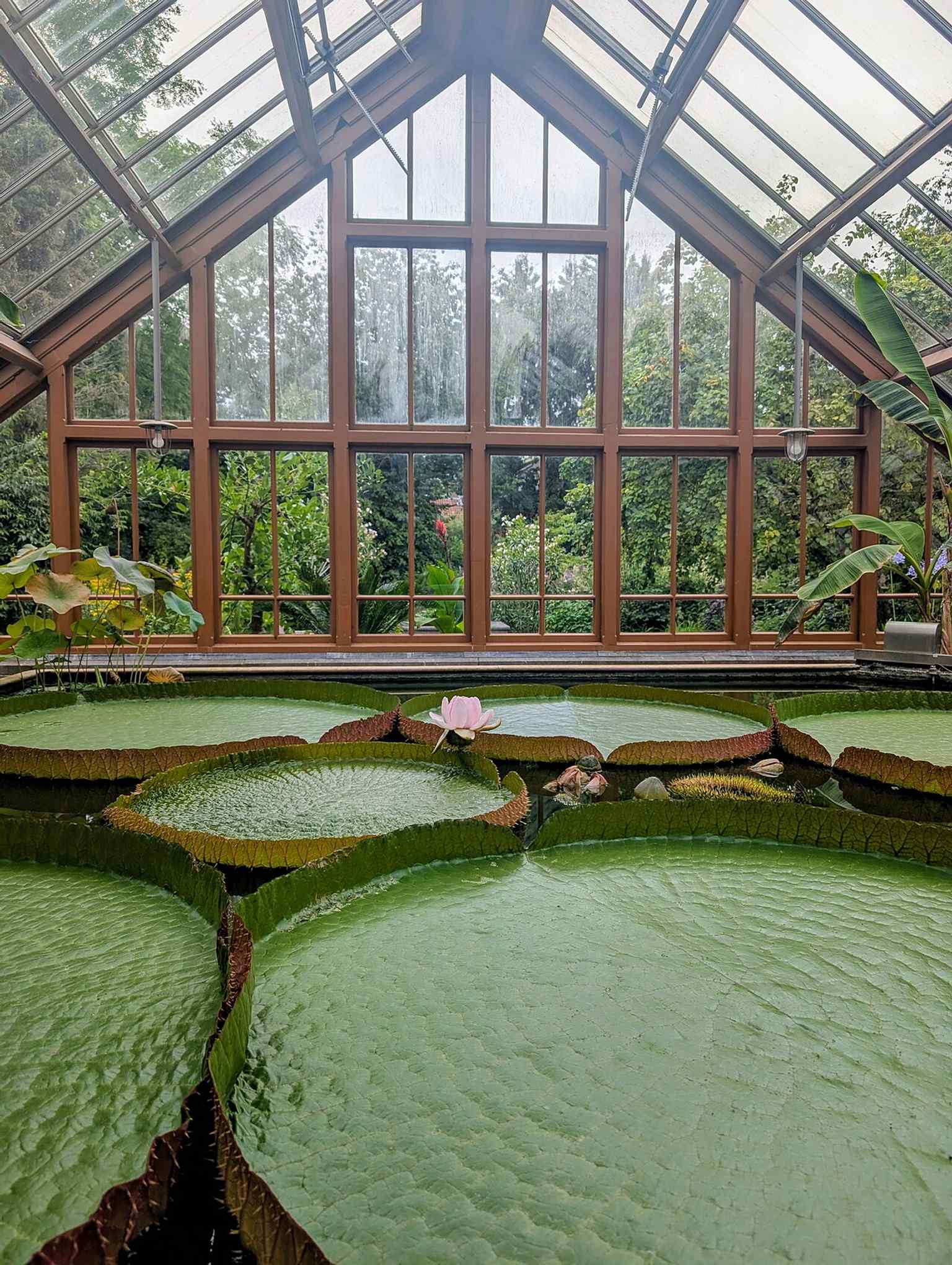
But science never stops moving. Jumping to the early twentieth century, between nineteen zero six and nineteen zero eight. Botanists tore down the old glasshouses to build a highly modern greenhouse complex where they could artificially control different climates. Check out the screen on your device for a look inside one of those incredible warm-climate rooms from the modern era, featuring the massive Victoria Amazonica water lily.
Eventually, the university outgrew this space too. In nineteen twenty, the main plant collection began moving out to the countryside, and by nineteen ninety-one, developers actually planned to demolish this entire historic complex to build a parking lot. Luckily, locals, rotary clubs, and dedicated volunteers formed a foundation and fought tooth and nail to save it. They won. Today, this space thrives as a museum garden attached to the Utrecht University Museum.
If you want to explore the historic gardens and the museum cafe, just keep in mind they are closed on Mondays, but open Tuesday through Sunday from ten AM to five PM.
This sanctuary survived against all odds, preserving three and a half centuries of scientific discovery in its soil. Enjoy the lush greenery. When you are ready, we will head to the next stop.





