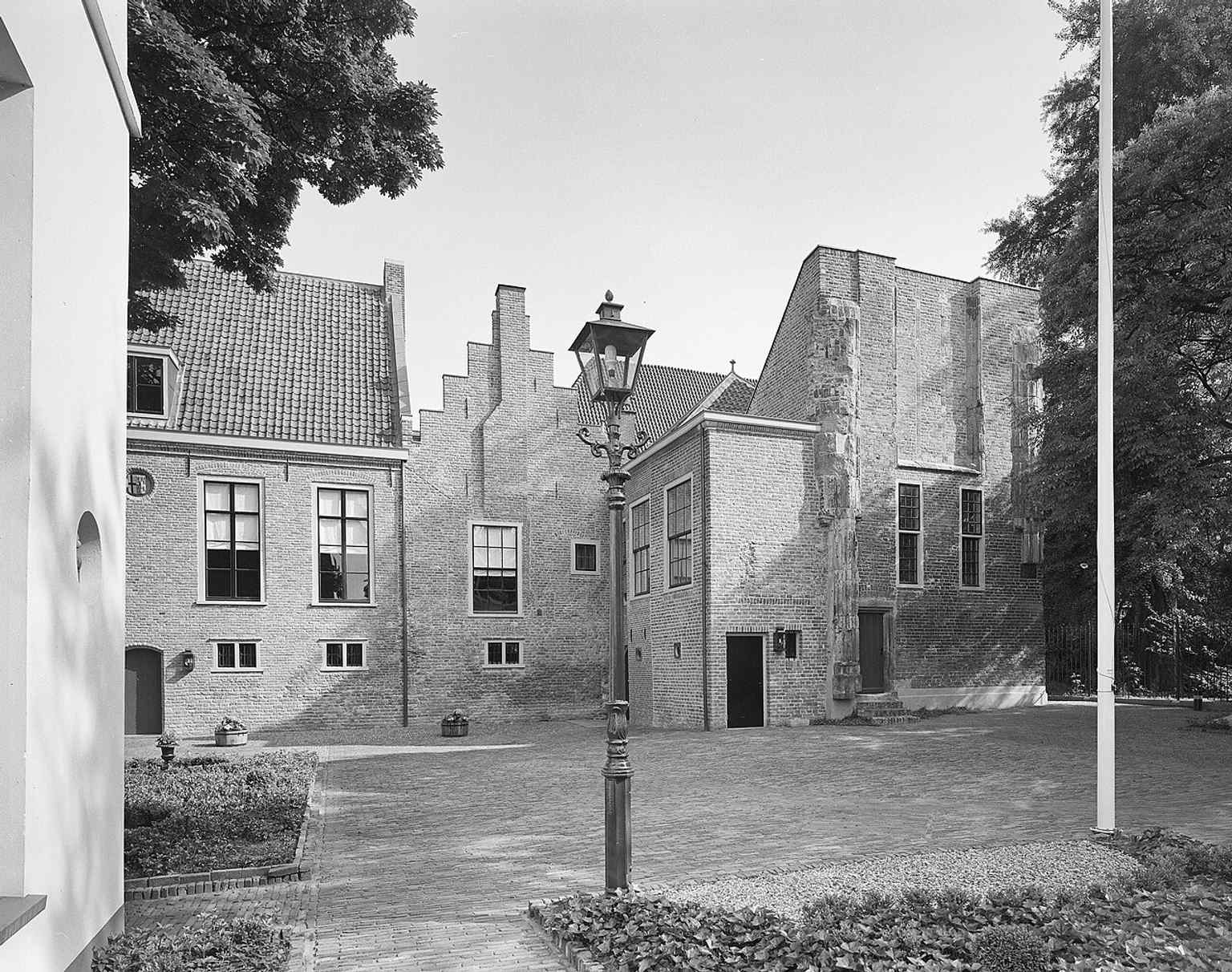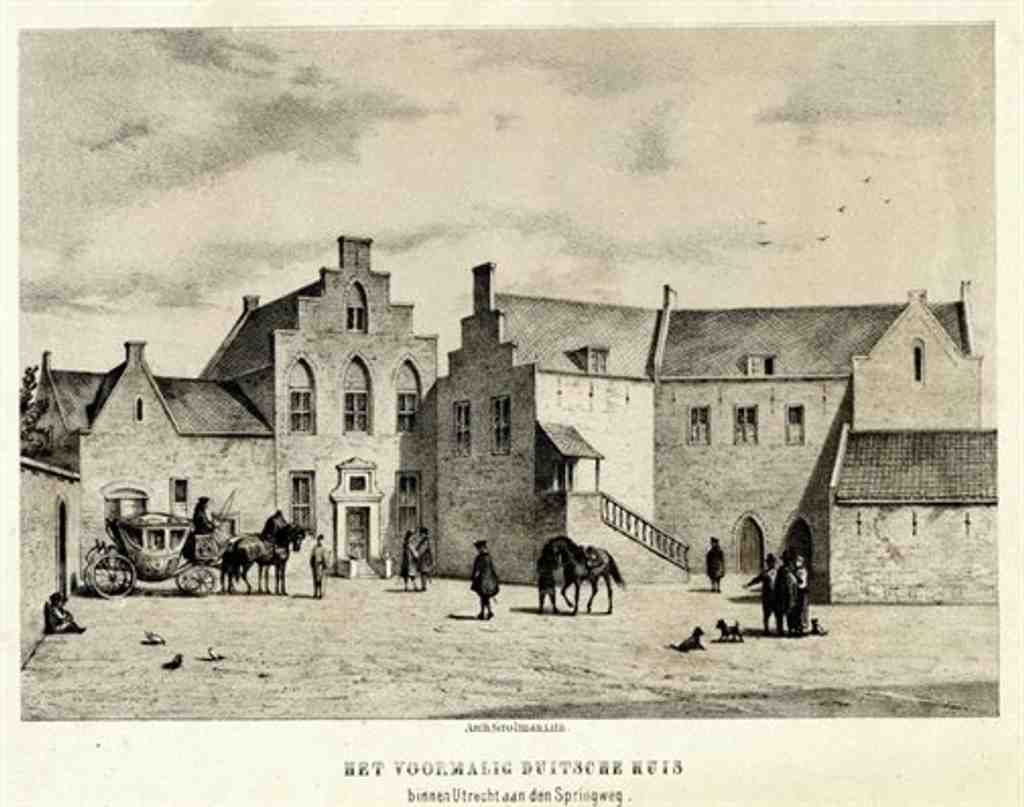
On your right is the Duitse Huis, a monumental brick complex marked by its striking stepped gables, a prominent central doorway framed in stone, and tall arched windows that hint at its medieval origins.
In thirteen forty-eight, the Bailiwick of Utrecht built this magnificent monastery as their local headquarters. A bailiwick, by the way, is simply a district managed by a commander. The Teutonic Order was a mighty Christian military group, much like the famous Knights Hospitaller. These knights and priests took strict vows of poverty, chastity, and obedience, yet they controlled vast agricultural lands across the Netherlands to fund their military campaigns in the Holy Land and the Baltic region.
Fast forward to fifteen forty-five. Emperor Charles the Fifth visited Utrecht, and the Duitse Huis hosted a spectacular meeting of the Order of the Golden Fleece. Imagine the grand refectory, the massive dining hall where the knights usually ate in silence, suddenly filled with elaborate feasts. Even King Henry the Eighth of England and King Francis the First of France belonged to this prestigious knightly circle. To accommodate these royal VIPs, the main building was heavily upgraded. Gothic windows were converted into bright bay windows, and the ceiling joists were raised to create an awe-inspiring space.
Check your screen for a sixteenth-century painting depicting the fierce land commanders of the order who walked these very halls.
But the political winds shifted drastically. By fifteen eighty, the regional government demanded the dissolution of all Catholic institutions. It seemed the knights would lose everything to the state. However, their commander, Jacob Taets van Amerongen, fought back fiercely. He argued his men were essential for defending the empire with weapons against foreign enemies. The order managed to survive by making a massive ideological compromise, officially converting to Calvinism in sixteen thirty-seven. This incredible tactical move allowed them to keep their property and preserve a staggering archive of historical records, including old charters with wax seals and medieval coins dating all the way back to the start of the thirteenth century.
The complex faced physical threats, too. In sixteen seventy-four, a terrifying windstorm completely ruined the main church, which towered over the surrounding area. Later, in eighteen twenty-three, King William the First transformed the remaining grounds into a highly modern military hospital. Step back over a century to see how the historic courtyard of the land commander's house has weathered the passage of time, capturing the enduring legacy of the Teutonic Order in Utrecht.
After the military finally left in nineteen ninety, the buildings sat empty and were briefly occupied by squatters. But in nineteen ninety-two, the modern descendant of the knightly order repurchased the property. During the massive renovations that followed, archaeologists were stunned to find a Roman cemetery from forty BC buried directly underneath the garden. Talk about layers of history. Workers even uncovered a sandstone fireplace engraved with a double-headed eagle, the personal emblem of Charles the Fifth.
This resilient stone fortress has survived religious upheaval, brutal storms, and military occupation, returning beautifully to its roots of hospitality and care. Take your time soaking in this quiet courtyard, and whenever you are ready, we will head over to our next stop.