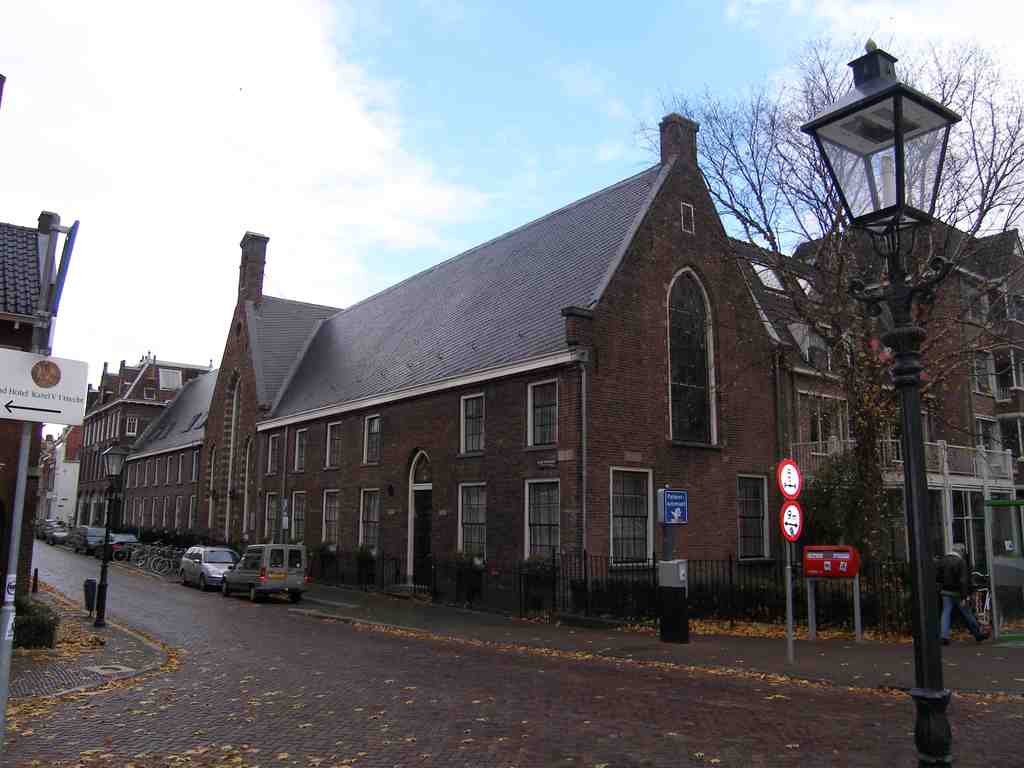
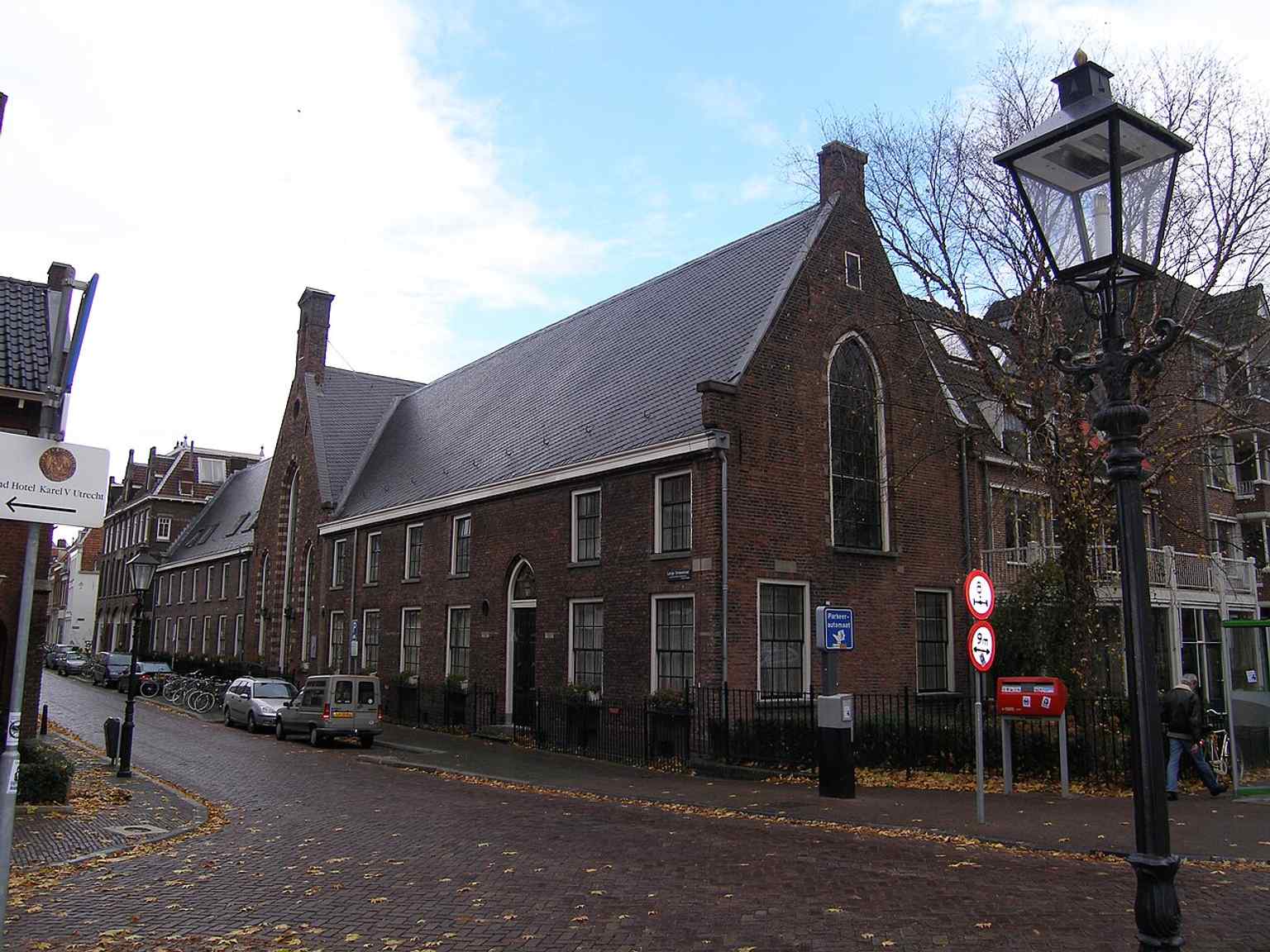
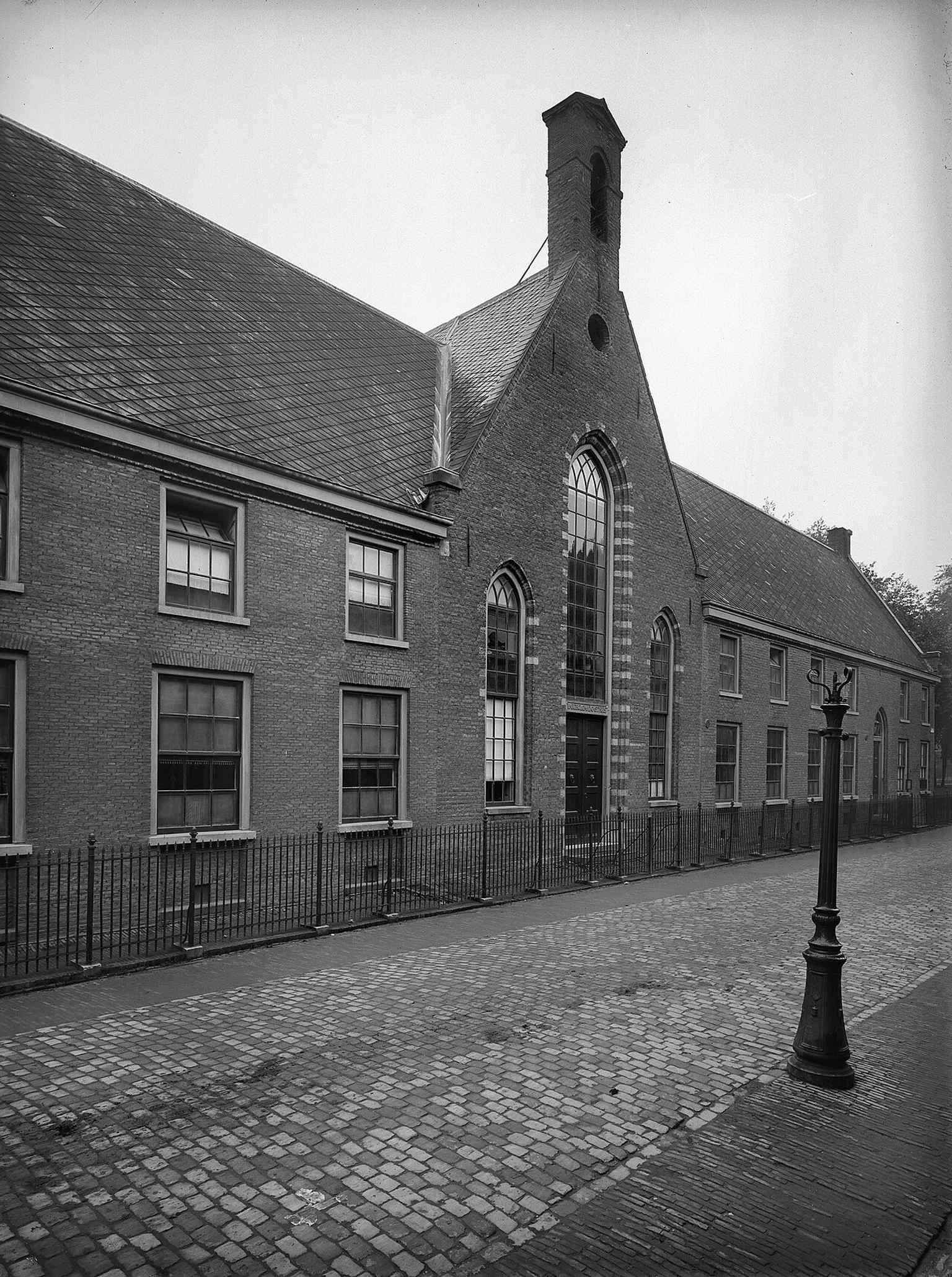
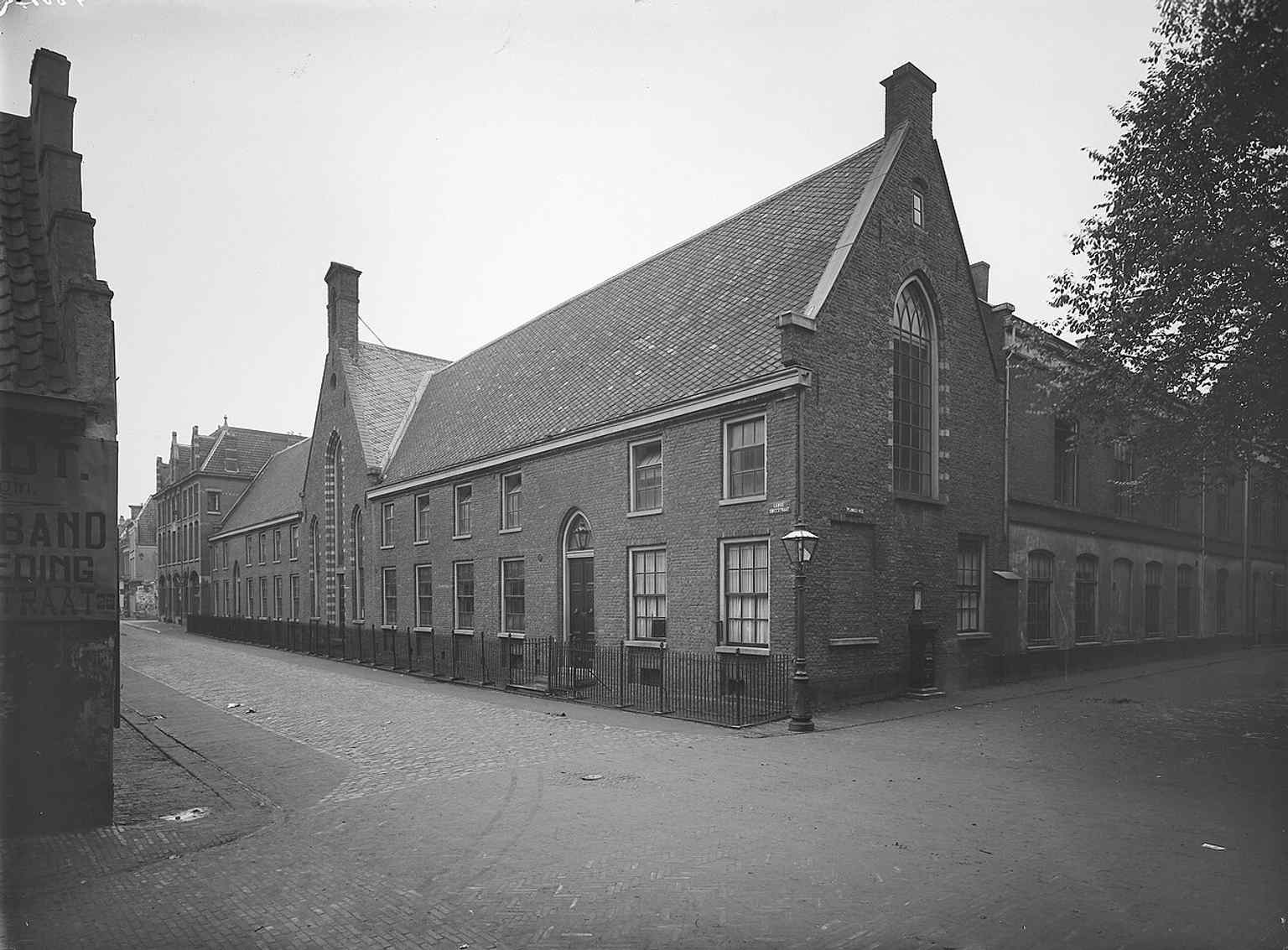
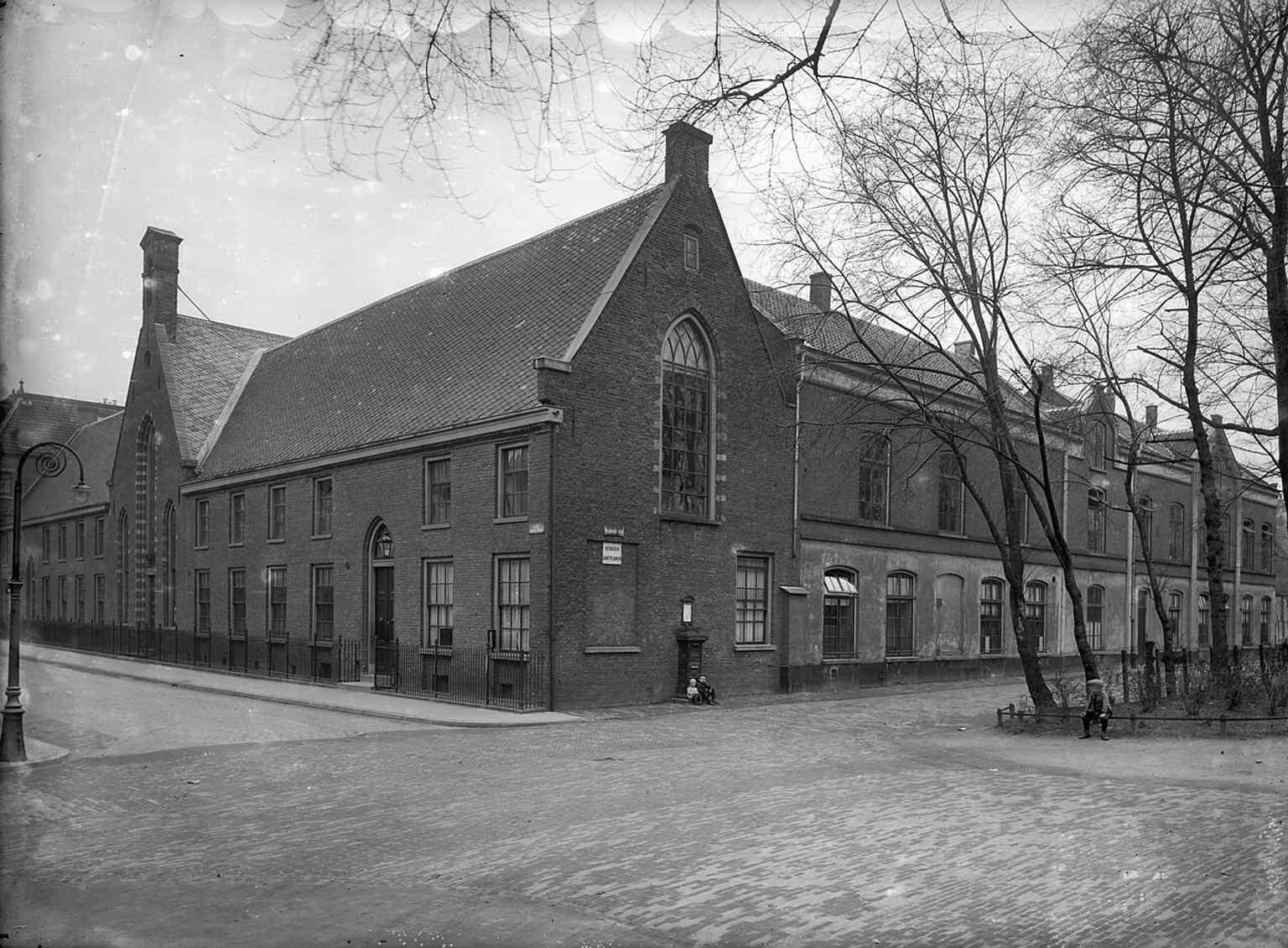
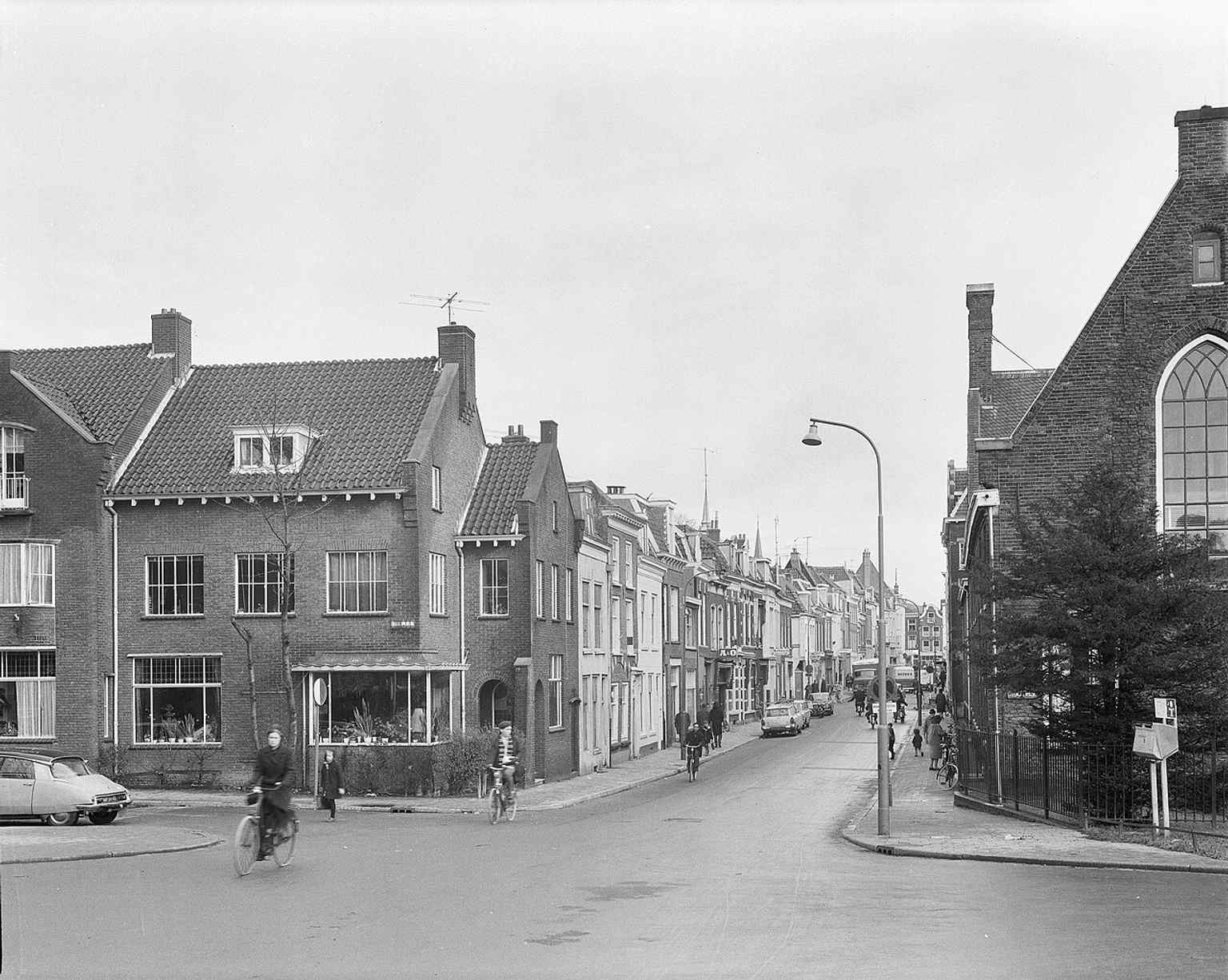
Look to your left, and you will spot a long, dark red brick building with a steeply pitched roof and a striking, tall arched gothic window on its right gable. This is the Bartholomeïgasthuis.
Back in thirteen sixty-seven, this started out as a humble shelter for weary pilgrims and beggars. But it struggled to survive. Then, in thirteen seventy-eight, a wealthy nobleman named Willem van Abcoude stepped in with a massive donation. He completely transformed the place, renaming it the Saint Bartholomeus Gasthuis, and decreed that from then on, it would only take in the sick. Gasthuis essentially means a guest house or hospital, a sanctuary for those with nowhere else to go.
Willem even set up a brotherhood of twenty-three men to guarantee the hospital's future, laying down strict rules in a foundation letter. He also created a charity fund to hand out weekly support to the city's poor. That incredible legacy of care stuck. Up in the structure, there is a bell cast in fourteen seventy-one by Steven Butendycke. It is the second oldest bell in Utrecht, and volunteers still ring it every single day at twelve P-M, exactly as they have for centuries.
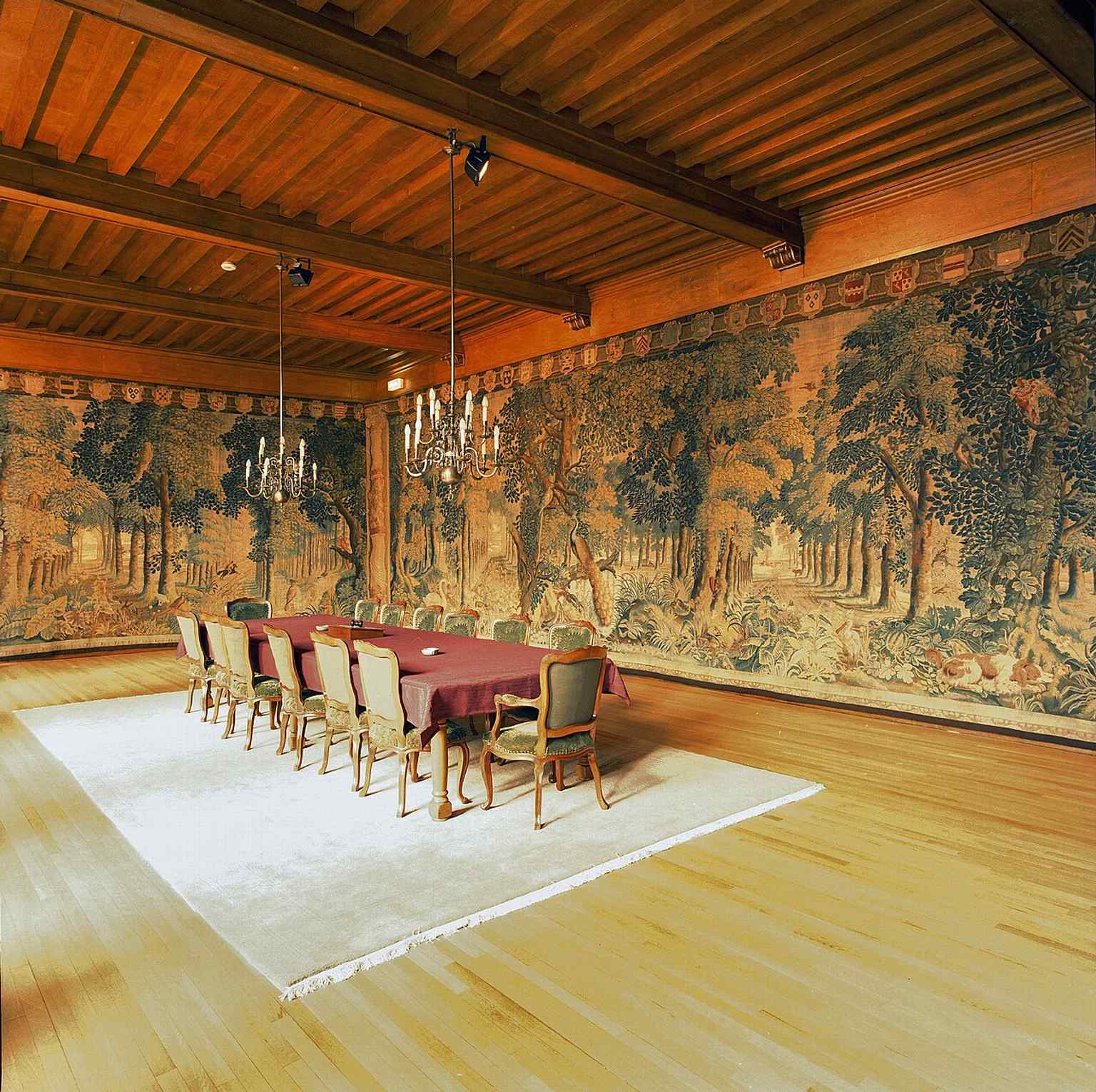
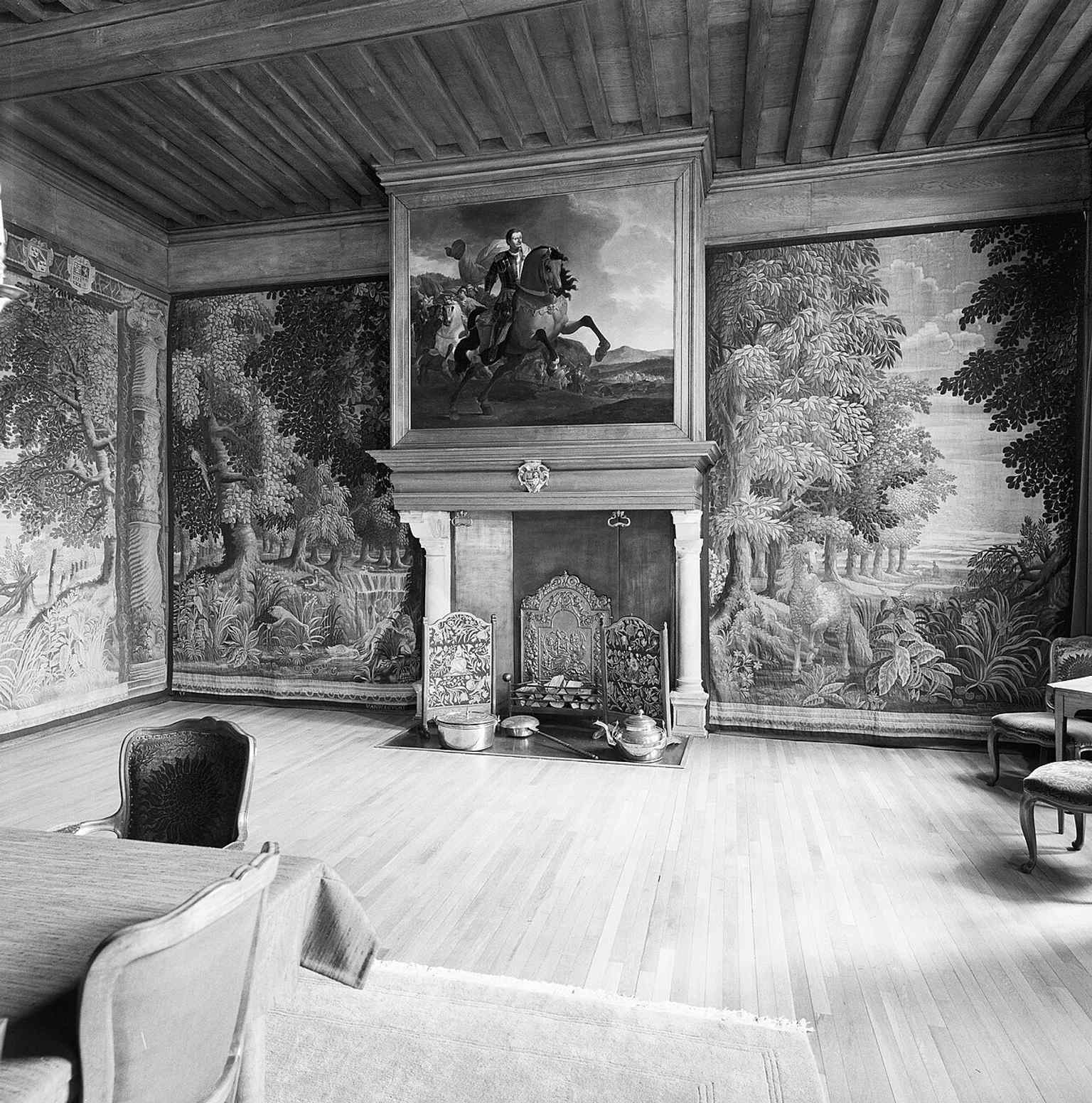
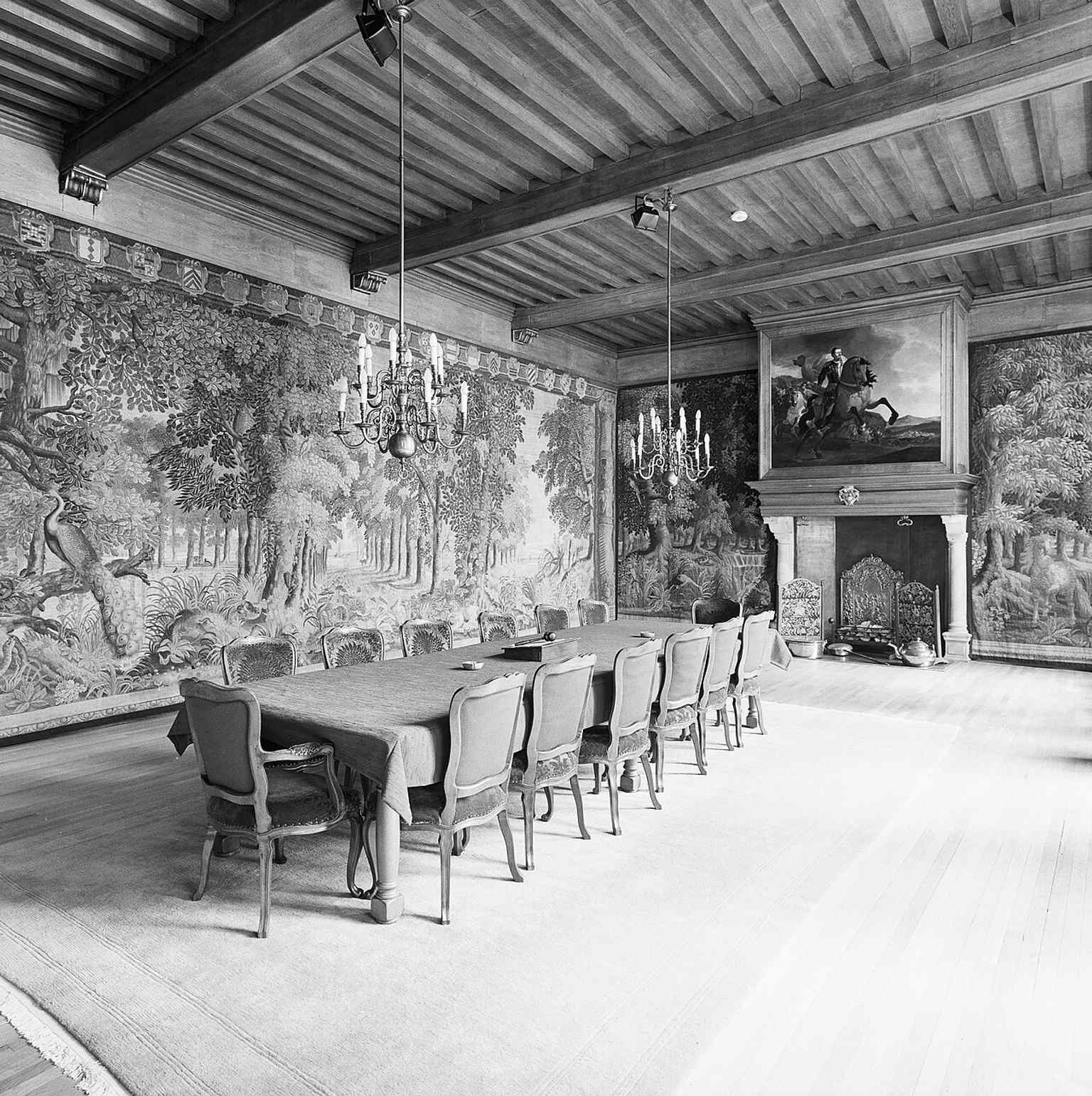
By sixteen thirty-two, the hospital added a Regentenzaal, a magnificent boardroom for its directors. A few years later, they commissioned a master weaver from Delft, Maximiliaan van der Gucht, to create four enormous, custom wall tapestries. These tapestries are a unique masterpiece of Dutch weaving history. You can take a peek at your screen to see the elegant interior and its original beamed ceiling. And if you want to see how beautifully those seventeenth-century tapestries have been preserved over the decades, check out the historic before and after comparison in the app.
The elegant interior of the Regentenzaal, showcasing its elaborate tapestries and original beamed ceiling, where the regents have met since 1818.Photo: A. J. van der Wal, Wikimedia Commons, CC BY-SA 4.0. Cropped & resized.
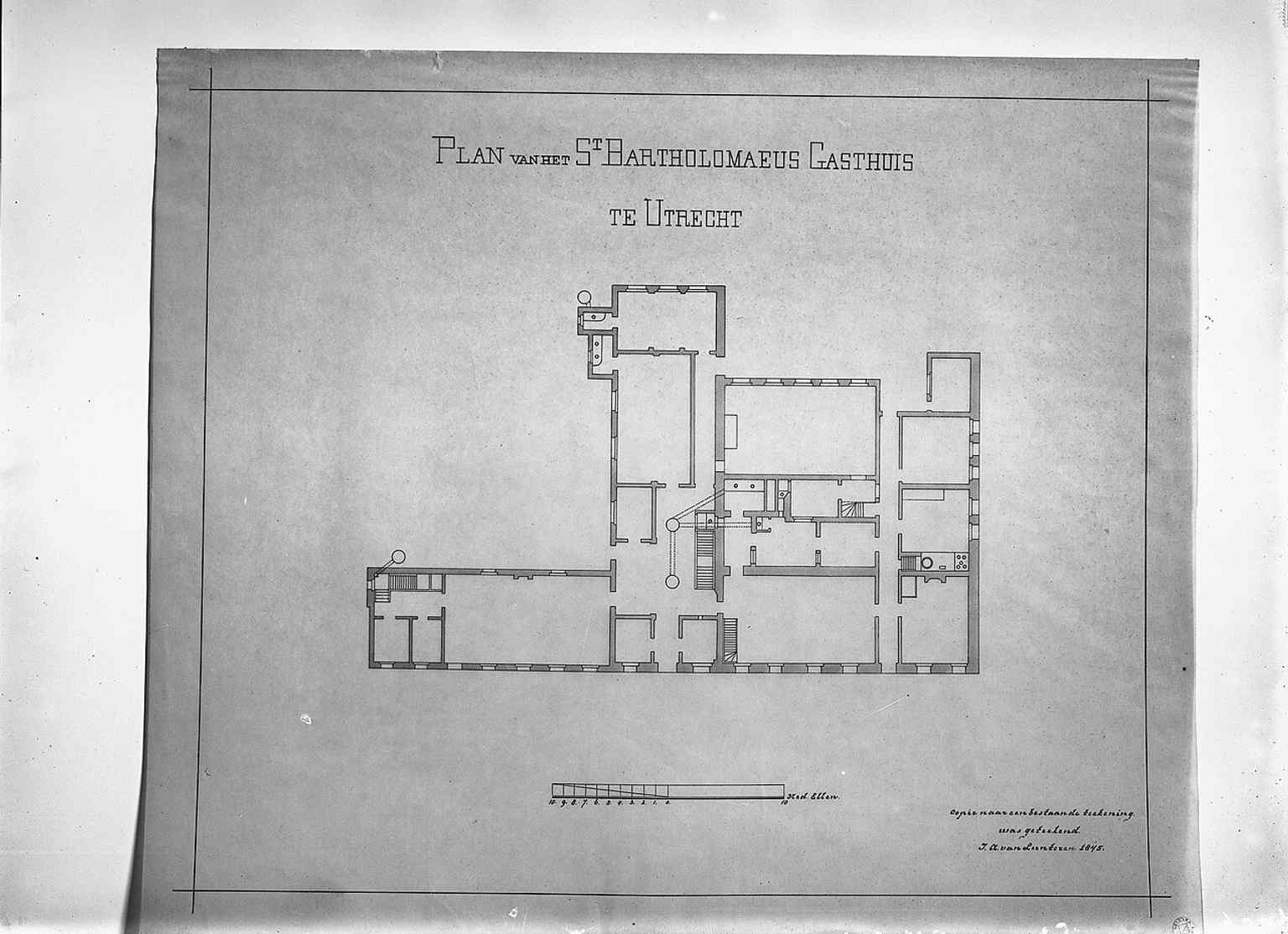
Everything changed in eighteen eighteen. The King demanded that the local university have a clinical hospital, but the city authorities realized they did not actually have one. Their solution was to force all seven of the city's independent guest houses to merge into this single building. To fit everyone inside, they ripped out the old bed boxes and built an entire new floor right through the middle of the medieval sick ward. That is why the exterior looks the way it does today, though they did leave that lovely gothic window intact.
After dodging the wrecking ball in the nineteen eighties, this remarkable building celebrated its six hundred and fiftieth anniversary in twenty seventeen. The doors are open every day of the week from eight thirty A-M to eight P-M if you ever want to step inside. What an absolute triumph of survival. Reflect on this long legacy of care. When you are ready, let's keep walking.
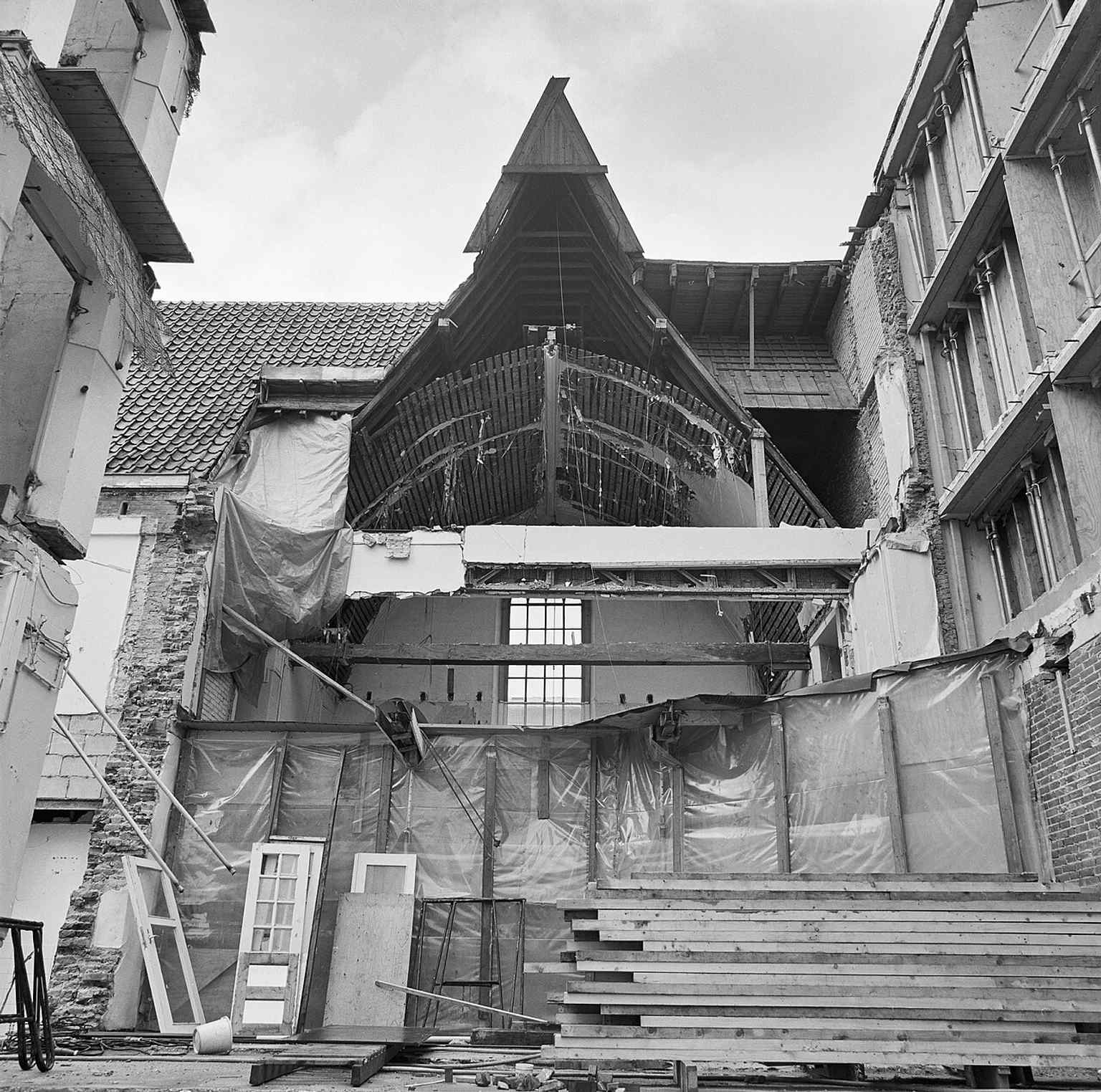
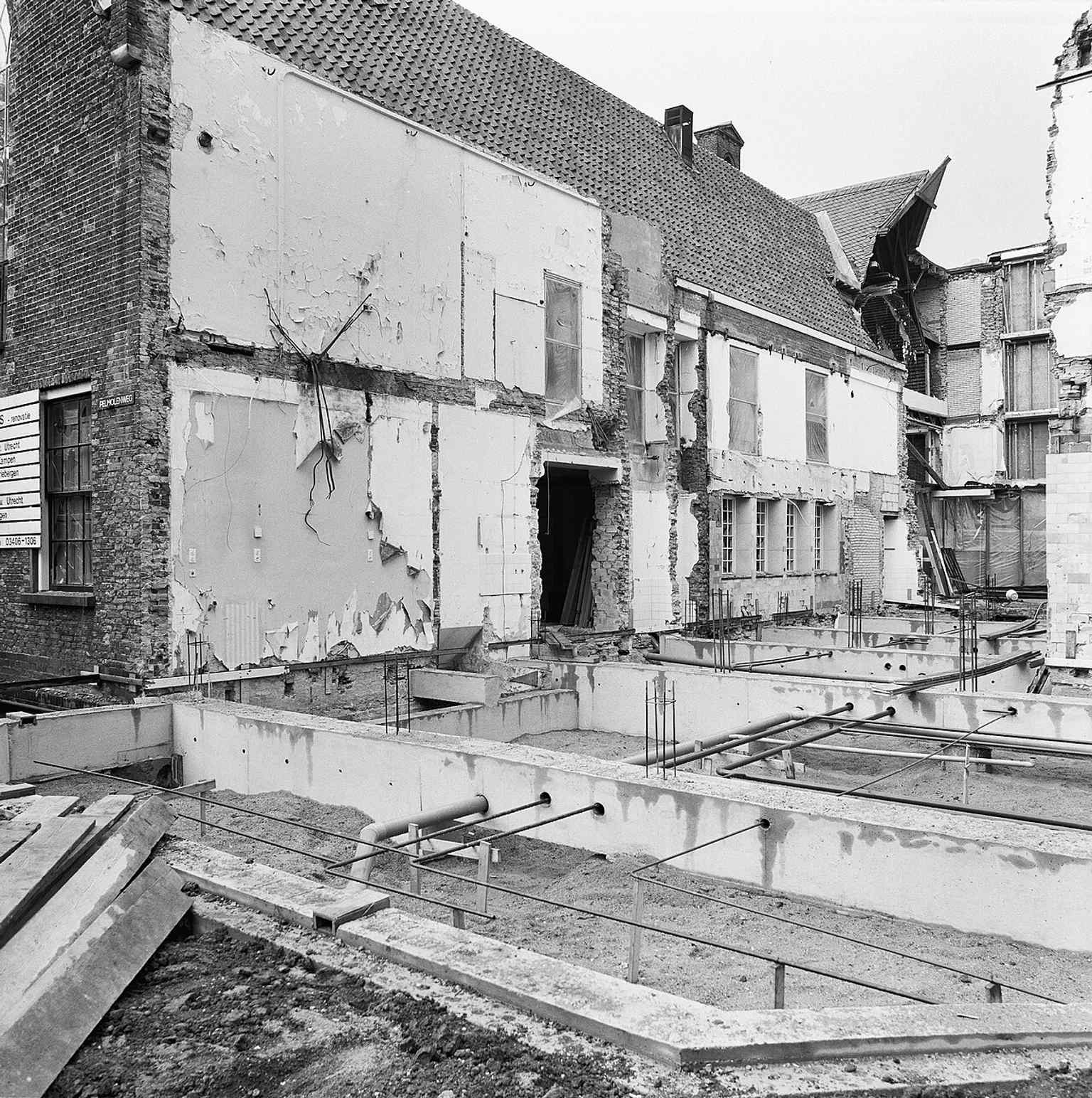
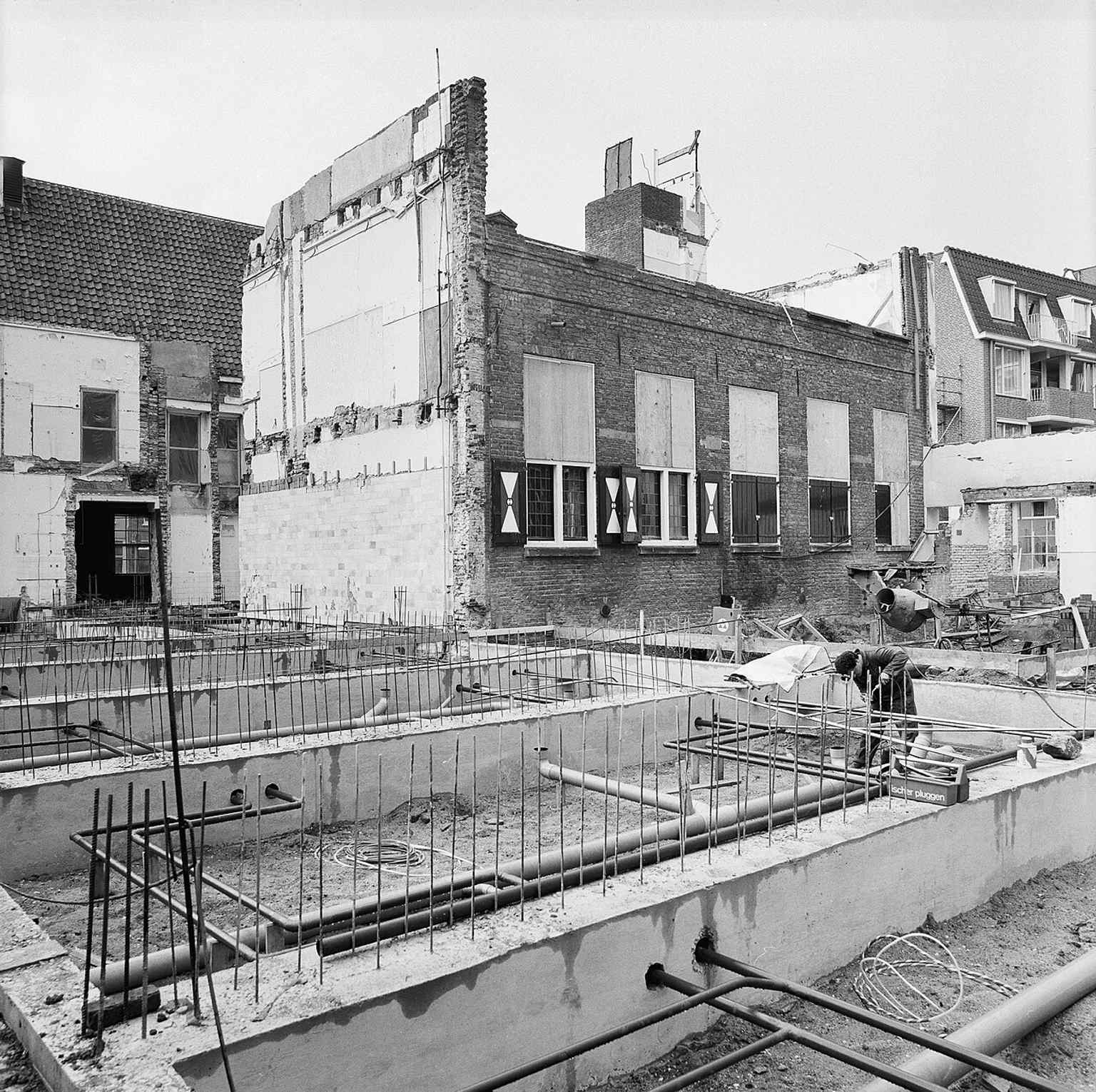
A modern view of the Bartholomeïgasthuis, which celebrated its 650th anniversary in 2017, after significant renovations in the 20th and 21st centuries.Photo: Japiot, Wikimedia Commons, CC BY 3.0. Cropped & resized.This 1845 blueprint shows the layout of the Bartholomeïgasthuis after its designation as a general gasthuis in 1818, which led to significant internal and external structural changes.Photo: Unknown authorUnknown author, Wikimedia Commons, CC BY-SA 4.0. Cropped & resized.The historic front facade of the Bartholomeïgasthuis in 1920, showing its appearance after the significant alterations made in 1818 when it became a general hospital.Photo: Unknown authorUnknown author, Wikimedia Commons, CC BY-SA 4.0. Cropped & resized.The various facades of the Bartholomeïgasthuis as seen in 1920, reflecting the architectural evolution since its foundation in 1378 and subsequent improvements.Photo: Unknown authorUnknown author, Wikimedia Commons, CC BY-SA 4.0. Cropped & resized.A view of the Bartholomeïgasthuis from the southeast in 1925, highlighting the building's historical architecture, which was founded in 1378 and improved by Willem van Abcoude.Photo: Unknown authorUnknown author, Wikimedia Commons, CC BY-SA 4.0. Cropped & resized.A 1966 view of the Bartholomeïgasthuis from Geertebolwerk, showcasing its urban setting. The building underwent extensive renovations in the 1980s and 2012 to meet modern requirements.Photo: A. J. van der Wal, Wikimedia Commons, CC BY-SA 4.0. Cropped & resized.The exterior of the original sick ward in 1986. This part of the building notably lost much of its gothic character after 1818 renovations which included new windows and an interim floor.Photo: Ton Schollen, Wikimedia Commons, CC BY-SA 4.0. Cropped & resized.The rear facade of the western wing in 1986, revealing aspects of the Bartholomeïgasthuis less commonly seen from the front, reflecting its historical extensions and modifications.Photo: Ton Schollen, Wikimedia Commons, CC BY-SA 4.0. Cropped & resized.An exterior view from 1986 showing an addition to the original sick ward, illustrating the continuous evolution and expansions of the Bartholomeïgasthuis over centuries.Photo: Ton Schollen, Wikimedia Commons, CC BY-SA 4.0. Cropped & resized.A close view of the 17th-century tapestries and chimneypiece in the Regentenzaal. These four tapestries, created in 1642 by Maximiliaan van der Gucht, are celebrated as unique Dutch cultural heritage.Photo: A. J. van der Wal, Wikimedia Commons, CC BY-SA 4.0. Cropped & resized.An expansive view of the Regentenzaal, featuring the historically significant 17th-century tapestries that were specifically designed for this room and installed in 1642.Photo: A. J. van der Wal, Wikimedia Commons, CC BY-SA 4.0. Cropped & resized.arrow_back Back to Utrecht Audio Tour: Timeless Treasures of Binnenstad’s Hidden Paths
Loved by travellers
Thousands of tours started. Plenty of opinions.
4.8 across the App Store and Google Play. Here's a few we keep coming back to.
starstarstarstarstar
This tour was such a great way to see the city. The stories were interesting without feeling too scripted, and I loved being able to explore at my own pace.
Started this tour with a croissant in one hand and zero expectations. The app just vibes with you, no pressure, just you, your headphones, and some cool stories.