
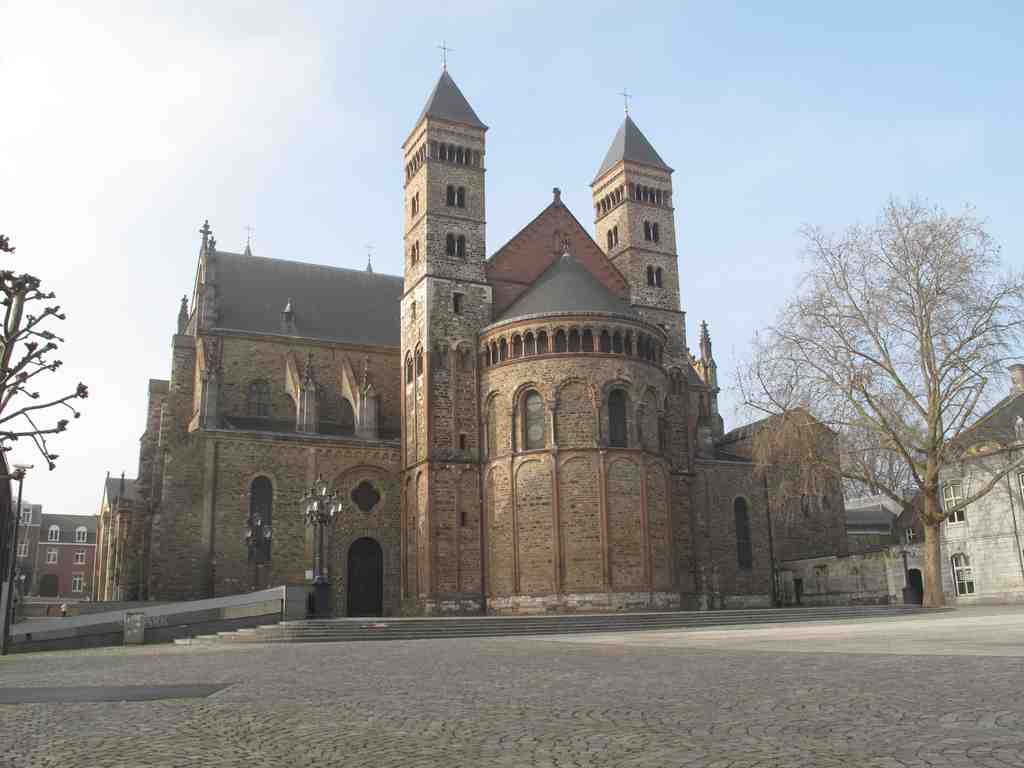
To spot the Basilica of Saint Servatius, look for a massive, fortress-like church of warm brown stone, with round arches and two tall square towers rising at the front, standing proudly at the edge of Vrijthof square.
Picture yourself back in the era of knights, emperors, and great church builders - you’re standing before one of the most storied places in the entire city. The Basilica of Saint Servatius, with its striking towers and mix of rounded and pointed arches, has watched over Maastricht for over a thousand years. Let me take you on a journey through its past - but keep an eye out for any ghostly bishops lurking about!
It all started on the grave of Saint Servatius, an Armenian missionary who, after roaming lands and spreading his message, finally came to rest right here in the 4th century. People believed his spirit hovered so close, you could almost hear the gentle shuffle of pilgrims gathering by candlelight. What began as a humble memorial chapel soon ballooned to a mighty stone basilica, upgraded stage by stage, century after century. By the first half of the 11th century, as the nave took form, a parade of bishops and nobles marched through its doors. In 1039, the place was so important that no less than Emperor Henry III himself, along with twelve bishops, came to watch the church's official dedication. Talk about a VIP guest list.
By now, the basilica had grown into a blend of styles. While most of what you see is solid Romanesque - those round arches and chunky stone - the side chapels and soaring ceilings sneaked in a little Gothic flavor. If only the old walls could talk, they’d spill secrets of feasts, coronations, and the odd medieval drama. When the sculpted Bergportaal was carved in the late 1100s, artisans were already dabbling in early Gothic - Maastricht was truly ahead of the curve!
But this grand building wasn’t always treated kindly. Imagine the clatter and nervous nickering as French troops burst in during the Revolution, turning holy ground into a horse stable. Sacred treasures, intricate screens, and colorful medieval windows either vanished or turned up elsewhere in Europe. Restoration after restoration followed, with Dutch architect Pierre Cuypers in the late 1800s trying to knit together the basilica’s battered beauty. Just when things seemed peaceful, a fire in 1955 sent the spire crashing through the roof! Not to worry though - sturdy as ever, the basilica survived.
And what’s a massive church without a little buried treasure? Hidden crypts, long-lost chapel fragments, and ancient marble panels have been rediscovered under your very feet. The church amassed sparkling reliquaries - from silver triumphal arches to elaborate busts - turning its treasury into a magnet for pilgrims, each hoping to catch a glimpse of sacred relics and perhaps snag a miracle for the road.
Speaking of road trips, every seven years, the Pilgrimage of the Relics transforms Maastricht into a spiritual festival, complete with processions and wide-eyed crowds. Even today, people from all over come to touch the key and the crozier of Saint Servatius, hoping the magic hasn’t run out.
Take a close look at those capitals on the Westwork - you’ll spot carvings of plants, battling beasts, and busy medieval workers, all telling stories older than most nations. The South portal, heavy with sculptures, marked a turning point from Romanesque into Gothic art, influencing churches as far away as France.
So as you gaze up at the spires, let the mix of styles and stones remind you: the Basilica of Saint Servatius isn’t just a church - it’s a layered record of faith, fire, royalty, and resilience. And who knows? If you listen hard enough on a quiet morning, you might just hear the echo of an emperor’s footsteps, or the far-off song of a medieval pilgrim.


