
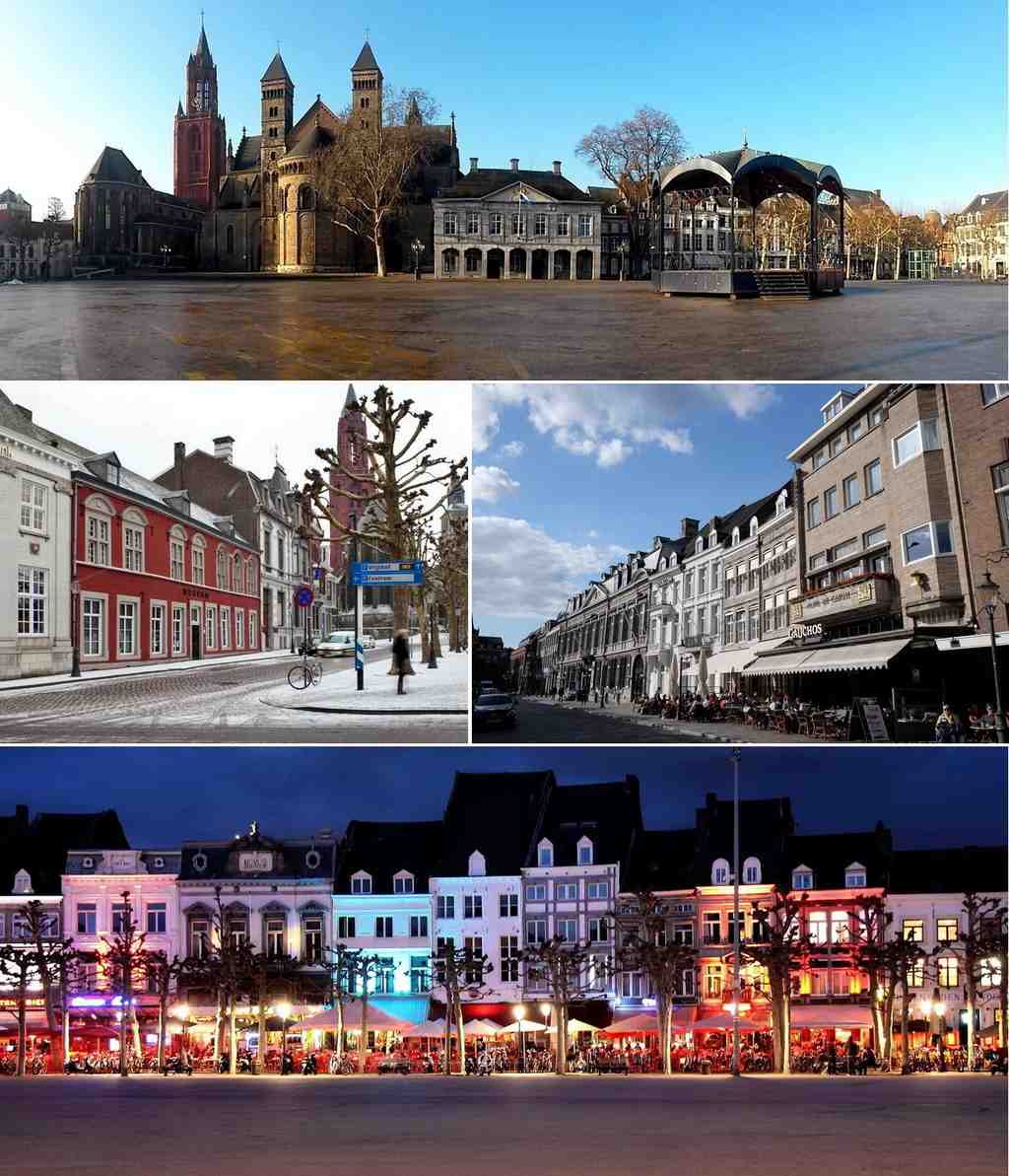
To spot the Vrijthof, just look for the huge open square right in front of you, with rows of trees and a sweeping view of grand historic buildings-especially the tall red and gray towers of the basilicas and the classic bandstand right in the middle.
Ah, welcome to the beating heart of Maastricht-the Vrijthof! Just imagine this square bustling with life as it has for thousands of years. You’re standing on ground that whispers tales from Roman times, when this was an ancient graveyard where generations were laid to rest. Archaeologists have dug up hundreds of medieval graves beneath your feet, and if you listen very closely, you just might hear the distant clinking of ancient treasure hunters digging for the legendary lost silver apostles... or was it gold? Either way, I wouldn’t start digging, or they’ll turn the square into a giant sandbox!
Take in those magnificent towers ahead of you-the twin churches of St. Servatius and St. John stare each other down across a tiny lane called Het Vagevuur, which means “Purgatory.” Perfect name for a street between a Protestant and a Catholic church, don’t you think? St. Servatius is the grand old dame here, a Romanesque basilica whose crypts and treasury you can still visit. St. John’s, the Gothic rebel painted red, claims Maastricht’s tallest spire. Try counting the steps if you feel energetic; just don’t blame me if your legs need a week to recover!
This square wasn’t always a peaceful gathering place. In the Middle Ages, high stone walls and iron gates guarded its edges, and at the center, the crowd would assemble for grand religious processions or, less cheerily, for dramatic executions. Now, don’t worry, they don’t do that anymore-you’re quite safe! But back then, the whole city would hold its breath as the relics of Saint Servatius gleamed in the sunlight, and thousands gathered to catch a glimpse, hoping for a miracle or two.
Look around and spot the grand houses along the edges-these were once homes for powerful canons, the city’s oldest governor’s mansion, and the stylish Hôtel Du Casque, where the fanciest travelers parked their top hats. Over there, the Groote Sociëteit-the gentlemen’s club-was so exclusive, regular folks had to wait centuries for an invite.
And don’t miss the proud, pinecone-topped column toward one corner! That’s the perroen, a symbol of local freedom, rebuilt after Napoleon’s troops knocked the original down for being a little too... independent. Three lions lounge around the column, but don’t worry, they’re stone-so the only thing you’ll hear is pigeons fluttering overhead.
Famous for its tradition of outdoor fun, the Vrijthof explodes with carnival joy every February. Ever seen a statue hoisted by a cheering crowd to mark the start of madness? That’s ‘t Mooswief, this square’s very own mascot. Meanwhile, André Rieu fills the whole space each summer with music and dancing-just picture waltzes echoing off the old stones, thousands singing along as fairy lights twinkle late into the night.
The terraces of cafés and restaurants you see are always filled with locals and visitors sipping coffee, raising toasts, and sampling Limburg pies. Some say In den Ouden Vogelstruys is the oldest café here, dating back to 1730. If those walls could talk, they’d have some tales about wild carnival nights and secret meetings.
Through sieges, celebrations, lost treasures, and legendary concerts, Vrijthof is Maastricht’s living memory-always changing, but forever the city’s beloved stage. So, take a stroll, grab a seat at a terrace, and let the past and present swirl around you in the square that’s seen it all.


