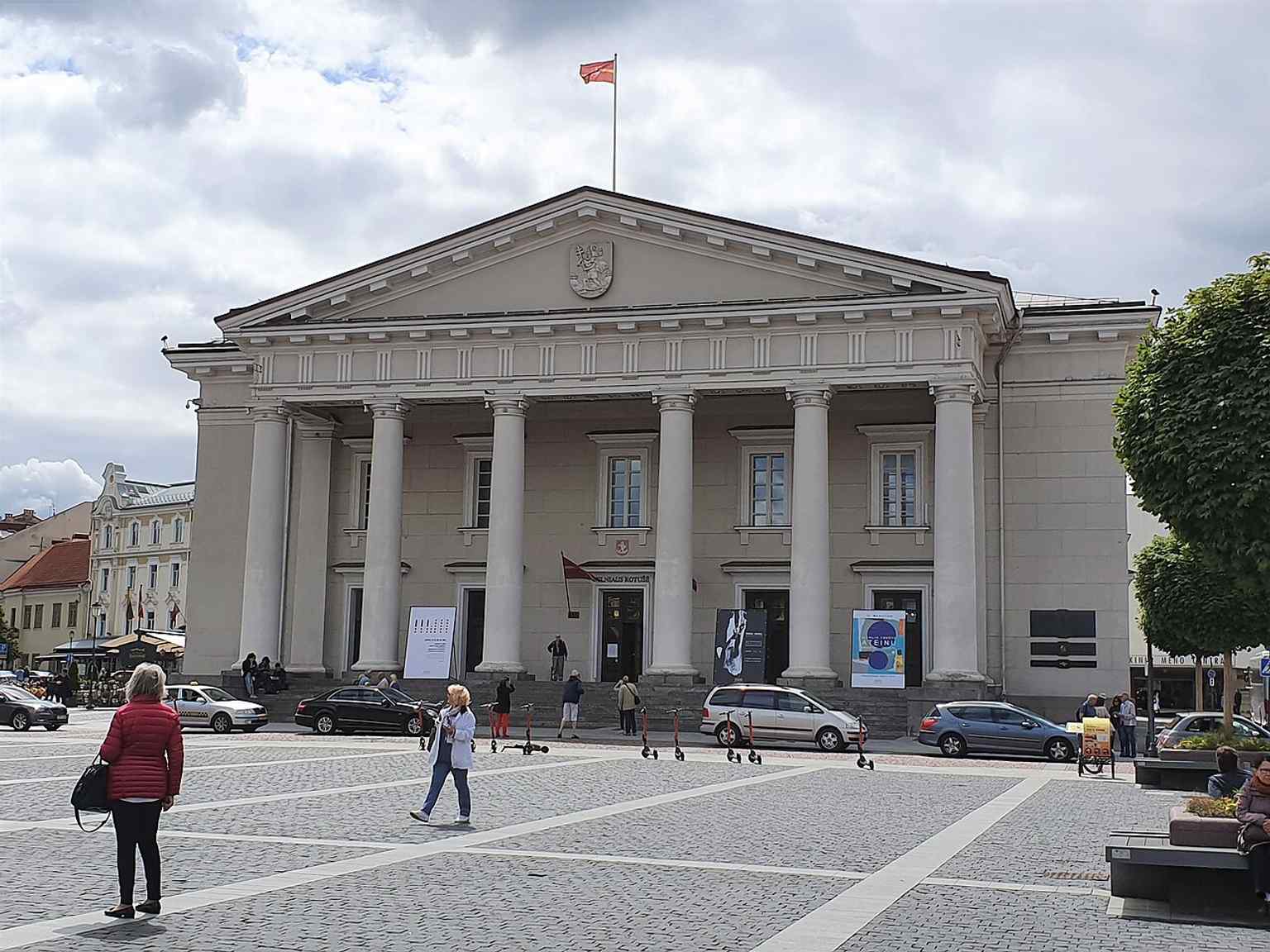
On your right, the Town Hall shows itself with a pale stone facade, a broad triangular pediment, and a row of tall classical columns above a short flight of steps.
This square is Vilnius out in the open. Churches shape the soul of a city, but squares handle its arguments, its bargains, and, now and then, its public melodrama. Town Hall Square began as a triangular market in the fifteenth century, right where trade routes crossed in the heart of the Old Town. Inns gathered nearby, then merchants, then craftsmen. Once people start buying, selling, gossiping, and complaining in the same place, a city government usually appears... and here it did.
The magistrate put up a town hall here, recorded in the sixteenth century. But civic authority came with some rather blunt stage props. Next to the hall stood a pillory called the pilat, where offenders were tied up for corporal punishment. Until the middle of the seventeenth century, the square also held a gallows and an execution scaffold. So yes, the same ground that hosted trade also hosted consequences. Vilnius did not separate shopping from moral instruction very carefully.
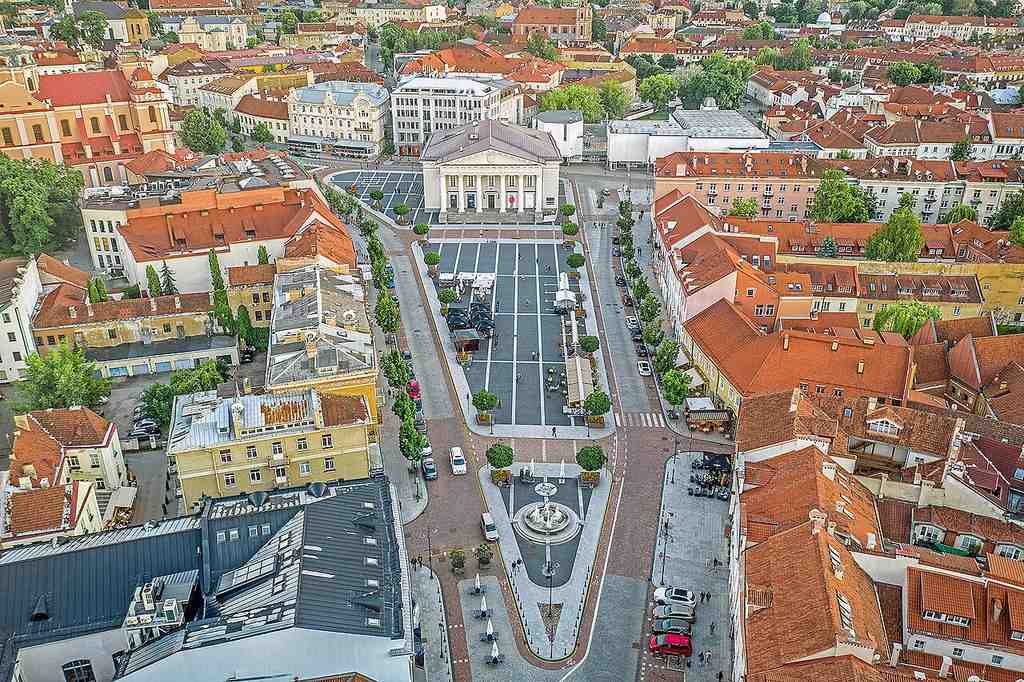
If you glance at the overhead image in the app, you can see how the streets still pour into this space from several directions, like the whole district reporting to one open room. That is the key to this place. You could not really avoid it.
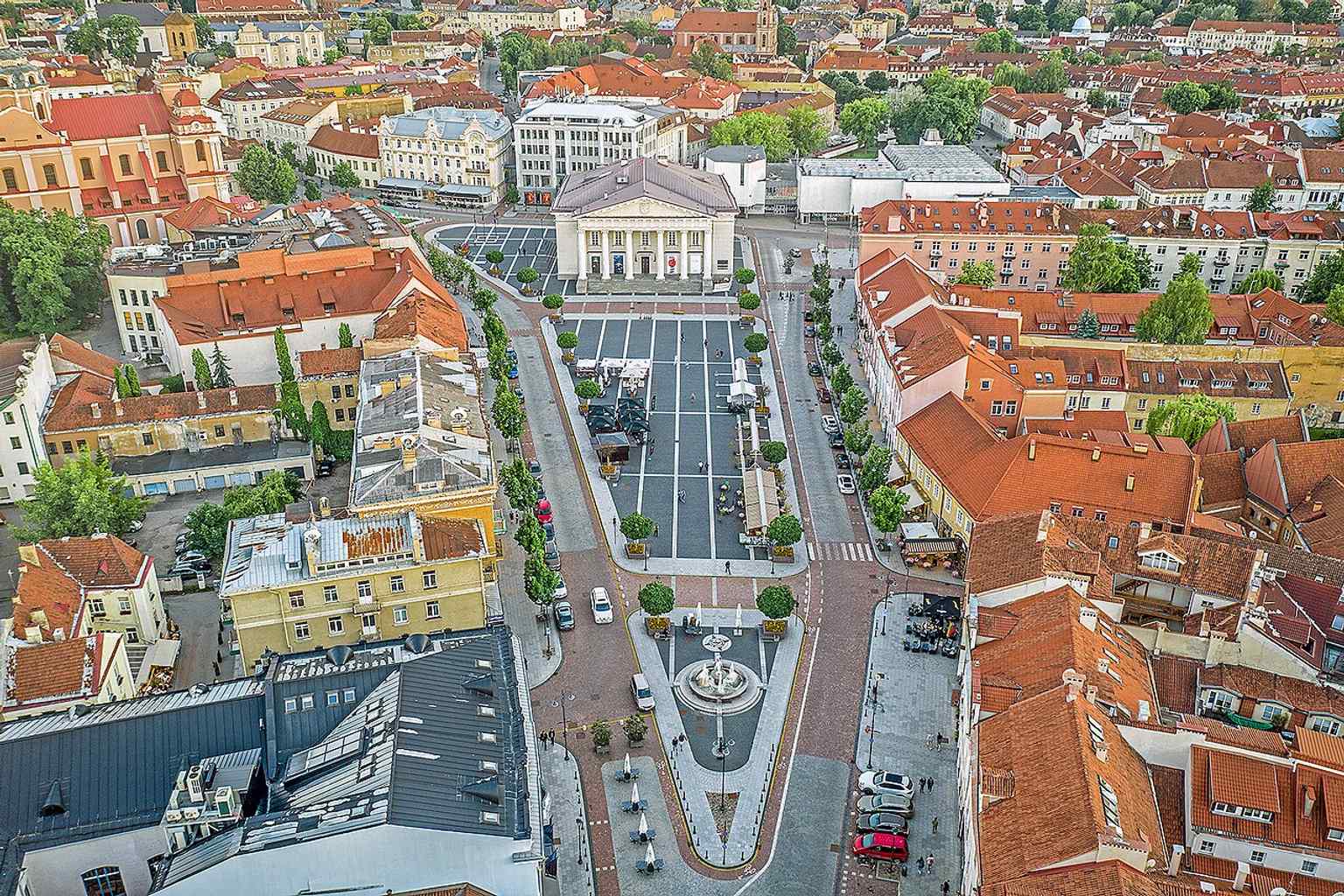
The building you see now took shape in seventeen ninety-nine, when architect Laurynas Stuoka-Gucevičius finished the new classical Town Hall. It looks orderly, almost serene. The local trick is to remember what sat beneath that calm facade. Sources from the seventeenth and eighteenth centuries place a prison in the tower and cellars, and architects only carried out the first official investigations of those spaces in the nineteen nineties. Public ceremony above, confinement below. Neat, elegant, and a little chilling.
One man fused this square to history in a single moment. On the twenty-fourth of April, seventeen ninety-four, Jakub Jasiński came here after liberating Vilna from Russian troops and proclaimed the Lithuanian uprising. Words spoken in an open square can turn into action very fast. Jasiński’s own story did not end neatly. Within weeks, other leaders removed him for being too radical and for pressing too hard on Lithuanian autonomy, and later he died in the Battle of Praga.
This square also watched Napoleon’s retreating army pass through in eighteen twelve, and later it swapped governance for performance. After the magistrate moved out in eighteen forty-four, the Town Hall became the city theater. From eighteen forty-five to nineteen twenty-four, people came here for plays and some of Vilnius’s earliest opera performances. Same building, different drama.
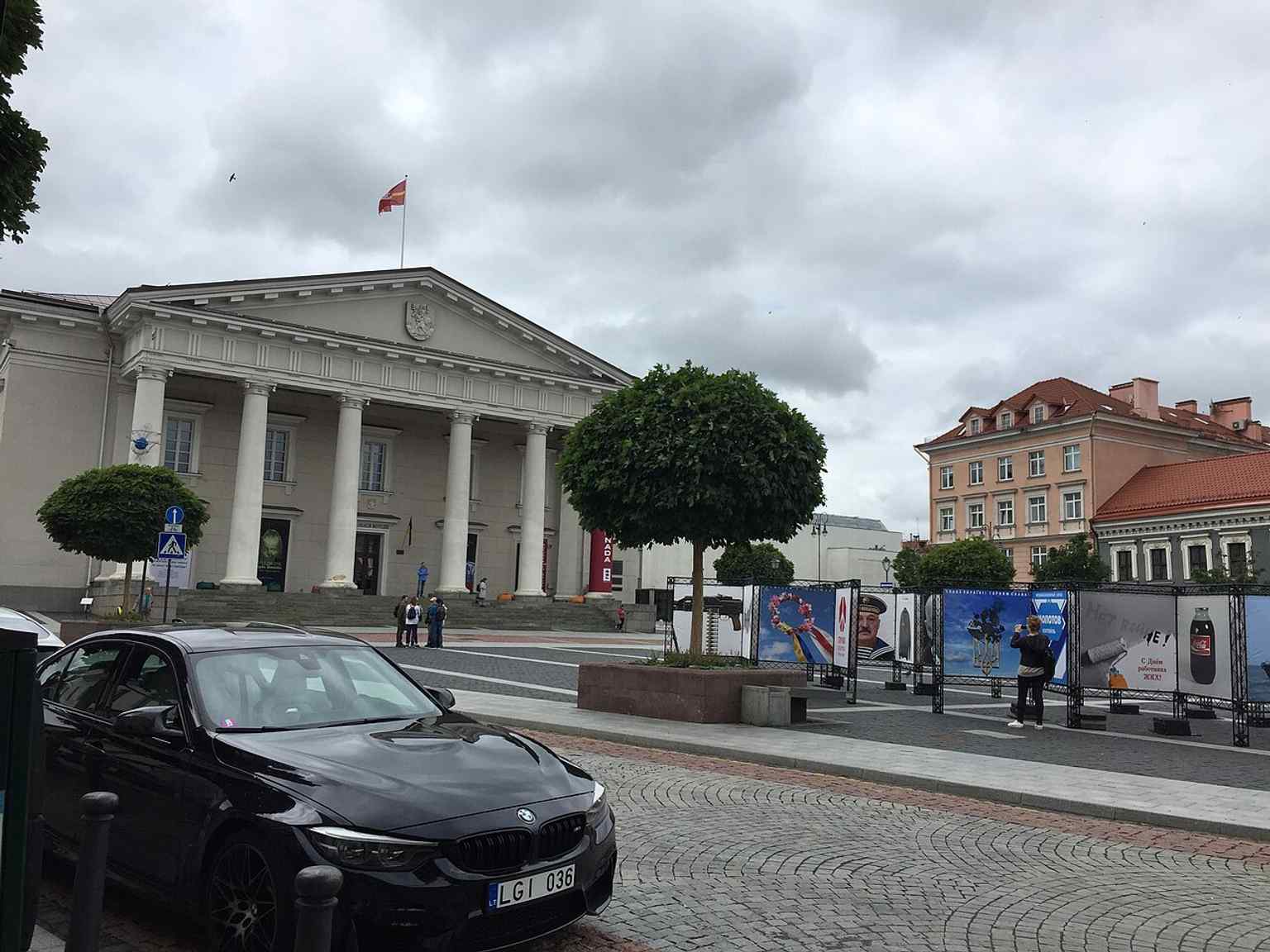
If you look at the image with protest posters on the Town Hall, that is not some odd modern interruption. It is the square behaving exactly like itself, a platform for public messages and public nerves.
Try to picture hearing Jasiński’s proclamation right here. Would this square have sounded like hope, fear, or both? In Vilnius, the biggest turns often happened not behind walls, but in places everyone had to cross. In about three minutes, we’ll head toward the Great Synagogue of Vilna, where another kind of city life once gathered its own force.