
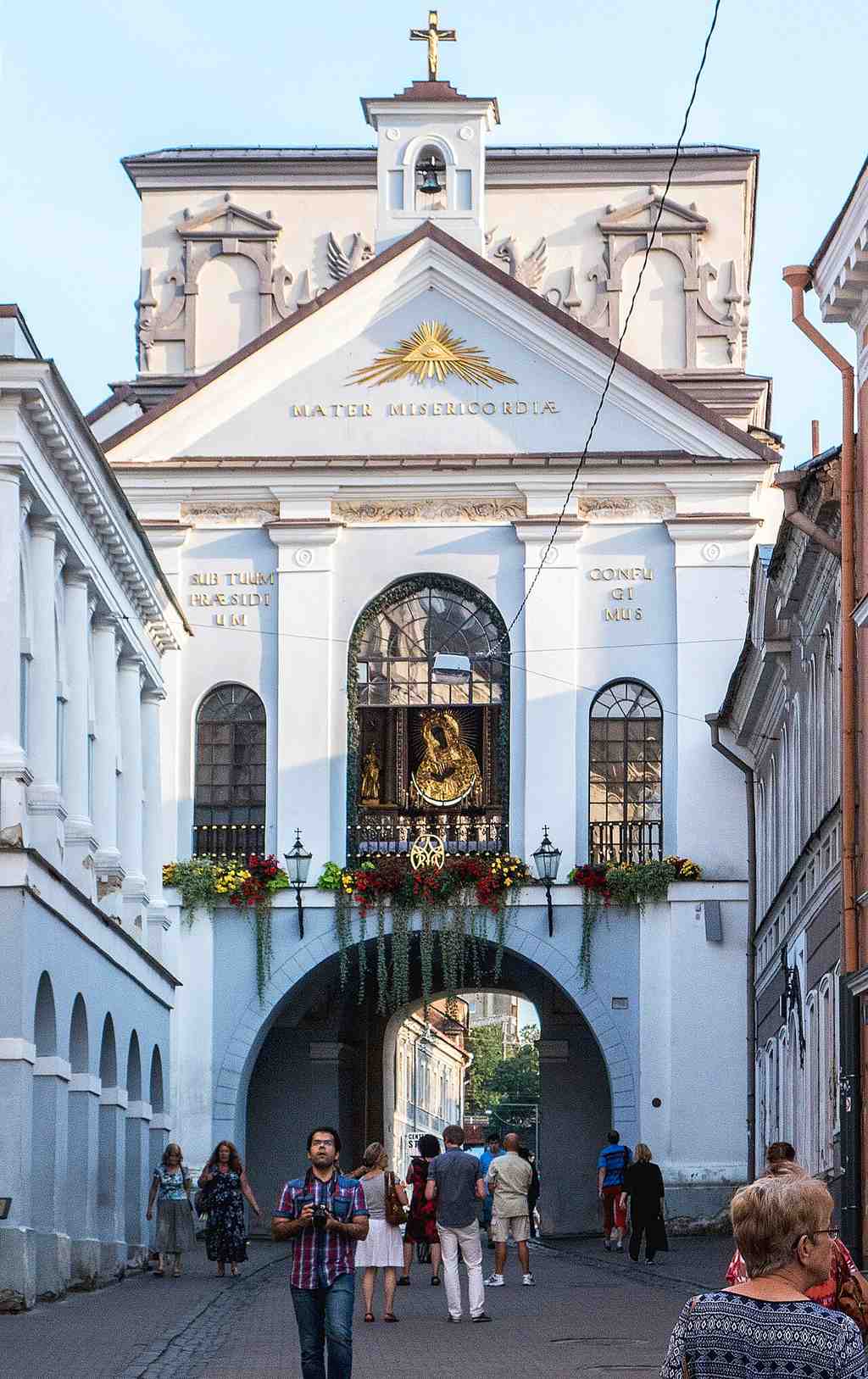
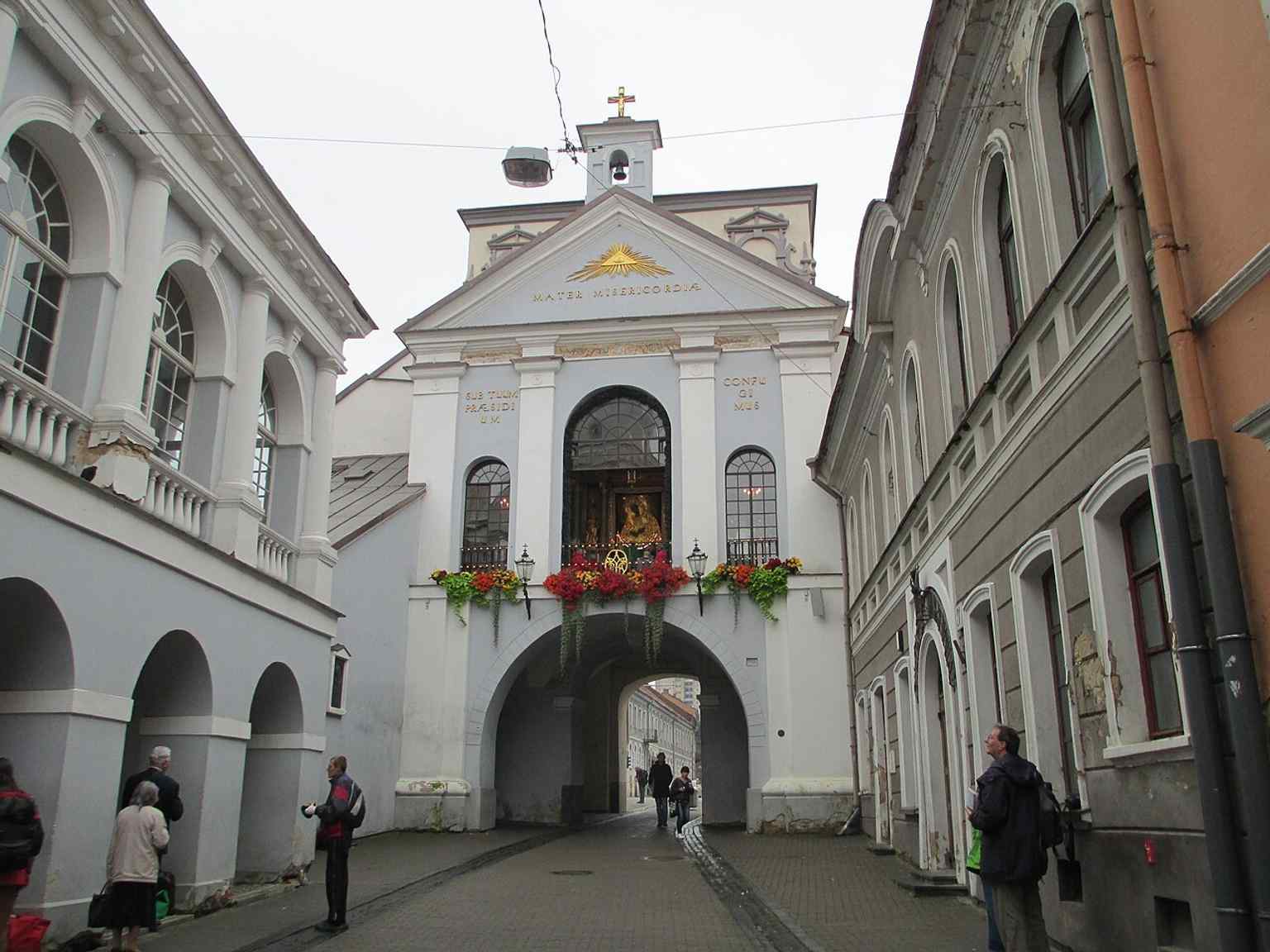
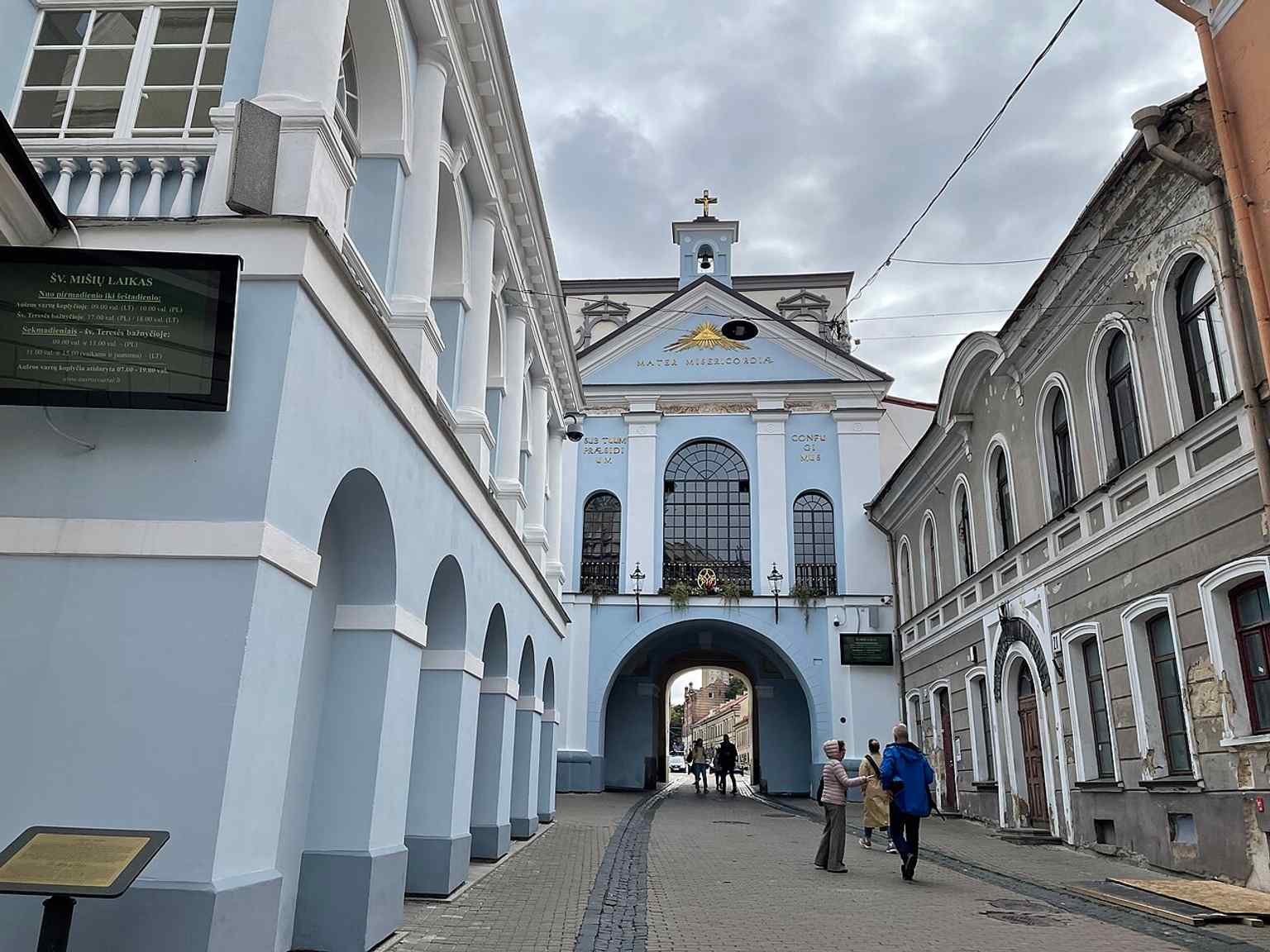
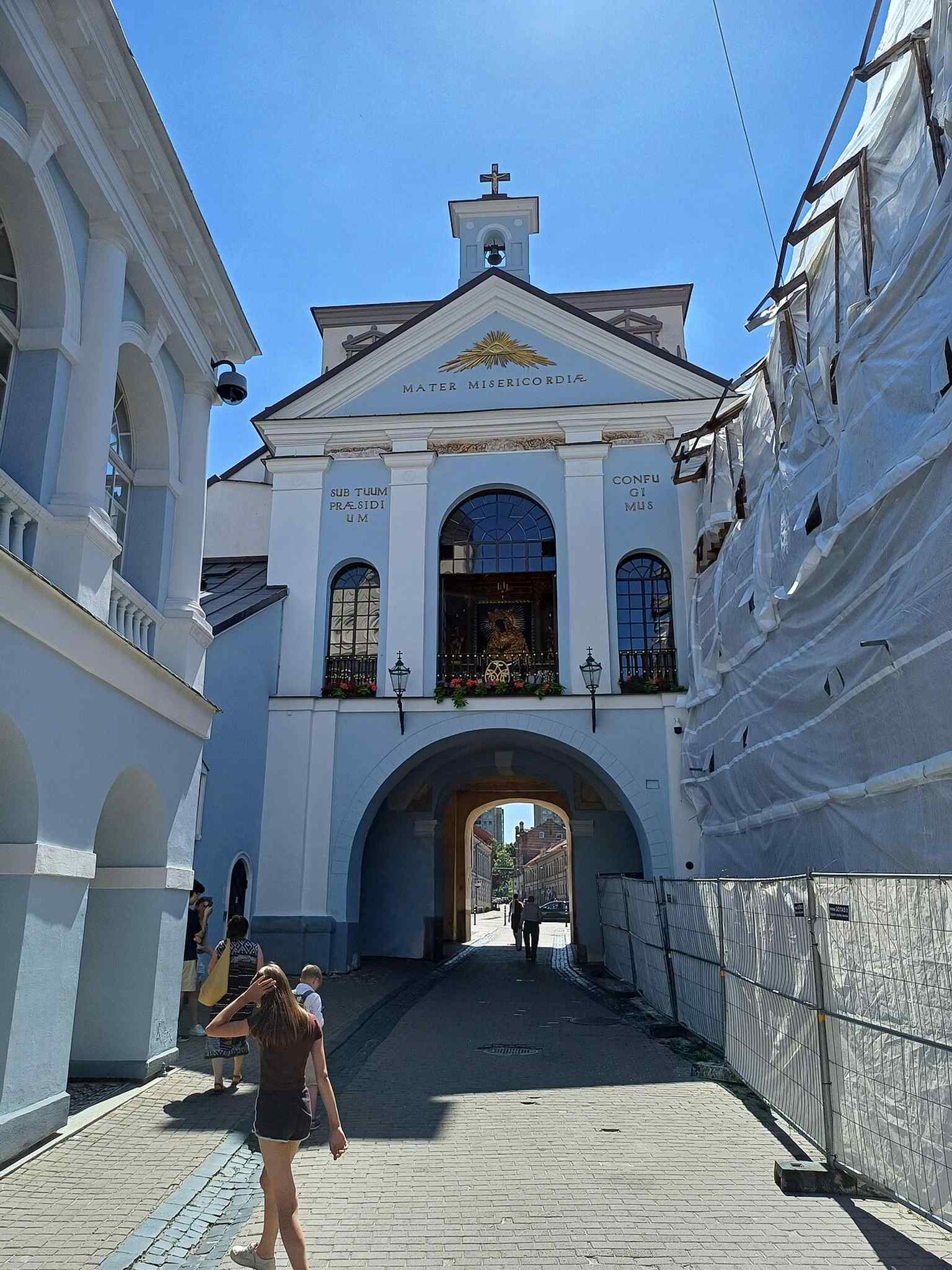
Look for a pale plastered gateway with a broad arch, a square chapel set above it, and small firing openings still visible in the wall.
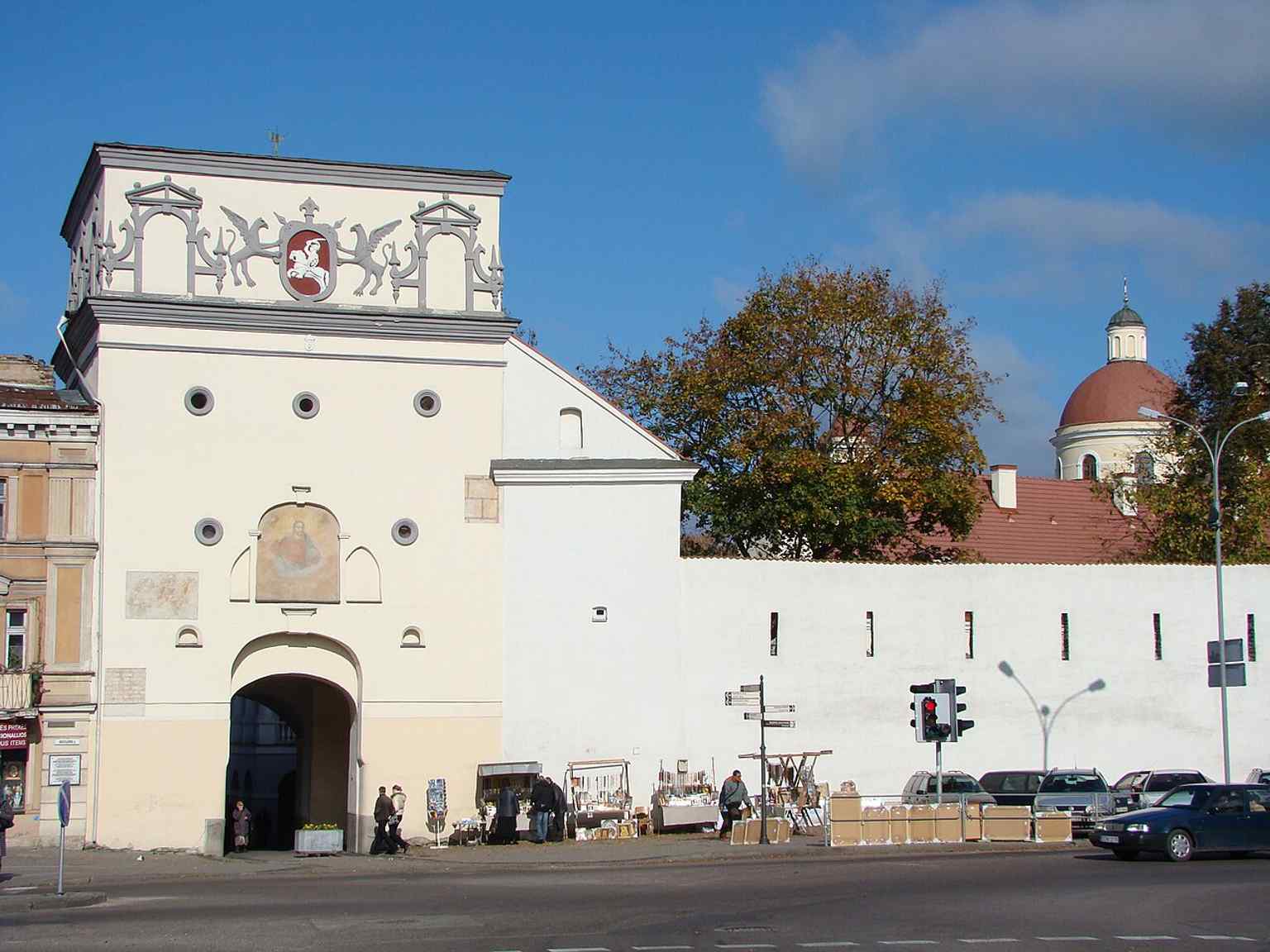
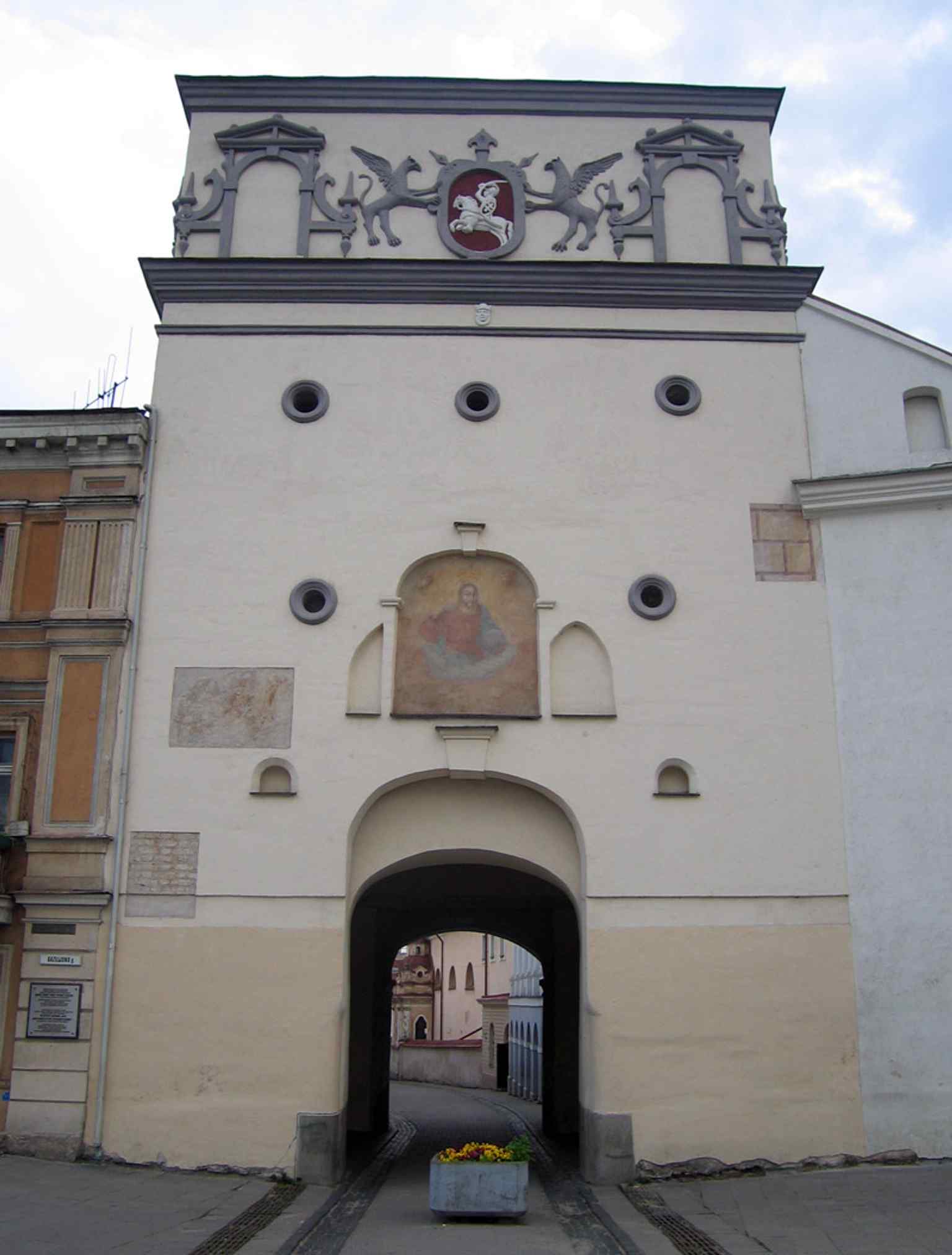
Welcome to Vilnius through a place that began with a very practical job: keep enemies out. Between fifteen oh three and fifteen fourteen, city builders raised this as one of nine gates in the defensive wall. The slits on the outside were not decorative. They were there so someone inside could shoot through them... which is a fairly direct form of urban planning.
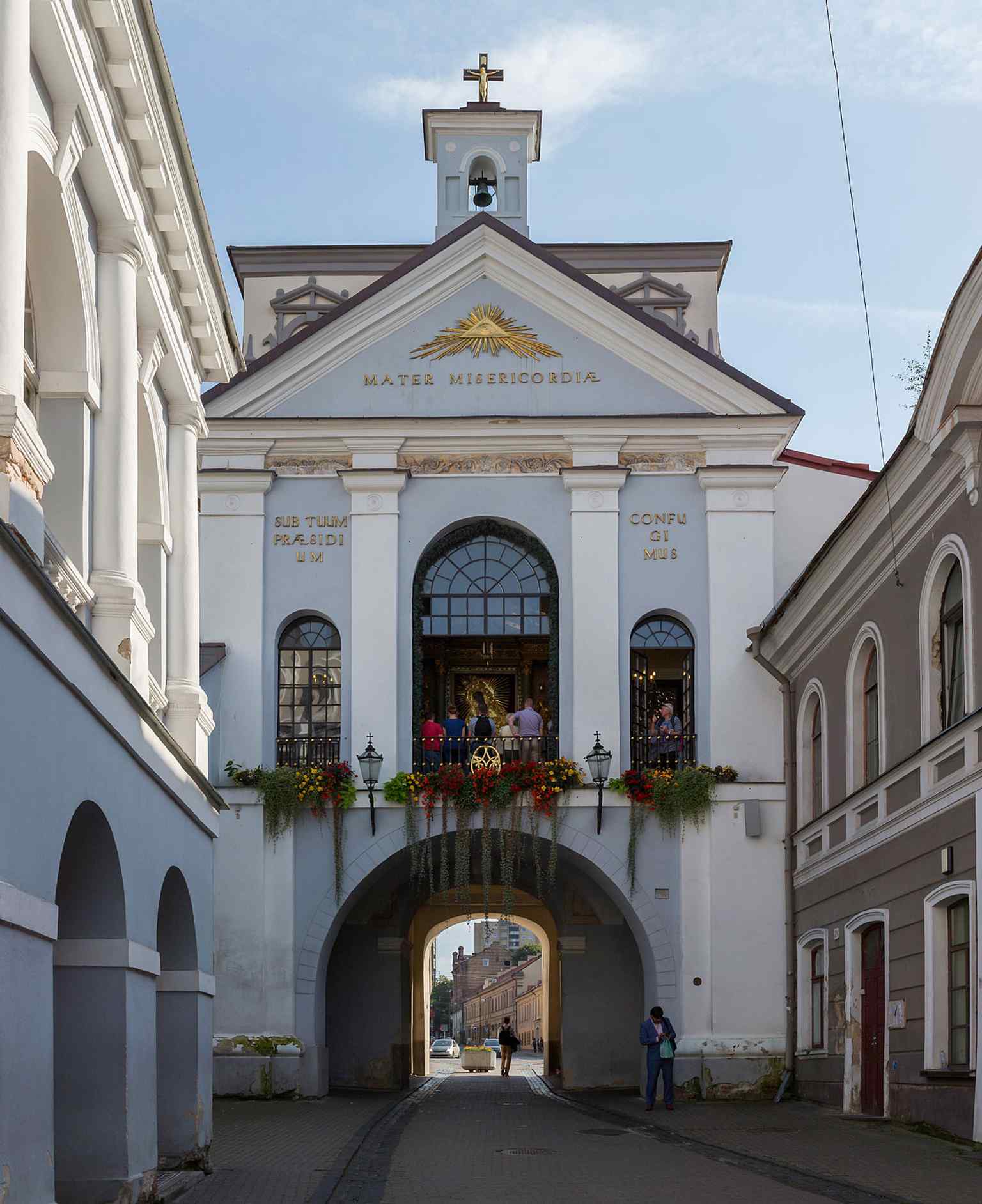
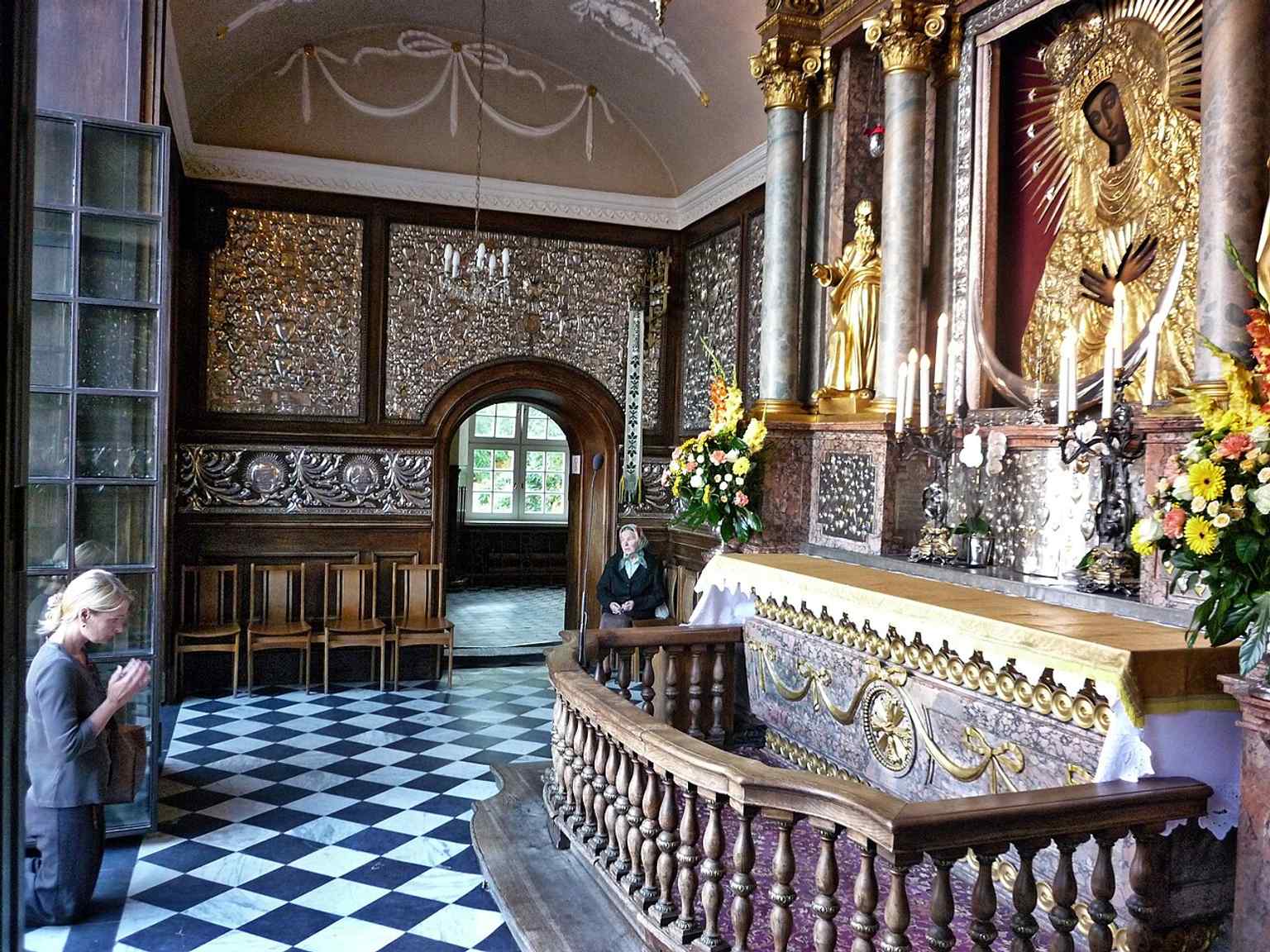
And yet almost immediately, this military entrance picked up another duty. People placed an image of the Virgin Mary here, and the gate started doing double work: guarding the city with force, and guarding it with prayer. That mix matters in Vilnius. Here, public power and private faith rarely stayed in separate rooms for long.
Before I go on, take a second and study the exterior. Find those defensive details, then imagine pilgrims approaching the very same structure expecting mercy instead of arrows.
Even the name refused to settle down. Locals and documents used Sharp Gate, Medininkai Gate, the Latin Porta Acialis, the Polish Ostra Brama, and eventually the Lithuanian Aušros Vartai. Some linked that last name to Mary as the Morning Star, others to the gate’s southeast direction toward first light. In other words, this place belonged to several traditions at once, and each one tried to name it a little more firmly than the others.
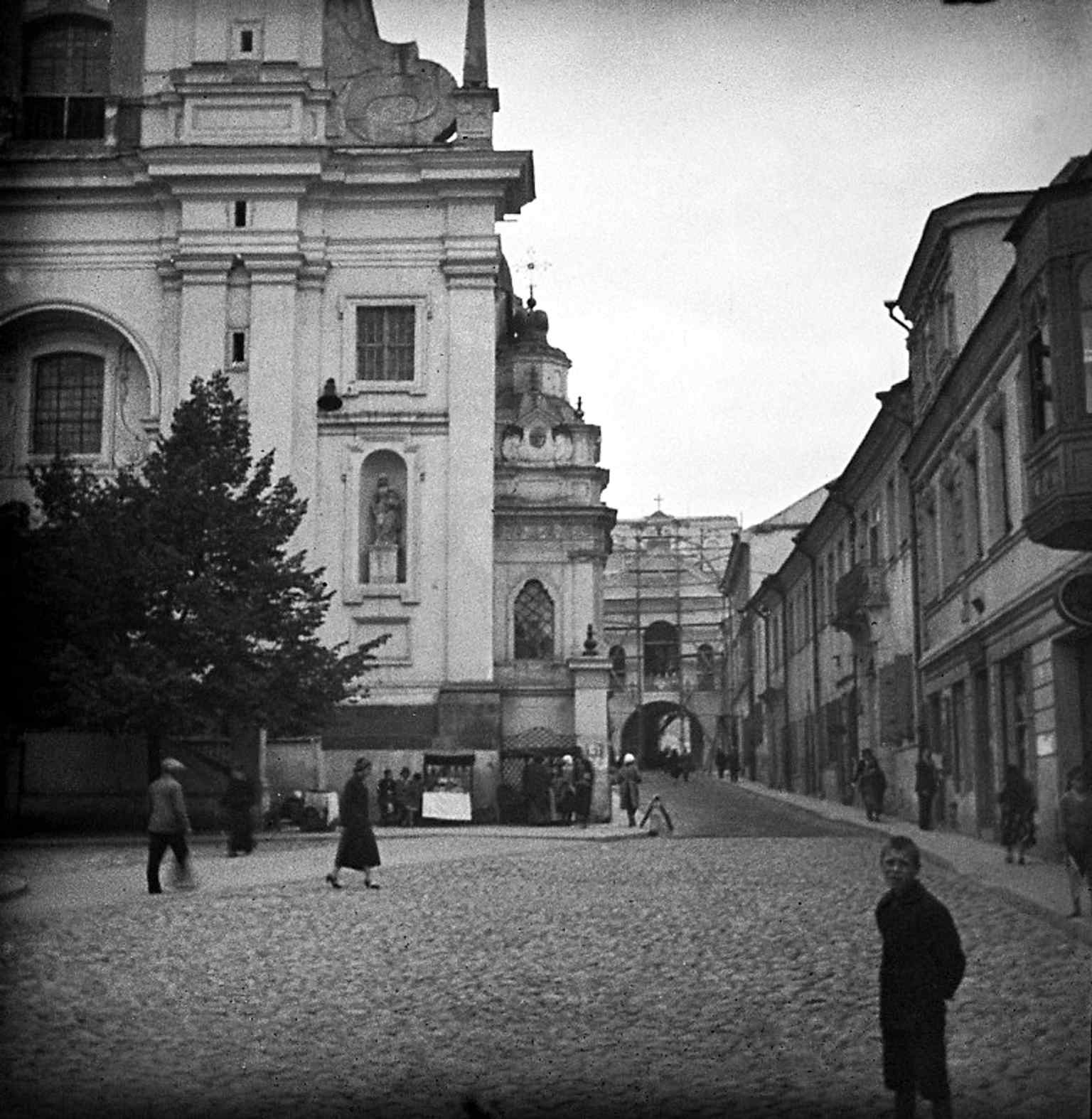
In the sixteen twenties, the Discalced Carmelites - a strict branch of Catholic friars known for a life of prayer and simplicity - settled right beside the gate near the Church of Saint Teresa. They did not invent devotion here, but they nurtured it, organized it, and spread its fame. In sixteen sixty-eight they got permission to build a wooden chapel inside the gate, and by sixteen seventy-two the sacred image hung there again with full ceremony. If you want a sense of how this fortress slowly turned into a shrine complex, glance at the image on your screen showing the gate beside Saint Teresa’s.
One Carmelite friar, Hilarion, later gathered the gate’s miracle stories into print in seventeen sixty-one. He opened with the story of a two-year-old child who fell from a second-floor window onto stone pavement and, after the parents prayed to Our Lady here, reportedly recovered by the next day. That kind of story traveled fast. So did the wartime ones. During the Swedish occupation in seventeen oh two, tradition says a bullet struck the painting itself, and commander Antoni Nowosielski later offered a silver votive gift in thanks after the defense of the gate. In Vilnius, survival often arrived wearing armor and carrying a candle.
When the city tore down its walls between seventeen ninety-nine and eighteen oh five, this gate survived because people revered the image too much to lose it. So a fortification outlived the fortifications. If you want, compare the before-and-after view in the app; it’s a neat little jump from interwar Wilno to modern Vilnius.
The shrine kept gathering meaning after that: under Tsarist pressure, in Polish and Lithuanian memory, in the Divine Mercy devotion, and during visits by Pope John Paul the Second and Pope Francis. Pilgrims from different Christian traditions all came here. For a single gateway, it has carried an absurd amount of human expectation.
And that is a fine way to begin. If even an entrance can change its meaning this completely, what else in Vilnius is hiding a second life? When you’re ready, head to the Church of Saint Casimir, about five minutes away. If you want to come back inside later, the shrine is generally open daily from seven to seven.






.JPG)


%20on%20the%20Gate%20of%20Dawn%20in%20Vilnius%2C%20Lithuania.jpg)


