Vilnius Audio Tour: A Stroll Through History and Governance
Beneath the elegant skyline of Vilnius, secrets simmer where power and rebellion have collided for centuries. Here, grand institutions share cobbled streets with shadowy remnants of intrigue. On this self-guided audio tour, unlock stories hidden behind solemn facades and iron gates. Roam at your own pace through halls of justice and corridors steeped in scandal. This city will reveal corners most travelers overlook. What sparked the midnight confrontation that sent shockwaves through the Seimas? Which elusive figure outwitted prosecutors at the Constitutional Court? Why did a silent crowd gather beneath the looming walls of Lukiškės Prison on an ordinary Tuesday? Wander from sweeping squares to narrow passageways, tracing footsteps of politicians, dissidents and unsung heroes. Each stop pulls back the curtain on drama both grand and intimate. Are you ready to uncover what really happened behind Vilnius’s storied walls? Start your journey now.
Tour preview
About this tour
- scheduleDuration 40–60 minsGo at your own pace
- straighten2.4 km walking routeFollow the guided path
- location_on
- wifi_offWorks offlineDownload once, use anywhere
- all_inclusiveLifetime accessReplay anytime, forever
- location_onStarts at Constitutional Court of Lithuania
Stops on this tour
As you stand here in front of the Constitutional Court of Lithuania, take a moment to appreciate the solemn air of justice that surrounds you. Imagine the gentle rustle of papers…Read moreShow less
As you stand here in front of the Constitutional Court of Lithuania, take a moment to appreciate the solemn air of justice that surrounds you. Imagine the gentle rustle of papers in the offices inside, judges in their black gowns discussing the fate of the constitution, and the weighty silence broken only by the shuffle of official documents. This building, right here in Vilnius, has guarded Lithuania’s Constitution since 1993, established by the freshly-minted Constitution of 1992, just after the country reclaimed its independence. Now, I know what you’re thinking: what makes this court so special? Well, this isn’t your average courthouse where neighbors squabble about fences or parking spots. No, the Constitutional Court stands apart like the referee in a football match: its main job is to blow the whistle when Lithuania’s lawmakers, the Seimas, overstep the boundaries of the Constitution. Sometimes, it’s a quiet guardian, ensuring new acts and international agreements are squeaky clean and constitutional. Sometimes, though, it’s right in the middle of the action. Picture this: it's the spring of 2004, and the buzz of anxious voices fills the air. The court is about to judge the fate of Lithuania’s president, Rolandas Paksas. After intense deliberation, the court rules that he’s broken his oath of office. The result? Lithuania became the first country in Europe to successfully remove its head of state through impeachment! Now that’s what you call constitutional drama-only without the popcorn. But wait, there’s more! Back in December of 1998, the court delivered another momentous decision: it declared the death penalty unconstitutional, making the legal system a little more humane and the Constitution a little more compassionate. Judges here aren’t just lawyers-they’re the constitutional superheroes of Lithuania, handpicked for their experience and spotless reputations. Only nine make up the court at any given time, each serving a single, unrepeatable nine-year term. To keep things fresh, every three years a third of the members are replaced-sort of like a law-themed game of musical chairs. So, as you gaze at these historic walls, remember: inside, crucial debates and high-stakes decisions unfold, keeping Lithuania’s democracy on a steady, constitutional course. And if you ever feel like your job is tough, just think-at least you don’t have to decide the fate of presidents!
Open dedicated page →You’re standing in front of one of Vilnius’s most haunting historic sites: the Museum of Occupations and Freedom Fights. If you feel a chill, it’s not just the Lithuanian…Read moreShow less
You’re standing in front of one of Vilnius’s most haunting historic sites: the Museum of Occupations and Freedom Fights. If you feel a chill, it’s not just the Lithuanian breeze-this building has seen some chilling moments in its time. Picture yourself in the late 1800s. This grand structure, finished in 1890 when Lithuania was part of the Russian Empire, first served as the nerve center for the local court. Judges were here, lawyers rushing up the steps, the clatter of horse-drawn carriages out on the street. But if these walls could talk, what stories they’d tell! World War I rolled in, and suddenly the German Empire took over. They didn’t bring any bratwurst but plenty of military boots. It wasn’t long before the tides of history turned again. The city’s independence quickly brought in a conscription center for the fresh Lithuanian army, then a brief Bolshevik turn, then, after an uprising, Polish courts set up camp here. It was like an Airbnb for European regimes-everyone checked in, sometimes reluctantly. Now, hold onto your hat, because in 1940 everything changed overnight. The Soviets stormed in and made this building their headquarters. Mass arrests and deportations soon followed. The prison cells downstairs weren’t just cold-they were places of terror. Imagine-no beds, just a bucket and stone silence. Some rooms were labeled “kitchen” on Soviet blueprints, but if you were unlucky enough to end up there, there was nothing to eat except fear. The Soviets even covered the floors in concrete before they left, just to keep things covered up. But wait, there’s a plot twist-the Nazis blitzed in during 1941, and the Gestapo set up shop. They left chilling scratchings on the cell walls that are still here today-a silent testimony from one tragedy to another. And then, as if Vilnius wasn’t tired enough, the Soviets swept back in 1944, and the KGB took over. That’s when this place got its nickname: the KGB Museum. Basement prisons, interrogations, and, for over 1,000 unfortunate souls, their final hour. Most of those bodies now rest at Tuskulėnai Manor, which hosts a branch of the museum. That brings us to today’s museum. Opened in 1992 and run by the Genocide and Resistance Research Centre, its exhibits are a raw, moving record of Lithuania’s 50-year struggle under the Red star. Inside you’ll see letters, photographs, even the personal belongings of partisans known as the Forest Brothers who fought the Soviets from the dark woods. There are stories of underground presses, brave words smuggled in battered books, and portraits of families separated by deportation trains. The museum is, strangely enough, still part-courthouse and a special archive for Lithuania’s tangled 20th-century records-talk about multitasking! Of course, history is tricky. The museum didn’t always tell every story. Until 2011, shockingly, there was no exhibit on the Holocaust here, despite Lithuania’s deep scars from that time. After public outrage and a not-so-glowing article in The New York Times, they added a section on the Holocaust and renamed the museum in 2018 to be more accurate-because nothing ruins a reputation faster than being called out in Time Magazine. Feel the heavy doors behind you, the quiet whispers of memory. The museum may no longer be a prison, but it’s a place where you confront the ghosts of the past, face to face. If you dare to visit inside, you might find the silence more powerful than any lecture. And hey-if these walls start whispering to you, don’t fret. It’s probably just history’s way of making sure you don’t forget. For further insights on the description, collections or the controversy, feel free to navigate to the chat section below and inquire.
Open dedicated page →You’re standing before the historic Vilnius Girls’ Gymnasium, but if you’d been here over a century ago, you might have needed a bit of courage-or perhaps just perseverance-to…Read moreShow less
You’re standing before the historic Vilnius Girls’ Gymnasium, but if you’d been here over a century ago, you might have needed a bit of courage-or perhaps just perseverance-to walk through those doors. Let’s take a stroll back to 1860, when Vilnius was tucked away under the Russian Empire’s sprawling reach, and the idea of a high school just for girls was about as shocking as seeing a snowstorm in July. The city was buzzing with whispers: What would these new schools mean? Who would go? And, most importantly-what on Earth would the girls be learning? Back then, this building wasn’t quite the lively hub you see today. In fact, it started off almost like a secret club with hardly any members. Only 89 girls showed up in its first year, and by 1862, attendance had dropped to just 58. Some children’s birthday parties had more guests! In those early days, the idea of girls’ education was still novel, and the locals weren’t exactly lining up to support it-unless maybe someone convinced them there’d be free cake. What’s more, the school wasn’t popular in part because it taught in Russian-a deliberate strategy by officials who wanted to encourage everyone here to think, speak, and act more Russian, what’s known as “Russification.” Imagine being a noble family in Vilnius, sending your daughter to a school that teaches her in a language that’s foreign to your heart and home. Not exactly a recipe for wild enthusiasm. Now, though the Gymnasium was intended to shape future generations into loyal Russian subjects, it struggled to fill its classes. Even the local nobles weren’t so sure. There were whispers about shutting the school down, or reducing it to a meager three-year institution. But the authorities were determined: as the only officially sanctioned girls’ school for Russian education in the city, the Gymnasium simply *had* to stay open. Once in a while, even bureaucracy can be stubborn for noble reasons-or at least their version of them. If you were a girl hoping to enroll in 1860, here’s another twist: Jewish girls were originally barred from attending. This rule was scrapped a year in, opening the doors just a little wider for diversity-after a friendly nudge from progress (or perhaps a not-so-friendly push). Through the years, the school evolved as more Jewish girls joined, and eventually, their families persuaded officials to offer classes on Judaism, too. Talk about a school that kept adding electives! The catch? Lessons were in Russian, of course, and families were usually asked to foot the bill. But a generous donor named Samuel Polyakov came to the rescue, making it possible for many more girls to join. By the turn of the century, things had changed dramatically. The cramped halls echoed with the footsteps of hundreds of students-over 450 by the 1890s, with young women lining up for a chance at education and independence. The majority, interestingly enough, were Jewish girls at this time, until separate Jewish schools opened and numbers dropped, even as overall enrollment kept soaring. By 1912, an impressive 831 students bustled through its corridors-a far cry from its humble beginnings. The Gymnasium’s curriculum was a mixture of the restrictive and the creative. At first, subjects like Latin, Greek, and advanced sciences weren’t for the girls-an education in “ladylike” pursuits was the main fare. Mathematics was taught, but don’t get too excited-physics and cosmography (yes, the study of the universe!) were excluded early on. Over time, though, the curriculum crept closer to what boys were studying. Electives like French, German, and even Latin, plus drawing and teaching skills, crept in, offering girls a chance at professions often limited to teaching, nursing, or art. As the twentieth century dawned and the Russian Revolution brewed, a spirit of protest filled the classrooms. Parents from several schools banded together-imagine PTA meetings, but with more passion-and demanded curriculum changes: open the doors to all, teach in every student’s language, and let the children have a say in their own activities. The result: Lithuanian and Polish lessons were finally allowed, though freedom of expression still had a long way to go. Amongst this sea of students, the Gymnasium produced some true legends. Felicija Bortkevičienė, a political mover and shaker, and Marija Piaseckaitė-Šlapelienė, bookshop owner and publisher, both started here. Even Bronislava Šėmytė-Biržiškienė, wife of a signatory of Lithuania’s Act of Independence, walked these very halls. So, as you gaze at the building today, try to imagine it filled with the rustle of petticoats, the murmur of multiple languages, and dreams growing bigger every year. As far as history goes, this school knew how to make a smart entrance-and an even smarter exit. And with that, let’s see what lessons the next stop has in store. Perhaps they’re not all in Russian? Onward!
Open dedicated page →
Show 12 more stopsShow fewer stopsexpand_moreexpand_less
- location_on4
Valstybės kontrolė
Buy tour to unlock all 19 tracksNow, you may be wondering-what’s so interesting about an audit office? Well, this isn’t just a place for dusty paperwork and calculators ticking. This is Lithuania’s supreme state…Read moreShow less
Now, you may be wondering-what’s so interesting about an audit office? Well, this isn’t just a place for dusty paperwork and calculators ticking. This is Lithuania’s supreme state audit institution-the nation’s financial watchdog and a guardian of public treasure. Its job? Ensuring not a single litas, nor new euro, is wasted, lost, or-heaven forbid-misplaced “accidentally-on-purpose” into someone’s pocket. In short, if Lithuania’s finances were a stage, these folks would be stage managers, making sure everything runs on cue, no banana peels for anyone to slip on. The roots of Valstybės kontrolė are a little mysterious. Some say it was founded on December 26, 1918, based on a certain dusty old document no one’s ever really seen. Others swear by February 16, 1919, backed up with more official paperwork-one of those great “who-baked-the-first-šakotis” type debates. But one thing is clear: by early 1919, Lithuania had a proper Office of State Control and a brand-new controller. Try picturing Kostas Daugirdas, the country’s first officially recognized State Controller, issuing commands with a fountain pen, determined to keep the young republic’s coffers in check. His job was no walk in the city park: overseeing revenues and expenses, tracking down debts, keeping both government offices and private companies honest, all while making sure every coin had a story to tell. The Audit Office’s power grew along with Lithuania’s own. By the 1920s, it wasn’t just handling cash matters. It was keeping order in railways, reviewing defense expenditures, and-get this-even had divisions with names like “Department of Military Inspection.” Imagine the tension as auditors checked up on armored vehicles and supply lists, hoping not to uncover a missing tank! By 1940, nearly 155 employees kept everything ticking. But just as they began to feel their stride, dark days rolled in. The Soviets issued their infamous ultimatum, and on June 15, President Smetona’s ministers met for their last session. The State Controller at the time, Konstantinas Šakenis, urged everyone to resist. You can almost picture his hand slapping the table for emphasis, voices rising-do we stand or do we cower? Sadly, his call wasn’t heeded, and the story of the independent office fell silent for a full fifty years. Picture the soft sigh as one by one, the lights in the building went out. But the saga wasn’t over. Fast forward to March 11, 1990-Lithuania’s independence is restored! Within a month, the State Audit Office was reestablished, ready once again to guard the treasury. Picture new staff shaking the dust off their desks, a sparkling sense of purpose as they wrote up rules and guidelines-vigilant not against invading armies, but against ‘spilled milk’ on balance sheets. Since then, the Valstybės kontrolė has led the charge for transparency, not just for Lithuania, but across Europe. They’ve audited government spending, health insurance funds, and even how EU support is used. Their inspectors can show up anywhere with the power to demand documents, make spot-checks, and, rumor has it, even scare a few accountants into honesty with just a raised eyebrow. Led by their chief, who’s appointed for five years (by Seimas, Lithuania’s parliament-because, you know, even auditors need to be kept in check!), the Audit Office is now a proud member of international organizations like INTOSAI and EUROSAI. They even got to sit on EUROSAI’s management board for six years-so yes, Lithuania’s auditors hobnob with the best number-crunchers from all over Europe. Each controller over the decades has been a character: some with sharp pens, others with iron principles or, for all you history buffs, a snazzy official flag and seal approved in 2001. These controllers were part of the government’s inner circle, but never quite under anyone’s thumb-like a polite, well-dressed referee who’s never afraid to blow the whistle. So, next time someone tells you accounting is dull, just introduce them to the tale of the Valstybės kontrolė: a story filled with intrigue, resilience, and enough financial drama to make even the boldest banker blush!
Open dedicated page →
5Prekybos ir pramonės rūmai
Buy tour to unlock all 19 tracksTo spot the Prekybos ir pramonės rūmai, just look for the striking pinkish-beige building with tall windows and an eye-catching statue of a man holding a globe right on top of its…Read moreShow less
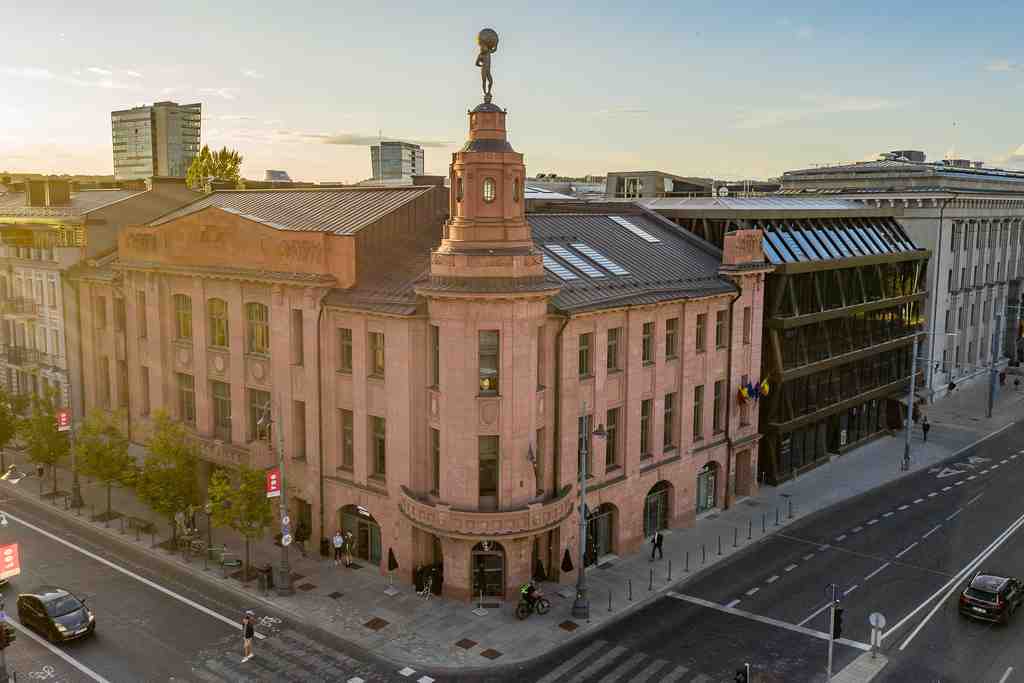
To spot the Prekybos ir pramonės rūmai, just look for the striking pinkish-beige building with tall windows and an eye-catching statue of a man holding a globe right on top of its rounded corner turret. Now, as you stand here, imagine yourself walking these same streets back in 1913-maybe dodging horse carriages or catching whispers of excitement about this brand-new building designed by Michailas Prozorovas. The elegant structure quickly became a symbol of ambition, especially when the Vilnius Trade and Industry Society took it over in 1925. But the building wasn’t just a hub for business deals and crisp handshakes! Not at all-by the 1930s, its halls echoed with a new purpose. It morphed into a hospital, and just imagine the drama: doctors racing up the high staircases, a stethoscope swinging wildly, perhaps someone yelling, “Stat!”. During Soviet times, the stakes changed again. It cleaned up, got a makeover in 1947 (thank you, Vladislovas Mikučianis), and became the headquarters for Vilnius city’s executive committee. Picture city officials plotting urban adventures and dreaming up new avenues. All that hustle was replaced by urban planners after 1984, filling the air with maps, blueprints, and the clatter of innovative ideas. And just when you think that’s enough reinvention-bam! It gets another fresh start in 2009, topped off with a modern annex next door. If these walls could talk, they’d say, “Keep your briefcase ready-you never know if you’ll need a business plan, a stethoscope, or a city map!”
Open dedicated page →- location_on6
Ministry of Foreign Affairs of the Republic of Lithuania
Buy tour to unlock all 19 tracksAh, you’ve arrived at the next stop: the Ministry of Foreign Affairs of the Republic of Lithuania! Take a look at this graceful building-quiet now, but imagine it buzzing with the…Read moreShow less
Ah, you’ve arrived at the next stop: the Ministry of Foreign Affairs of the Republic of Lithuania! Take a look at this graceful building-quiet now, but imagine it buzzing with the serious business of international diplomacy. This is the nerve center for Lithuania’s foreign policy, weaving connections across continents and guarding Lithuania’s interests beyond its borders. If you listen closely, you might just hear a pen scratching across a treaty-oh wait, or is that just my imagination? Let’s step back into history. It’s November 1918. The ink on Lithuania’s independence is practically still wet, and the city around you is waking up from years of turmoil. Lithuania, eager to join the family of nations, establishes the Ministry of Foreign Affairs, one of its first nine government institutions. Enter Augustinas Voldemaras-professor, politician, and, apparently, an overachiever because he takes on not only the role of Prime Minister, but also the first Minister of Foreign Affairs. Talk about multitasking! In these early years, the ministry’s main mission was clear: Make sure everybody else knew Lithuania was back on the map. Jurgis Šaulys, one of our earliest diplomats, sets off on a grand adventure to represent Lithuania in Germany-complete with all the pomp, privileges, and probably a suitcase full of formal hats. Not stopping there, Šaulys also helps open embassies in Switzerland, the United States, the United Kingdom, and France. Lithuania is going global! But being a diplomat isn’t all about elegant receptions with little sandwiches. In those tense times, even the smallest misstep could spark an international spat. Just think-by 1921, the Ministry had only 25 employees in its main offices. That’s right, you could fit the entire staff and still have seats left over in a Vilnius trolleybus. Despite the small size, 123 Lithuanians were dispatched to embassies and consulates abroad. You could say the travel budget was, well, ambitious. The tension wasn’t just about making introductions. In 1920, Lithuania clinched the Treaty of Peace with Soviet Russia, which was basically Russia saying, “Fine, you can keep your country.” But diplomatic titles in Lithuania had their own flair-while big countries sent “ambassadors,” Lithuania’s highest rank was “Extraordinary Envoy and Plenipotentiary Minister.” Try fitting that on a business card. Fast forward to 1940-tough times crash down as Lithuania faces occupation. But here’s where the Ministry’s story reads like a diplomatic thriller. With the President’s secret approval, messages flash across the globe, appointing Stasys Lozoraitis in Rome to head Lithuania’s diplomatic missions if things go badly-spoiler alert, they do. Lithuania becomes the only occupied country in Europe whose diplomatic service continues protesting and working from abroad. The Soviets demand Lithuanian embassies, gold, and assets. Some countries hand them over, but not everyone: the United States holds firm, letting Lithuania keep its diplomatic offices in Washington, D.C. Imagine the tension-quiet embassy corridors, urgent whispers, and every phone call heavy with uncertainty. But Lithuanian diplomats, scattered across continents, keep the spirit of the nation alive, never giving up their posts, not even when the world seems to forget. When independence is restored in 1990, the old and new generations of Lithuanian diplomats team up, blending experience, contacts, and that classic Lithuanian tenacity. Many of those who never left their post under occupation step right back into the Ministry, sharing war stories and wisdom. Nowadays, the Ministry’s work is both a bit more high-tech and just as demanding. The Foreign Minister, appointed by the President on the Prime Minister’s suggestion, is the conductor in this diplomatic orchestra. He-and it is Kęstutis Budrys as of December 2024-guides a talented team handling everything from international trade to EU relations, and even standing up for human rights and democracy abroad. Meetings click along, recommendations go to the President, and the policy director’s job is to think big: bolster security, strengthen ties with the East, and keep Lithuania’s voice strong among the European and global chorus. Four Deputy Ministers back up the boss, handling everything from legislation to media appearances. Don’t forget the Chancellor-no, not Angela Merkel!-but Lithuania’s own, whose job is making sure the Ministry’s intellectual and financial fuel is put to good use. And as you stand here, imagine the countless decisions, debates, and documents that have shaped Lithuania’s destiny within these walls. For a building so focused on going out into the world, it’s become a pillar of Lithuanian identity, weathering occupation, celebrating freedom, and always reminding us that the art of diplomacy never goes out of style. Somewhere, you can almost hear the distant sound of a ceremonial glass clinking-a quiet toast to Lithuania’s place in the world. Ready for our next stop? Don’t worry-I promise there won’t be any pop quizzes on diplomatic titles!
Open dedicated page →
7Lukiškės Square
Buy tour to unlock all 19 tracksLook straight ahead for a huge, open public square with neat geometric lawns, crisscrossing walkways, and often a scattering of colorful tents or events-Lukiškės Square sits right…Read moreShow less
Look straight ahead for a huge, open public square with neat geometric lawns, crisscrossing walkways, and often a scattering of colorful tents or events-Lukiškės Square sits right in front of the elegant state buildings at the city’s heart. Welcome to Lukiškės Square, the grandest and most spacious square in all of Vilnius! You’re now standing where centuries of history have swirled together-sometimes with celebration and sometimes with the darkest shadows imaginable. Picture it: four whole hectares of city life, with Gediminas Avenue buzzing along one edge, and important buildings-like the Ministry of Finance and Foreign Affairs-watching over you like polite, stone-faced sentries. A few centuries back, this wasn’t the busy heart of Vilnius but a leafy suburb. The area was known for its wooden mosque belonging to Lithuanian Tatars and a serene graveyard-imagine the gentle smell of grass and the quiet rustling of trees. But the winds of history are not always gentle, and the Soviets sadly bulldozed these landmarks away in the 1960s, forever changing the landscape. Let your imagination carry you to the mid-19th century. The square is newly planned, crisscrossed by the grand avenue that’s now known as Gediminas. But the air here can seem tense-especially after the failed January Uprising in 1863. You might feel a chill as I tell you: this place was once a stage for public executions. In 1864, when the freedom-seeker Konstanty Kalinowski was led here for his final moments, the crowd was thick with whispers and nervous breath. From then on, the man in charge, Governor General Muravyov, became feared as “The Hangman.” I promise things get lighter-eventually! Move ahead a few decades to the 20th-century hustle and bustle: imagine the Kaziukas Fair, with market sellers hawking their wares, the sweet smell of pastries, and kids darting between stalls. But shadows returned during Soviet rule. Just steps from where you stand, in the imposing NKVD Palace, countless Lithuanians who dared to oppose the Soviets met a fate much darker than the storm clouds overhead. Between 1944 and 1947, this became a place that seemed to swallow hope. When the Soviets wanted to send a message, they plunked down a gigantic statue of Lenin right in the middle of the square. Locals joked it was the biggest Lenin head for miles-you just couldn’t escape that trademark sneer! But after independence in 1991? The crowd cheered as the statue came down, its upper half waving an awkward, accidental goodbye as it was hoisted away. Now, this square is a place for festivals, fairs, and free spirits-you might just stumble upon music or laughter echoing from the green. What a journey for one city square-you can almost hear the stories beneath your feet!
Open dedicated page →- location_on8
Ministry of Finance of the Republic of Lithuania
Buy tour to unlock all 19 tracksLook up ahead for a modern sign with two blue hexagons: one shows a knight on horseback, and the other an “M”-welcome to the Ministry of Finance of the Republic of…Read moreShow less
Look up ahead for a modern sign with two blue hexagons: one shows a knight on horseback, and the other an “M”-welcome to the Ministry of Finance of the Republic of Lithuania. Imagine Vilnius back in November 1918-cold, uncertain, and buzzing with hope as Lithuania was just starting to shape its destiny. Right here, a new government body was born: the Ministry of Finance, Trade, and Industry. Its job? To somehow balance the country’s budget while people outside worried about their next meal. Decisions inside these walls have always echoed through Lithuania’s streets, whether rationing precious litas after World War I or debating how high to set taxes. At first, the ministry juggled not just money, but also all things trade and industry. Eventually-probably after someone decided that three jobs in one was as risky as keeping all your eggs in a basket on a rollercoaster-it separated into the Ministry of Finance and other branches. Fast forward to 1940: Soviet footsteps and rumbling trucks changed everything. The Nazis swept through, then the Soviets again, each time flipping the sign and the fate of Lithuania’s budget. In those tough times, this place controlled every coin-well, except when the Soviets took all the decisions straight to Moscow. But in 1990, with independence declared, the Ministry of Finance finally came home again, keys jingling and papers flying as staff rushed to rebuild Lithuania’s financial future. Today, the Ministry isn’t just the home of spreadsheets and coffee-it manages tax inspectors, customs officers, and even folks guarding against money laundering and supervising lotteries! As you stand here, close your eyes a second and you might just imagine footsteps echoing down grand hallways, with leaders anxiously waiting for that year’s budget plan to pass. So, whenever someone tells you money doesn’t grow on trees, just remember: in Lithuania, it’s carefully managed by the folks in this very building!
Open dedicated page →
9Lukiškės Prison
Buy tour to unlock all 19 tracksTo spot Lukiškės Prison, just look for a massive blocky stone complex with rows of small windows and a striking domed Orthodox church popping out from one side-right behind the…Read moreShow less
To spot Lukiškės Prison, just look for a massive blocky stone complex with rows of small windows and a striking domed Orthodox church popping out from one side-right behind the trees in front of you. Welcome to the mysterious, storied walls of Lukiškės Prison-Vilnius’ most infamous neighbor for over 180 years. As you stand before this impressive fortress, take a moment to soak in its stern, almost haunting presence. The building stretches an entire city block, crowned by the silver domes of the Orthodox St. Nicholas Church, like a guardian eye watching over the city. If you close your eyes for a second, you might just imagine the clang of iron bars or distant footsteps echoing down endless corridors. The story of Lukiškės Prison begins way back in 1837, when this whole complex actually started its life as a humble monastery-hardly a place you’d expect to house hardened criminals and political prisoners! For most of the 19th century, the Russian Empire ruled Vilnius with a heavy hand. Break the law, upset the tsar, or simply have a master who didn’t like you (if you were a serf), and you could find yourself sent away to Siberian labor camps-or, far more rarely, passed through this very spot for a short stay, a sentence, or even your final walk to the gallows. But by the end of the 19th century, the law changed. More criminals and political troublemakers meant the old, cramped prison that stood here was bursting at the seams. So, in 1900, the authorities decided to demolish it and build something bigger, scarier, and definitely harder to escape. Inspired by the “Panopticon” idea-where a single guard could watch an entire circle of cells-the designer G.A. Trambitski created a high-security marvel, complete with a cold stone wall and everything from a bakery, baths, and an ice cellar to an astonishing three houses of worship-Orthodox, Catholic, and even a synagogue tucked away in a prison block. I bet you didn’t see that twist coming! By 1905, this new fortress was finished-so modern it even had its own water supply and sewage system. The cells were heated, ventilated, and filled with anxious whispers and hopeful prayers. In its early days, it was already the most expensive building in all the region. You might say it was the “prison penthouse suite” of Eastern Europe… if only the guests actually wanted to check in. Now, let’s step forward to the wild days of the Second Polish Republic, when the prison’s guests included not just ordinary crooks, but famous poets, musicians, and political agitators. Think of it as a who’s who of West Belarusian thinkers-everyone from Maksim Tank to the composer Ryhor Šyrma fell under its shadow. The Communists and Socialists called it a den of “fascist terror” and staged protests at the gates. Outside, angry crowds would shout; inside, hopes flickered and faded with each day. But it wasn’t just Poles and Belarusians. When Lithuania fell under Soviet control in 1940, the rules got even stricter. Lukiškės, now under the creepy watch of the dreaded NKVD, became the farewell station for those exiled to Siberia and the Gulag. For a while, even Menachem Begin-who would later become Prime Minister of Israel-was kept behind these thick walls. And then, as World War II swept over Vilnius, things got even darker. The Nazi Gestapo and Lithuanian Saugumas packed the cells with Jews from the Vilna Ghetto and Poles snatched in reprisals. Most were doomed never to return, transported out to Ponary for mass executions. Every stone here witnessed tears, secrets, and lives forever changed. As the decades rolled on, Lukiškės remained a place of fear and legend-even as Lithuania finally became independent again. It was here, in 1995, that the country saw its last execution. By then, several hundred prisoners still called this place home, and the European Committee for the Prevention of Torture reported deplorable conditions in some of the older wings. Not exactly the kind of review you'd want to see on TripAdvisor. After more than a century-filled with drama, sorrow, and more than a few controversial characters-the prison finally closed its gates in 2019. You might think the story ends here, but no! Today, Lukiškės is full of surprises. It’s now a cultural hotspot, open for tours, concerts, parties, and even movie shoots. If you’re a Stranger Things fan, you’ll be tickled to know the fourth season was filmed right here! There’s even a themed cell you could rent on Airbnb, although, personally, I’d hope the only monsters in there are the ones from TV. So, as you stand in front of these old walls, try to imagine all the whispers, shouts, and even laughter that have echoed through here over the years. Lukiškės Prison has seen it all-from the darkest chapters of history to the bright spotlight of pop culture. And now, for the first time, it’s the city’s guests who decide when they want to leave!
Open dedicated page →
10Vilniaus Lukiškių kalėjimo šv. Nikolajaus cerkvė
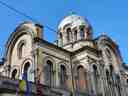
Buy tour to unlock all 19 tracksLook just ahead for a building with striking pale brickwork and multiple shiny silver domes rising above arched windows-that’s the Vilniaus Lukiškių kalėjimo Šv. Nikolajaus…Read moreShow less
Look just ahead for a building with striking pale brickwork and multiple shiny silver domes rising above arched windows-that’s the Vilniaus Lukiškių kalėjimo Šv. Nikolajaus cerkvė. Now, while you’re gazing at those beautiful domes, imagine the year is 1904. The air smells faintly of fresh mortar and new brick, and there’s a steady clink of hammers echoing all around. This church was built right alongside the prison, like a guardian keeping watch over the walls. But don’t let its peaceful presence fool you-life here was anything but quiet! Back then, it was alive with the chants and rituals of Orthodox believers, the candlelight flickering against the thick stone. Prisoners, guards, and townsfolk would stop and listen, everyone drawn together by a sense of hope and community, no matter what side of the wall they were on. Over the years, the church saw more secrets and stories than most. Imagine late-night footsteps on the cold stone floor, whispered prayers, and maybe even a few dreams of miraculous escapes. And now, fast-forward to today: on Sundays, it echoes with the prayers of faithful from the Ecumenical Patriarchate of Constantinople. The building stands quietly, a mighty survivor of storms, revolutions, and the occasional lost pigeon looking for a seat. So as you stand here, remember: behind every stone there’s a story, some mysterious, some moving, and all waiting to be discovered.
Open dedicated page →- location_on11
Jonas Mekas Visual Arts Center
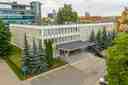
Buy tour to unlock all 19 tracksTo spot the Jonas Mekas Visual Arts Center, look ahead for a sleek, modern building with big glass windows-and if you step inside, you’ll see bold, thought-provoking art displays,…Read moreShow less
To spot the Jonas Mekas Visual Arts Center, look ahead for a sleek, modern building with big glass windows-and if you step inside, you’ll see bold, thought-provoking art displays, like the giant "NO WORRIES" mural right in front of you. Welcome to the house where art refuses to stay quiet-where the walls themselves seem to whisper stories, ideas, and the wildest dreams! This place opened its doors in 2007, all thanks to Jonas Mekas, an acclaimed Lithuanian filmmaker who believed in making art a living, breathing adventure. Imagine the excitement in the air on the opening night, the scent of fresh paint blending with an electric buzz as artists and dreamers gathered, hearts racing to see what the future might bring. The very first exhibition pulled visitors into the wild world of the avant-garde-from the speed-obsessed Futurists to the playful pranksters of Fluxus. And speaking of Fluxus-imagine owning a collection so big, you could swim in a sea of 2,600 wild artworks! That’s what you’ll find here, a treasure trove worth millions, bursting with oddities and surprises. Mekas wanted this to be a place where artists and thinkers collide, where creativity lives and breathes right alongside you. So, don’t be shy-step closer, take it all in, and remember: in here, there really are "no worries."
Open dedicated page →
12Lietuvos Aukščiausiasis Teismas
Buy tour to unlock all 19 tracksTo spot the Lietuvos Aukščiausiasis Teismas, look for a modern, rectangular white building with tall rows of windows and a broad entrance canopy sheltered by evergreen trees along…Read moreShow less
To spot the Lietuvos Aukščiausiasis Teismas, look for a modern, rectangular white building with tall rows of windows and a broad entrance canopy sheltered by evergreen trees along the front. Welcome to the very top of Lithuania’s legal ladder-the Supreme Court! Picture yourself standing before this crisp geometric building, where history and justice meet. Back in June of 1994, lawmakers gathered and, with a flourish of pens, officially created this very court. Just imagine the nerves on January 1st, 1995, as the doors swung open for the first day-new judges in fresh robes, the scent of coffee and fresh paint still lingering in the hallways! Here, every person who feels wronged by lower courts dreams of one last shot: the chance to have their case heard by the wisest legal minds of Lithuania. At the helm today is Chief Justice Danguolė Bublienė, but behind every leader, there’s a rich parade of past heads and a team of legal detectives (okay, officially, they’re called division chiefs) solving civil and criminal puzzles. I bet the inside buzzes with whispered strategy and the tap of courtroom shoes on polished floors. So if you hear a tiny sigh from these walls, it might just be history itself taking a break between justice’s next big decision!
Open dedicated page →- location_on13
Martynas Mažvydas National Library of Lithuania
Buy tour to unlock all 19 tracksStep right up to the awe-inspiring facade of the Martynas Mažvydas National Library of Lithuania! If you think libraries are quiet, boring places where dust bunnies outnumber…Read moreShow less
Step right up to the awe-inspiring facade of the Martynas Mažvydas National Library of Lithuania! If you think libraries are quiet, boring places where dust bunnies outnumber people, prepare yourself for a surprise-this is not just a home for books, but a fortress of culture, knowledge, and a few ancient secrets. As you gaze up at those bold, neoclassical columns, imagine the echoes of thousands of footsteps and whispered conversations that have filled this space since its grand opening in 1963. Let’s step into the past for a moment. The story began in 1919, not here in Vilnius, but in Lithuania’s temporary capital, Kaunas. Back then, it was known as the State Central Bookstore, a humble but hopeful operation with a big dream: to gather and protect Lithuania’s written legacy for future generations. As the decades rolled on, and with a few political plot twists along the way, the library journeyed from Kaunas to Vilnius. In 1988, it took on the name of Martynas Mažvydas-the very author of the first Lithuanian book-and in 1989, it officially earned the title of National Library. Standing here, you’re looking at the first building in the Baltics custom-designed for a library, dreamt up by architects Viktor Anikin and Ciprijonas Strimaitis in the throes of the Soviet era. Think of it-the year was 1958, and this bold project rose from the ground as a classic monument to socialist realism, a statement that Lithuania’s culture could weather any storm. But it hasn’t always been a peaceful tale. Take the early 1990s. With Lithuania breaking free from the Soviet Union, rare books and precious diaspora press-sometimes smuggled, sometimes donated-began to flow back into the country. Over a million documents arrived from as far away as the US, Germany, and France. Each parcel carried stories of exile, resilience, and, yes, awkward packaging. If these walls could talk, they’d have some serious baggage to unpack. The Martynas Mažvydas National Library does more than store books. Inside, there’s the hum of computers in nine reading rooms: the sound of keys clacking in the Humanities Reading Room, the sweet shuffle of music scores in the Music and Visual Arts Room, the curious laughter bubbling in the Children’s Activity Centre-aptly named Toytheque. During the summer, a special reading room pops up by the sea in Palanga, just in case you like your literature with a side of salty air. The library’s mission is ambitious: to preserve every Lithuanian publication ever printed, both local and worldwide. Its main archive, a true time capsule, holds over 2.5 million items-books that echo the voices of writers, revolutionaries, exiles, dreamers, and poets, including rare manuscripts penned in Old Church Slavonic and parchments older than some countries. There’s a dazzling collection of music, too-like 2,566 shellac records, which, in their day, were the Spotify of early 20th-century Lithuania. Now, for a twist: this library is no one-trick pony! It offers a coworking space, TV studio, sound recording booth, cinema room, research centers-where, if we’re lucky, modern-day Mažvydases hatch tomorrow’s masterpieces. It’s even the main parliamentary library, which means lawmakers sometimes browse the shelves. (I wonder, do they peek at the cookbooks for inspiration during long debates?) Over the decades, international cooperation has flourished here. In 1992, the first pact with neighboring Baltic libraries was signed. Since then, the National Library has helped weave Lithuania into the global tapestry of library science, joining forces with everyone from the International Federation of Library Associations to the creators behind Europe’s mega-digital library, Europeana. And the adventures keep coming: Bill and Melinda Gates lent a hand to modernize, public internet access projects sprang up, and digital archives began turning Lithuania’s history into pixels for the future. The library’s Reading Promotion Programme works to entice people of all ages and backgrounds to turn another page. Because here, reading isn’t just for scholars or quiet types-every Lithuanian’s story belongs on these shelves. So as you stand before these pillars, close your eyes for a second and picture: generations of students poring over ancient tomes, children in awe at their first storybook, a rare parchment unfurled for careful restoration, and somewhere in the background, the cheerful chaos of creativity and discovery. The Martynas Mažvydas National Library truly is a living monument to Lithuania’s past, present, and boundless imagination. For further insights on the duties, architecture or the services, feel free to navigate to the chat section below and inquire.
Open dedicated page → - location_on14
State Commission for the Lithuanian Language
Buy tour to unlock all 19 tracksYou’ll spot the State Commission for the Lithuanian Language by looking for its sharp black-and-orange letters-VLKK-standing out boldly on the building, usually near the…Read moreShow less
You’ll spot the State Commission for the Lithuanian Language by looking for its sharp black-and-orange letters-VLKK-standing out boldly on the building, usually near the entrance. Welcome to the guardians of the Lithuanian language! Standing here, you might imagine the faint *tap-tap* of keyboards inside as experts work on the fate of every letter and word. Picture a bright meeting room where seventeen language specialists gather, a bit like linguistic superheroes, always ready to argue (in the friendliest way possible) over grammar, spelling, and how to keep Lithuanian fresh yet traditional. Led by Dr. Violeta Meiliūnaitė since 2022, this team debates everything from legal language to the trickiest borrowed words-should we say “internet” or make a new word? Should “café” stay a “kavinė”? It’s a bit like a detective story for language, only with more dictionaries and fewer trench coats. And if you hear a sudden burst of laughter from inside, it’s probably because someone tried to sneak a funny new place name onto the national map. This place doesn’t just guard traditions; it creates new ones every day, checking textbooks, preserving dialects, and even designing the Lithuanian national dictation you might hear on the radio. Thanks to them, the Lithuanian language keeps growing and changing, but never loses its roots.
Open dedicated page → - location_on15
Seimas of the Republic of Lithuania
Buy tour to unlock all 19 tracksThis is it-the very heart of Lithuanian democracy! The Seimas is Lithuania’s parliament, the engine room of the country’s laws, debates, and national direction. Inside, 141…Read moreShow less
This is it-the very heart of Lithuanian democracy! The Seimas is Lithuania’s parliament, the engine room of the country’s laws, debates, and national direction. Inside, 141 members-known as Seimo nariai-represent the people of Lithuania. Every four years, citizens cast their votes, carefully filling in ballots in schools, libraries, and even sports halls across the country. Perhaps somewhere in a village hall, a ballot box creaks open and a vote slips in. Direct and secret elections are the rule here, ensuring that every voice counts… and every auntie’s opinion, spoken loudly in the voting line, is heard only by the birds outside. Now, don’t let those stately columns and polished windows fool you-Seimas isn’t just about impressive architecture. This building is alive with lively debates. Sometimes, voices rise, hands wave, and rules are read with the seriousness only politicians can muster. And you’d be amazed-sometimes the biggest tension isn’t about taxes or treaties, but who gets the last cup of coffee in the break room. Let’s rewind the clock. It all started back in April 1920, when the very first Constituent Seimas assembled right here in Vilnius. They set about the mighty task of building a country: establishing fundamental rights, outlining the state structure, and possibly arguing over who got the better office with a view. Since then, there have been 14 different Seimas assemblies, each elected and each a new chapter in the nation’s story. Throughout 20th-century turbulence, occupation and independence, the Seimas has remained the symbol of the Lithuanian people’s will to govern themselves. But what exactly happens inside? Well, twice a year, the Seimas rings with activity: the spring session from March to June, and the autumn session from September to December. And if things get really exciting (or crises arise), the President or a third of Seimas members can call for an extraordinary session. Imagine a phone vibrating on a desk, the urgent whisper, “It’s time!” Leadership here is a bit like musical chairs. The very first session after elections? It’s started by the oldest member present-so wisdom (and age) has its moment in the spotlight. The Speaker of Seimas, with their trusty deputies, leads debates, keeps order, and makes sure no prankster tries to sneak in a law to make Mondays illegal. Over the decades, Seimas has been tasked with some daunting decisions. Constitutional amendments, new laws, calling and approving referendums, setting taxes, overseeing the nation’s budget, appointing judges to the highest courts, and even approving or rejecting the Prime Minister. If Lithuania needs a new President, or a major new direction, it all comes through here. Can you imagine the tension when a big vote is coming up? The air would be thick with anticipation, coffee would be twice as strong, and someone’s tie would almost certainly be askew. Want to know a fun fact? If at least 84 out of 141 members are elected, the Seimas can go to work. And the President must call them for their first meeting within 15 days-if not, the Seimas members just gather themselves and say, “Let’s get this democracy party started!” That’s Lithuanian efficiency for you. The role of Seimas member is serious business-no double-dipping in other government jobs, no sneaky bonuses, and definitely no running off to run a bakery on the side. They’re protected by law; no one can arrest or otherwise restrict a Seimas member’s freedom without permission from the Seimas itself. But if they make a real blunder, there are ways for their mandate to end: resigning, losing their citizenship, or-unfortunately-passing away. And if things get really dramatic, there’s even impeachment! Imagine the walls echoing with the voices of history-from the hopeful shouts of the long-ago Constituent Seimas, to the hard-fought debates of today’s digital age. Every season, decisions here ripple through all of Lithuania-from the smallest fishing village to the bustle of Vilnius streets. Through hardship, political storms, and the endless quest for a perfect budget, the Seimas has been where Lithuania has found its direction and defended its democracy. So, as you stand here, maybe you’ll catch the distant clamor of a passionate debate or the cheerful laughter of a late-night parliamentary coffee break. Who knows? Maybe your own footsteps will echo in those hallowed halls someday. Thanks for exploring Vilnius with me-where history is just around every corner, waiting for you to listen! Curious about the features, features or the powers of a member of the seimas? Don't hesitate to reach out in the chat section for additional details.
Open dedicated page →
Frequently asked questions
How do I start the tour?
After purchase, download the AudaTours app and enter your redemption code. The tour will be ready to start immediately - just tap play and follow the GPS-guided route.
Do I need internet during the tour?
No! Download the tour before you start and enjoy it fully offline. Only the chat feature requires internet. We recommend downloading on WiFi to save mobile data.
Is this a guided group tour?
No - this is a self-guided audio tour. You explore independently at your own pace, with audio narration playing through your phone. No tour guide, no group, no schedule.
How long does the tour take?
Most tours take 60–90 minutes to complete, but you control the pace entirely. Pause, skip stops, or take breaks whenever you want.
What if I can't finish the tour today?
No problem! Tours have lifetime access. Pause and resume whenever you like - tomorrow, next week, or next year. Your progress is saved.
What languages are available?
All tours are available in 50+ languages. Select your preferred language when redeeming your code. Note: language cannot be changed after tour generation.
Where do I access the tour after purchase?
Download the free AudaTours app from the App Store or Google Play. Enter your redemption code (sent via email) and the tour will appear in your library, ready to download and start.
If you don't enjoy the tour, we'll refund your purchase. Contact us at [email protected]
Checkout securely with 


