
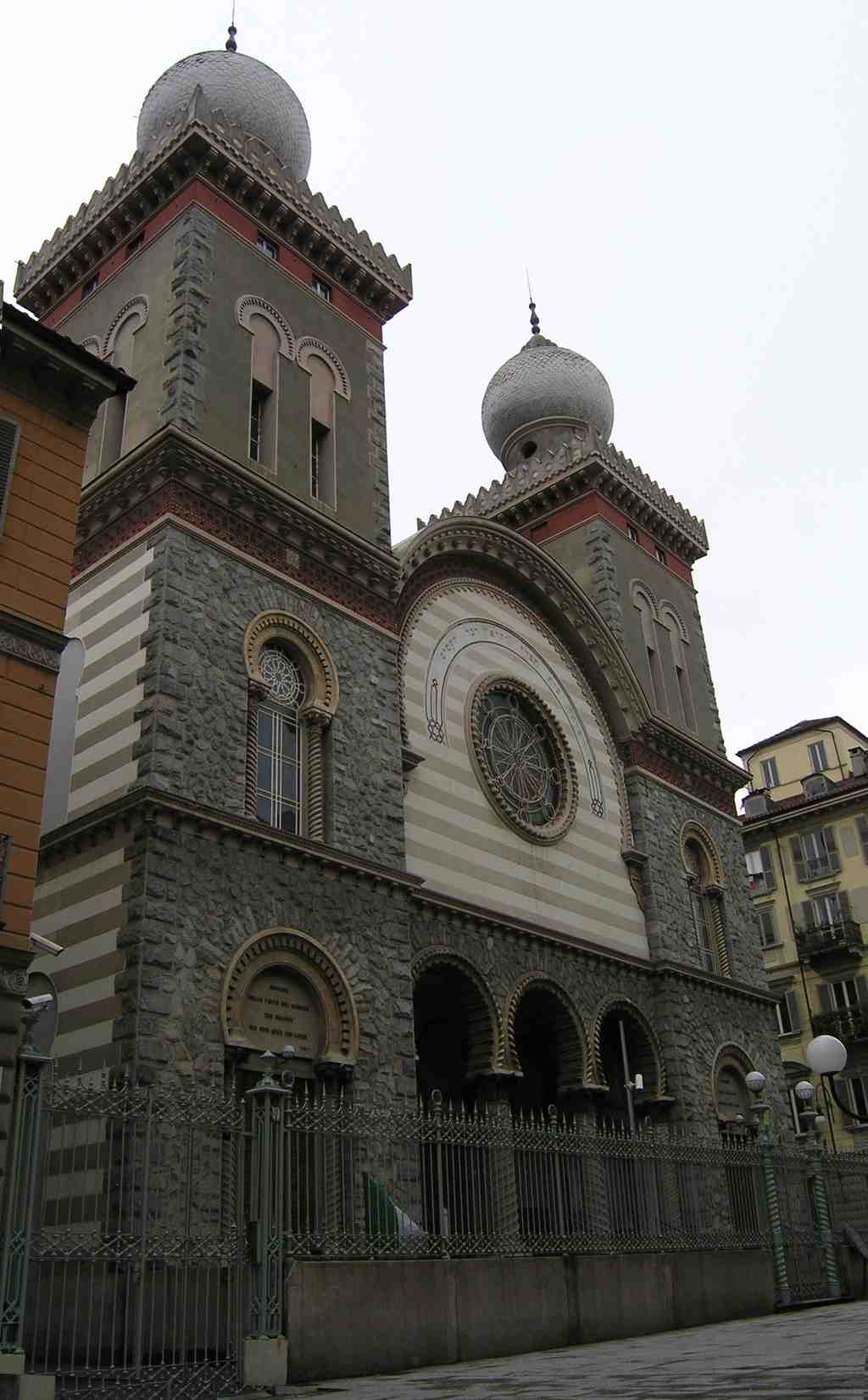
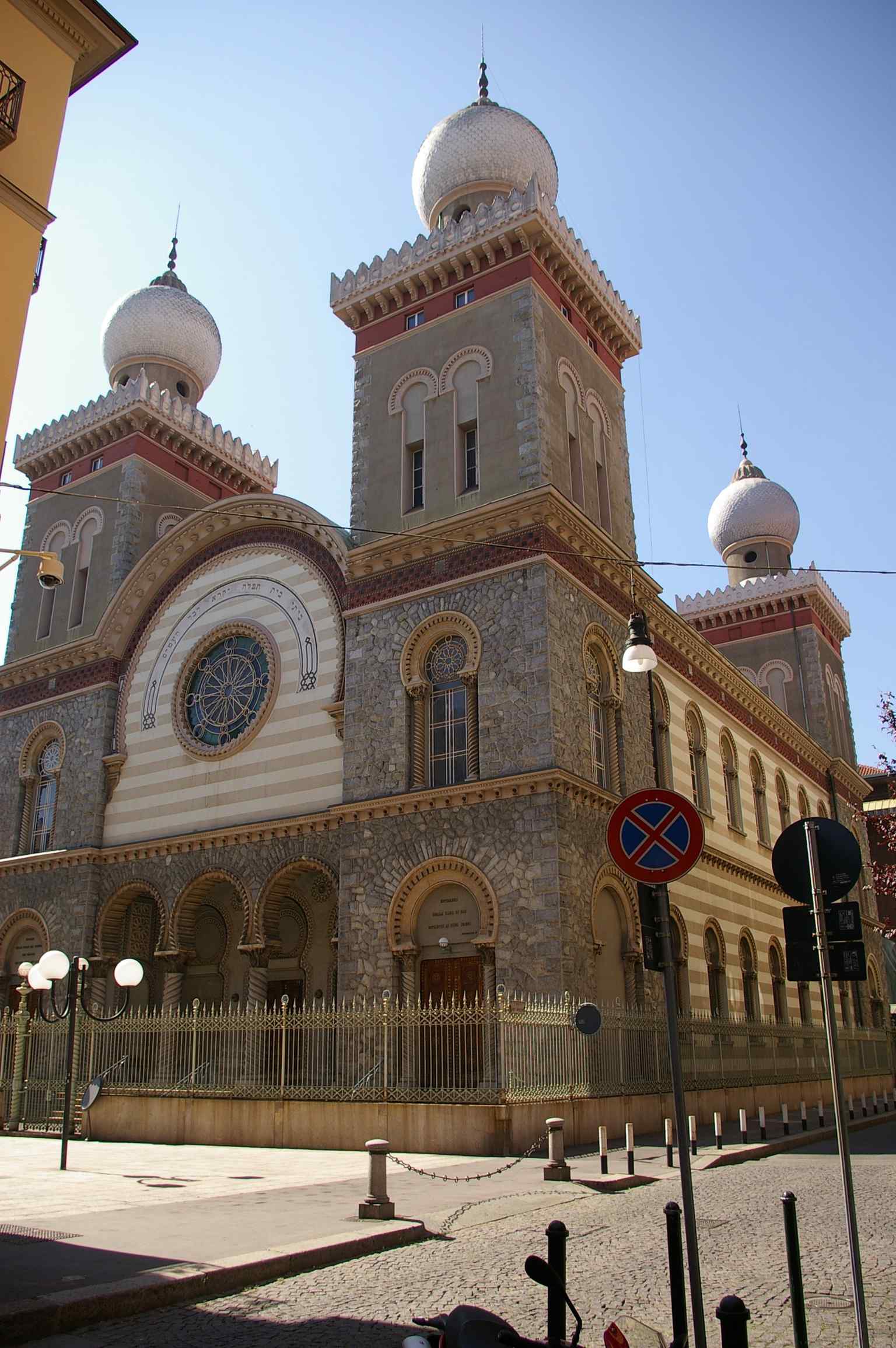
Before you is the Synagogue of Turin, an imposing stone structure defined by its striking horizontal stripes, two square towers topped with silver onion domes, and a beautiful circular rose window right in the center. The story of this congregation mirrors what we just explored at the Waldensian Temple. In 1848, the Albertine Statute finally granted civil rights to minority faiths, giving the Jewish community the freedom to establish a visible, prominent presence here in the capital. But their first attempt at building a temple went wildly off script. In 1859, the community hired architect Alessandro Antonelli, a man utterly consumed by architectural and scientific megalomania. Antonelli became obsessed with pushing the limits of masonry and gravity, unilaterally altering the design during construction to raise the dome higher and higher until it reached a dizzying one hundred and sixty seven meters. As the budget completely spiraled out of control for a building that looked less like a synagogue and more like a towering monument to one man's ego, the Jewish community wisely pulled the plug. They sold the unfinished, legendary fiasco to the city, and in a twist of irony, that failed synagogue became the Mole Antonelliana, the towering iconic symbol of Turin. Forced to start over, the community hired Enrico Petiti, who finished this beautiful Moorish Revival building, a design inspired by historic Islamic architecture, in 1884. But the peace did not last. In the tense autumn of 1941, fascist arsonists attacked the building. Young members of the community took turns standing guard outside to protect it. Among those brave sentries was twenty two year old Primo Levi, the future author and Holocaust survivor. Despite their protection, the sanctuary was completely incinerated by an Allied bomb in 1942. The app has a neat side by side showing what this place looked like in ruins back in 1942 compared to today. Under the guidance of Chief Rabbi Dario Disegni, the community meticulously rebuilt. Down in the basement, they created a smaller sanctuary, the Tempio Piccolo, using ornate Baroque furnishings saved from an abandoned nearby town. Down there, they hold treasured eighteenth century wedding contracts, called ketubbot. Fascinatingly, these contracts are written using the Hebrew alphabet, but when read aloud, the words are actually in the local Piedmontese dialect, a beautiful secret language of a deeply rooted people. Today, this square is named Piazzetta Primo Levi, honoring the man who once stood right where you are. From grand architectural ambitions to the quiet resilience of faith, this city has constantly reshaped itself. Now, we are going to explore how that same drive shaped scientific inquiry, as we take a short seven minute walk to our next stop, the Botanical Garden of Turin.





.JPG)