
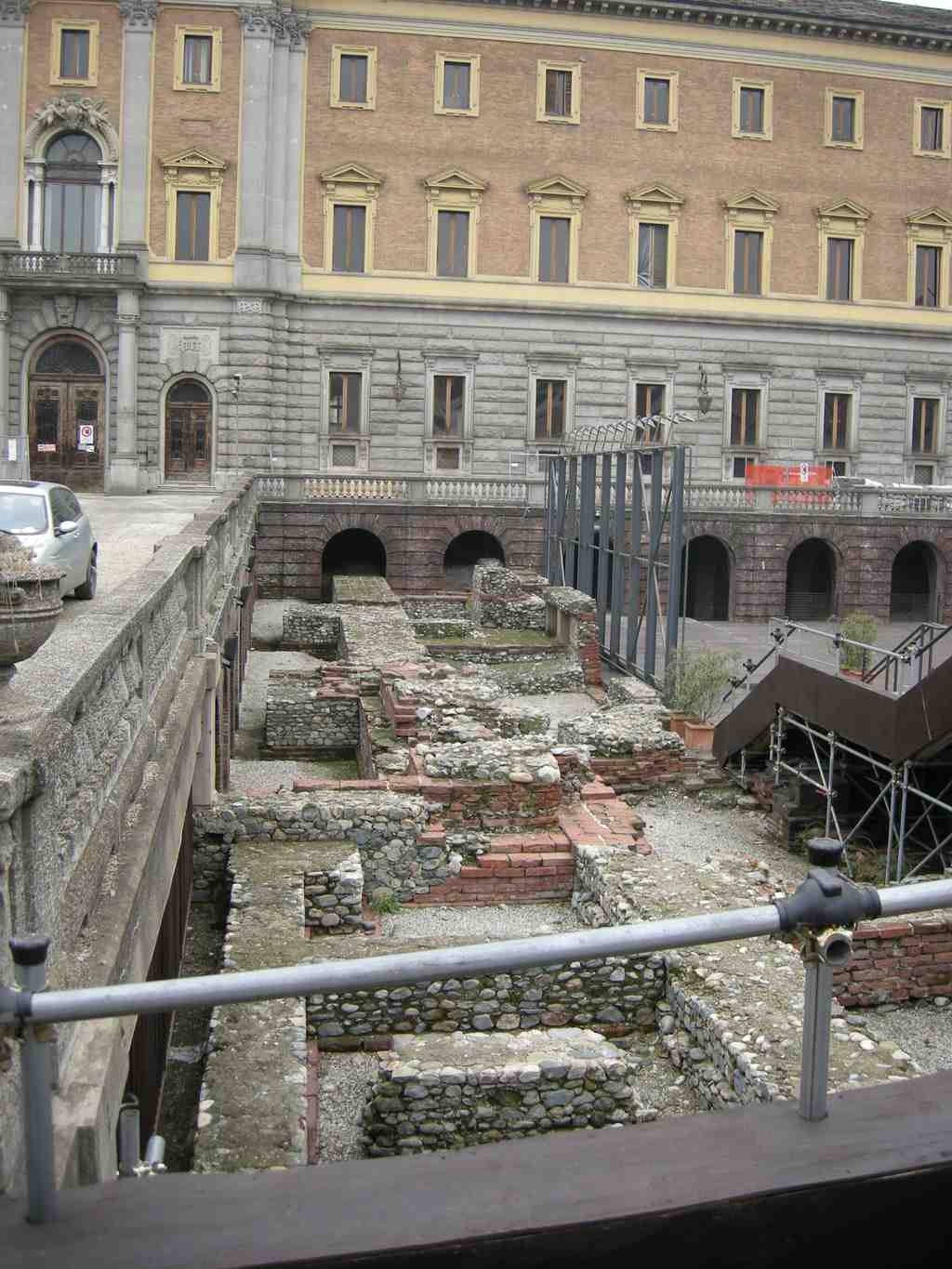
Look for a series of low, ancient stone and brick walls nestled beside a grand, historical building-these are the remains of the Roman Theatre of Turin, peeking out just at your feet and stretching toward the neighboring Palazzo Reale.
Welcome to the Teatro romano di Torino, where every stone beneath your shoes tells a story older than most countries! Imagine it: the year is 13 BC, and Augusta Taurinorum, now Turin, is a fresh Roman colony buzzing with new beginnings. Right where you're standing, workers are laying out a massive rectangular theater, designed with the precision and flair that only the ancient Romans-those original drama kings-could manage. Can you picture it? A crowd of thousands, the anticipation of a show thrumming through the air, and the best marble seats reserved for the bigwigs of Roman society, while the rest had to climb the cheap seats up back-think of it as the world’s first balcony tickets!
Originally, the structure was simple but grand: a semicircular sweep of stone steps, a stage with an impressive backdrop, and three monumental doors where actors would burst onto the stage. You could almost hear the cheers as they emerged, maybe to the latest love tragedy or sword-clanking epic. The poor weren’t left out; they’d pack into the upper gallery, which was rebuilt over time in sturdy stone-probably after a few too many stampedes. Even back then, Italians knew the value of comfy seats for an epic drama!
Through the ages, the theatre became more elaborate. Fancy columns, glittering marble seats for the city’s VIPs, and even a lush garden behind where playgoers could gossip during intermissions. If you needed a bit of fresh air after all the theatrical excitement, you’d stroll through that cool garden, perhaps gossiping about the actor who forgot his lines or the wild plot twist in the last act. With room for 3,000, this place was the Broadway of ancient Turin!
They didn’t stop at plays, either. Ever heard of a water show inside a theater? Some archaeologists think they staged naumachiae-mock naval battles-right here! They’ve found old drains around the place, which suggests that at least once in a while, this theater turned into a splash zone. Makes you wonder if the front row had to bring their ancient umbrellas!
But history isn’t all curtain calls and applause. By the third century and the rise of Christianity, the party was over. Theatre was officially “un-Christian,” and this magnificent place was abandoned. Pieces of the building were scavenged-recycled to construct the first cathedral. If repurposing ruins was an Olympic sport, the Romans would have taken gold!
The theater saw even tougher times during the 1500s, when almost all that remained was crushed in a fierce French siege. For centuries after that, the stones you see now lay forgotten, hidden away like treasure just below the cobbled city streets.
Then came the great plot twist: in 1899, while workers were busy tearing down part of the Royal Palace, they uncovered these remarkable ruins. Imagine their shock, seeing ancient walls rising beneath rubble! Alfredo D’Andrade, an architect who clearly loved a good detective story, rushed in and insisted these Roman remains must be protected. He convinced the king to halt construction, and thanks to him, this slice of antiquity survived-not just beneath the city, but proudly visible to visitors like you.
So look around: the layered stones, those odd little pits, even traces of the twelve holes for the ancient curtain mechanism-you’re not just seeing ruins, you’re standing on a stage where generations dreamed, laughed, and cheered. Behind you, the Cathedral stands watch, and all around, the ghosts of emperors, actors, and eager Romans mingle. Take a deep breath and let yourself travel back through time-just be careful not to try out your own Shakespearean monologue, or you’ll have me for competition!




