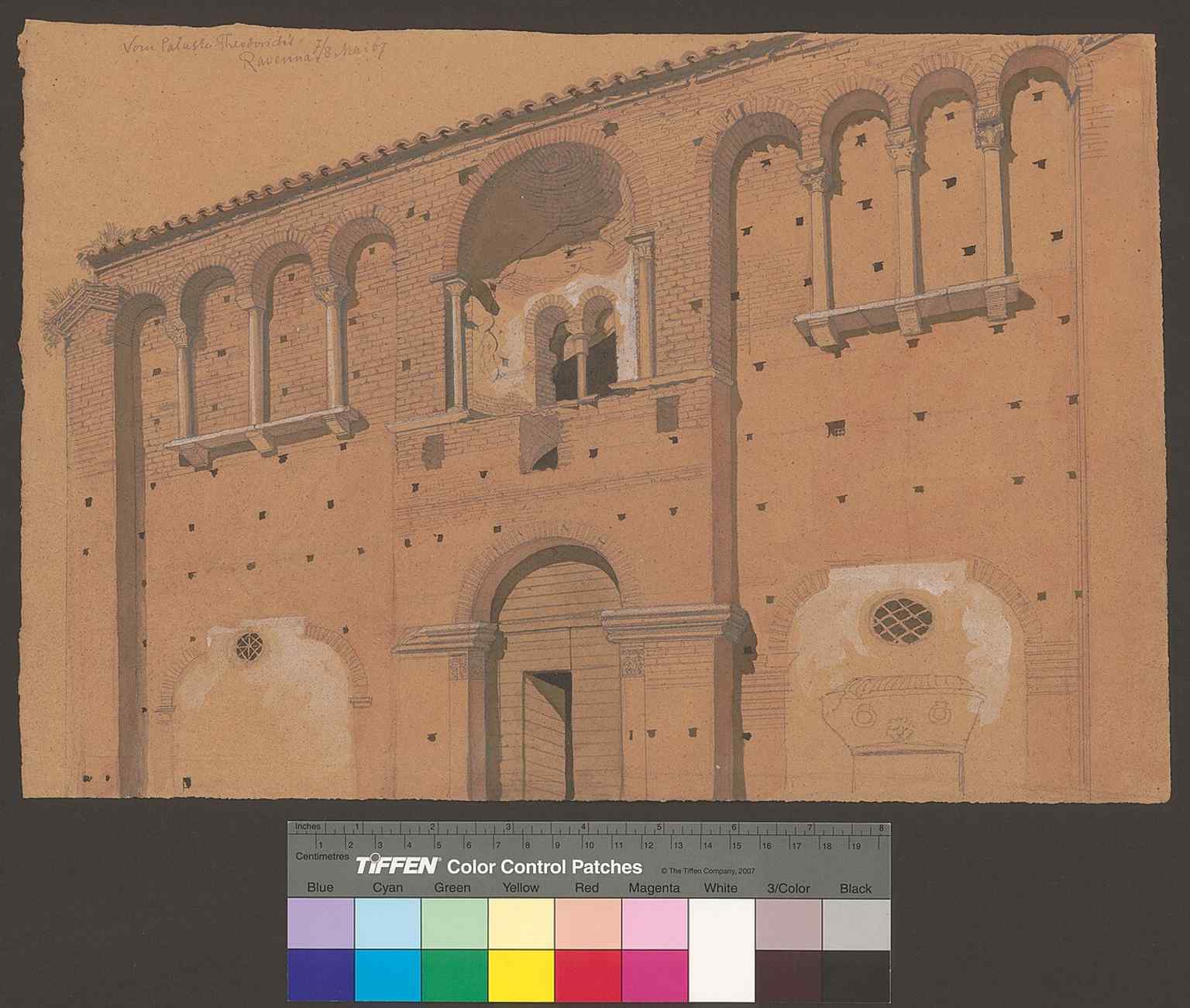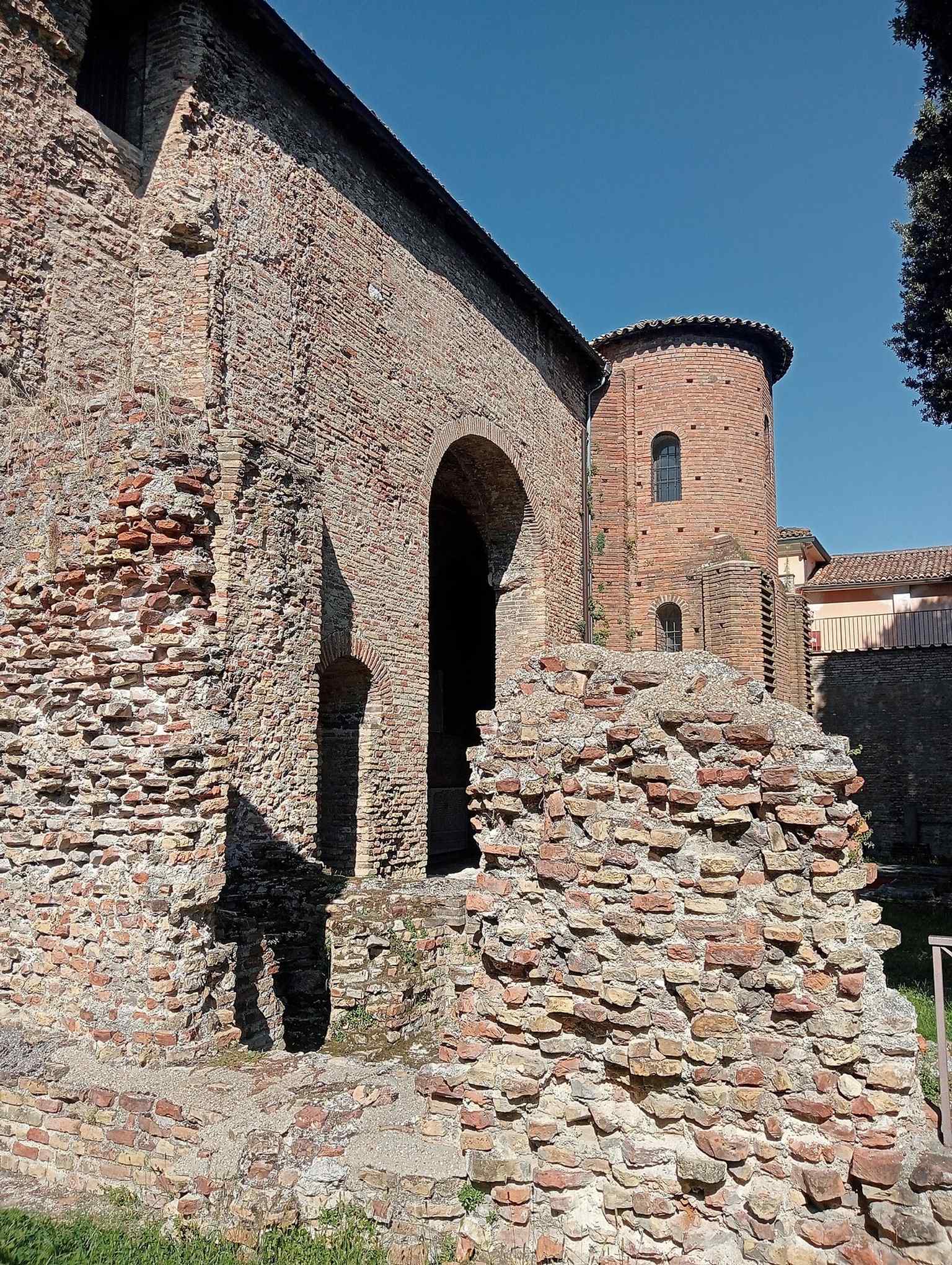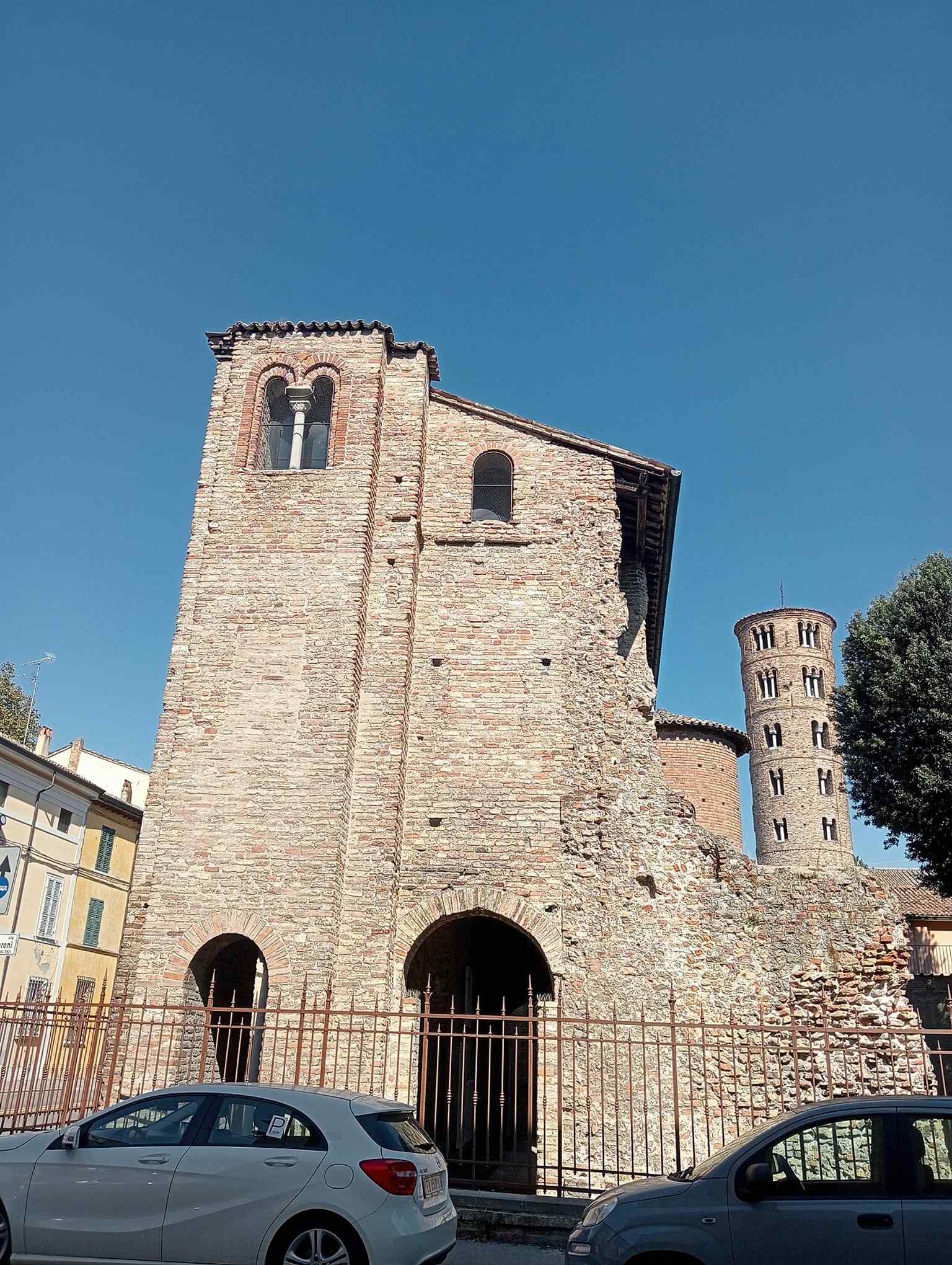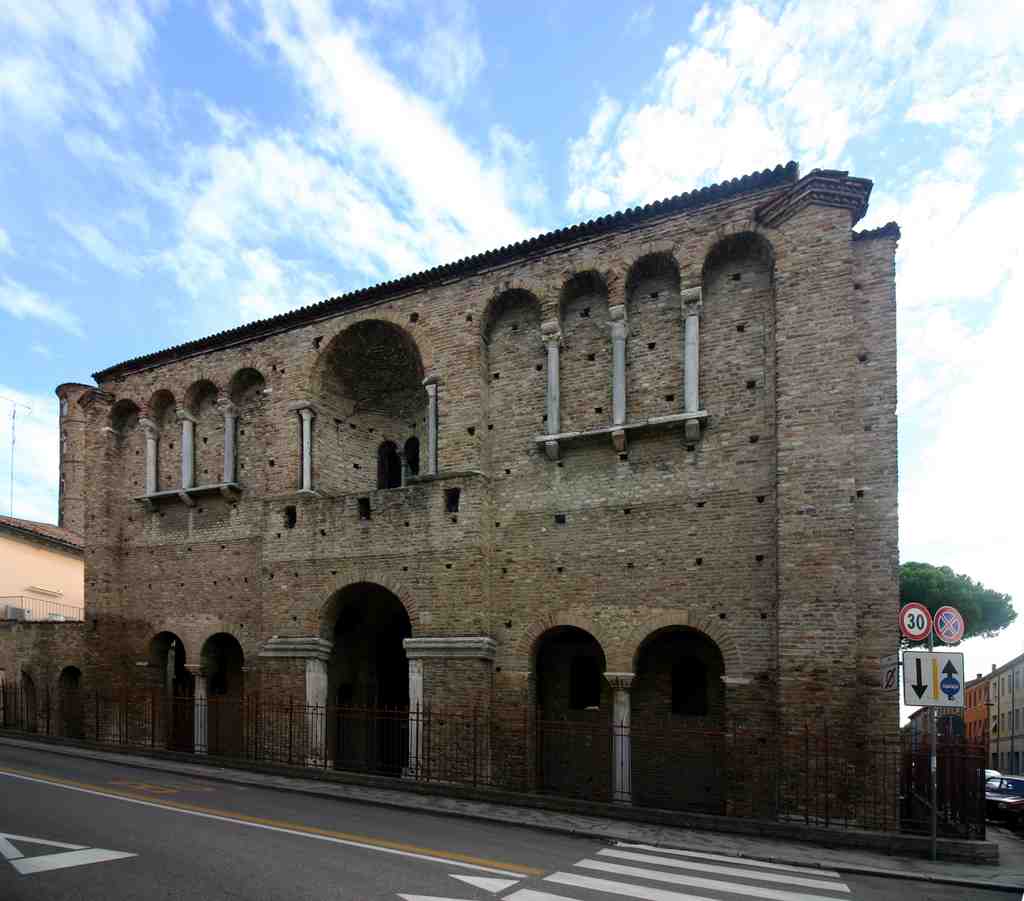
Look to your left for a tall brick facade with a broad round arch, paired upper windows, and the curious sight of a single monumental wall standing almost alone.
This is the so-called Palace of Theodoric, though that title is part truth, part longing. What survives here is less a palace you can neatly identify than the memory of Theodoric’s palace quarter: a royal district once charged with ceremony, now reduced to one stubborn fragment that still insists on a name.
And names matter in Ravenna, because each new power liked to inherit the city, then quietly relabel it.
Most visitors assume Theodoric began the story here. He did not. Long before the Ostrogothic king enlarged and repaved this prestigious zone, the site already held a Roman suburban villa, then a grand late antique complex from the fourth and fifth centuries, probably tied to the imperial residence of Honorius after he moved the capital to Ravenna in the year four hundred and two. That is the detail locals cherish: this place had already been chosen for power before Theodoric touched it.
Now look at the facade itself. It is wonderfully uncertain. Early twentieth-century scholars argued over it with real passion. Some thought it belonged to the residence of the exarchs, the Byzantine governors. Then, in nineteen twenty-one, Giuseppe Gerola proposed something quite different: not a palace at all, but the remains of San Salvatore ad Calchi, a church later destroyed. In that reading, what you see may be the church’s narthex, its entrance hall, or an atrium portico before the main body of the building. The visible structure likely dates to the middle of the eighth century, yet it rests on foundations far older than itself.
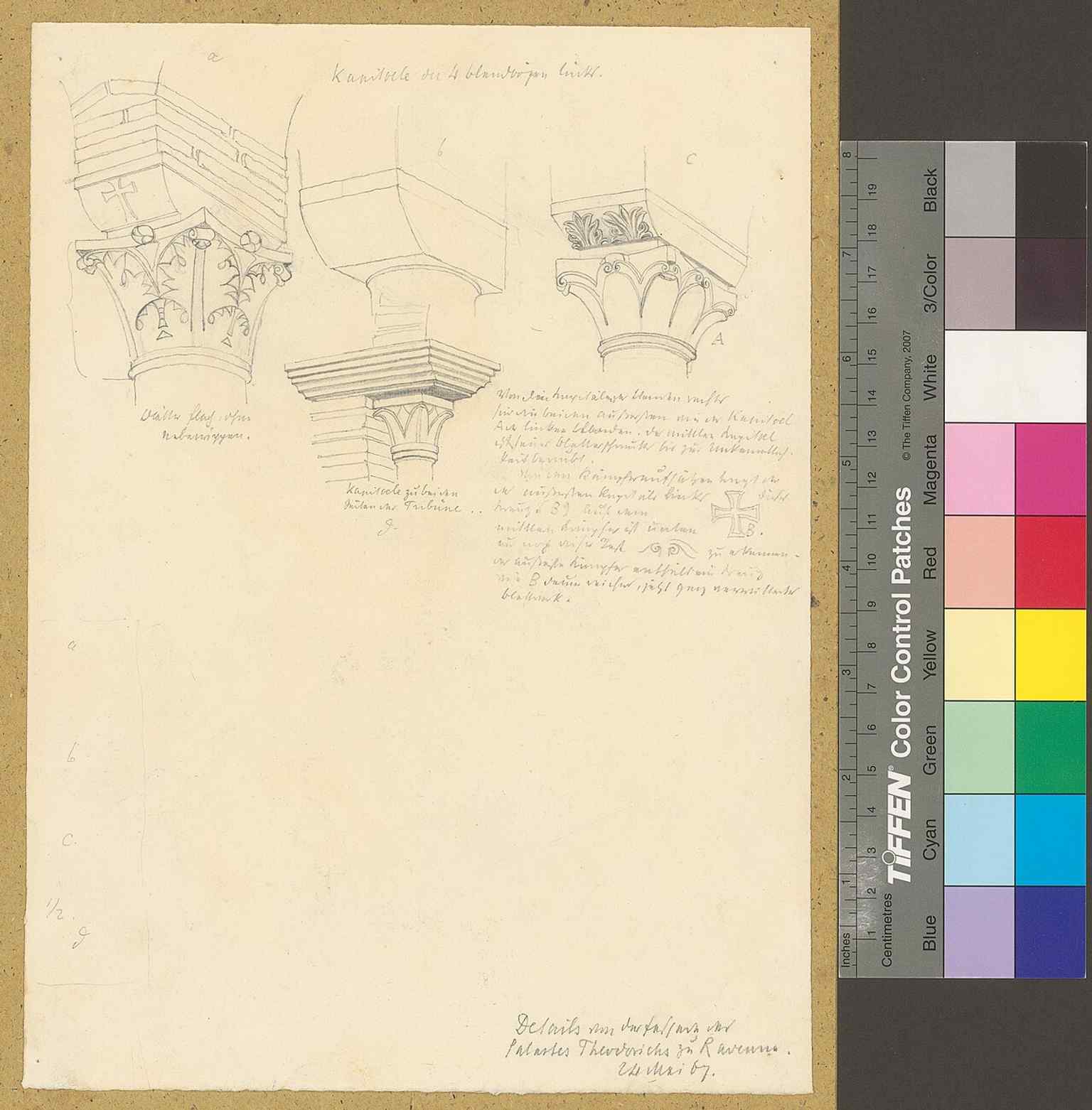
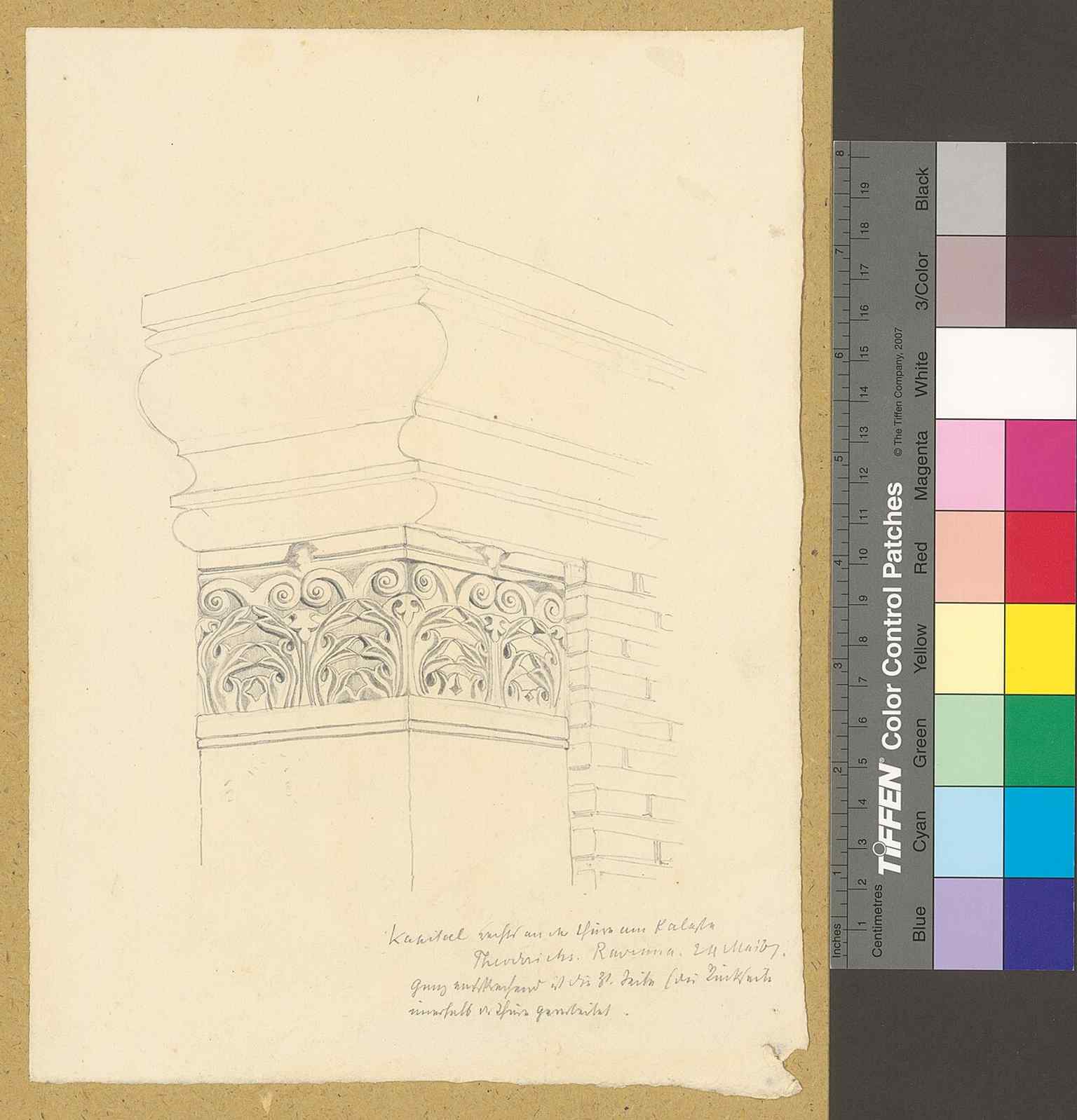
If you glance at the masonry details on your screen, the layered fabric becomes easier to read. Corrado Ricci understood that problem perfectly. Between the late eighteen hundreds and early nineteen hundreds, he stripped away later blockages, rebuilt one of the circular staircases, and even inserted columns into the twin windows at street level. Before that, this frontage looked almost mute, a sealed mass. If you fancy it, have a look at the before-and-after image in the app; it shows how dramatically conservation changed the way this ruin presents itself.
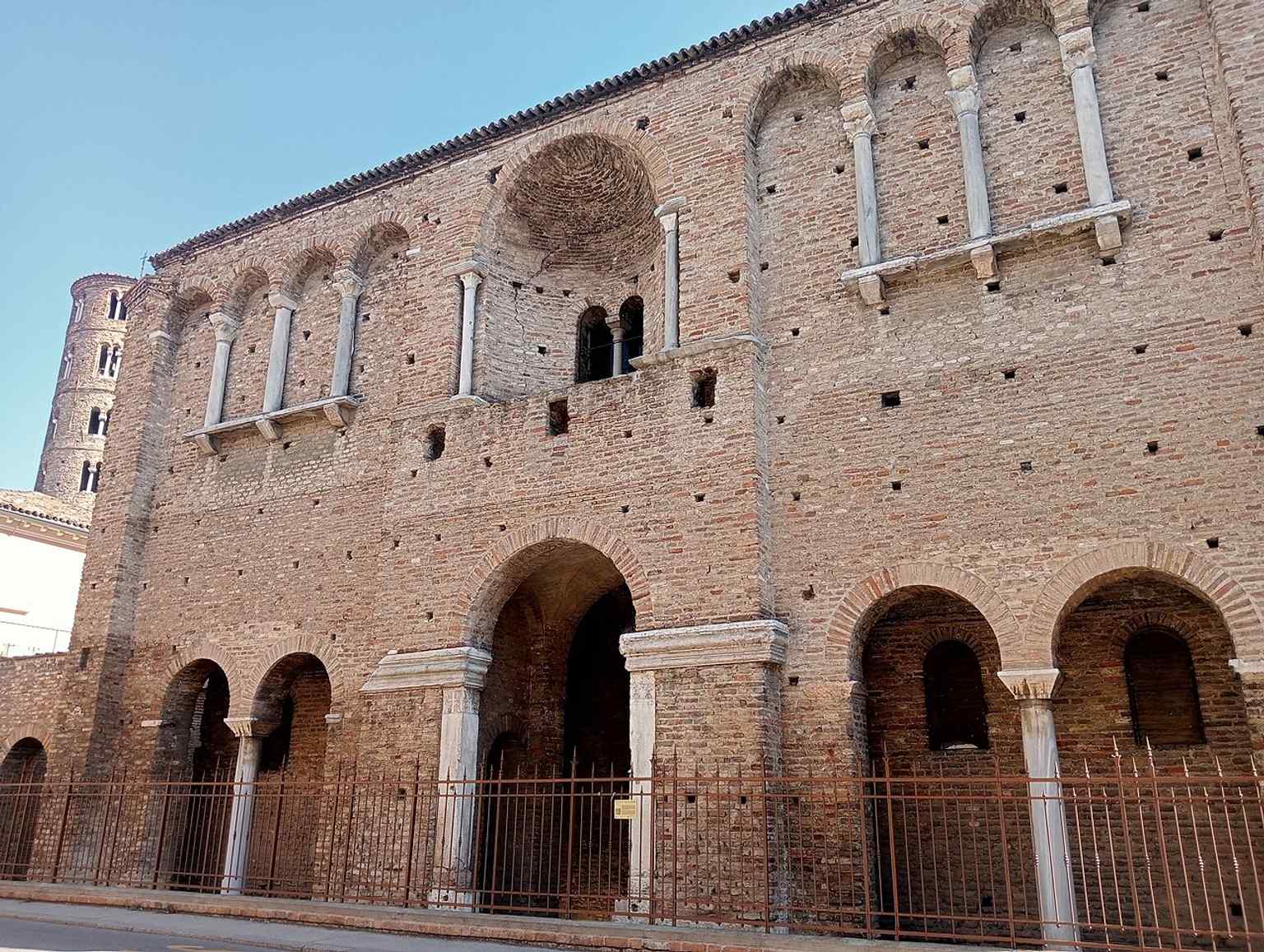
Then came more surprises. Don Mario Mazzotti dug here in the nineteen fifties and confirmed that the medieval building stood on older remains. Earlier excavations had already uncovered floor mosaics from several ages: Roman opus sectile, patterned stone inlay, and figured mosaics with circus games and motifs linked to Theodoric’s world. One tiny fragment carries the word Tessella, perhaps part of tessellavit, as if a mosaic maker left a shy signature in the floor.
So this facade keeps its secret. Royal quarter, church front, ceremonial threshold, all at once. Ahead, at Santa Maria in Porto, we meet a later age that also claimed Ravenna and gave the city yet another face. If you hope to visit inside here another day, it generally opens only on Monday mornings.