
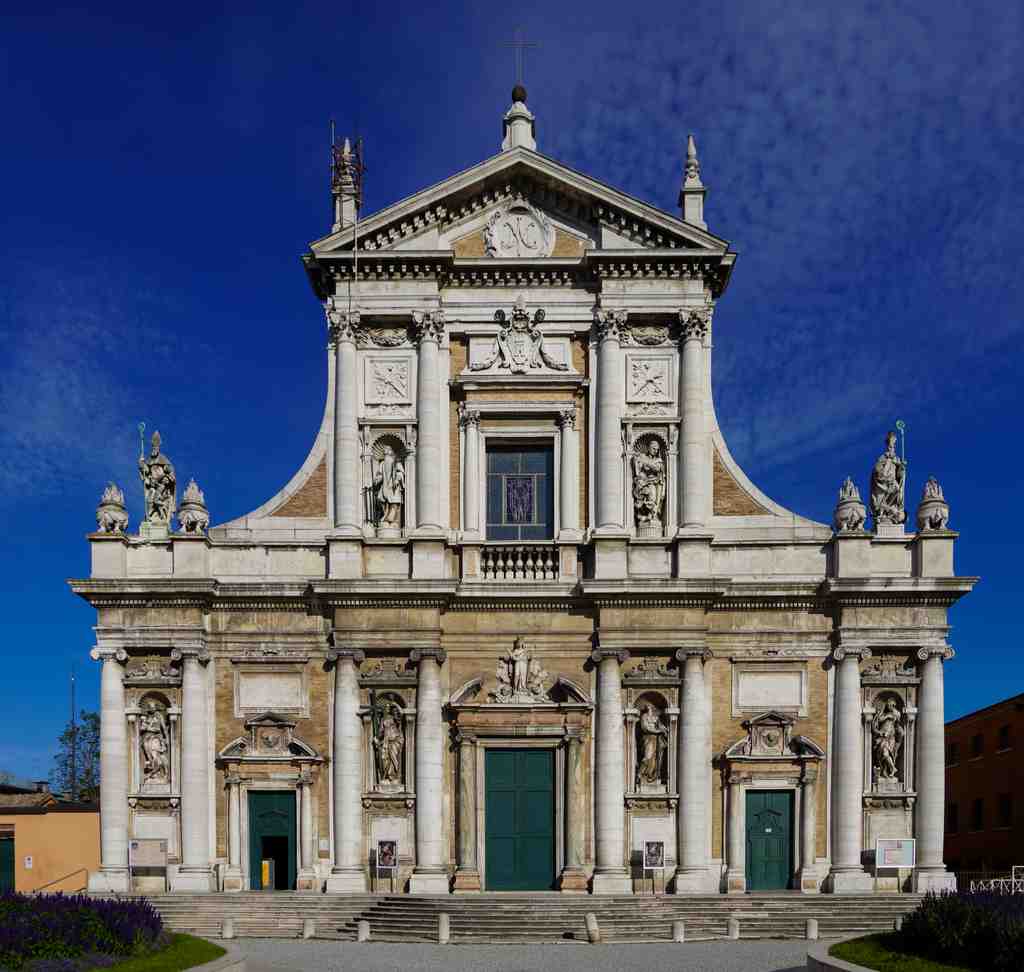
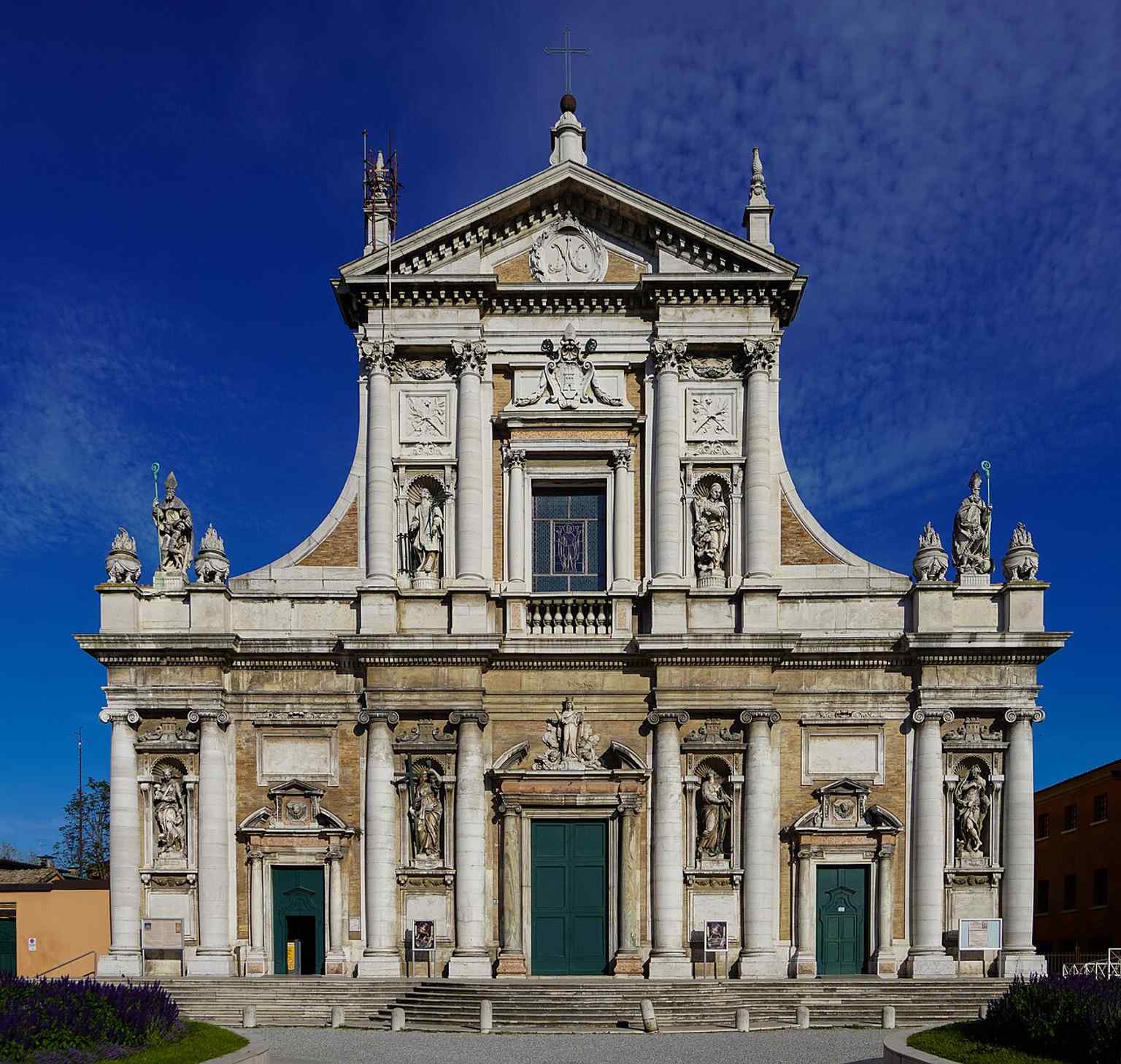
On your left, look for a broad white Istrian-stone façade rising above a staircase, with three portals and a statue of the Madonna set over the central door.
Santa Maria in Porto looks calm, even stately. Yet this church began in anxiety. The community of canons originally belonged to Santa Maria in Porto Fuori, their older house beyond Ravenna’s walls, about four kilometres away. In the fifteenth century, when Venice ruled Ravenna, Venetian military logic changed everything. The republic feared that a large monastery outside the walls could be seized by an enemy army and turned into a fortified base for attacking the city, so the canons were ordered to move sacred life inward, closer to defence, gates, and control.
That decision was anything but abstract. Near Porta Nuova, then the southern edge of town, the canons bought a plot occupied by houses, and on the fifth of August, fourteen ninety-six, those houses came down. The monastery rose first. The canons settled here by fifteen oh three, and by fifteen oh nine the complex was largely complete. In fifteen eleven Pope Julius the Second stayed here during his journey through Romagna. In that same year the Ravennate architect Bernardino Tavella presented a design for the church itself, though building only began in fifteen fifty-three.
That long timeline matters, because this basilica is really several moments layered together. The body of the church belongs to the sixteenth century, but the brilliant façade before you came much later, in seventeen eighty-four, when Camillo Morigia gave it this poised, theatrical face. If you glance at the image in the app, you can read its careful order: three doors below, a large rectangular window above, saints in niches, and the Madonna Greca presiding over the centre. Even the columns beside the main portal carry an older memory. They date back to the fifth century and came from the lost Basilica of San Lorenzo in Caesarea, so this elegant front quietly incorporates fragments of imperial Ravenna.
The human heart of the story belongs to Pietro degli Onesti. According to tradition, back in eleven hundred, at Porto Fuori, he and his companions were praying by the shore when two angels brought an eastern marble image of the Virgin over the water. No one could take hold of it until Pietro knelt and promised to guard it forever. That image, the Madonna Greca, now venerated here as patroness of Ravenna, gave this church a purpose deeper than architecture: the holy centre shifted into the city, but it never forgot the coast. Dante would later brush against Pietro’s memory too, in one of those tantalising little knots of identity we shall meet again.
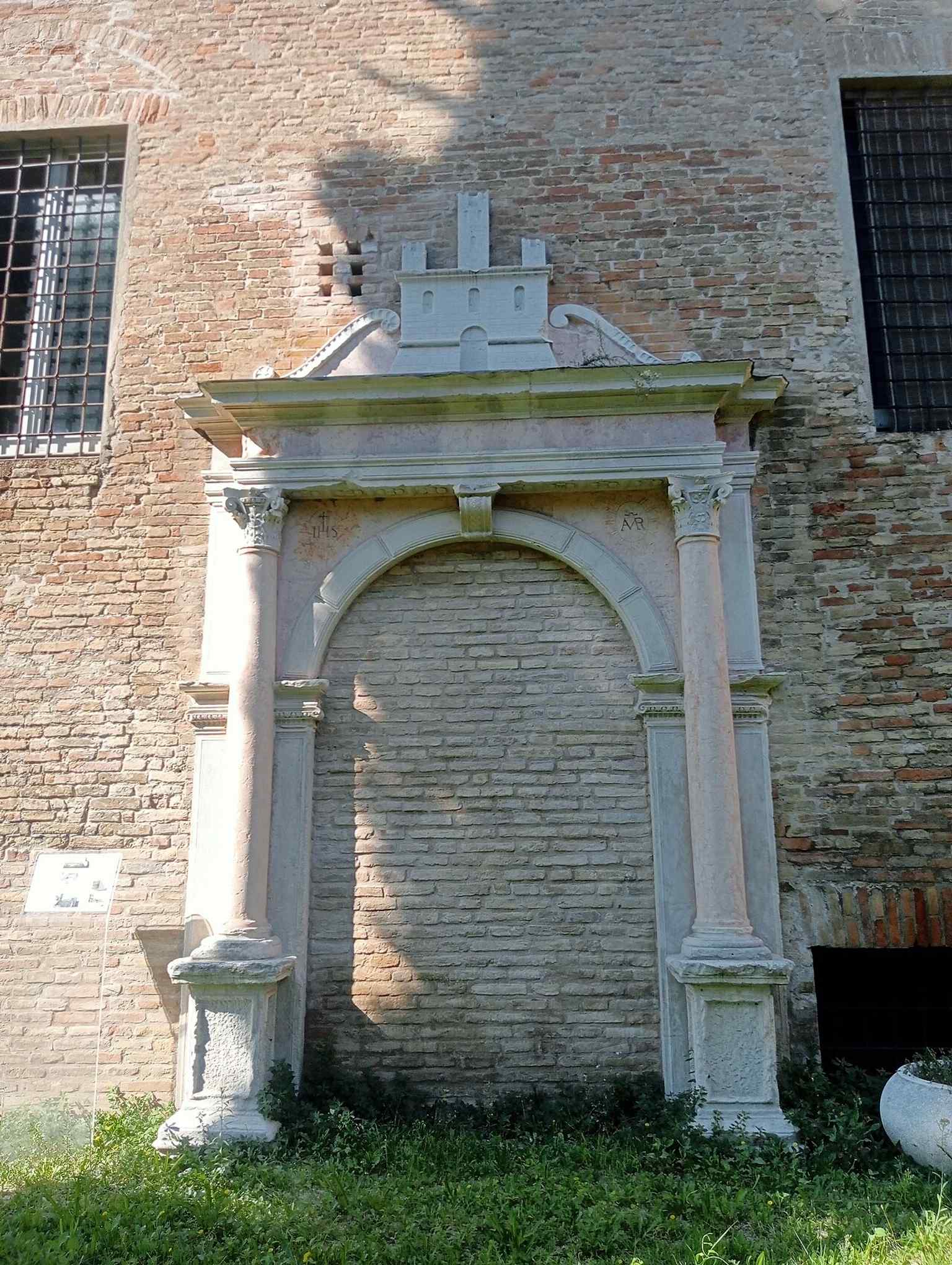
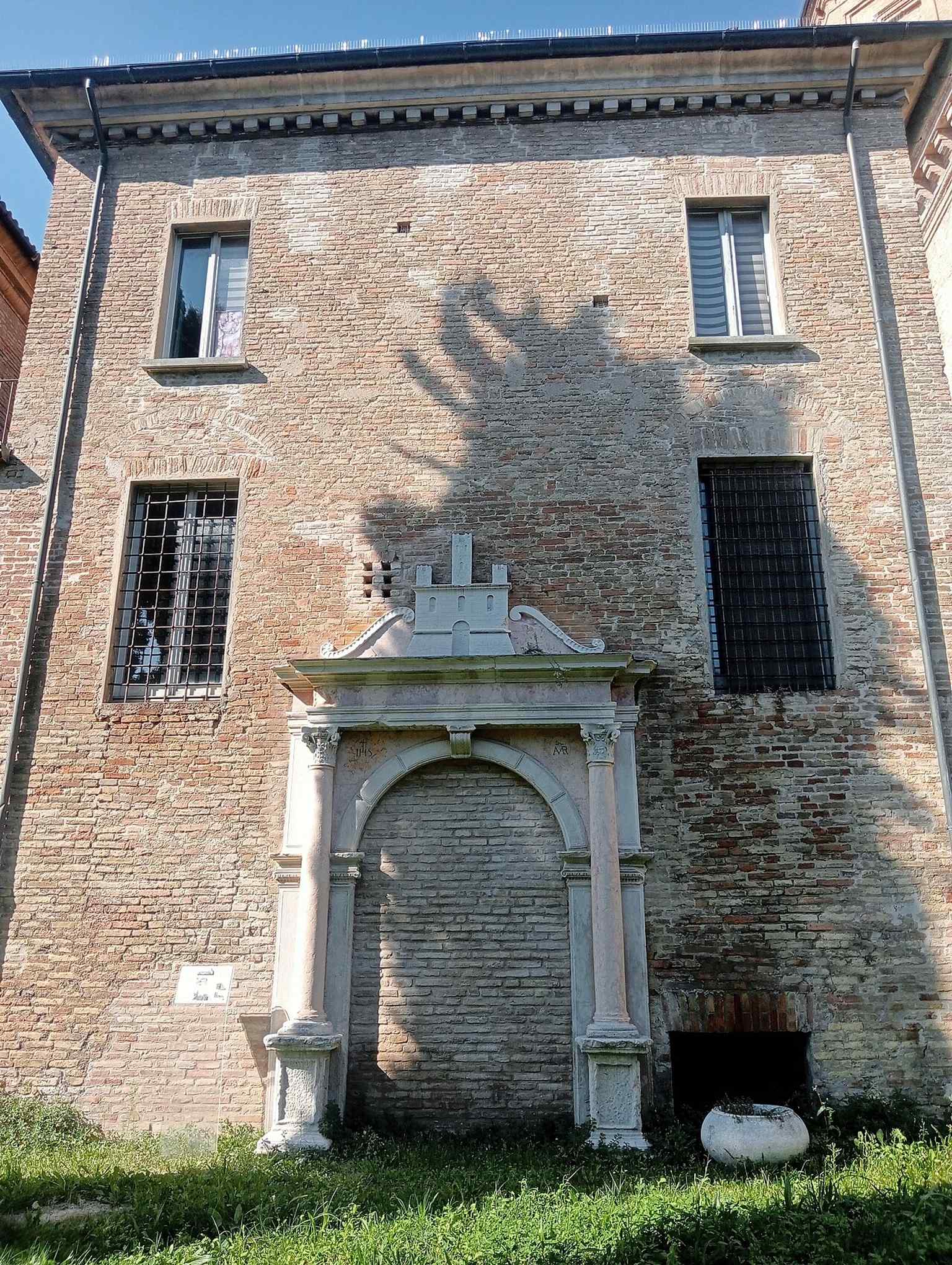
Then came other powers. In seventeen ninety-seven French troops stripped the sanctuary, expelled the monks, and carried off Ercole de’ Roberti’s great Portuense altarpiece to Milan, where it remains. The monastery and church became barracks. Later, parts of the complex even served industry. If you look at the second image, the old walled-up portal of the monastery is a neat little scar from those later rewritings.
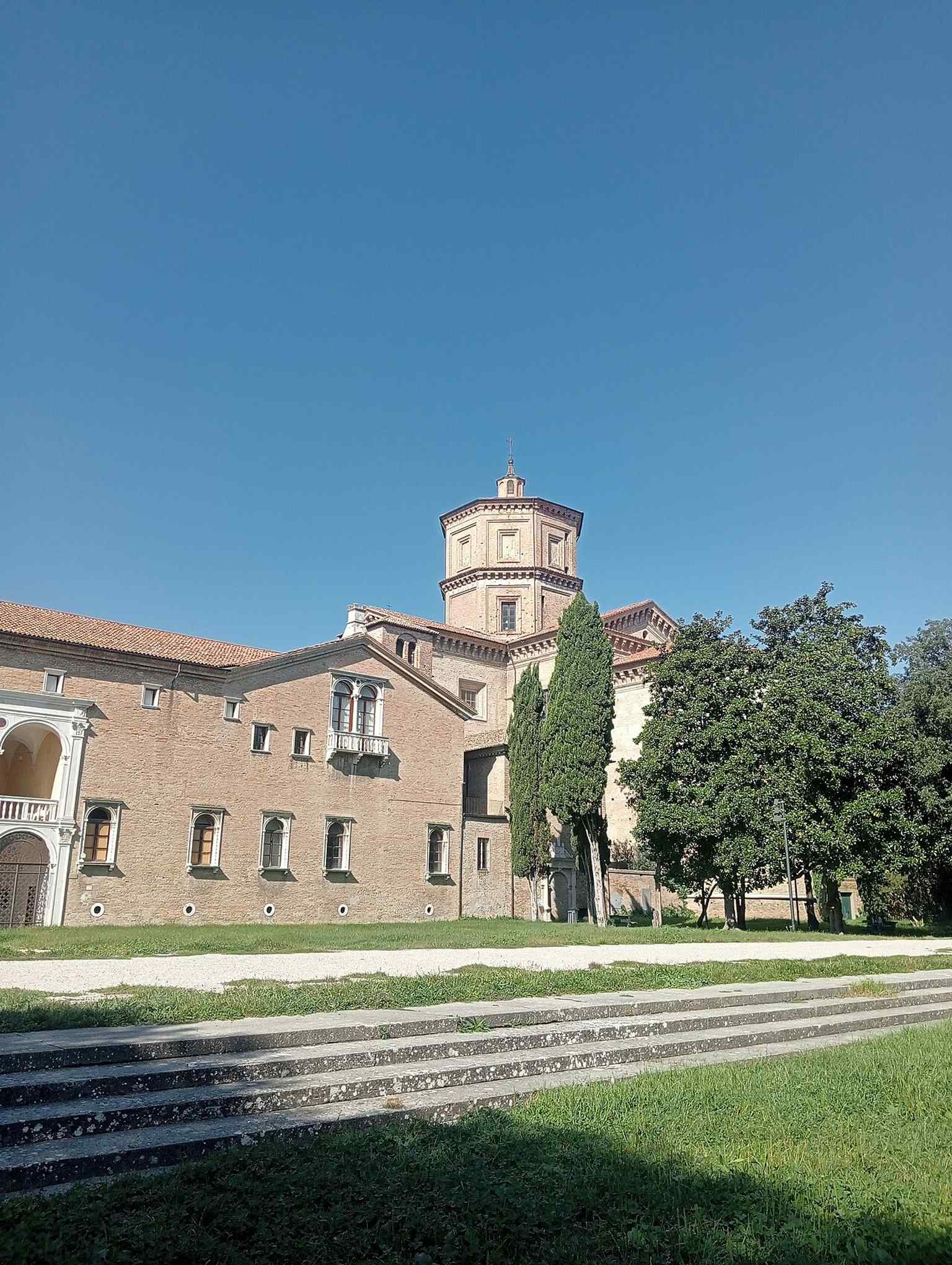
That is the point here: authority leaves traces not only in churches, but in routes, precincts, and the very arrangement of a neighbourhood. In about two minutes, that story continues at the Art Museum of the City of Ravenna, housed in the former monastic complex nearby. If you want to come back inside later, the basilica is generally open daily from seven-thirty until seven.





%20-%20Facade.jpg)


