
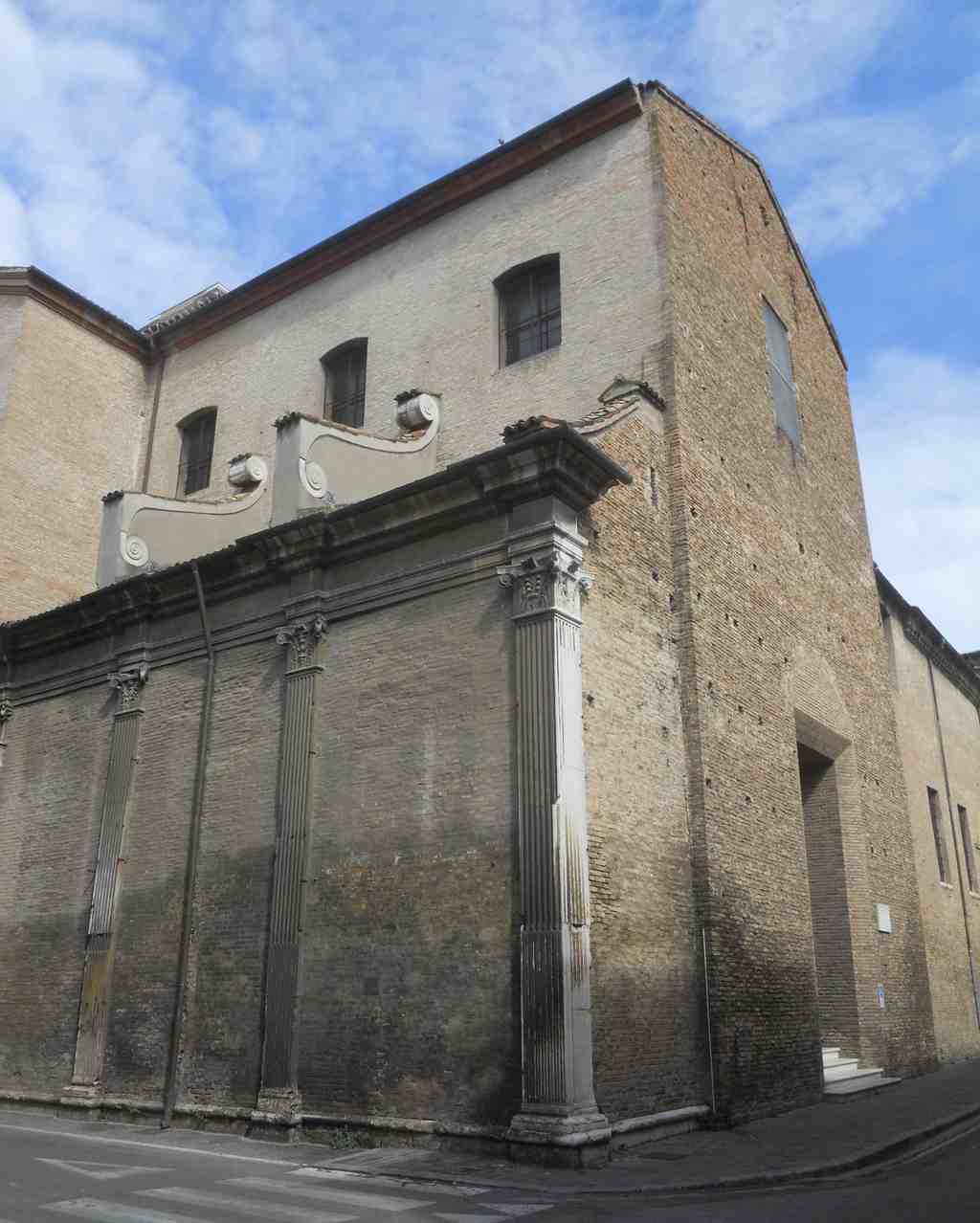
On your right, look for the plain brick façade with its stepped, double-sloping outline, a deep rectangular doorway lifted on marble steps, and one large rectangular window set high above.
From a distance, San Romualdo can seem almost severe, as though it has decided to keep its secrets to itself. That restraint is part of the story. The front you see was never fully finished, and the church has the slightly withheld air of a building that has lived several lives and trusted none of them completely. If you glance at the image on your screen, you can see how bare the façade remains, almost stripped back to intent alone.
Its first turning came with violence. On the eleventh of April, fifteen twelve, the Battle of Ravenna tore through the area outside the city walls. The Camaldolese monks, who had been living at Sant’Apollinare in Classe, no longer felt secure there. War pushed religious life inward. They moved into Ravenna itself, onto land they owned here along what is now Via Baccarini, and by about fifteen fifteen they had created a new abbey. They carried more than bedding and relics with them. They brought books, the volumes that would help form the Biblioteca Classense.
Then came ambition. In the seventeenth century, the monks decided they needed a proper new church beside the abbey, dedicated to their founder, Saint Romuald. Luca Danesi, a Ravennate architect, drew the design. In sixteen thirty, Archbishop Andrea Corsini attended the laying of the first stone. By sixteen thirty-two the structure stood; by the first of May, sixteen thirty-seven, Cardinal Luigi Capponi dedicated it. Behind this plain exterior, the interior bloomed in Baroque richness: side chapels, painted vaults, coloured marbles, and later a grand high altar designed by Camillo Morigia in seventeen eighty-eight.
But here is the turn most people miss. The monks did not simply build and remain. In seventeen ninety-eight, Napoleonic requisitions forced them out. Their church lost much of its furniture and many paintings. Some vanished. Some survived by leaving. If you remember the art museum earlier in the route, that is where part of this church quietly lives on now: Guercino’s Saint Romuald and Marcantonio Franceschini’s saints ended up in Ravenna’s collections, rescued by displacement rather than spared from it.
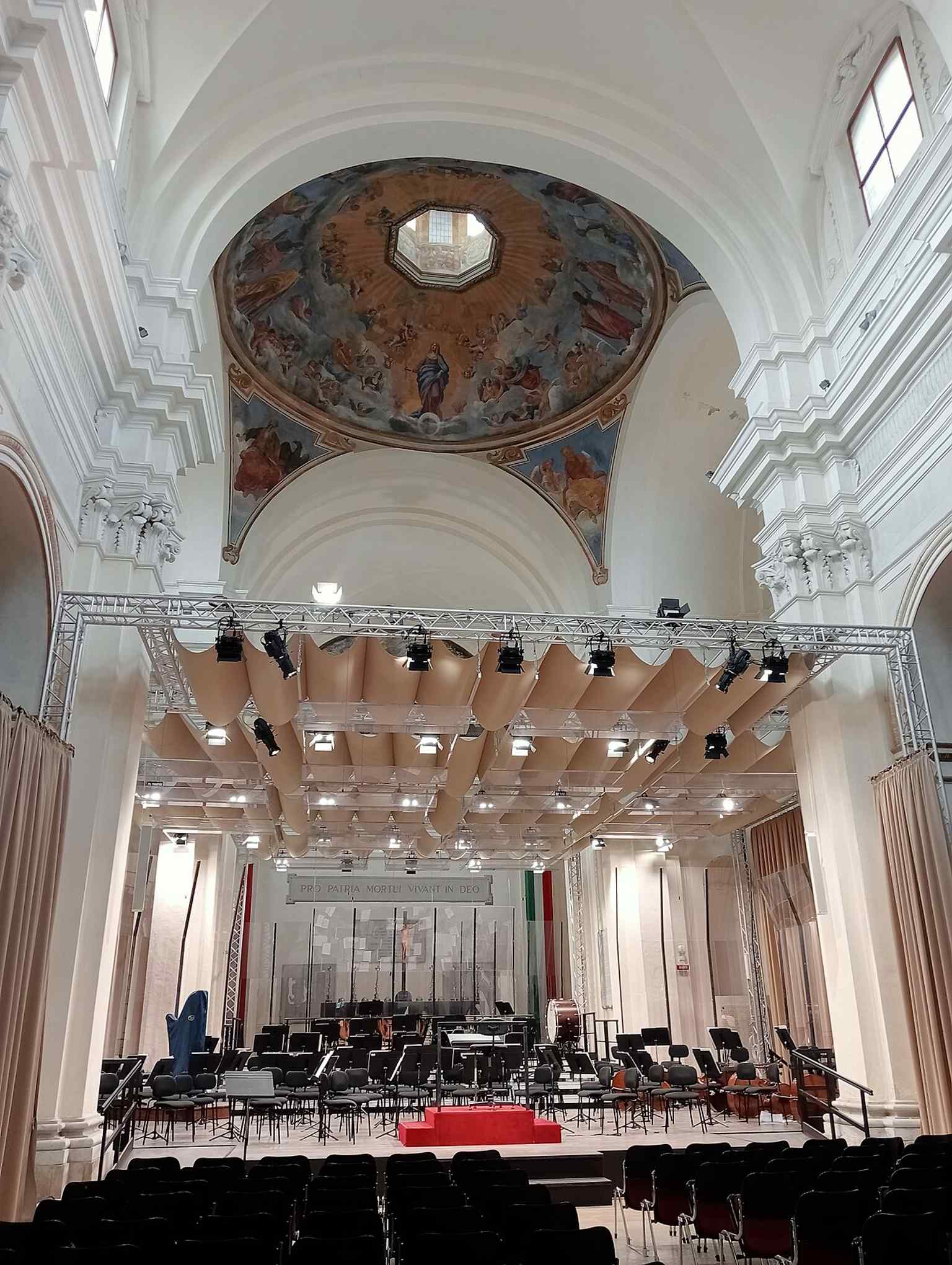
And the building itself kept changing. The city acquired it in eighteen twenty-five. It became a museum in eighteen seventy-seven, then a gymnasium in nineteen twenty. In nineteen thirty-five, Ravenna restored it again and turned it into a civic shrine for those killed in war and captivity. Inside are marble plaques with gilded names, and even the declaration of war and the Bulletin of Victory from the First World War were placed in the most sacred part of the church. A local would also tell you something else: this closed, almost unconsecrated-looking church was not only a memorial to the dead, but from nineteen ninety-seven until twenty nineteen it also housed Ravenna’s Museo del Risorgimento, the museum of Italian unification.
That is the quiet lesson here. In Ravenna, being moved does not finish a story. It lays down another one. When you are ready, continue toward Christ trampling on the beasts, about six minutes away.





