
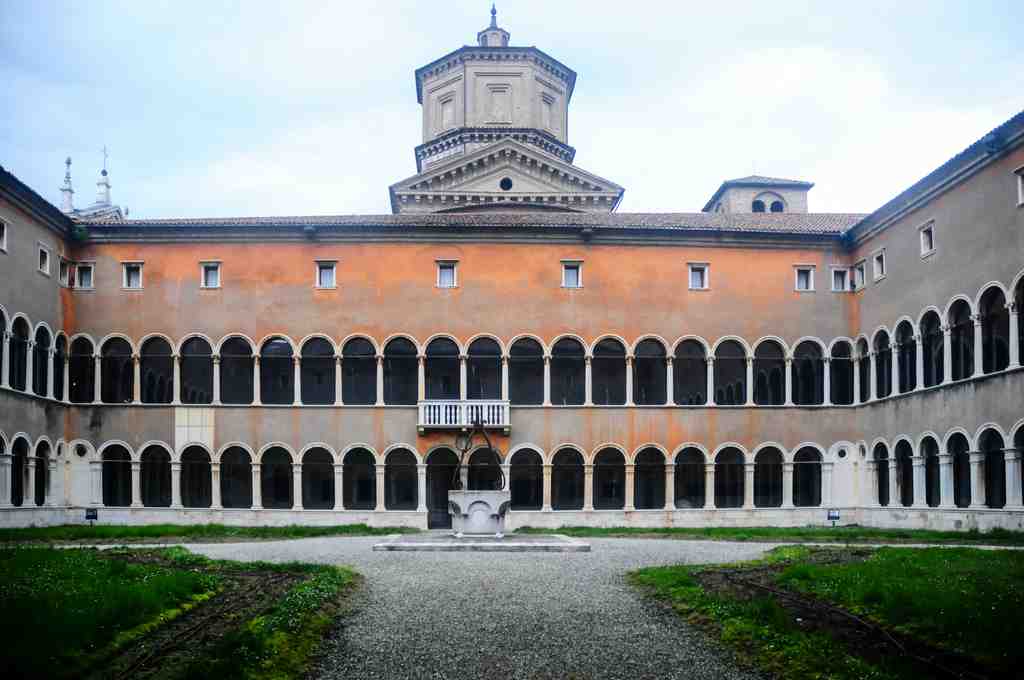
Ahead of you stands a warm brick and pale-stone Renaissance façade, shaped as an elegant open arcade of five arches, with two tiers of slender columns and carved Lombard capitals as its unmistakable signature.
This is the Art Museum of the City of Ravenna, housed in the Loggetta Lombardesca, one of the grandest Renaissance monastic buildings in the city. It began in the early sixteenth century as part of the abbey linked to Santa Maria in Porto, and the name “Lombardesca” remembers the Lombard and Campionese craftsmen who worked here under Tullio Lombardo. Much has changed around it, but this façade beside the gardens still preserves the original poise of the old complex.
Its story is not a simple tale of safe keeping. In Ravenna, art often survives by passing through upheaval: monks collect it, governments suppress the monasteries, property changes hands, and then a civic institution gathers the fragments before they vanish. Loss, rather perversely, becomes one of the engines of preservation.
One of the first guardians of that chain was Pietro Canneti, a learned monk from the Camaldolese house at Classe, a Benedictine reform community. He and his fellow monks assembled books, artworks, antiquities, even natural specimens with the curiosity of scholars and the patience of custodians. When the Napoleonic suppressions closed religious houses and confiscated their goods, those objects moved to the city, which founded the municipal Classense Museum in eighteen hundred and four. So the monastic world was broken apart, yet much of what it had cherished escaped dispersal.
Then another figure enters, with rather more drama. Enrico Pazzi, the sculptor who later created the famous Dante monument in Florence, first knew Ravenna as a troublesome student. The Academy of Fine Arts expelled him for bad conduct against its director, Ignazio Sarti. And yet, decades later, that same rebellious young man became a major benefactor, leaving Ravenna a vast collection of antiquities, books, and art. He even proposed giving this former convent a museum role as early as eighteen seventy-seven. It is a lovely reversal: the expelled student helping to shape the city’s cultural memory.
The building itself needed rescuing too. After the monastery ended, the complex served other uses, even military ones. In the Second World War, soldiers turned it into barracks, and Allied bombing in the summer of nineteen forty-four badly damaged this area near the station and the old docks. Restorers spent years removing military additions and repairing the bomb scars. During the restorations of the nineteen seventies, workers reportedly heard unexplained footsteps in the empty corridors. No proof, of course, but the whisper of a monastery does suit the place.
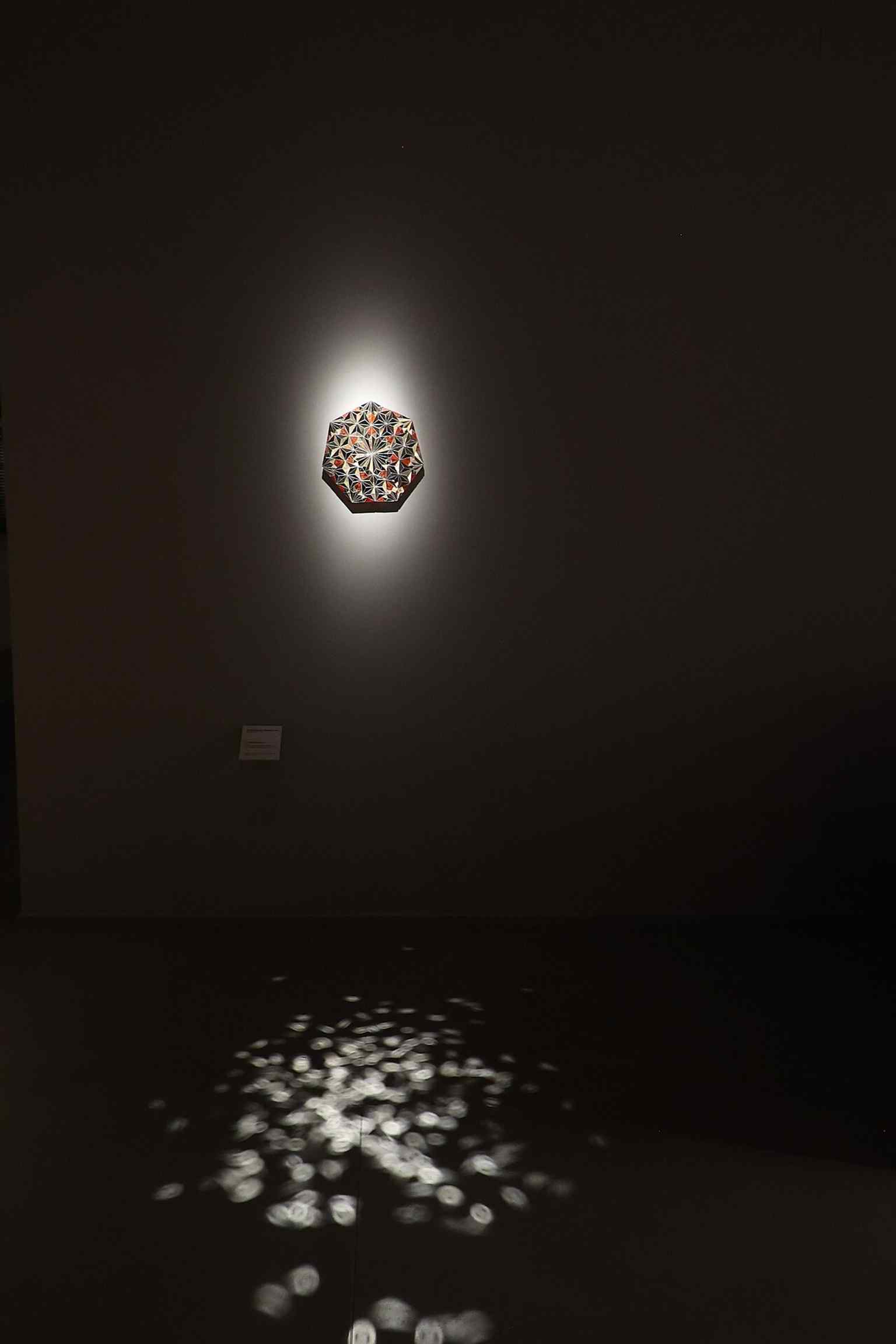
By two thousand and two, the renewed museum finally took the form you see today. Inside are more than three hundred works, from small devotional panels once made for monks’ cells to later paintings and sculpture. One of its legends is Guidarello Guidarelli’s tomb slab, so admired that admirers reportedly left lipstick marks on the marble with their kisses. And one of its great paintings, Vasari’s Lamentation over Christ, was painted for the church of San Romualdo, where our path will lead later. If you glance at the image on your screen, you can also see how this old monastery now shelters Ravenna’s modern mosaic collection, where artists such as Chagall and Georges Mathieu found new life in tesserae, those tiny mosaic pieces.
A museum like this stores memory indoors, but Ravenna never keeps memory in one place for long. In a few minutes, at Porta Nuova, we will meet that same instinct written into a gate: not a collection this time, but an opening in the city’s own body. If you want to come back, the museum is usually closed on Monday, open from nine to six Tuesday to Saturday, and from ten to seven on Sunday.





