
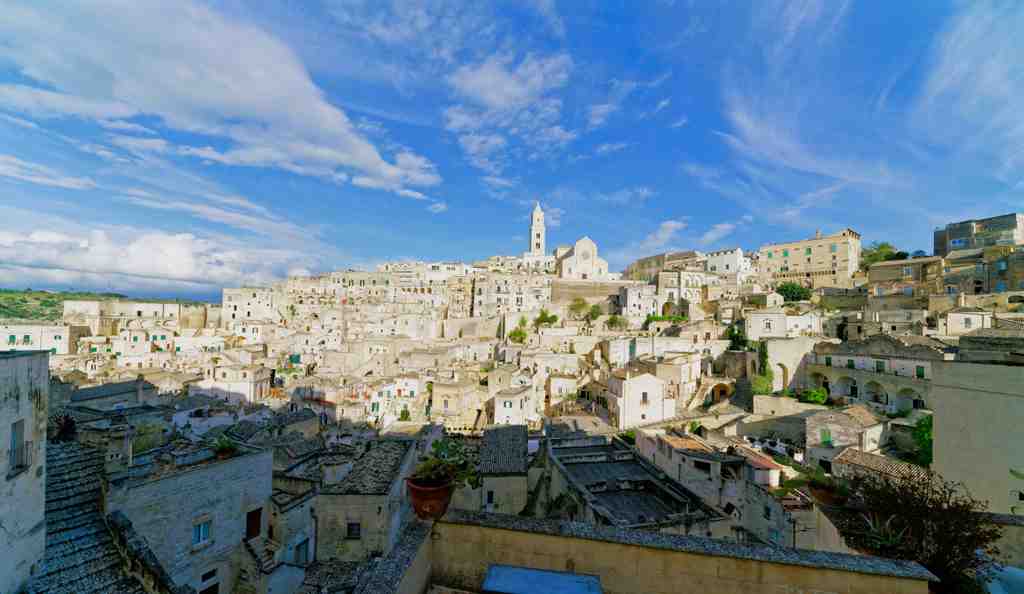
To spot the Sassi of Matera, look just ahead at the dramatic hillside covered in pale stone houses and twisting paths, stacked and carved straight from the rock-a real stone honeycomb beneath the open sky.
You’re standing in front of one of the most mind-bending cityscapes in the world, and no, you haven’t fallen into Dante’s Inferno or on the set of a Hollywood epic, though both have had their turn here. These are the Sassi of Matera: two ancient districts-Sasso Barisano and Sasso Caveoso-etched and sculpted into the side of the Murgia plateau for thousands of years. Just imagine what this place looked like long ago: the sound of daily life in rock-hewn homes, echoing through cave corridors and over rooftop gardens.
History clings to every surface here, sometimes literally-just feel the coolness of the tufa stone that has sheltered people since the Paleolithic era, right up to the 1950s. These dwellings have seen it all: Neolithic villagers, medieval monks hunched over their icons, Renaissance nobles gazing from stone balconies. Some houses dive so deep into the rock it’s as if you’re stepping into another world. Back in the day, families, animals, and water cisterns all shared close quarters. I suppose you could say they took the phrase “tight-knit community” to a whole new (underground) level.
Take a look: Sasso Barisano winds northwest towards Bari, famous for its carved portals and ornate stonework. Face south and you see Sasso Caveoso, its stepped arrangement of dwellings echoing the seats of an immense rocky theater, looking out over the ravine. Between them rises the Civita, crowned with the Matera Cathedral-perched up like the grand judge overseeing an ancient trial.
As you wonder how these homes stayed so cool in the Italian heat, here’s the secret: the rock itself. Tufa functions like a natural air conditioner, keeping things pleasantly steady year-round. Ingenious channels and cisterns guided water down into each nook; some houses boasted up to seven water tanks. Of course, there were even hanging gardens and rooftop cemeteries. Yes, here in Matera, the dead rested above the living-a set-up that might make even the Addams Family jealous!
Once, after sunset, families lit lamps outside cave doors, creating a “starry sky” below ground level. Imagine being one of those passersby, squinting at the glowing labyrinth beneath your feet. Some say Matera’s name even comes from the Greek “meteora”-a “starry heaven.” Now that’s poetic urban planning.
But life here wasn’t always picture perfect. By the early 1900s, overcrowding made conditions tough. Families and livestock crammed into damp grottoes with very little fresh air or sanitation. The government finally ordered an evacuation between 1952 and 1965, moving thousands to brighter, healthier neighborhoods. It was a bittersweet moment-finally, better living, but at the cost of abandoning centuries of memory-filled caves.
Yet the Sassi didn’t stay forgotten forever. In 1993, they were declared a UNESCO World Heritage Site for their unique cultural and urban legacy. Restoration began, and now you find artisan workshops, boutique hotels, and even scenes from famous films. Remember Mel Gibson’s “The Passion of the Christ?” That was right here. Matera’s stone maze has played ancient Jerusalem more times than Hollywood can count.
Peek inside the next cave you pass and you might just stumble upon a house-museum, still dressed in period clothes, or a contemporary art gallery bringing new color to these old stones. The Sassi hold secrets in every shadow and step. Up ahead, maybe you’ll even spot a modern musician strumming a tune inspired by these ancient alleys.
Matera is a city written in stone, but never set in stone-always changing, surprising, and utterly unique. Now, who knew a place could be both prehistoric and perfectly photogenic?




