
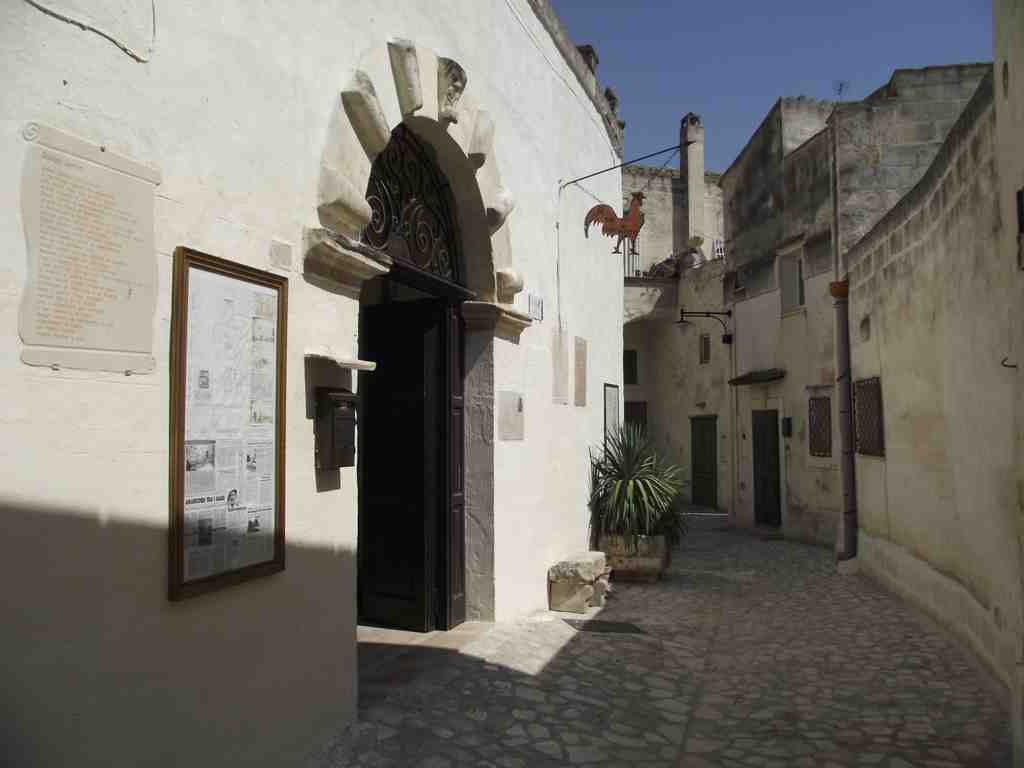
To spot the Museum-laboratory of peasant civilization, just look for a whitewashed stone building with a rounded arch entrance and some quirky signs, right on your left as you turn into this narrow cobblestone lane.
Welcome to a place where history isn’t just in dusty books - it’s under your feet, behind these walls, and sometimes hiding in a forgotten grain basket! Just picture it: we’re standing in the heart of the ancient Sassi, and this museum stretches out over 500 square meters, like a time capsule built right into a neighborhood that’s looked almost the same since the 1500s. The founder, Donato Cascione, must’ve loved his job - he created not just a museum, but something a bit like a living stage, where every room shows what peasant life really felt like. As you step in, it’s impossible not to imagine the hustle and bustle of daily life.
The first space you see is a lamione, a raised stone room joined to a cave. In the past, this was the luxury upgrade of the era: the family slept up high, while their goats and cows snored below. Hey, if anyone ever tells you a studio apartment is cramped, just tell them about Matera! Most people here were farmers, but hidden among the bedrooms you’ll find old workshops where craftspeople kept the city running. There’s a blacksmith’s hammering, the gentle clatter of weaving, the whir of a potter’s wheel - it all returns if you listen closely.
Cascione and his team didn’t just collect stuff; they hunted down every detail to recreate entire lives. They even consulted the elders for those juicy stories you can’t read in textbooks - like old tricks for shining shoes or building a chair sturdy enough for grandma’s cat. Each tool, basket, and pot has its own secret, and some stories even have a little drama. Did you know there’s a whole display just for brigands and childhood memories? If you ran through these alleys a century ago, you might have to dodge a shoemaker’s workbench, a giggling bunch of kids, or even a sheep or two.
The museum now also runs a hands-on workshop, where kids and students try ancient crafts from painting to pottery. Imagine getting your hands covered in clay, shaping a bowl just like the people of the Sassi did centuries ago. Alongside all this, they’ve published books and guides so the stories keep going, passing from generation to generation. So take a deep breath - the air you smell is full of old flour, sawdust, and echoes of lives lived deeply, right where you’re standing.
Ready to delve deeper into the structure, preparation or the tour itinerary? Join me in the chat section for an enriching discussion.




