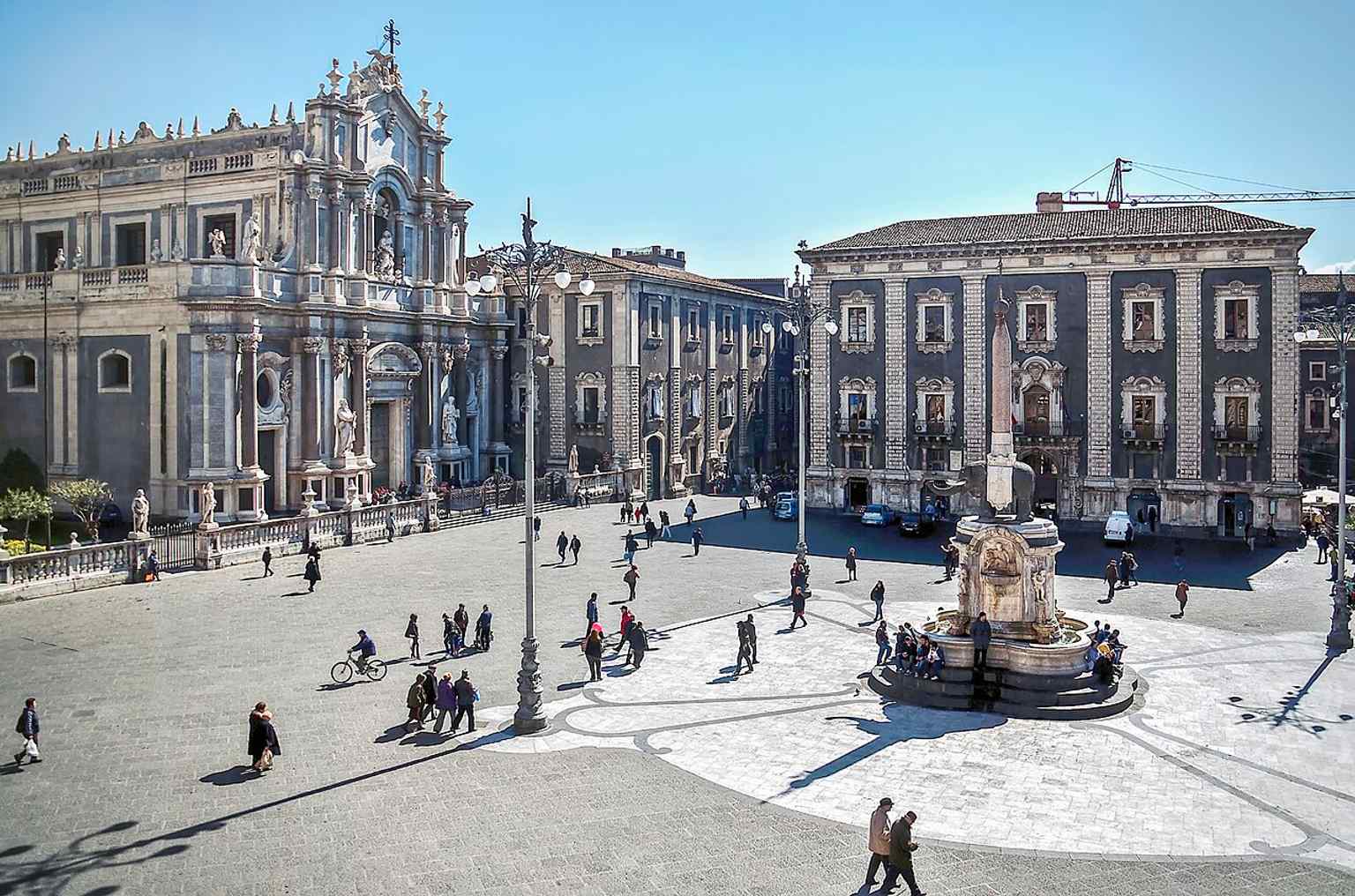
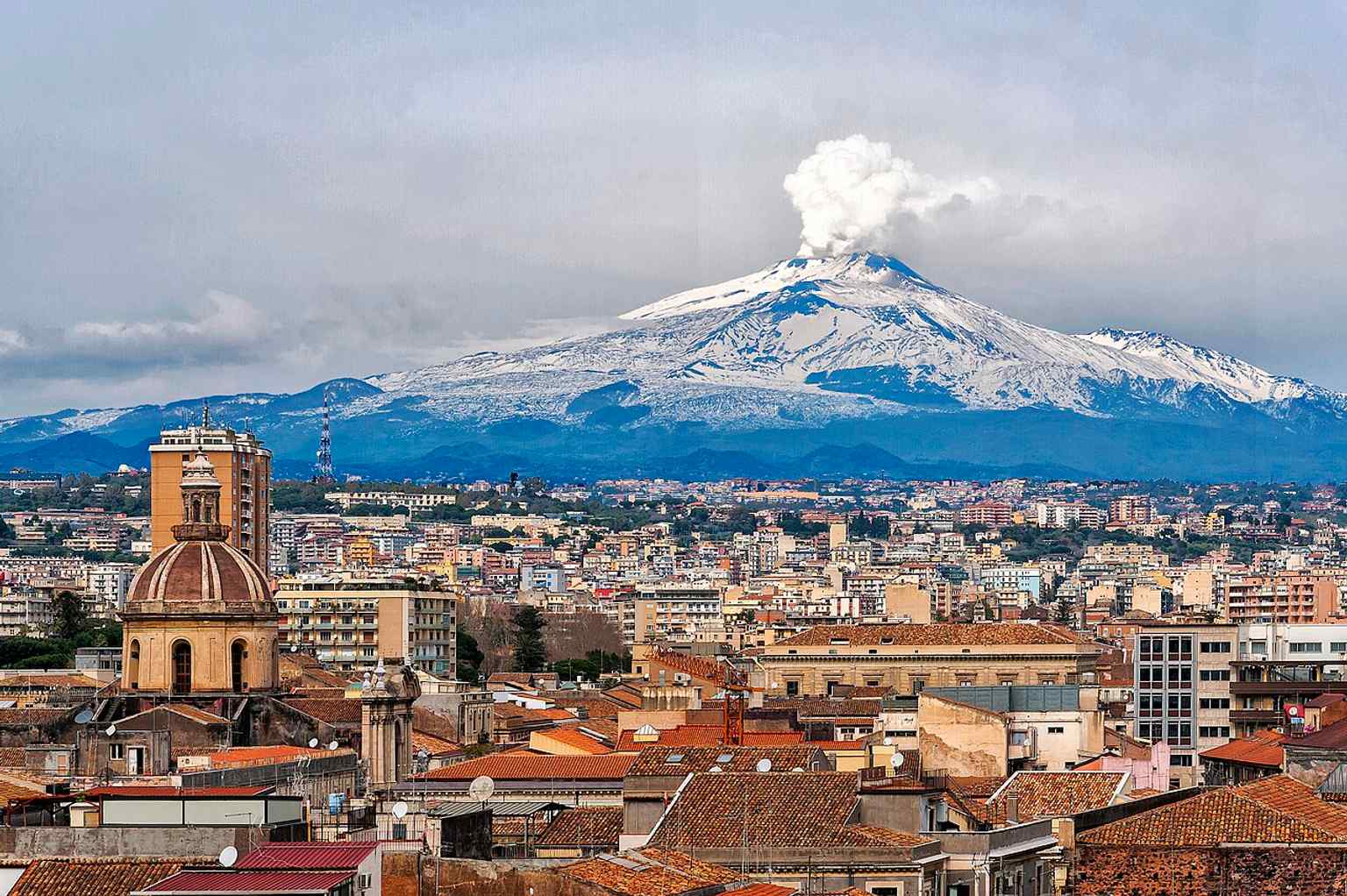
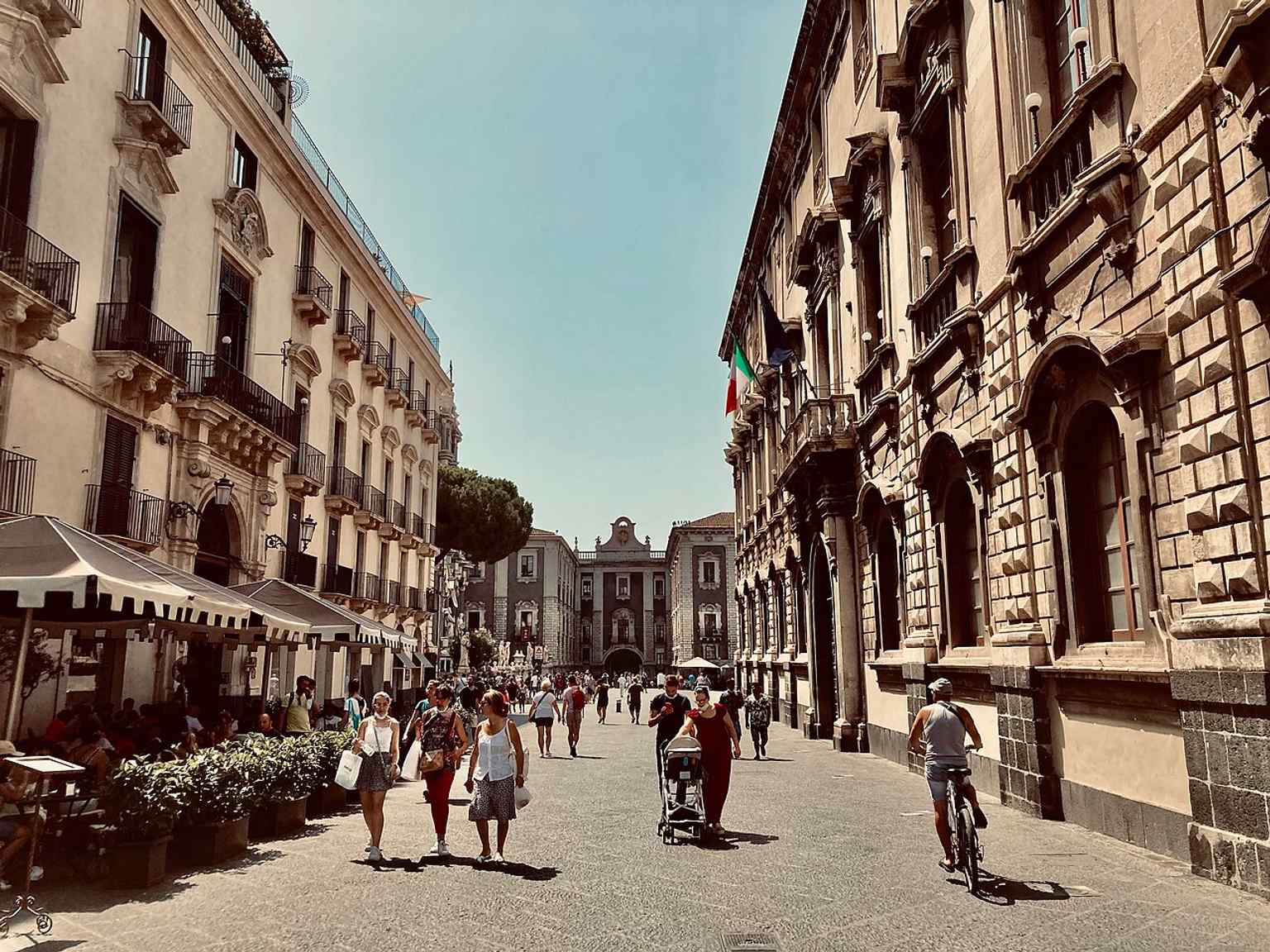
Look to your right for the broad, straight lava-stone avenue lined with pale Baroque facades and iron balconies, the unmistakable spine of Via Etnea running through Catania’s historic centre.
What you are facing is not simply an old quarter. It is the old nucleus of Catania, drawn and redrawn so many times that the city learned to keep its memory in layers rather than in one clean story.
This is the buried city beneath the city. Under your feet lie Greek Katane, Roman Catanae, Arab Qaţânîah, Norman Catania, and the eighteenth-century Baroque city that rose after calamity. Each age covered the last, but never quite silenced it.
The first version began in seven hundred and twenty-nine B C, when Greek settlers from Chalcis, led by Tucle, founded Katane over an earlier Sicel settlement. Within a century it had grown important enough to attract the poet Stesichorus and the philosopher Xenophanes. Then came conquest, rebuilding, and renaming: Dionysius of Syracuse destroyed it around four hundred and three B C, and the Campanians repopulated it. Under Rome, Catanae declined, then revived after Etna’s eruption in one hundred and twenty-two B C buried it in ash. The Roman Senate even excused the city from taxes for ten years so it could recover. Baths, theatres, basilicas, aqueducts, and public buildings returned.
Later, after the western Roman Empire fell in four hundred and seventy-six, raids battered the city again. The citizens asked Theodoric, king of the Ostrogoths, for permission to rebuild their walls with stone taken from the ruined Roman amphitheatre, and he agreed. Even that is Catania in miniature: one age dismantled so another might endure.
Now pause for a moment and look carefully along the streets around you. Notice the broad, straight Baroque lines, then the odd interruptions, the changes in level, the hints of narrower older lanes. You are looking at a city redesigned, not wiped clean.
The great turning point came after the earthquake of sixteen ninety-three. It killed about sixteen thousand and fifty people out of a population of just under nineteen thousand, and it shattered almost everything. Yet the city did not move. Juan Francisco Pacheco, the Duke of Uzeda, sent Giuseppe Lanza, the Duke of Camastra, to oversee a new plan here on the same ground. Camastra, working with the military engineer Carlos de Grunenbergh, ordered wide straight streets and larger squares, partly for dignity, partly for survival. New buildings could rise only to three storeys, and streets had to follow set widths measured in canne, an old local unit of length.
If you glance at the image on your screen, you can see that new logic clearly in Via Etnea, the great north to south axis cut through the rebuilt city. And in Piazza Duomo, where civic power, religious authority, and ceremonial display stand close together, the city turned reconstruction into a public statement.
Even later centuries kept altering the fabric: lava in sixteen sixty-nine changed the western edge, bombs damaged buildings in nineteen forty-three, and the demolition of San Berillo in the twentieth century left another scar. Catania never stopped revising itself.
To see how the city kept rebuilding through its institutions, we shall next walk to one of its oldest institutions: the University of Catania, about six minutes away.