AudaTours logoAudaTours

Stop 15 of 16

Biblioteche Riunite Civica e A. Ursino Recupero

Biblioteche Riunite Civica e A. Ursino Recupero
Biblioteche riunite Civica and A. Ursino Recovery
Biblioteche riunite Civica and A. Ursino RecoveryPhoto: Rita angela carbonaro, Wikimedia Commons, CC BY-SA 3.0. Cropped & resized.

On your right, look for the pale stone entrance set into the long monastery wall, with a tall rectangular doorway, dark iron gate, and rows of austere windows above.

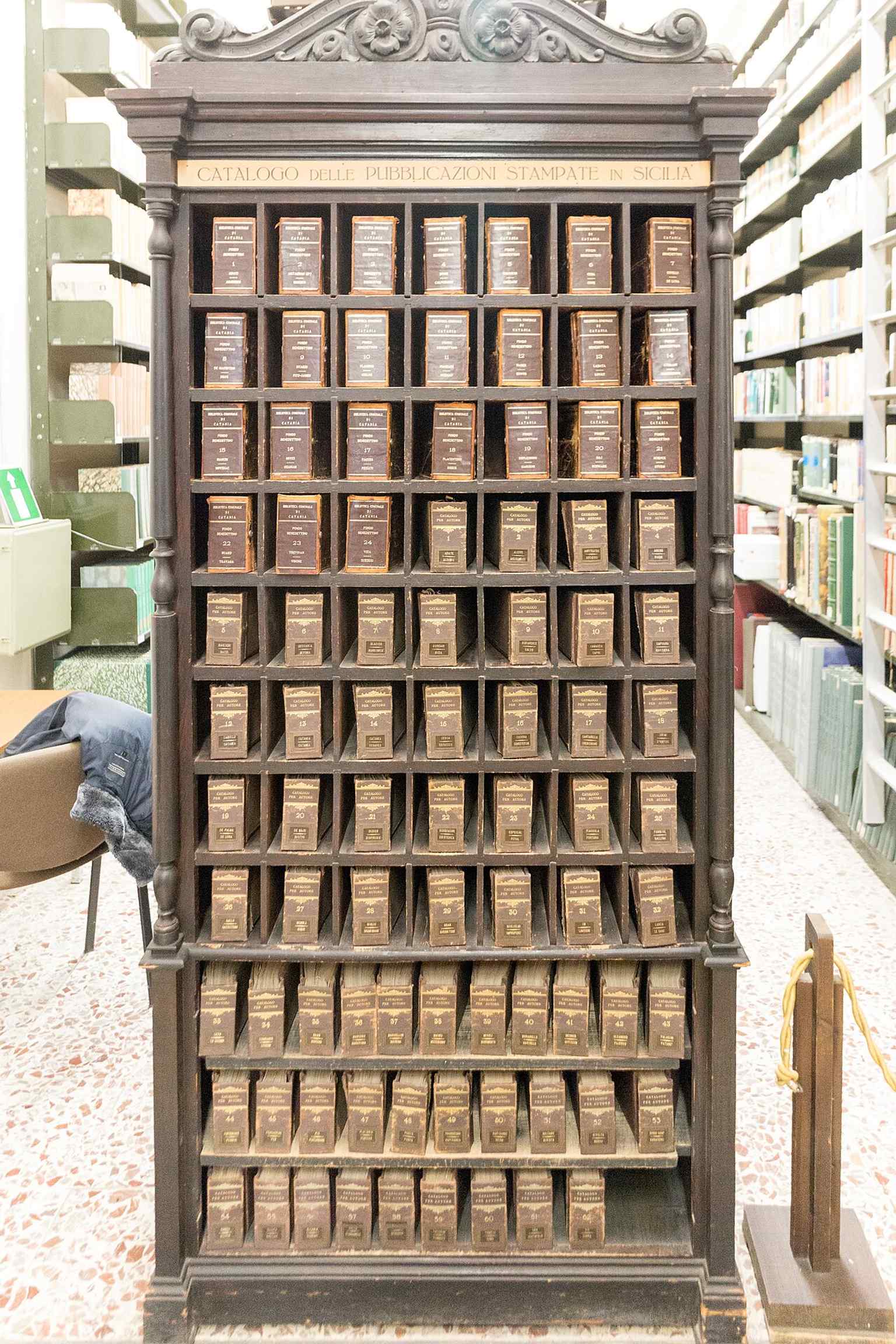
This is a fine place to end, because Catania keeps many of its memories in stone, but here it keeps them in paper, ink, bindings, catalogues, and patient human care. The united libraries called Civica and A. Ursino Recupero took shape in nineteen thirty-one, when the city joined its civic library to the collection of Baron Antonio Ursino Recupero. By the end of nineteen thirty-three, the two had physically come together here, in the north wing of the former Benedictine monastery, and the restored library opened to the public in nineteen thirty-four.

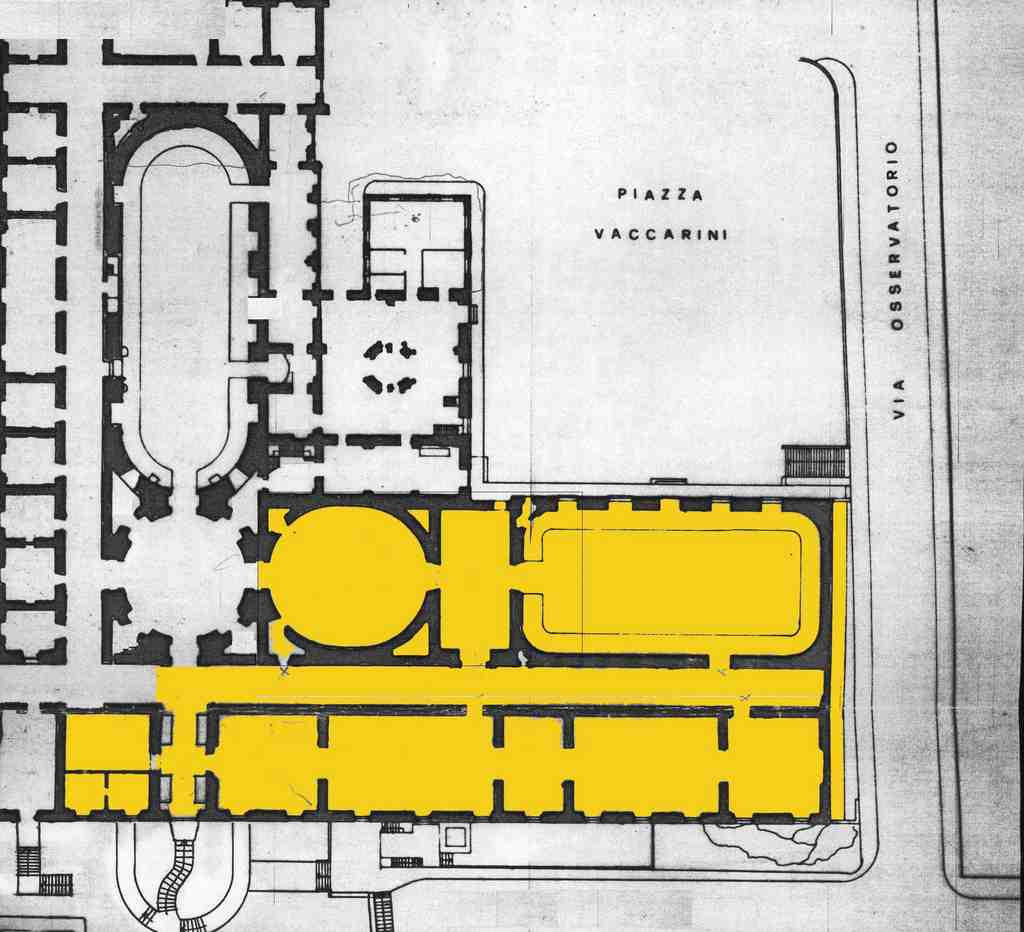
The setting matters. These rooms were not chosen at random. The libraries occupy the old Benedictine book spaces themselves: the monastic library, the former museum rooms, the Sala Guttadauro, the little refectory known as the Rotunda Room, and even the Corridoio dell’Elefante, the Elephant Corridor. In other words, the city did not simply store books here. It inherited a habit of study that monks had been building for centuries.

That habit began in Catania around fifteen seventy-eight, when the Benedictines moved down from Nicolosi and brought their books with them. Then came the earthquake of sixteen ninety-three. Part of the collection vanished in the ruins. But only fifteen days later, the monks built a wooden shelter for the surviving books and for scholars who still needed a place to read. That tells you something important about this city: after catastrophe, people here do not merely rebuild walls. They rescue meaning.

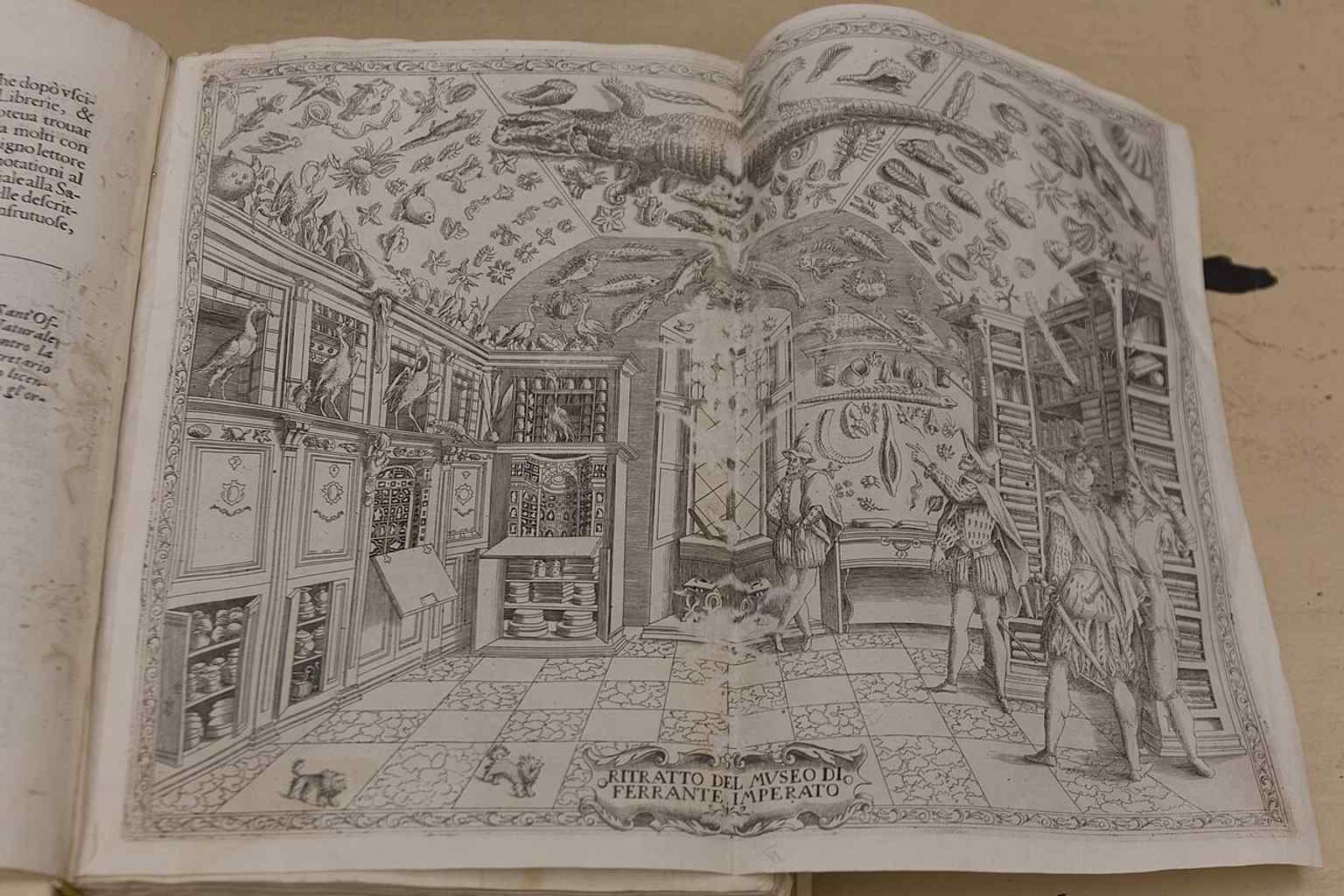
In the eighteenth century, the library flourished again. The monk Niccolò Riccioli e Paternò spent lavishly to furnish it and fill it with books. The prior Placido Scammacca went shopping in Rome for manuscripts, illuminated books, and incunabula, meaning books printed in the very earliest age of printing, before fifteen hundred and one. Among his finds was a Latin Bible from the thirteenth to fourteenth century, attributed to Pietro Cavallini, now counted among the most beautiful illuminated Bibles in the world. In the app, you can see the great Sala Vaccarini, the oval book hall that still preserves the monastery’s grandeur almost intact. Then came another rupture. In eighteen sixty-six, the new Italian state suppressed many religious houses and seized their property. The monastery ended, the last monks were turned out, and the books suffered damp and vandalism before the library revived in eighteen seventy-two as a civic institution. It absorbed not only the Benedictine collection, but thousands of volumes from other dissolved religious communities, and later the private library and memorabilia of the poet Mario Rapisardi, plus the immense Sicilian collection of Ursino Recupero.
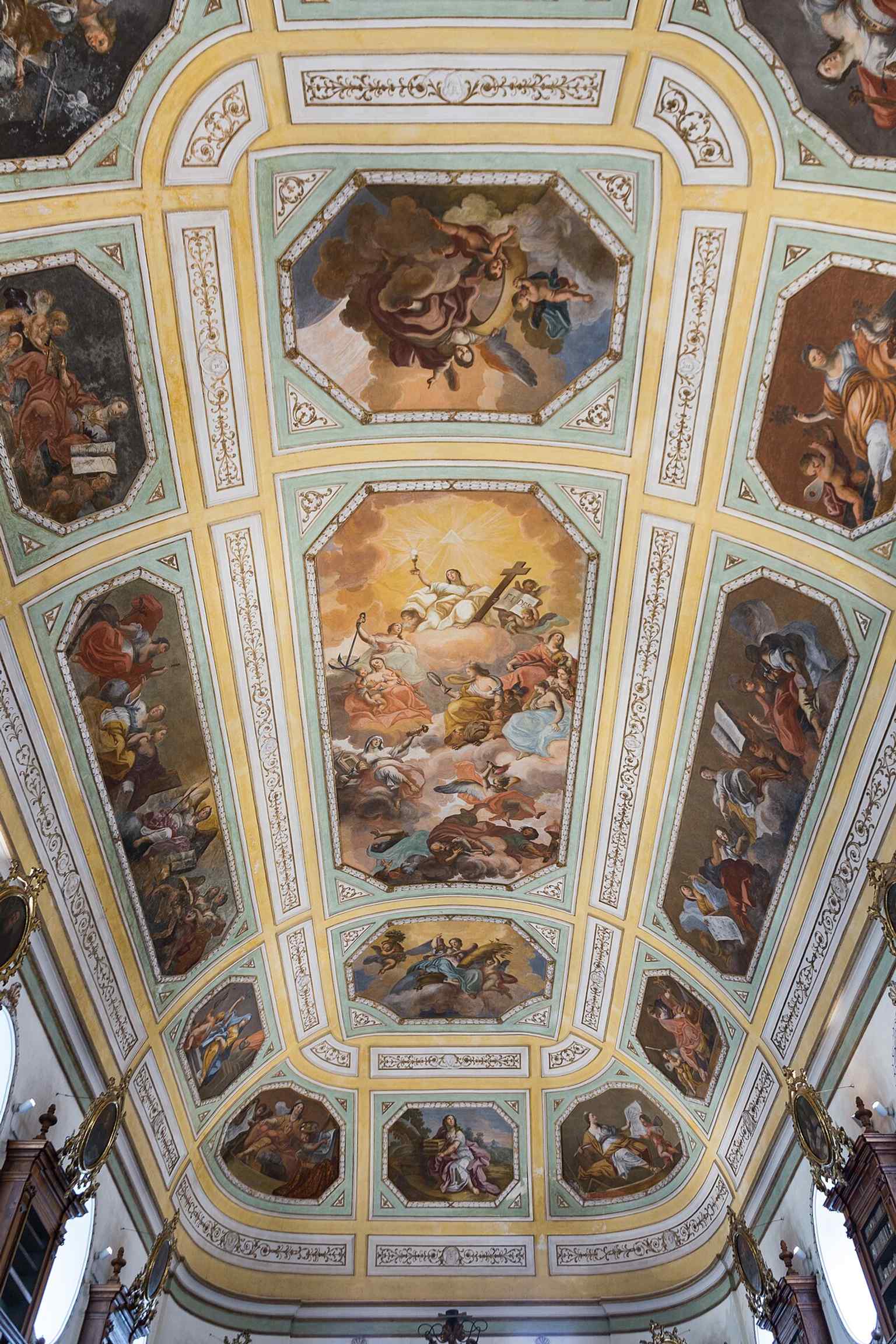
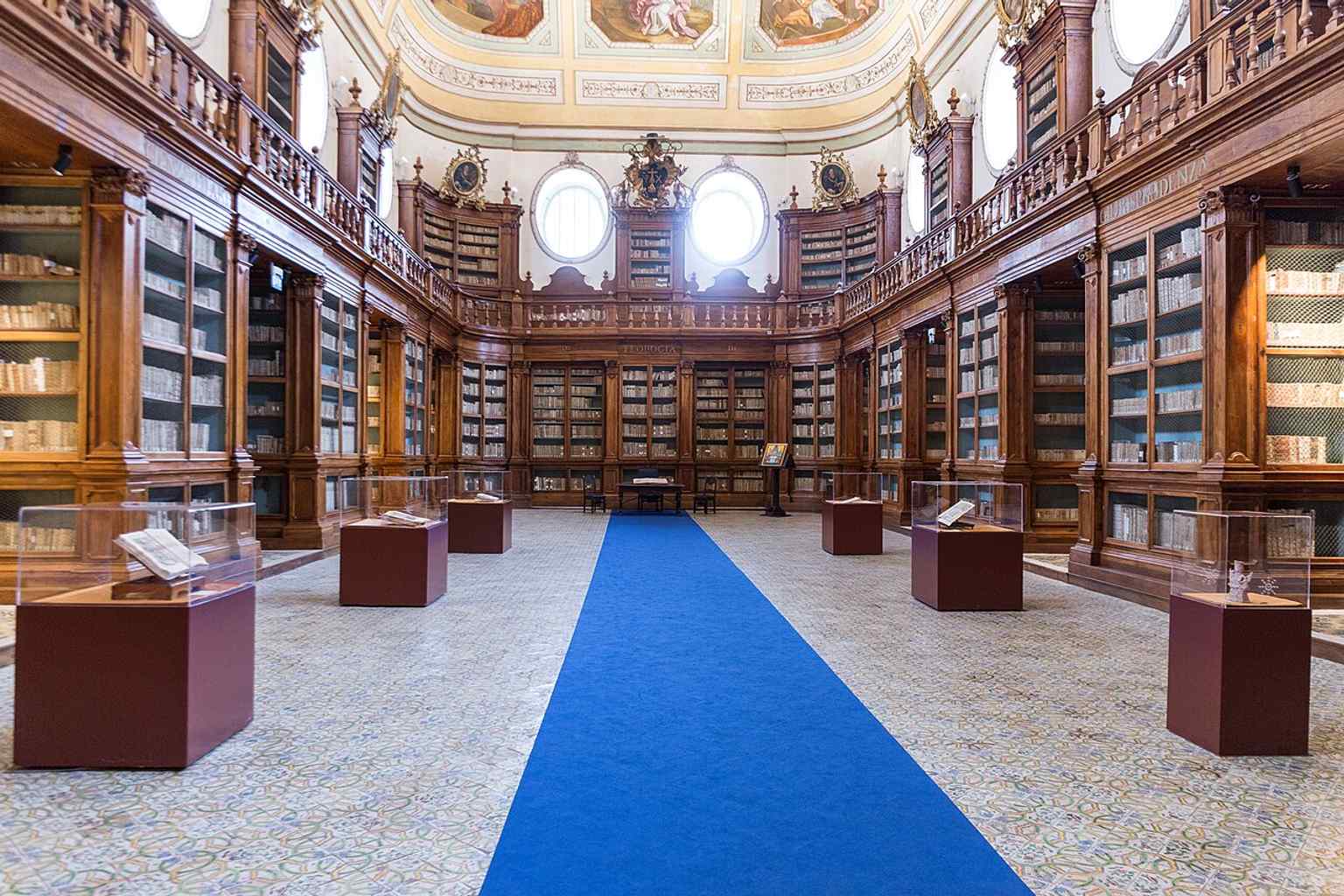
The oval Sala Vaccarini, the jewel of the library and one of the few 18th-century Catanese interiors preserved almost intact.
The oval Sala Vaccarini, the jewel of the library and one of the few 18th-century Catanese interiors preserved almost intact.Photo: Pymouss, Wikimedia Commons, CC BY 4.0. Cropped & resized.

One man here deserves to be remembered: Federico De Roberto. Appointed honorary librarian in eighteen ninety-three, he wrote pages of I Viceré at a donkey-back desk, a sloped writing desk still preserved inside. More importantly, he badgered the city authorities for funding and fought to reopen a library that had stayed shut for more than twenty years. The app image shows that desk too. And in our own time, Rita Angela Carbonaro carried that same stubborn devotion. When funding collapsed after two thousand and nine and staff disappeared, she remained for years as the library’s only employee and director, even working without salary rather than let a collection of more than two hundred and seventy thousand volumes fall silent.
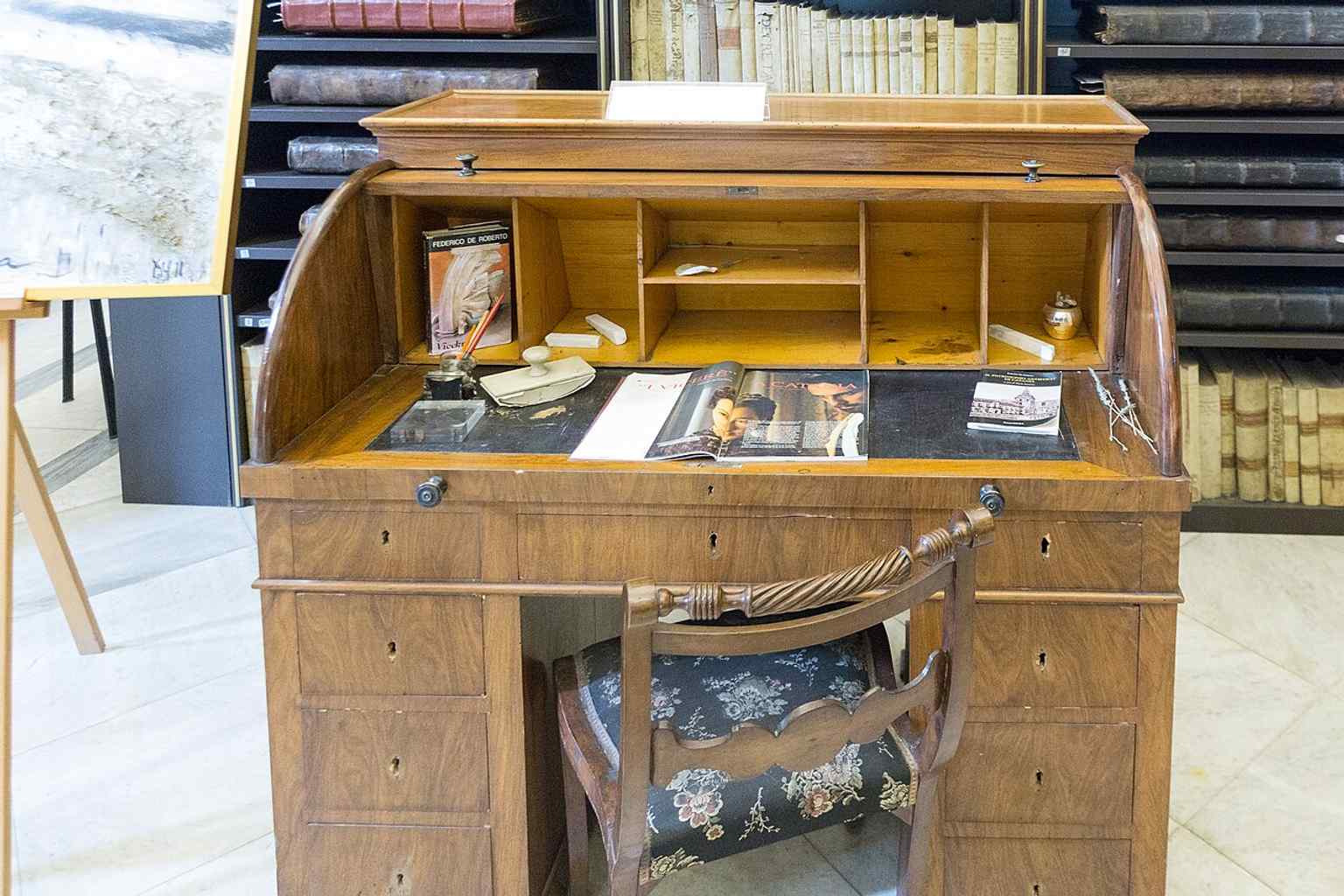
Federico De Roberto’s writing desk, a rare surviving object linked to the writer who served as honorary librarian here.
Federico De Roberto’s writing desk, a rare surviving object linked to the writer who served as honorary librarian here.Photo: Pymouss, Wikimedia Commons, CC BY 4.0. Cropped & resized.

We have spent this walk among lava stone, saints, theatres, baths, cloisters, and facades. Here, at the end, the deepest layer is neither buried nor displayed. It is indexed, shelved, and handed on. What began as fragments now reads as one long act of remembrance.

If you plan to come inside another day, the library normally opens Monday through Friday from nine in the morning until noon, and stays closed on Saturdays and Sundays.
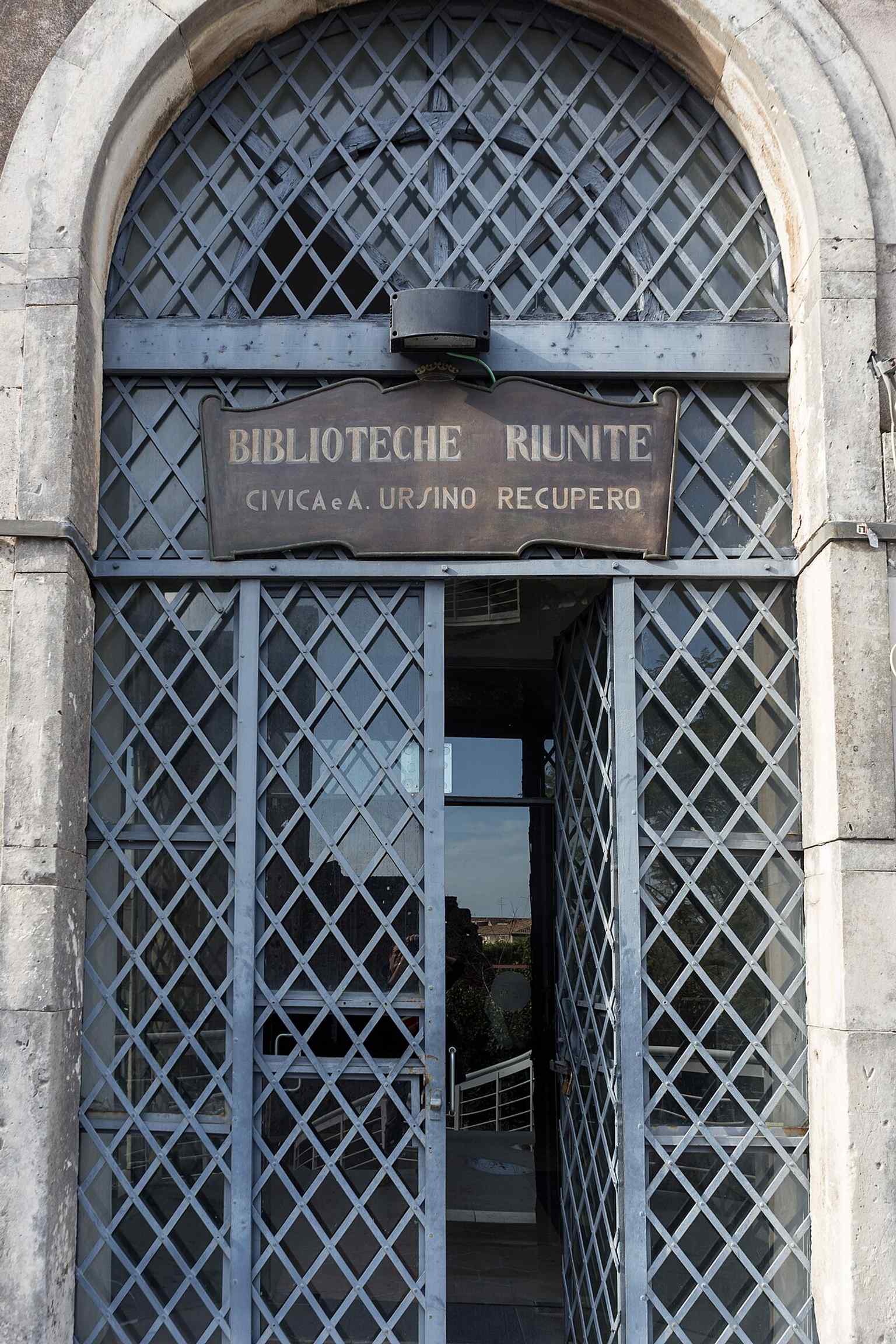
The library’s entrance in the old San Nicolò l’Arena monastery, where the Civica and Ursino Recupero collections were united in 1931.
The library’s entrance in the old San Nicolò l’Arena monastery, where the Civica and Ursino Recupero collections were united in 1931.Photo: Pymouss, Wikimedia Commons, CC BY 4.0. Cropped & resized.
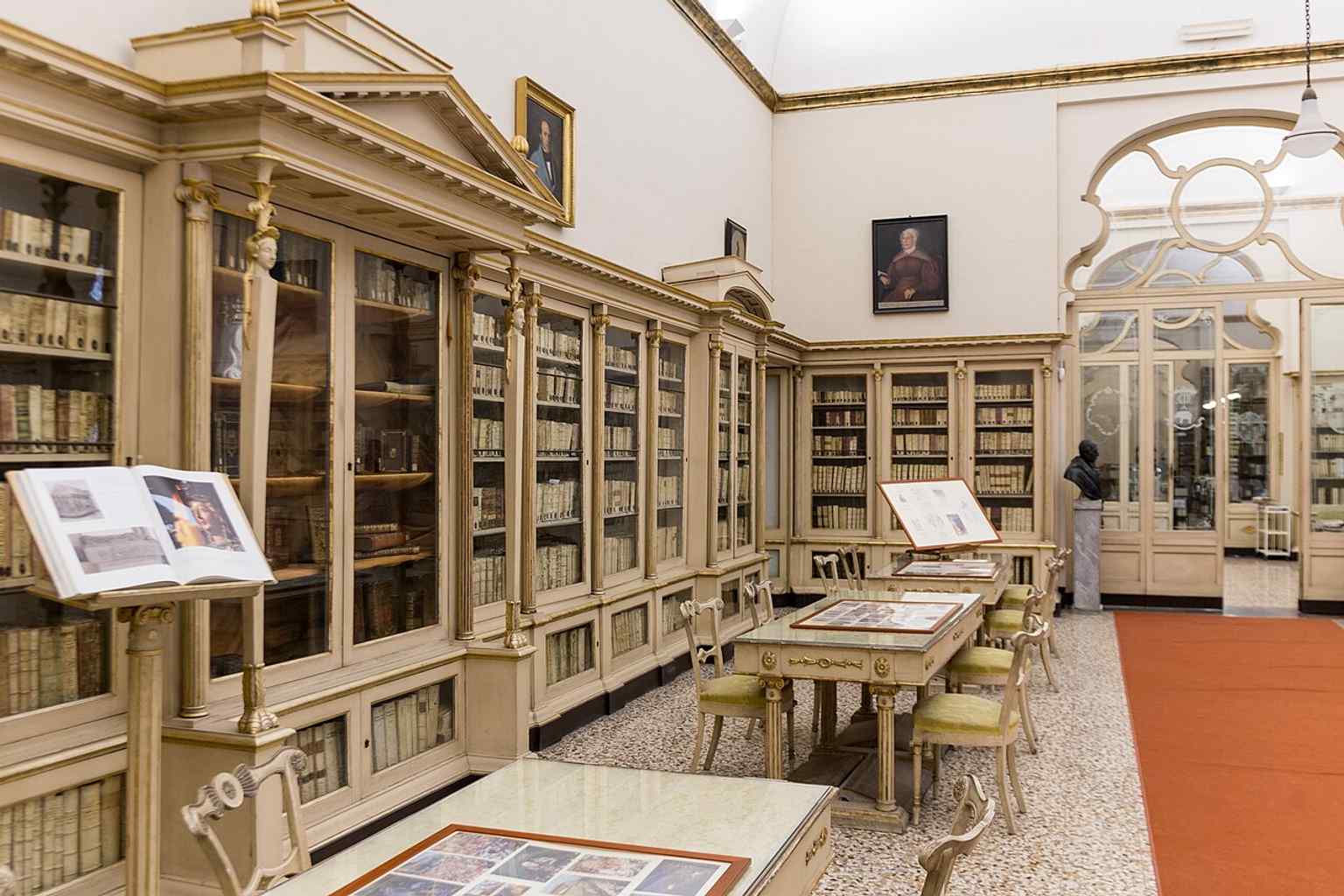
A broad reading room inside the historic monastic complex, showing how the collection now serves as a working public library.
A broad reading room inside the historic monastic complex, showing how the collection now serves as a working public library.Photo: Pymouss, Wikimedia Commons, CC BY 4.0. Cropped & resized.
A reading-room view with botanical material on display, echoing the monastery’s long interest in natural science and study.
A reading-room view with botanical material on display, echoing the monastery’s long interest in natural science and study.Photo: Pymouss, Wikimedia Commons, CC BY 4.0. Cropped & resized.
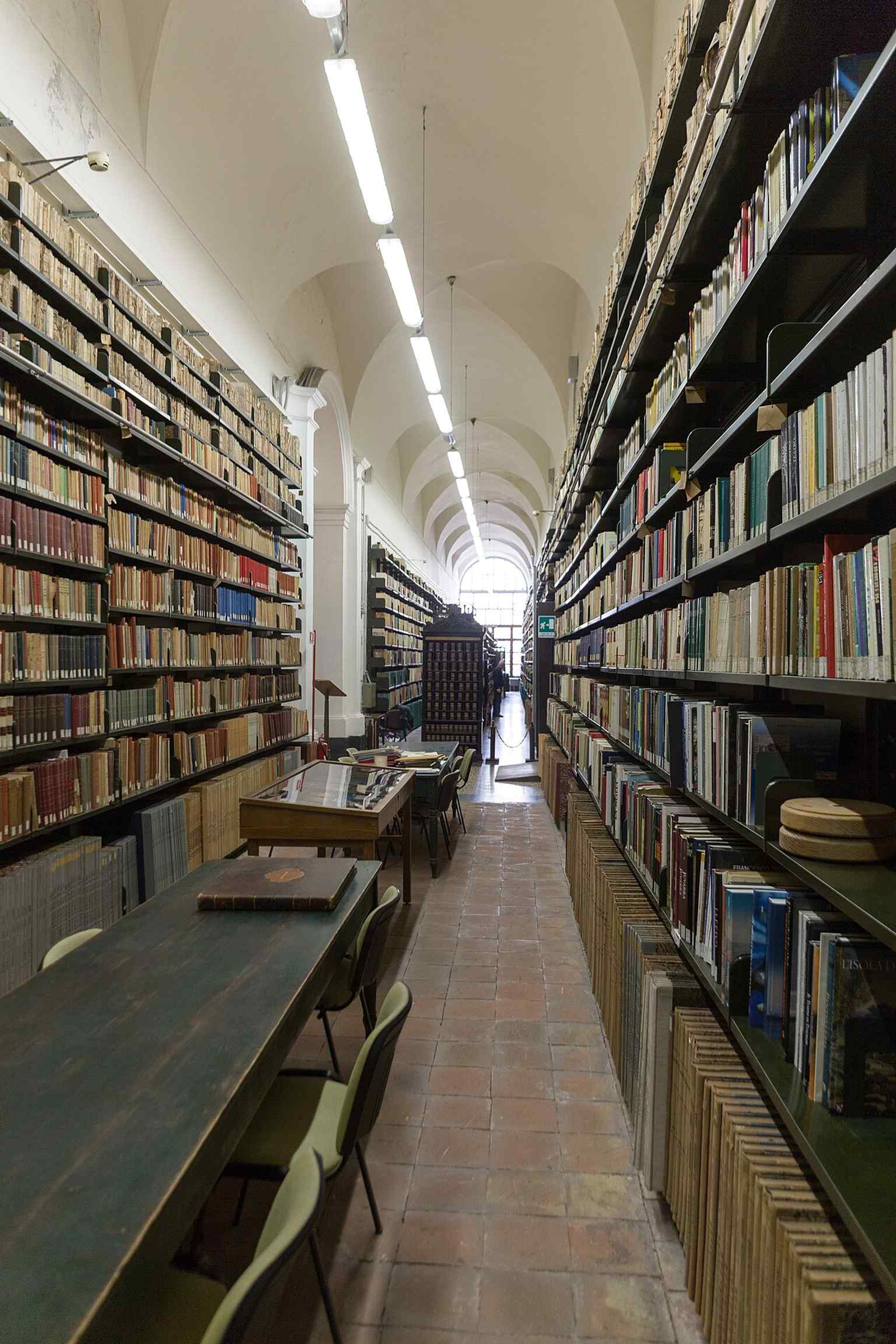
The Corridoio dell’Elefante, one of the named spaces occupied by the merged libraries within the former monastery.
The Corridoio dell’Elefante, one of the named spaces occupied by the merged libraries within the former monastery.Photo: Pymouss, Wikimedia Commons, CC BY 4.0. Cropped & resized.
Another angle on the Elephant Corridor, a distinctive passage in the north wing of the Benedictine complex.
Another angle on the Elephant Corridor, a distinctive passage in the north wing of the Benedictine complex.Photo: Pymouss, Wikimedia Commons, CC BY 4.0. Cropped & resized.
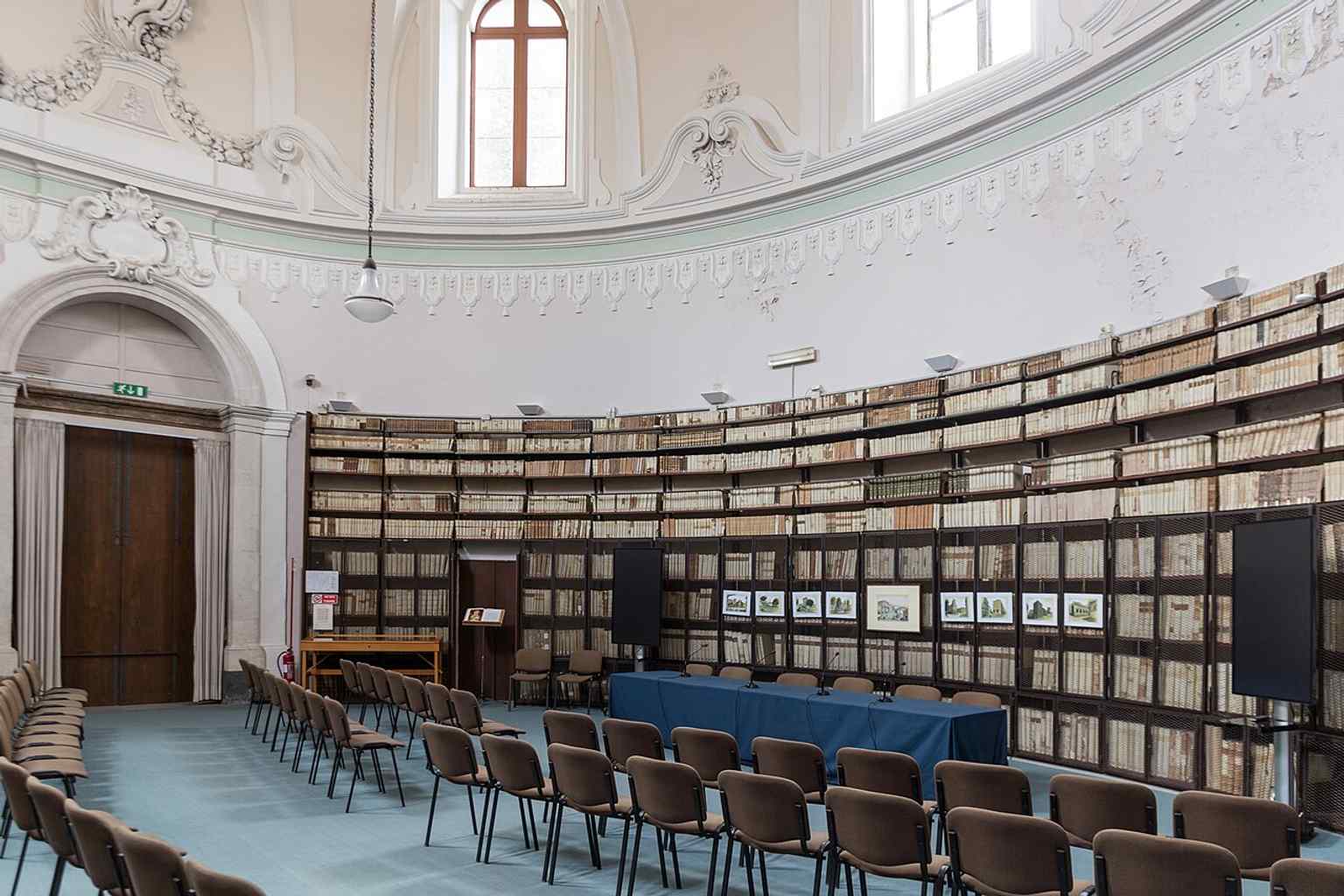
The small refectory, also called the Rotunda Room, one of the original monastic spaces now used by the libraries.
The small refectory, also called the Rotunda Room, one of the original monastic spaces now used by the libraries.Photo: Pymouss, Wikimedia Commons, CC BY 4.0. Cropped & resized.
Another view of Sala Vaccarini, with its continuous wooden shelves and the atmosphere of the former Benedictine book hall.
Another view of Sala Vaccarini, with its continuous wooden shelves and the atmosphere of the former Benedictine book hall.Photo: Pymouss, Wikimedia Commons, CC BY 4.0. Cropped & resized.
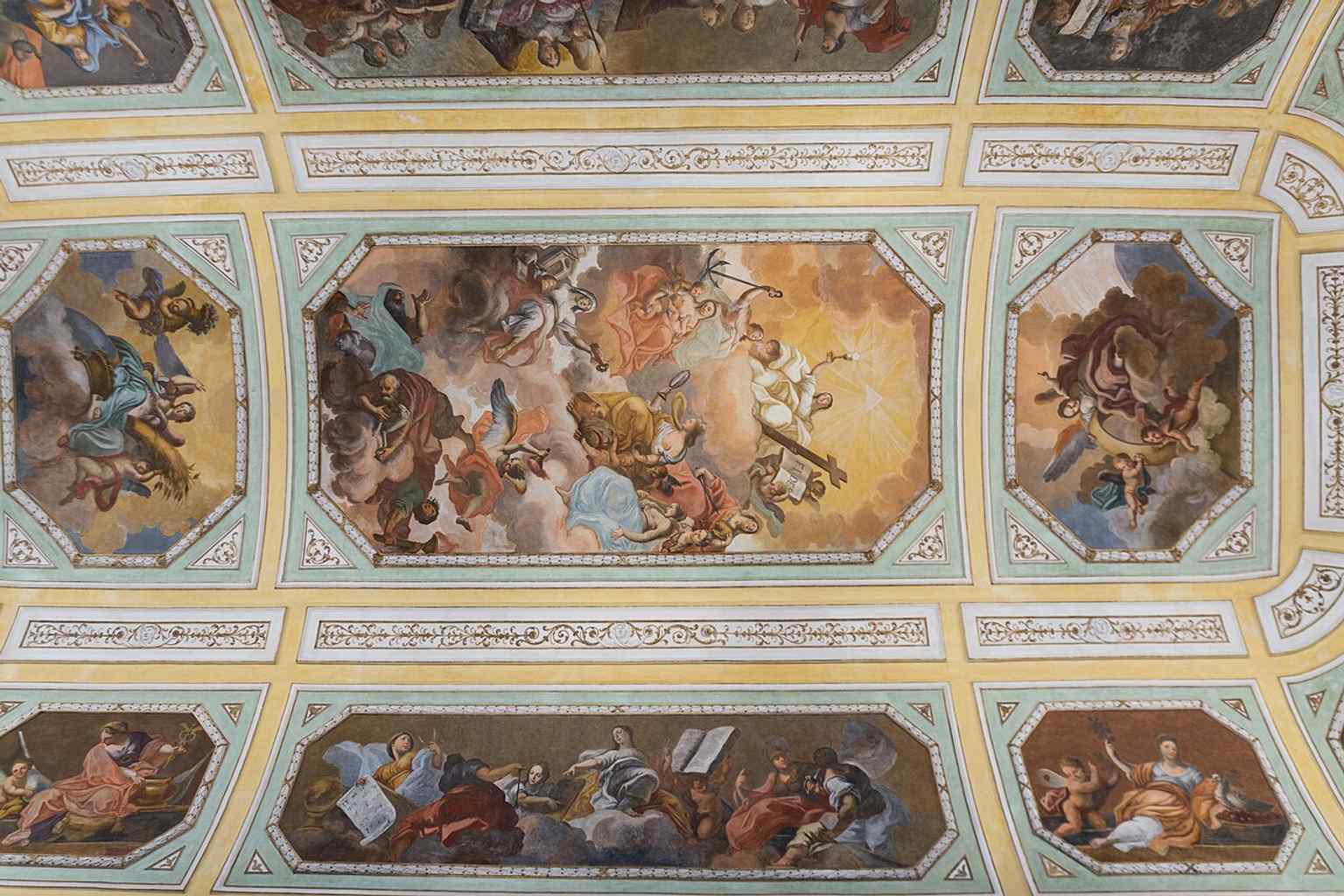
The decorated book hall in Sala Vaccarini, recalling the rare and precious volumes once gathered by the Benedictines.
The decorated book hall in Sala Vaccarini, recalling the rare and precious volumes once gathered by the Benedictines.Photo: Pymouss, Wikimedia Commons, CC BY 4.0. Cropped & resized.
A wider look across Sala Vaccarini, where the original monastic library architecture still frames the collections.
A wider look across Sala Vaccarini, where the original monastic library architecture still frames the collections.Photo: Pymouss, Wikimedia Commons, CC BY 4.0. Cropped & resized.
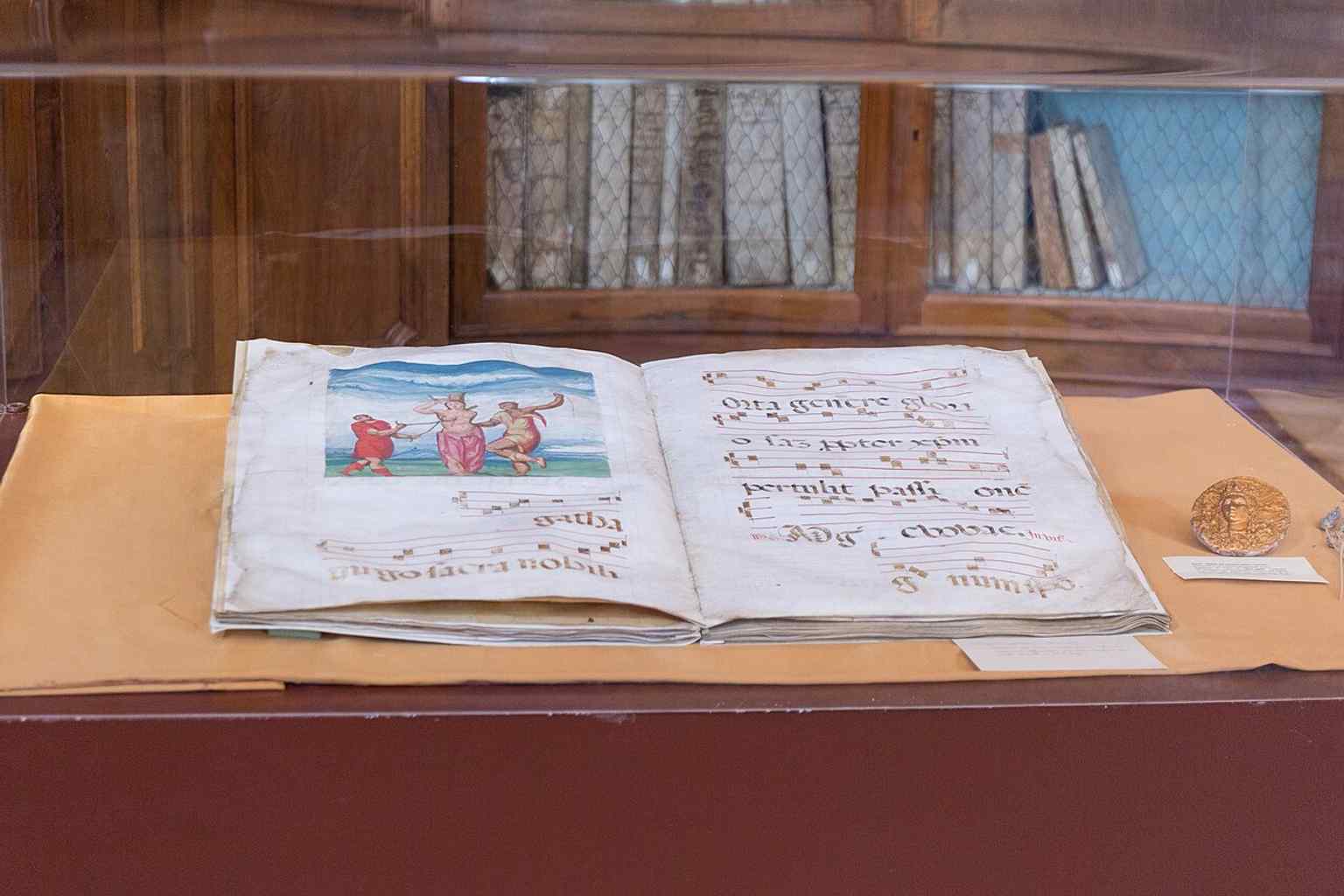
The richly furnished Sala Vaccarini, reflecting the library’s role as a guardian of manuscripts, incunabula, and rare editions.
The richly furnished Sala Vaccarini, reflecting the library’s role as a guardian of manuscripts, incunabula, and rare editions.Photo: Pymouss, Wikimedia Commons, CC BY 4.0. Cropped & resized.
arrow_back Back to Catania Audio Tour: Echoes of Empires and Baroque Splendor
Loved by travellers

Thousands of tours started.
Plenty of opinions.

4.8 across the App Store and Google Play. Here's a few we keep coming back to.

starstarstarstarstar
This was a solid way to get to know Brighton without feeling like a tourist. The narration had depth and context, but didn't overdo it.
Christoph
Christoph
Brighton Tour
starstarstarstarstar
Started this tour with a croissant in one hand and zero expectations. The app just vibes with you, no pressure, just you, your headphones, and some cool stories.
download Get the app

Pop your headphones in.
Step outside.

Free to download. Tours in every city. Start in 60 seconds — no account, no card.

Download on the App StoreGet it on Google Play
starstarstarstarstar_half
4.8
AudaTours app icon
headphones
~ 4 min until your first tour starts
public
1,000+ cities worldwide
all_inclusive
AudaTours
Unlimited

Every tour. Every city. One subscription.

3101 tours2271 cities138 countries50+ languages