
Cagliari Audio Tour: Echoes of Empires & Sacred Streets
Beneath Cagliari’s sunlit facades lies a city of secrets where power, faith, and rebellion have collided for centuries. This self-guided audio tour reveals the hidden stories that ripple through long corridors and grand piazzas. Lose the crowds and unravel histories most visitors never hear. Who risked everything for a midnight escape inside the looming walls of Buoncammino Prison? What ancient rites echo behind the baroque altar of San Michele Church? And which scandalous decision in the Palazzo Civico shifted the fate of a city overnight? Move through shadowed corners and golden streets. Stand where defiant voices once echoed and forgotten intrigues changed Cagliari forever. Let the city’s past ignite the present beneath your feet. Begin now and pull back the layers of Cagliari. The untold stories are waiting.
Tour preview
About this tour
- scheduleDuration 40–60 minsGo at your own pace
- straighten4.6 km walking routeFollow the guided path
- location_on
- wifi_offWorks offlineDownload once, use anywhere
- all_inclusiveLifetime accessReplay anytime, forever
- location_onStarts at Church of Our Lady of Mount Carmel
Stops on this tour
Look ahead for a grand white stone building with twin octagonal towers, towering above the arcaded street of Via Roma-this is the Palazzo Civico, Cagliari’s impressive city…Read moreShow less
Look ahead for a grand white stone building with twin octagonal towers, towering above the arcaded street of Via Roma-this is the Palazzo Civico, Cagliari’s impressive city hall. Welcome to the Palazzo Civico, or as the locals sometimes call it, Palazzo Bacaredda-quite the tongue-twister, but trust me, it’s worth every syllable! Imagine yourself in the late 19th century: Cagliari’s city councilors are squeezed into their old offices atop the Castello, dreaming of something bigger and brighter. Under Mayor Ottone Bacaredda’s direction, they huddled in a smoky room on December 14, 1896, and finally agreed: it was time to move to a bold, new city hall down here on Via Roma, right across from the bustling harbor. You could almost hear a collective sigh of relief, or maybe the clinking of celebratory glasses. A national competition was launched and, after much drawing and debating, the winning design came from two ambitious northern architects, Crescentino Caselli and Annibale Rigotti-engineers who would go wild for what was then state-of-the-art: reinforced concrete floors, courtesy of a certain engineer Porcheddu (even back then, everyone loved a fancy foundation!). The foundation stone was laid with royal fanfare in 1899-King Umberto I and Queen Margherita themselves attended-even more excitement than when someone brings free gelato to the office. It took a few years-think “Italian time”-but when the Palazzo Civico was finally unveiled in 1907, everyone in Cagliari gasped at its gleaming limestone façade. Look up and spot those two tall, octagonal towers, rising thirty-eight meters, keeping an eye on the city like twin medieval guardians. Overhead, small obelisks perch on each edge, decorated at the base with sculpted heads of the famous “four Moors”-a symbol of Sardinia’s history. Lions and eagles in bronze stand watch, and on the golden-mosaic panels you’ll see allegories of Agriculture, Commerce, and Industry, like a dream team of economic superheroes! Step through those grand arches, and you’d enter a once-splendid courtyard, originally crowned with iron and glass-destroyed sadly during the bombings of 1943. Yes, the palazzo took some hard knocks in World War II. Picture shattered windows, the air thick with dust and hope, as the people of Cagliari patched it back together between 1946 and 1953. Inside, the council chambers are steeped in history and drama. There are enormous paintings by Filippo Figari-scenes of Sardinian and royal pageantry. The Mayor’s office even has a grand Flemish tapestry from 1620, and the Marriage Hall is dotted with local crafts and a beautiful mural on Sardinian weddings-if you ever want to get hitched with style, this is the place. One secret: among the displayed treasures is a centuries-old statue of Saint Augustine, which leaves its glass case once a year for a special parade. So as you stand before this fortress of civic pride, imagine the bustle of decisions, celebrations, and a few heated arguments echoing through its halls-this building is much more than stone and mortar; it’s the throbbing, ever-changing heart of Cagliari. If walls could talk, I’d bet this one would have some pretty juicy stories!
Open dedicated page →
Show 11 more stopsShow fewer stopsexpand_moreexpand_less
 5
5Chiesa di Santa Chiara
Buy tour to unlock all 18 tracksTo spot the Church of Santa Chiara, look up the short steps in front of you for a pale baroque facade with a double-curved top edge, two rectangular windows, a simple stone…Read moreShow less
To spot the Church of Santa Chiara, look up the short steps in front of you for a pale baroque facade with a double-curved top edge, two rectangular windows, a simple stone portal, and a pair of leafless trees stretching their branches beside a high iron fence. Now, let’s take a little stroll back in time! Imagine the clatter of footsteps echoing on these old stones as you stand in Stampace, just steps from the heart of Cagliari. The Church of Santa Chiara in front of you might look quiet today, but centuries ago it was alive with whispers and laughter from a bustling community of Clarisse nuns. Founded between the end of the 1200s and the beginning of the 1300s, both the church-originally dedicated to Saint Margaret-and its neighboring monastery sheltered nuns for over 600 years. One can almost hear their prayers drifting through the air, mixing with the city’s daily life. But, as in any good story, peace was interrupted. In 1943, the bombs of World War II thundered over Cagliari, shattering this sacred ground. The monastery was so badly damaged it had to be torn down, leaving only a few stubborn ruins as ghosts of the past. In a twist worthy of any Italian drama, part of the monastery’s ruins became a lively market in the 1950s-and it’s still busy with shoppers today! The church you see was rebuilt in the late 1600s with a baroque style and stands on a little square, its entrance marked by a decorative portal, a tiny niche, and two watchful windows above-if only windows could talk! Peer around and you’ll spot a bell gable and, nearby, a modern elevator, giving people a vertical shortcut and sparing them the 98 steps up Santa Chiara. Inside, there’s a golden altarpiece and a hidden crypt beneath your feet with medieval secrets and ancient graves. So, what’s harder, keeping a secret for centuries underground, or walking all those 98 steps? At least with this tour, you won’t break a sweat!
Open dedicated page → 7
7Chiesa di San Michele
Buy tour to unlock all 18 tracksTo spot the Church of San Michele, just look up ahead and you’ll see a striking Baroque façade with three grand arches, richly decorated columns, and colorful flags fluttering…Read moreShow less
To spot the Church of San Michele, just look up ahead and you’ll see a striking Baroque façade with three grand arches, richly decorated columns, and colorful flags fluttering above-plus, don’t miss the distinctive octagonal dome over to the right! You’ve arrived at one of Cagliari’s most extraordinary landmarks-imagine, right where you’re standing, centuries of intrigue, devotion, and a little bit of drama have unfolded. The air still seems to buzz with stories. Close your eyes for a second and you might almost hear the bustling city of centuries past: footsteps echoing on stone, the distant ring of church bells, whispers of Jesuit priests in bustling robes. Back in the 1500s, the Jesuits swept into Cagliari like spiritual superheroes, setting up schools and dreaming of big things. But by the late 16th century, their first hideout felt more like a cramped broom closet-so, thank heavens for Monsignor Giovanni Sanna! Thanks to his generous donation, they could build a grand new novitiate right here, squeezed between the old city walls and the looming Torre dello Sperone. Construction became something of an adventure: first, there were not enough rooms, then a series of benefactors stepped up to fund chapels, new wings, and finally, the dazzling Baroque church you see now. Work started in 1687 and finished ten whirlwind years later. They didn’t stop, of course-over the next decades, skilled hands kept carving, painting, and polishing, turning San Michele into a sparkling jewel-box brimming with art and marble. If you peek at the façade, you’ll spot not only classical columns and arches, but three shiny coats-of-arms: in the middle the Jesuit “IHS” monogram (you’ll see it repeated everywhere inside-almost as if the Jesuits didn’t want anyone to forget where they worked!), with Sanna’s own wild boar crest to one side, and the whimsical shield of Francesco Angelo Dessì-a goose, crowns, hearts, and more-on the other. Legend has it that one of the grandest pulpits ever-which still stands nearby-was once used by Emperor Charles V himself. If you listen closely, maybe you’ll catch the faint echo of royal prayers mingling with the voices of countless worshippers. Now, picture stepping through those giant arches into an atrium that once welcomed not only priests and novices, but later, soldiers: after the Jesuits were temporarily banned in the late 1700s, the whole novitiate became a military hospital-a transformation that left secret traces inside, like old slate portals topped with the ever-present IHS. Then, of course, there’s the church’s octagonal dome-a nod to the “eighth day” of Catholic teaching, symbolizing eternal renewal. As you approach the sanctuary, your voice might bounce among the rich colored marble, lavish gold, and over two dozen swirling columns. The chapels circle around like a protective embrace, each bursting with paintings and statues: saints like Ignatius of Loyola and Francis Xavier, and masterpieces by Giacomo Altomonte, the master of Sardinian Rococo (who, fun fact, always signed his works “Romanus,” just to keep people guessing). Inside, you will find an irresistible blend of movement and grandeur: gleaming marble, ceiling frescoes, and an altar where the polychrome statue of Saint Michael stands triumphant, his curly hair and gold decoration the envy of every angel in the city. But it’s not all peace and piety-the area saw its share of fiery uprisings. During the 19th century, Jesuits were kicked out by angry crowds, secret archives were burned, and the novitiate was seized by the state. Yet, through all this, traces of the old Jesuit world survive-hidden doorways, lingering symbols, and a sense that every stone remembers. So while San Michele’s façade might seem quiet now, it thrums with a history of hope, faith, music, and mischief. Next time you pass, imagine those swirling capes, the flash of a bishop’s ring, or the silent gaze of Saint Michael surveying all of Cagliari from his marble pedestal. Onward to our next stop-history waits for no one! Interested in a deeper dive into the architecture and works of art, the church hall or the the anti-sacristy? Join me in the chat section for an insightful conversation.
Open dedicated page →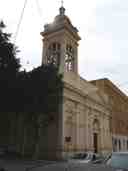 8
8Church of the Santissima Annunziata
Buy tour to unlock all 18 tracksTo spot the Church of the Santissima Annunziata, look for a light-colored neoclassical facade with tall columns and a striking bell tower topped by a small dome, right where Corso…Read moreShow less
To spot the Church of the Santissima Annunziata, look for a light-colored neoclassical facade with tall columns and a striking bell tower topped by a small dome, right where Corso Vittorio Emanuele meets Viale Merello-if you see a building that looks ready to ring in both saints and emergencies (thanks to the nearby police station), you’ve found it! Now, imagine yourself standing here, where history has swept through like a strong Sardinian wind. If you traveled back in time to the 1600s, you’d find a humble country chapel sitting quietly at this very spot-until a furious storm in 1643 tore it down, leaving just memories and soggy priests behind. But the story didn’t end there; no, like any good Sardinian, this place had resilience. The church rose from the ruins, rebuilt by a group of determined priests known as the Piarists, who filled it with new life, learning, and the sweet scent of candles. On March 25, 1645, the church was dedicated to the Virgin Annunciata, marking a fresh start and drawing in worshippers from all over Cagliari. The biggest attraction? An impressive painting of the Annunciation, said to perform miracles! So many people came to see it that they had to build its own special “super chapel” just to fit everyone-and probably to keep the line down to a manageable level. The church thrived, but life here was not just singing and incense. In the 1800s, the church closed, and the adjacent convent took on a tougher job as a police barracks-if these walls could talk, they’d have tales of prayers and police whistles! In 1911, the Franciscan friars took over, giving the church yet another twist. Soon after, a grand new facade and bell tower were built, bringing some neoclassical pizzazz to the neighborhood. Step inside and imagine the 1920s, when the interior sparkled with fresh stucco, detailed frescoes, and the echo of hymns. That beauty was nearly lost in the 1980s, when moisture damage forced a long closure-think of it as the building taking a much-needed spa break. Ever since, restorations have kept it standing, though some treasures were sadly lost over time. Despite storms, soldiers, and the occasional stubborn leak, this church remains a living symbol of survival and faith. The Annunziata is a place where history never quite leaves, and there’s always a story waiting behind every stone. Not bad for a place that started out as just a little country chapel in a storm.
Open dedicated page →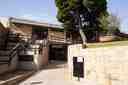 11
11National Archaeological Museum of Cagliari
Buy tour to unlock all 18 tracksTo spot the National Archaeological Museum of Cagliari, look up the wide set of stairs framed by black railings, leading beneath a canopy of pine trees to a modern building with…Read moreShow less
To spot the National Archaeological Museum of Cagliari, look up the wide set of stairs framed by black railings, leading beneath a canopy of pine trees to a modern building with large stone walls and big windows. Now, imagine you’re standing in front of the gateway to Sardinia’s treasure chest of secrets! The National Archaeological Museum of Cagliari might look modern, nestled serenely among the pine trees, but inside, you’ll find thousands of years packed into four stories of surprises. This museum is the jewel box of Sardinia-if Indiana Jones ever retired, he’d do it here. Let’s rewind to the year 1800. Picture a fancy room in the Viceroy’s palace, lined with shelves groaning under the weight of shiny stones, ancient tools, and maybe the odd dinosaur bone-because who was really keeping track? The museum started as a cabinet of curiosities, where viceroys, knights, and collectors competed to see who could bring home the oddest artifact. Within a few years, the collection grew so wild, it was gifted to the University of Cagliari, which probably said, “Thanks, but where do we put this mummified lizard?” By 1857, they were expanding rooms and carving out new sections, dividing everything from Roman statues to glimmering minerals. As decades passed, the collection grew like a Sardinian sunflower, thanks to passionate donors and thrilling archaeological digs. Important families and adventurous explorers added treasures, and the poor staff were always negotiating for more space. Imagine this: in 1904, after years crammed in various buildings, the museum finally got its own custom-designed home, complete with Roman gardens and enough rooms to get lost in-pardon the pun, but even the statues got their own gallery. In 1993, the treasures moved one last time to this very spot, with halls dedicated to prehistoric axes, mysterious Punic masks, shining Roman coins, and even the ghosts-er, memories-of the ancient Tophet of Tharros. Each floor is like turning the page of an epic book, from the Neolithic age to the Byzantine era. If you hear the faint whispers of the past, don’t worry-it’s probably just the statues comparing notes. And if you’re curious about Sardinia’s most famous giants, head up to the fourth floor: since 2014, the giant statues of Mont’e Prama have been standing guard over the secrets of this magical island.
Open dedicated page → 13
13National Pinacotheca of Cagliari
Buy tour to unlock all 18 tracksThe story begins right after 1866, when new laws meant many church treasures flowed into the State’s collection-imagine monks reluctantly waving goodbye to their precious…Read moreShow less
The story begins right after 1866, when new laws meant many church treasures flowed into the State’s collection-imagine monks reluctantly waving goodbye to their precious altarpieces! These masterpieces needed a home, so by the late 1800s, they were displayed in the grand Palazzo delle Seziate. But since 1992, they’ve found their perfect stage here, winding around the old Spanish walls that have seen as much drama as an opera. Inside, you’ll find astounding art from the 1400s all the way to the present. The real show-stoppers? Huge ‘retabli’-that’s a fancy word for enormous, multi-paneled altarpieces, sculpted and painted with loving detail. Many came from the sadly demolished San Francesco di Stampace church. Highlights include Juan Mates’s vibrant Annunciation, Juan Barcelo’s Visitazione, and so many golden wooden arches you’d think you’d stumbled into a gilded forest. Go down a level, and you’re face to face with seventeenth-century works from masters like Domenico Fiasella. And then further down-just when you thought you’d reached rock bottom!-you get scenes from everyday Sardinian life in the 1800s and 1900s: farmers, landscapes, portraits of grumpy old men (or is that just me before my morning coffee?). Don’t miss the temporary ethnographic displays: suitcases stuffed with glittering gold and silver jewels, trays of Spanish-Arab ceramics, and old weapons sharp enough to make any visiting knight nervous. There’s even a quirky twelfth-century Islamic bronze aquamanile, an ancient bronze vessel, with a long-lost twin over in the Louvre. And if you spot a ‘spuligadentes’-a very traditional Sardinian toothpick-just remember, not all museum pieces are meant for testing your lunch. Step inside, and let history’s brushstrokes sweep you away. I promise, it's far from your average rainy day art museum!
Open dedicated page →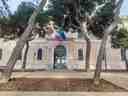 14
14Buoncammino Prison
Buy tour to unlock all 18 tracksAhead of you rises a long, pale stone building on a gentle hill, with a pair of flags flapping above its arched main entrance-look for tall pine trees lining the path and the…Read moreShow less
Ahead of you rises a long, pale stone building on a gentle hill, with a pair of flags flapping above its arched main entrance-look for tall pine trees lining the path and the symmetrical rows of green shutters framing prison windows. Welcome to Buoncammino Prison-the “giant on the hill” that once loomed over Cagliari’s lives, both outside and inside these stout limestone walls! Take a moment to feel yourself standing on one of the city’s ancient hills, known as Colle di San Lorenzo, where the air was once thick not just with pine resin but with secrets, stories, and no small amount of tension. Picture the late 1800s: Cagliari’s population swelling, cholera rumors swirling, and its old prisons-like the ones in the mighty towers of San Pancrazio and the feared Torre dell’Elefante-bursting at the seams. City leaders, desperate to prevent disease, voted to build a new, safer jail right here. By 1855, the first prisoners marched through Buoncammino’s doors, passing a stern military guardhouse, their eyes perhaps catching on the little Romanesque church that gave this hill its hopeful name-Our Lady of the Good Walk. (I suppose for prisoners, any “good walk” wasn’t far enough!) But nothing in Sardinia is ever simple or speedy. Through the endless dance of bureaucracy and debate, this “temporary” jail quietly became the city’s main pen, growing brick by brick for decades until, in 1897, it stretched across 15,000 square meters-Cagliari’s largest structure, more fortress than home. Hundreds moved here from the ancient Torre di San Pancrazio, closing that chapter of Sardinia’s sometimes grim penal history. If you’re wondering why nobody was ever able to escape (not even the most determined or imaginative inmates), you’ll spot the answer in the building’s design: octagonal keeps at each corner, tiny lookout slits, and labyrinth corridors all created a place so secure it inspired the city’s most chilling legend. They say that one of the original architects, stricken with guilt after a relative landed behind these bars, was told: “You were a monster, and you built a monster”-and so overcome with remorse, he ended his own life. That’s the kind of story that makes you shiver, even under the Sardinian sun! Buoncammino’s history is thick with little dramas and big changes. In the early days, hundreds were crammed in-sometimes over a thousand-surviving on just a bowl of soup and a chunk of bread. Girls were taught by nuns, boys by a kindly old inmate-turned-teacher, and the guards paced the wall day and night, rain or shine. When war thundered overhead in 1943, the inmates were rushed away to safer places, only to shuffle back the following year, their world still shaken. But change crept in, sometimes quietly, sometimes not. Prison directors, some colorful characters, pushed for better: classrooms, movies, new beds, hot water-Buoncammino even boasted showers and TV before most local homes! Yet, even as the world advanced, the ancient stones began to crumble and the number of incarcerated outgrew the corridors. By the end, over a century after its founding, life here could be harsh, lonely, and desperately overcrowded-so much so that, after more than 100 years, Buoncammino finally shut its gates in 2014 and sent its last residents to a new jail outside town. Today, Buoncammino is no longer a place of locked doors and heavy footsteps, but one of civic offices, its stories echoing silently through the high-arched halls. So as you take in those pale stones, try to imagine the swirl of lives, rumors, heartbreak, and hope that once filled this place-from desperate escapes foiled, to stirring student lessons, to the laughter of guards at changing shifts. Not one prisoner ever got out without permission-except, perhaps, their stories, which still drift on the Cagliari breeze!
Open dedicated page →
Frequently asked questions
How do I start the tour?
After purchase, download the AudaTours app and enter your redemption code. The tour will be ready to start immediately - just tap play and follow the GPS-guided route.
Do I need internet during the tour?
No! Download the tour before you start and enjoy it fully offline. Only the chat feature requires internet. We recommend downloading on WiFi to save mobile data.
Is this a guided group tour?
No - this is a self-guided audio tour. You explore independently at your own pace, with audio narration playing through your phone. No tour guide, no group, no schedule.
How long does the tour take?
Most tours take 60–90 minutes to complete, but you control the pace entirely. Pause, skip stops, or take breaks whenever you want.
What if I can't finish the tour today?
No problem! Tours have lifetime access. Pause and resume whenever you like - tomorrow, next week, or next year. Your progress is saved.
What languages are available?
All tours are available in 50+ languages. Select your preferred language when redeeming your code. Note: language cannot be changed after tour generation.
Where do I access the tour after purchase?
Download the free AudaTours app from the App Store or Google Play. Enter your redemption code (sent via email) and the tour will appear in your library, ready to download and start.
If you don't enjoy the tour, we'll refund your purchase. Contact us at [email protected]
Checkout securely with 


