
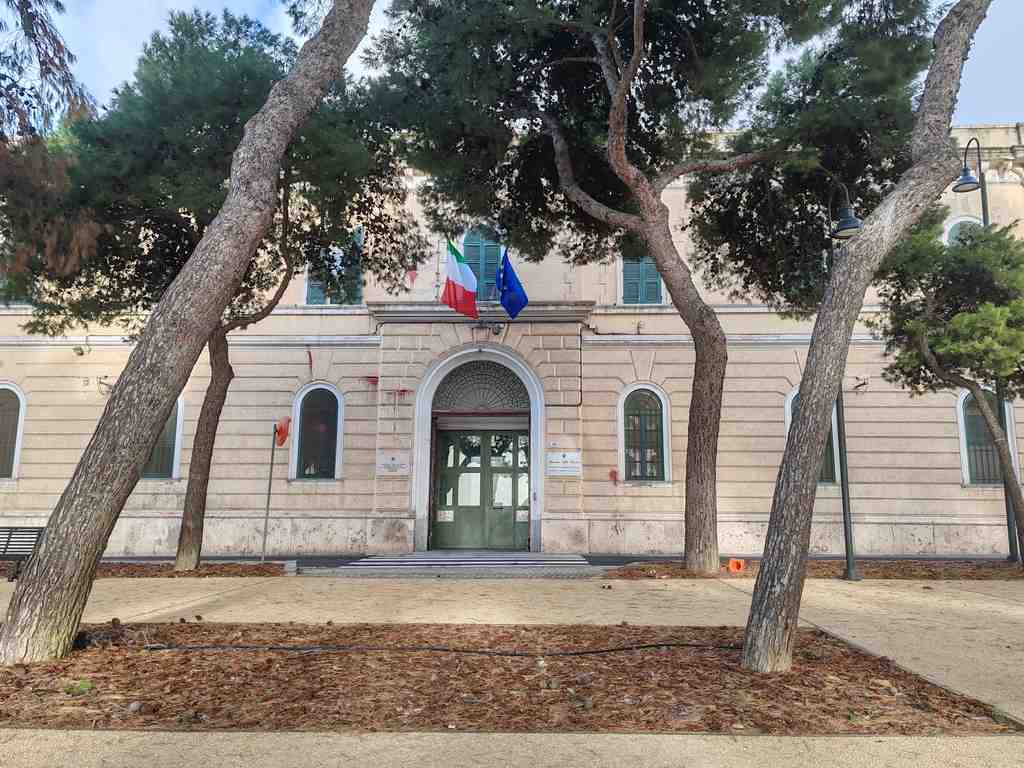
Ahead of you rises a long, pale stone building on a gentle hill, with a pair of flags flapping above its arched main entrance-look for tall pine trees lining the path and the symmetrical rows of green shutters framing prison windows.
Welcome to Buoncammino Prison-the “giant on the hill” that once loomed over Cagliari’s lives, both outside and inside these stout limestone walls! Take a moment to feel yourself standing on one of the city’s ancient hills, known as Colle di San Lorenzo, where the air was once thick not just with pine resin but with secrets, stories, and no small amount of tension.
Picture the late 1800s: Cagliari’s population swelling, cholera rumors swirling, and its old prisons-like the ones in the mighty towers of San Pancrazio and the feared Torre dell’Elefante-bursting at the seams. City leaders, desperate to prevent disease, voted to build a new, safer jail right here. By 1855, the first prisoners marched through Buoncammino’s doors, passing a stern military guardhouse, their eyes perhaps catching on the little Romanesque church that gave this hill its hopeful name-Our Lady of the Good Walk. (I suppose for prisoners, any “good walk” wasn’t far enough!)
But nothing in Sardinia is ever simple or speedy. Through the endless dance of bureaucracy and debate, this “temporary” jail quietly became the city’s main pen, growing brick by brick for decades until, in 1897, it stretched across 15,000 square meters-Cagliari’s largest structure, more fortress than home. Hundreds moved here from the ancient Torre di San Pancrazio, closing that chapter of Sardinia’s sometimes grim penal history.
If you’re wondering why nobody was ever able to escape (not even the most determined or imaginative inmates), you’ll spot the answer in the building’s design: octagonal keeps at each corner, tiny lookout slits, and labyrinth corridors all created a place so secure it inspired the city’s most chilling legend. They say that one of the original architects, stricken with guilt after a relative landed behind these bars, was told: “You were a monster, and you built a monster”-and so overcome with remorse, he ended his own life. That’s the kind of story that makes you shiver, even under the Sardinian sun!
Buoncammino’s history is thick with little dramas and big changes. In the early days, hundreds were crammed in-sometimes over a thousand-surviving on just a bowl of soup and a chunk of bread. Girls were taught by nuns, boys by a kindly old inmate-turned-teacher, and the guards paced the wall day and night, rain or shine. When war thundered overhead in 1943, the inmates were rushed away to safer places, only to shuffle back the following year, their world still shaken.
But change crept in, sometimes quietly, sometimes not. Prison directors, some colorful characters, pushed for better: classrooms, movies, new beds, hot water-Buoncammino even boasted showers and TV before most local homes! Yet, even as the world advanced, the ancient stones began to crumble and the number of incarcerated outgrew the corridors. By the end, over a century after its founding, life here could be harsh, lonely, and desperately overcrowded-so much so that, after more than 100 years, Buoncammino finally shut its gates in 2014 and sent its last residents to a new jail outside town.
Today, Buoncammino is no longer a place of locked doors and heavy footsteps, but one of civic offices, its stories echoing silently through the high-arched halls. So as you take in those pale stones, try to imagine the swirl of lives, rumors, heartbreak, and hope that once filled this place-from desperate escapes foiled, to stirring student lessons, to the laughter of guards at changing shifts. Not one prisoner ever got out without permission-except, perhaps, their stories, which still drift on the Cagliari breeze!




