
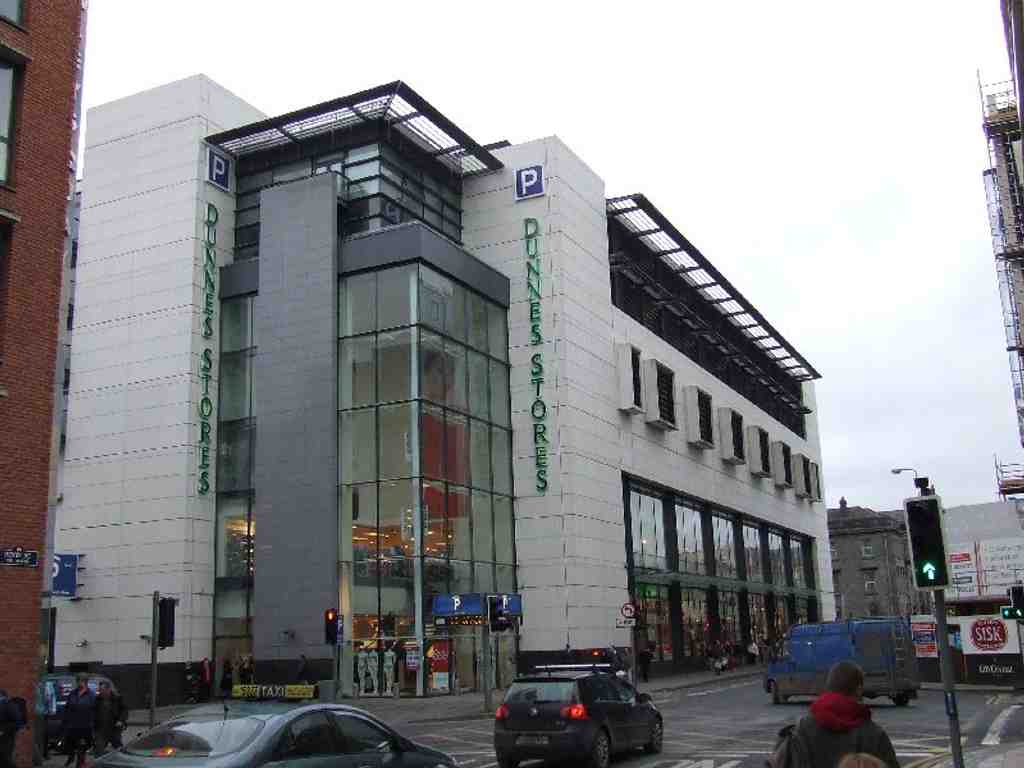
Look for a long, straight street framed by brick and stone facades, with the broad glazed frontage of Dunnes Stores as its most modern marker and the heavier ecclesiastical mass of the Franciscan church further along.
Henry Street may seem like a commercial corridor, but it has a habit of turning into a stage, then a ruin, then a stage again. In eighteen forty-eight, Joseph Fogerty fitted up a new theatre here for a Masonic ball. Later accounts claimed men tried to set it alight. That uneasy rhythm returned on the twenty-third of January, nineteen twenty-two, when the Theatre Royal on this street burned down.
And yet Henry Street kept performing. The Savoy opened here on the nineteenth of December, nineteen thirty-five. Fire tore through it in October nineteen forty-one. Then, improbably, it entered what many locals remember as a golden age under Tom English, who took charge in nineteen fifty-four at just twenty-two years old and ran the house for eight years. A street can teach you a city’s character that way: applause in one decade, ash in the next, then a queue forming all over again.
If you glance at the image on your screen, you can see one of Henry Street’s later acts of self-reinvention: the glazed Dunnes frontage that replaced the old Spaights site in two thousand and one. People had mocked Spaights as shabby and tacky; its replacement became a small declaration that the city intended to smarten its cuffs and carry on.
But Henry Street does not keep only commercial memory. It also keeps political memory at pavement level. A plaque marks the birthplace of Seán South, born here and later active in Clann na Poblachta, Sinn Féin, the Gaelic League and the Legion of Mary. So here, on one ordinary street, cinema glamour, fire, retail ambition and ideology all occupy the same address book.
Walk on toward O’Connell Street. There, these local dramas broaden into the city’s main public performance.




