
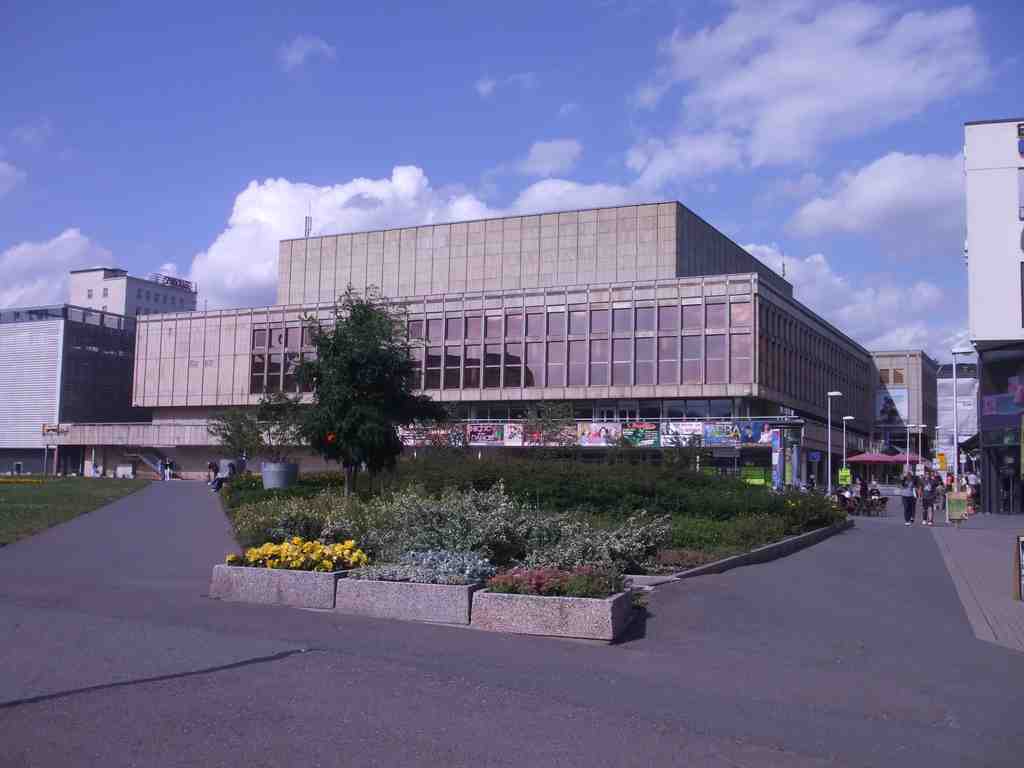
To spot the Culture and Congress Centre Gera, look straight ahead for a large, modern cube-like building with a pale stone facade and lots of rectangular windows stretching across its face.
Now that you’re standing in front of Gera’s Culture and Congress Centre-known locally as the KuK-take a moment to let your mind travel back to the final years of the 1970s. Picture the city buzzing with the energy of change, construction dust swirling around as workers brought this monument of East German modern architecture to life. The KuK rose from the ground like a giant block of possibilities, its design a statement of confidence by architects and city planners who wanted something bold, multi-functional, and oh yes-big enough to make even the loudest polka band sound good.
When it was completed in 1981, the grand opening was a showstopper itself, attended by party officials and beaming locals. Back then, people called it the “House of Culture”-the heart of socialist Gera, with a massive main hall able to seat 1,700 music lovers, hopeful dancers, or, every so often, political debates that could make your ears ring. As you look at that square facade, you might guess that the main hall would peek out somewhere, but here’s the genius-inside, the hall is set on a diagonal, thanks to architect Manfred Metzner, giving everyone an outstanding view and earful.
At first glance, it may not look flashy, but this building holds stories in each corner. Imagine dancers’ soft footsteps echoing through the halls or the chaos of comedians cracking up an audience. Peek through those windows and you might see banners hanging for a folk music festival, a car exhibition, or even a magician about to pull a rabbit from a hat. KuK wasn’t just for fun though-big political events happened here too, like the 2002 PDS party convention, where the arguments were probably as colorful as the 1970s carpeting.
Now, let’s slip back a few decades. Right inside the foyer, high above the crowds, stretches a massive limestone relief called “Song of Life.” This three-story masterpiece is one of the largest pieces of DDR-era public art-450 square meters! Imagine, 25 sculptors and one master stonemason all carving, hammering, and dreaming up 89 elements to make it come together. The lead artist, Jo Jastram, once even presented his work at the famous documenta in Kassel. You can almost hear the clink of chisels and the bustle of artists debating if that last bit of limestone really looks like a bird or just someone’s lunch.
While most visitors remember the sweeping acoustics-planned by Gisela Herzog, a true magician of sound-others talk about the old bowling alley, sadly gone before the new millennium. But the real magic is in the walls: the echoes of shows like the classic East German Christmas TV extravaganza “Between Breakfast and Roast Goose.” Picture happy families, glittering costumes, dancers’ can-can kicks and, if you listen carefully, maybe you’ll catch a faint chuckle from a joke that landed just right.
Oh, and the guests! Superstars like Frank Schöbel and even faraway legends: Harry Belafonte from the U.S. and Howard Carpendale from South Africa graced this stage. The house also kept its own troupes-youth ballet dancers and a sparkling amateur ensemble called “Brilliant”-who burst out onto television screens across East Germany.
The KuK wasn’t left behind as the years sped by. In 2006, a wave of renovations began, step by step, like a determined grandma spring-cleaning. The old, tired lighting was swapped out for a “rain of light,” designed by clever students from Bauhaus University. Now, those 160 special lights in the foyer make the whole place twinkle, much more energy efficient and, let’s face it, less likely to start a fire-always handy during a magic act.
And the future? There’s a big celebration on the horizon: in 2025, the KuK will host the national opening for the Day of Open Monuments. The city is already planning deeper renovations to ensure the KuK glows for its 50th birthday in 2031.
So, as you stand here, feel the thrum of old shows, art, and history in the air. Even if you can’t dance like the youth ballet, I promise the KuK will always let your imagination run wild-just mind your toes if there’s a polka night!
For further insights on the acoustics, architecture or the modernization, feel free to navigate to the chat section below and inquire.


