
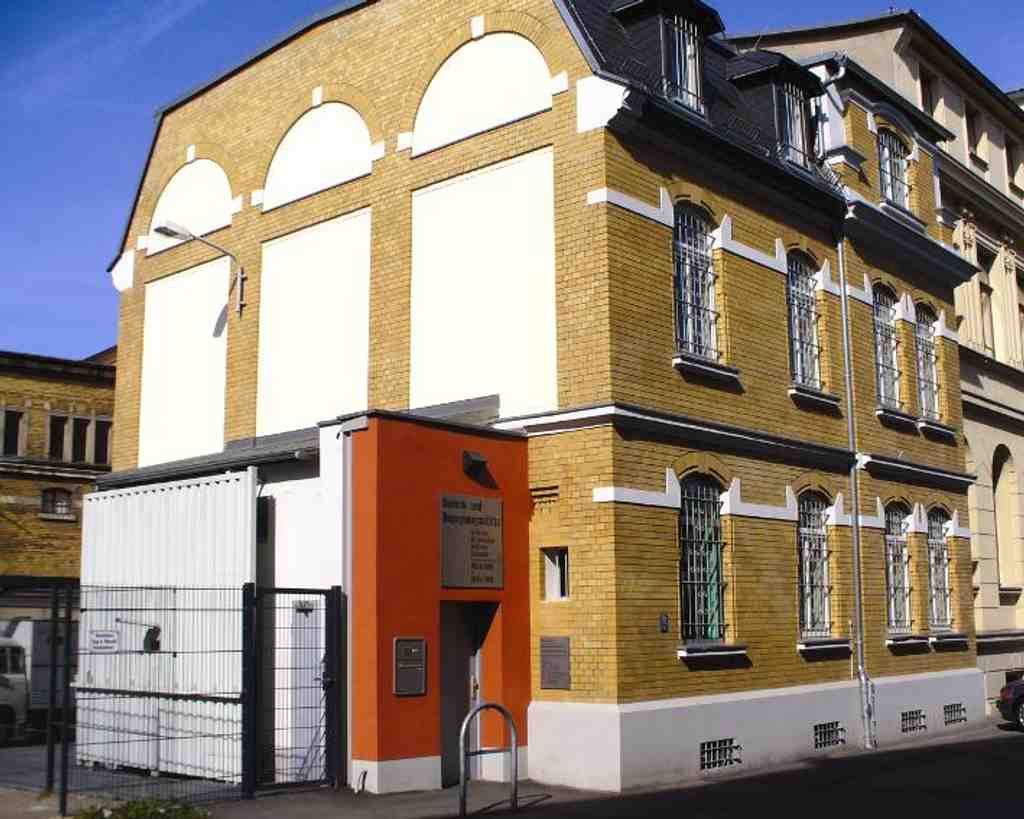
To spot the Amthor Passage Memorial, look for the yellow-brick building with white details and barred windows, right at the corner behind a metal gate and a small orange entryway-it's quite distinctive, so you can’t miss it!
As you stand here, close your eyes for a second and imagine the sounds of heavy iron doors echoing down these corridors, keys jingling at the waist of a guard--this building holds secrets from more than 100 years of Gera’s history.
You’re at the memorial for the Amthordurchgang, once a notorious prison, the yellow bricks you see were first laid way back in 1876. Local folks actually didn’t want a prison in the heart of their city-imagine dropping off bread nearby and thinking, “well, at least the neighbors are quiet… most of the time.” Early on, this place felt almost like a family operation; there were just three guards, their wives did the laundry and cooked meals for everyone inside. That sounds almost cozy-if you can ignore the barred windows and locks!
But as you walk closer, you’ll be able to sense the layers of history pressed into these old walls. The prison doubled in size in the late 19th century, then transformed into something much darker during Germany’s years under Nazi rule. From 1933 to 1945, this place became a holding center for the Gestapo, who used these cells not just for criminals, but for anyone they decided to call an enemy. Imagine the fear, the footsteps echoing at night, the sense that freedom was just yards-yet a whole world-away.
Then, just when you might think it couldn’t get any worse, after World War II the prison was handed over to new occupiers. One day in April 1945, Gera switched from American to Red Army control, and suddenly, this was a Soviet holding site. It was filled with people picked up for “political reasons,” or sometimes just because they owned property or had a certain job. They could wake up free in the morning and go to bed here at night, waiting in these cells, sometimes for years, sometimes marked for deportation or far worse.
Fast forward to the days of East Germany-now, the Ministry for State Security, the infamous Stasi, ran the show. Don’t make a joke about the government, and especially don’t plan on escaping over the border. Between 1952 and 1989, more than 2,800 people sat in these cells for their “crimes against the state”-from daring to criticize the ruling party to joining a peace rally.
And it wasn’t just anonymous prisoners-on a spring day in 1981, a young civil rights activist named Matthias Domaschk died here under mysterious circumstances, becoming a symbol for many, a reminder that not everyone who walked in those doors walked out again.
When the Berlin Wall fell and the old East German regime collapsed in 1989, the doors here finally swung open for good. The prison closed, and after years of debate-and more than a little drama about bulldozers-a dedicated team kept this site from disappearing entirely. The cells may be gone, but the administration building and gatehouse survived, thanks to the stubborn determination of people eager to make sure none of this gets forgotten.
You’ll find memories built right into this place: a staircase painted by artists, a memorial out front that plays tricks on your eyes-it looks like a moving silhouette as you walk by, a little wink from history to make sure you’re paying attention. Interactive exhibits bring you face-to-face with letters, newsreels and the stories of so many who passed through these doors.
Standing here now, remember-this isn’t just a memorial. It’s a meeting point between the past and present, a space to reflect on justice, freedom, and the value of every life. When you move on, maybe you’ll feel just a bit thankful for open doors and open streets. And hey, no barbed wire souvenir shopping, alright?
Let’s keep moving, the next stop is not far!


