
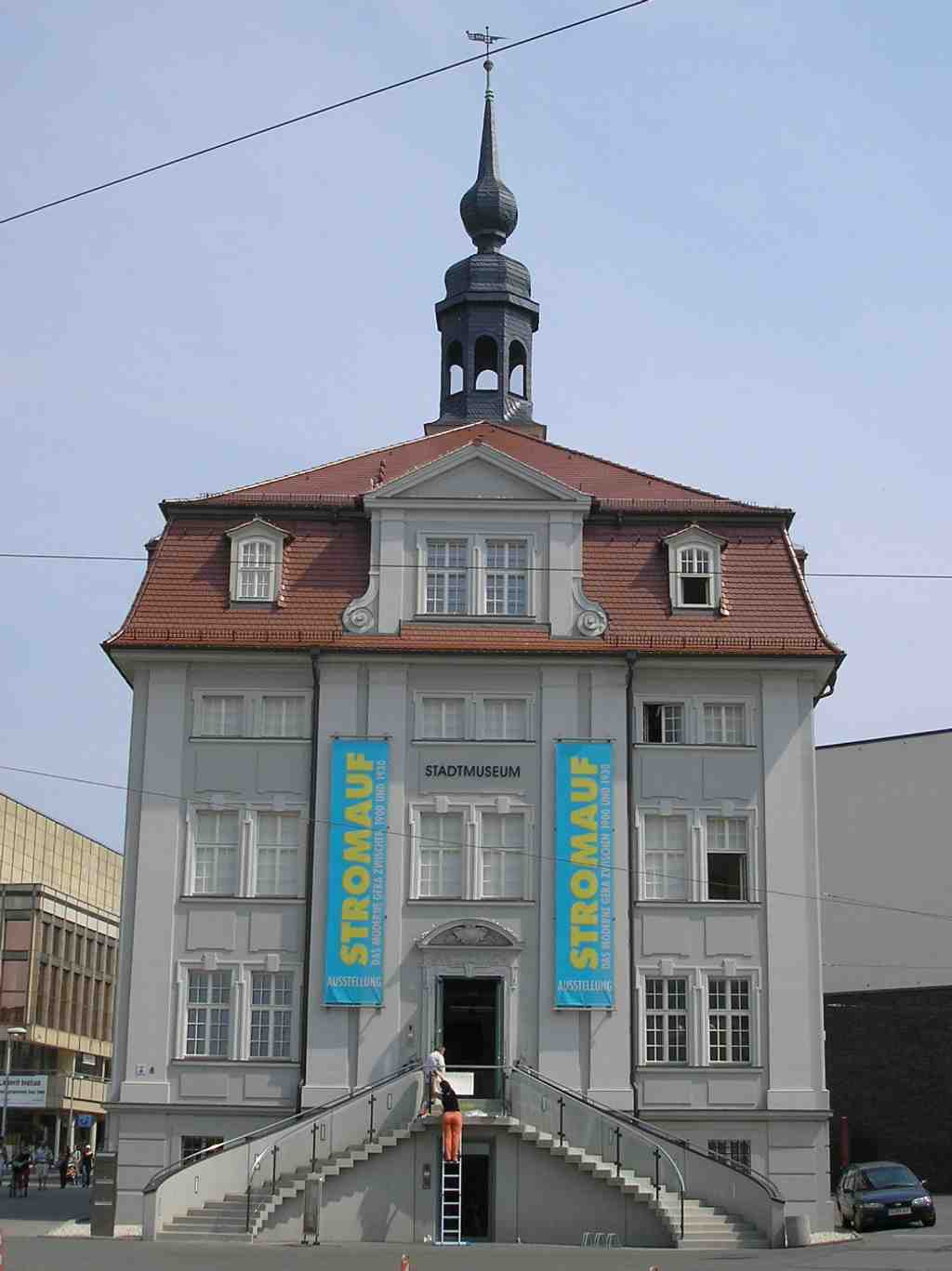
To spot the Gera City Museum, look for a stately grey building with a red tiled roof, white-framed windows, and a charming turret crowned by a spire, rising right in front of you-its dramatic staircase and inviting banners make it hard to miss.
Now, as you stand here, imagine the air thick with the secrets of centuries past, as if the walls themselves have tales to whisper. You're not just looking at a museum-you’re staring into the heart of Gera’s history, housed in a building that has seen more twists and turns than a rollercoaster. Originally, this wasn’t a place people came to ponder the past, but a strict home for orphans and the mentally ill, built between 1724 and 1738 on the ruins of an even older hospital that burned down in the 17th century. Just picture the kids playing in the courtyard, a moment later replaced by the stern echo of prison guards' footsteps when the basement became a jail, and the upper floors a workhouse.
Fast forward to 1824-the orphans moved in with local families, but the building’s gloomy side wasn’t over. For decades, those thick walls held prisoners and workers alike, and later, tenants tried to make it feel like home. But Gera’s citizens wanted something more uplifting. In 1878, with a bit of ambition and no shortage of local pride, Johann Christian Seydel and his fellow townsfolk said, “Let’s tell our own story!” Enter the city museum, collecting wonders from natural history to cultural treasures, and eventually finding a gallery-style home by 1914.
But history isn’t always kind. The Nazis stormed through, clearing out so-called “degenerate art” in 1937-including works by Otto Dix and others. Then came World War II, and in 1945, the severest air raid left this grand house a burnt shell. The city’s hopes could have vanished with the ashes, but locals rallied. By 1950, a smaller house nearby filled in as a makeshift museum, prioritizing schoolchildren and memories, while dreams of restoration simmered.
Finally, in 1956, the museum reopened here, and step by step, the city’s story was pieced together anew-prehistoric relics, tales of weaving mills, elegant old industry, even underground beer storage chambers called “Höhler.” After a major makeover in the early 2000s, the museum sparkles again, welcoming curious minds with fresh exhibitions and modern flair. So go ahead, step inside-the city’s whole adventure, from ancient settlers to industrial pioneers, is waiting for you. Just remember: this building has seen it all, and it’s got stories even Netflix can’t compete with!


