
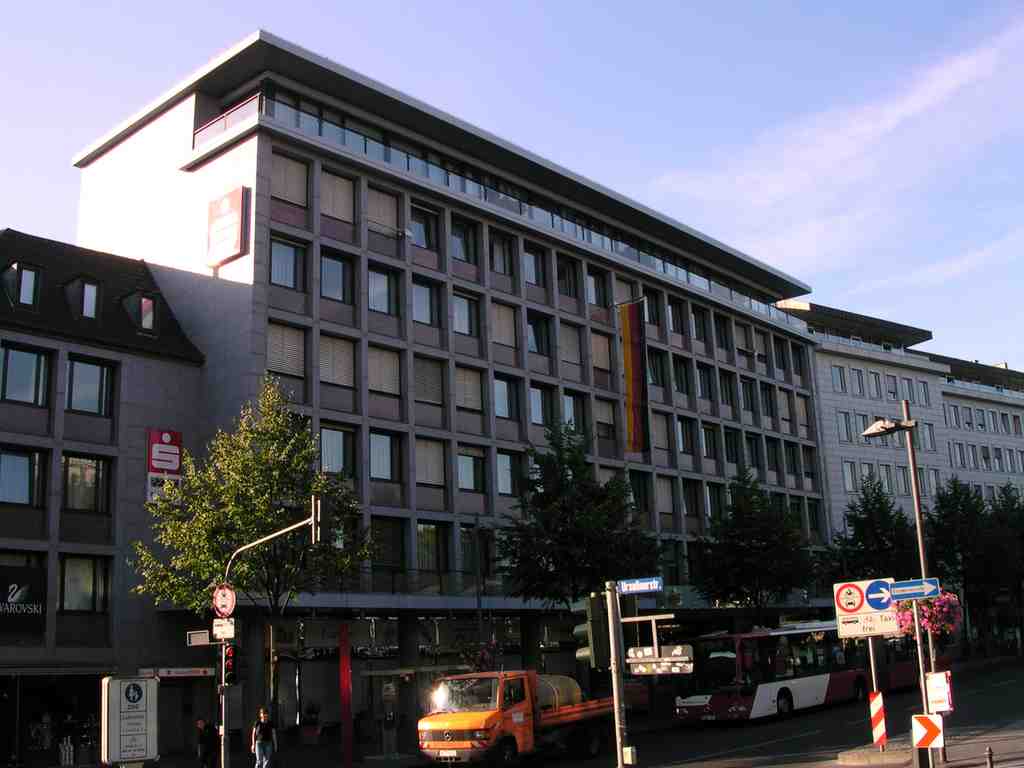
To your left stands the Sparkasse Aachen, a prominent rectangular building defined by its stark grey stone grid of recessed windows and a bold red square logo mounted high on the upper facade.
For centuries, wealth in cities like this was tightly controlled by rulers and a select group of nobles. But in the early nineteenth century, a new idea took root, the belief that the working public deserved a way to build their own financial security. The city fathers of Aachen opened the first public savings bank in eighteen twenty nine. It was a radical step toward civic empowerment.
But this noble project quickly ran into a formidable rival. A brilliant entrepreneur and social pioneer named David Hansemann had started his own private savings bank. Hansemann believed deeply in a cooperative spirit. He used the profits from his fire insurance company to fund social causes, earning the immense trust of the local people.
The city's public bank went about as you might expect when facing such a beloved competitor. It was completely crushed. By eighteen fifty, the city's bank held a meager five hundred Taler in deposits. A Taler was the large silver coin used in Germany at the time, so five hundred was perhaps the equivalent of a few thousand dollars today. Meanwhile, Hansemann's private association had amassed an astonishing eight hundred and fifty five thousand Taler. Unable to compete, the city fathers had to surrender, and they liquidated their public bank in eighteen fifty one.
It took decades for the public savings bank to successfully relaunch. But when it did, it became deeply woven into the fabric of the city. It survived the crushing hyperinflation of the nineteen twenties. During the terrifying final months of the Second World War in nineteen forty four, bank clerks carried out an astonishing overnight rescue mission. They smuggled cash, heavy ledgers, and even typewriters out of the city to protect the people's savings from the advancing front lines.
The bank has witnessed modern extremes as well. In nineteen ninety nine, a building now part of the Sparkasse became the center of a tense fifty hour hostage crisis. An armed bank robber barricaded himself inside with hostages, demanding a ransom. The terrifying standoff ended with a police rescue. In a moment of incredible bravery, a surviving hostage physically held the safety lever of the attacker's live hand grenade in place after he fell, saving everyone left in the room until special forces could secure it.
Today, the Sparkasse stands strong, helping everyday citizens invest in their futures. If you need their services, they are open weekdays from nine to five, with an early closure on Fridays, and they remain closed on the weekends.
We have spent time exploring how everyday people built their power in this city. Now, it is time to face the ultimate symbol of ancient imperial might. Aachen Cathedral is just a short, two minute walk away.




