
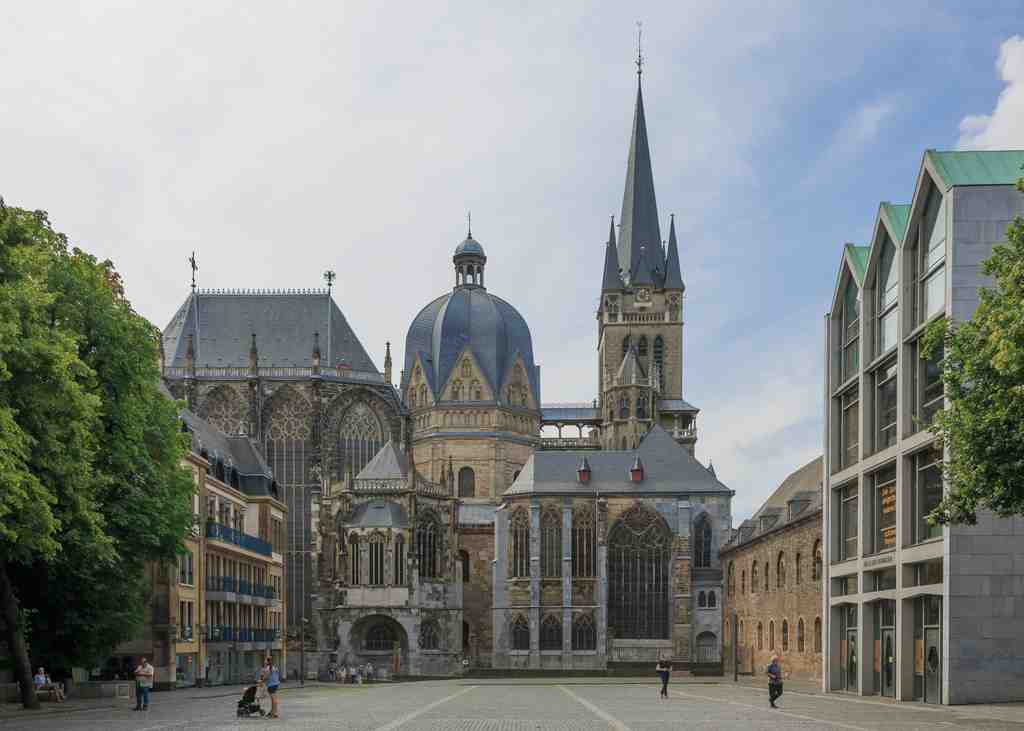
Look to your left, and you will see an extraordinary stone complex anchored by a massive octagonal dome, a towering dark spire, and a soaring rear section made almost entirely of tall, delicate glass windows.
This magnificent structure began around the year 796 as the royal chapel of Emperor Charlemagne, casting a monumental shadow of imperial power that would shape the destiny of Europe for centuries. It is truly a marvel of history preserved in stone. The very core of the building, that central, rounded structure, is the Carolingian Romanesque octagon. This was Charlemagne's personal sanctuary, modeled after the great Byzantine churches to the south. When the emperor passed away in the year 814, he was laid to rest right inside.
Over time, the chapel became a powerful magnet for weary travelers. Following Charlemagne's canonization, thousands of pilgrims flocked here to honor his memory and to see the holy relics kept within the cathedral treasury. The crowds grew so enormous that the original chapel simply could not hold them all. So, in the fourteenth century, the city added the breathtaking Gothic choir hall to the back of the building. With its towering windows spanning over a thousand square meters, it was essentially conceived as a giant glass reliquary, a luminous architectural container meant to display and protect the emperor's remains. Comparing the cathedral's south facade over a century apart reveals the enduring presence of its medieval architecture alongside the subtle passage of time.
This cathedral was the absolute epicenter of royal authority. Between the years 936 and 1531, thirty one German kings and twelve queens were crowned inside its walls. The coronations were massive, highly choreographed spectacles. The new rulers would be led to the high altar, then ascend to the upper gallery to take their seat upon Charlemagne's simple marble throne. Yet, these royal events often brought utter chaos to the city. During the coronation of Emperor Charles the Fifth in 1520, the royal train included over two thousand horsemen, leading to bitter squabbles among the nobles right at the cathedral doors over who had the right to enter first.
It makes you wonder... standing before this ancient structure, how does it feel to know that emperors were crowned in unimaginable luxury exactly where you stand, while the common people could only watch from the outside?
That tension between the supreme power of the emperors and the everyday lives of the citizens is woven into the very fabric of Aachen. The cathedral is a profound statement of imperial might, but the people eventually built their own monument to stand against it and claim their own voice. Take a moment to look across the square. We are going to walk toward the civic answer to this royal powerhouse, the Aachen City Hall, which is just a three minute walk away. And just so you know, the cathedral welcomes visitors daily from eleven in the morning until the early evening, opening a bit later on Sundays.




